

10 Of The Biggest Egg Recalls Of All Time
We may receive a commission on purchases made from links.
With 10 big egg recalls hitting headlines since 2010, eating eggs seems riskier these days. The list of big recalls includes fresh eggs, powdered eggs, and packaged hard-boiled eggs, with the potential contaminants including both Salmonella and Listeria.
There are several ways Salmonella can spread on farms and in production areas, including infected hens, contaminated feed, dirty surfaces, and the presence of rodents. Since Salmonella can grow both inside and outside the shell, the CDC suggests various ways to protect yourself from illness, including refrigeration, tossing cracked or dirty eggs, avoiding eating raw or undercooked eggs, and thoroughly cleaning any surfaces raw eggs have touched.
The dates of these 10 big recalls provide an unsettling picture of the egg industry. Eight of these recalls were from fresh eggs, and half of them happened in 2024 and 2025 alone. One reason we're seeing such large-scale recalls is that we now have enormous chicken plants that produce millions of eggs daily, making it easier for outbreaks to spread. Additionally, tests are now more sensitive, and food safety regulations have become stricter since the introduction of the Food Safety Modernization Act in 2011. All of these factors have contributed to the U.S. having multiple big egg recalls, likely with more to come in the future.
August Egg Company (2025)
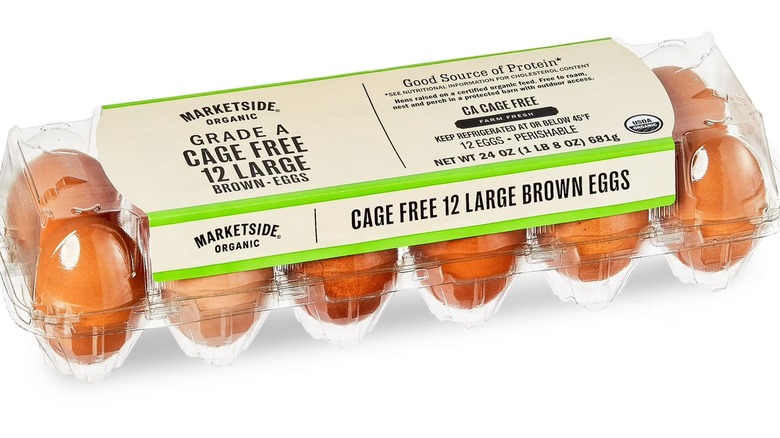
The August Egg Company recall in June 2025 was unfortunately the first of three large egg recalls in 2025. This one got the ball rolling with a retraction of 20.4 million cage-free and organic brown eggs. Like most recalls, it was based on a heightened risk of Salmonella contamination.
A variety of potentially infected products had gone out to several grocery store chains in nine states under 10 different brand names, including Clover, First Street, Nulaid, O Organics, Marketside, Raley's, Simple Truth, Sun Harvest, Sunnyside, and Loose. By the end of the outbreak, at least 134 people had become sick in 10 states, with 38 being hospitalized and one dying. Six of the illnesses had happened to people who were traveling from out of state to either Nevada or California. The infections had started as far back as February, with the recall not occurring until June.
Once the Salmonella strain was traced back to August Egg Company, the company stopped selling in-the-shell eggs. Instead, it began selling pasteurized liquid eggs to eliminate the danger of bacterial infection, allowing for internal reviews to address the infection problem and prevent future outbreaks.
Country Eggs, LLC (2025)
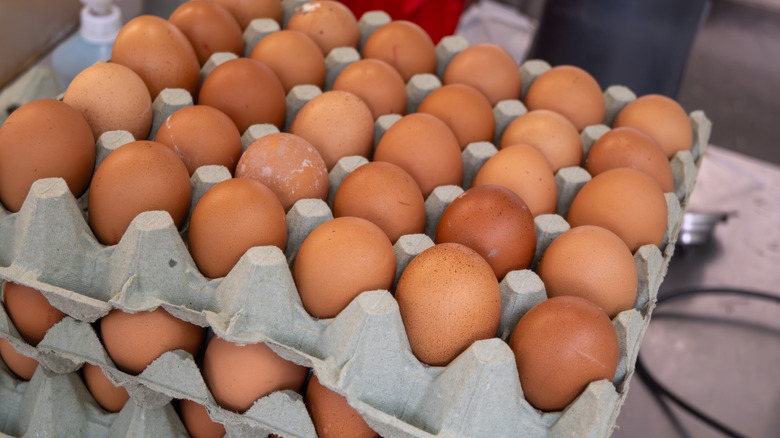
Two months later, in August, Country Eggs, LLC, was involved in the second big egg recall of 2025. Once again, the bacterial culprit was Salmonella, and the eggs were cage-free brown eggs. A significant number of people fell ill due to the outbreak.
The products had been distributed to grocery stores and food service distributors under four different name brands. The ones that went out to grocery stores bore the brand names of Nagatoshi Produce, Misuho, and Nijiya Markets, while the ones that went to food service companies were labeled as Country Eggs Large Brown Sunshine Yolks.
While there weren't any deaths connected to this outbreak, at least 95 people in 14 states were sickened by this strain of Salmonella, and 18 were hospitalized. Most illnesses were reported in California, Nevada, Washington, and Minnesota, with the lion's share in California, where the company is located.
Black Sheep Egg Company (2025)
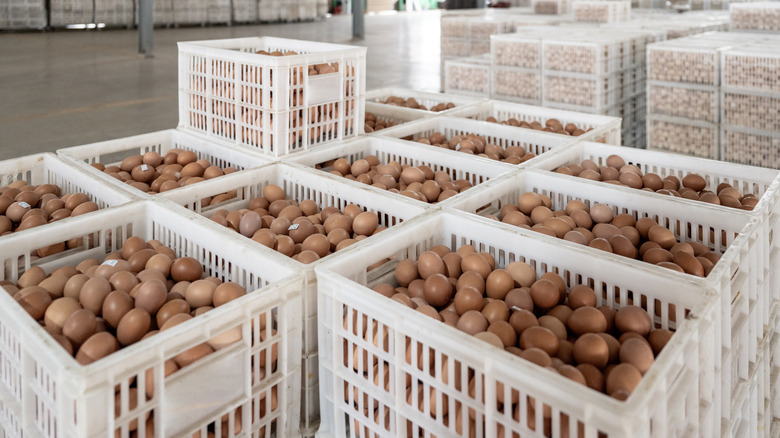
The third big egg recall in 2025 happened in September, when the Black Sheep Egg Company was forced to recall 6 million eggs. Luckily, there were no illnesses related to this one, with quick action possibly averting a potential crisis once the FDA detected Salmonella at the company's facilities.
An FDA environmental inspection at the Black Sheep Egg Company uncovered Salmonella in 40 of its test samples. More alarming than that was the fact that the tests found not one but seven strains of Salmonella active in the facility. Not all of the detected strains were known to cause illness in humans, however, the presence of Salmonella in the environment still raised alarm bells quickly.
One of the problems this time around was that the Arkansas company had sent many of its eggs in bulk to various companies in Arkansas and Missouri, which would then have packaged them for resale under different names. However, some free-range Grade A brown eggs actually bear the Black Sheep Egg Company brand name. The company also sent some out to the Kenz Henz in Texas, which had sold them to stores by the dozen as Kenz Henz Grade AA large pasture-raised eggs. So, the branded ones were easier to locate and warn against.
Milo's Poultry Farms LLC (2024)
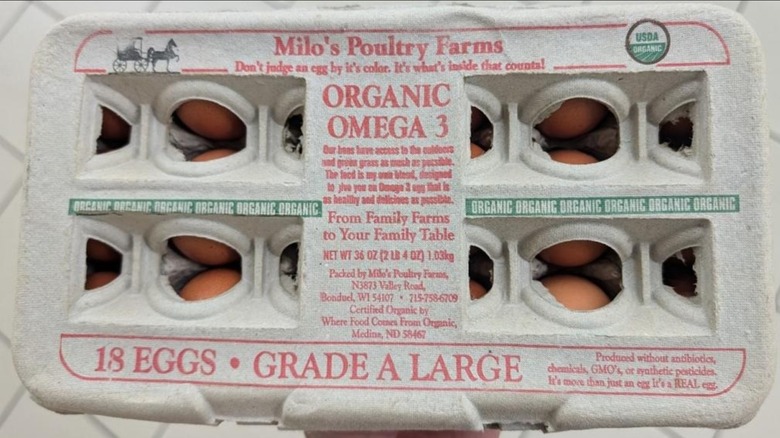
The next big recall on our radar happened in September 2024, when Milo's Poultry Farm, LLC, had to pull back over 4 million eggs. The culprit, once again, was Salmonella, only this time, it affected more products than just chicken eggs, with duck eggs also included in the recall.
Ultimately, this Salmonella outbreak infected 65 people in nine states, with 24 related hospitalizations. After the FDA determined that the outbreak was egg-related and began testing the eggs and their production environments, the agency discovered the offending Salmonella strain at Milo's Poultry Farms. The resulting recall affected several brands, including Milo's Poultry Farms and Tony's Fresh Market chicken eggs, as well as M & E Family Farms and Happy Quackers Farm duck eggs. The pull list included everything from large cases to smaller cartons, encompassing regular eggs, as well as organic and cage-free ones. With so many people becoming seriously ill, the recall was upgraded to Class I by the end of the month, indicating a high potential for severe illness or even death. Luckily, nobody died in this outbreak. Despite the recall, when the FDA and state agencies inspected the farm months later, the agency still found unsanitary conditions and various code violations related to Salmonella safety.
Handsome Brook Farms (2024)
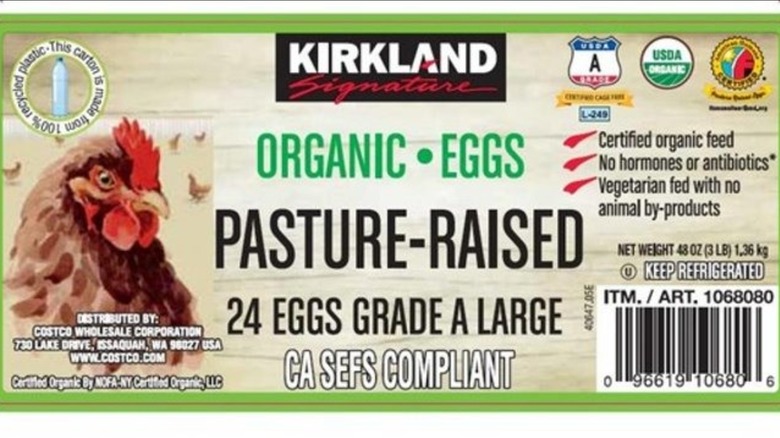
Toward the end of 2024, in November, another Salmonella-related recall occurred. The offending products were all organic pasture-raised eggs sold in packages of two dozen at Costco. These Kirkland Signature-branded eggs, all sourced from Handsome Brook Farms, were distributed to 25 Costco locations across five Southern states. Ultimately, it ended up being one of Costco's biggest recalls, affecting 10,800 cartons that were already on store shelves.
Nobody had been sickened by Salmonella before the eggs were recalled, but the company wanted to ensure that nobody ended up ill. The reason the company gave for the recall was that it had packaged eggs that weren't meant for retail sale. Whether that meant that they hadn't gone through all the proper cleaning or inspection processes or were diverted to the wrong facility isn't clear. Still, whatever happened, there was concern that the products had the potential to transmit disease.
The fact that the recall was upgraded to Class I means there was a reasonable risk that this could have developed into something more serious, had the infected products been widely consumed. In the end, it seems that everyone came away from this recall healthy and unscathed, with the product retraction being a success. After the whole debacle was over, the company went on to create a new supply chain in an attempt to prevent the wrong items from arriving in the wrong place in the future.
Rose Acre Farms and Cal-Maine Foods (2018)
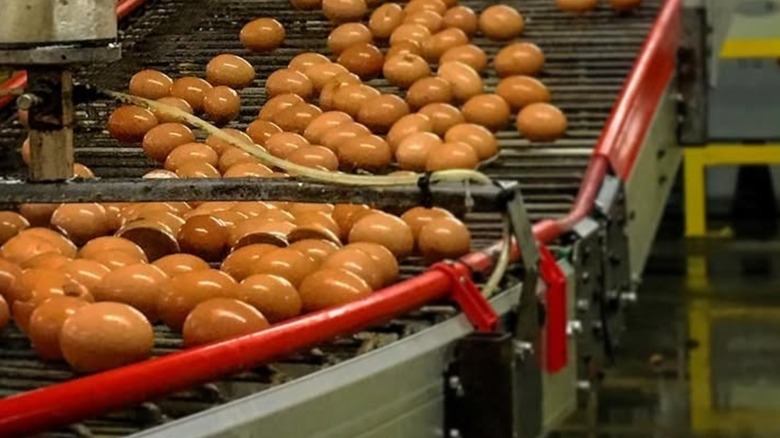
In February 2018, there was a big recall involving over 2 million eggs that were potentially infected with Salmonella Braenderup. The products that were involved in this recall all came from Rose Acre Farms. This company was the first to voluntarily recall over 206.7 million eggs, with Cal-Maine Foods following three days later by voluntarily recalling 280,800 eggs that it had bought from Rose Acre Farms. With Rose Acre Farms being the second-biggest egg producer in the U.S., it's no surprise that the number of affected products was such a large one.
Unfortunately, the product callback happened as a result of Salmonella outbreaks in 10 states. Ultimately, 45 people became ill, and 11 people were hospitalized from contaminated eggs that seemed to be connected to Rose Acre Farms. The FDA traced many of the illnesses back to egg-based foods eaten both at home and at restaurants, and then tested samples at the farm to confirm the source of the Salmonella. With Great Value brand being part of the recall, this was also among Walmart's all-time biggest recalls.
When the FDA inspected the farms with Salmonella outbreaks in the following months, the agency found numerous worrisome conditions, including rodents, dirty equipment, and unsanitary handling practices. Unfortunately, the company is no stranger to controversy, having had the Humane Society accuse it of false advertising regarding animal welfare and pushing back on California animal cruelty regulations.
Nutriom LLC (2014)
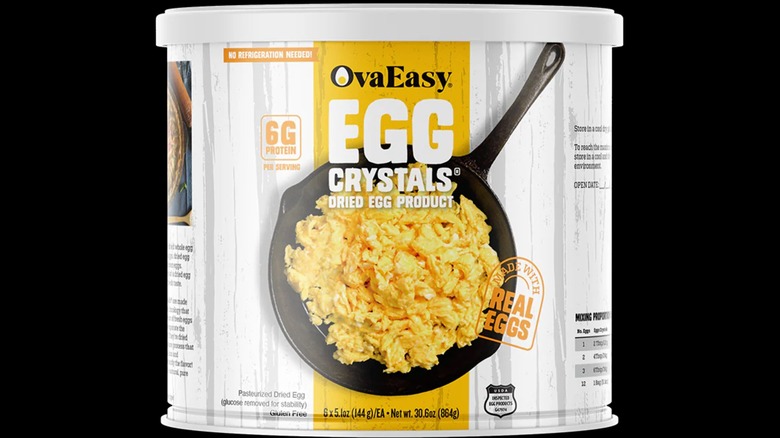
In February 2014, Nutriom LLC began what would eventually become a 309,000-pound powdered egg recall because of concerns about Salmonella contamination. One of the myths you might mistakenly believe about powdered eggs is that they are safe from contamination. However, powdered eggs aren't immune to bacterial pathogens, and you should treat them with caution, just as you would fresh eggs. Interestingly, the Nutriom powdered egg recall seemed to have nothing to do with a detected contamination at all.
The company said that the whole thing started as a technical error related to regulatory issues surrounding recordkeeping, rather than a food safety issue. With USDA inspectors constantly doing inspections, the company felt it had always maintained sanitary conditions. All of the tested products appeared perfectly safe, and there were no illnesses reported. Still, the recall, which started with just 226,710 pounds of products in February, increased later in April, ultimately encompassing 39 dried egg products that lacked proper records and needed to be pulled from shelves out of an abundance of caution.
The products (largely from the OvaEasy brand) ranged from powdered boil-in-a-bag eggs, powdered whole eggs, and sausage and herb egg crystals to egg wash sprays. Some of the products hadn't been divided into smaller packages yet, while others were already in consumer-sized packages. Since the recall could have been avoided with better record-keeping, the company decided to hire outside experts to help it with regulatory compliance.
Michael Foods (2012)

In February 2012, Michael Foods had to recall 1 million hard-boiled eggs that were potentially contaminated with Listeria monocytogenes. Michael Foods is currently the 12th biggest egg distributor in the U.S. Ultimately, the hard-boiled products had been distributed to 34 states.
A third-party inspection team was responsible for the discovery that some of the products were infected with Listeria. The products seemed to have become contaminated in the packaging room, where workers had been making some repairs. The products that were infected were ones intended for institutional use that had been packaged into 10- and 25-pound buckets. Although they were in a brine solution, there was still a concern that they were in danger of harboring bacteria.
Institutions that had purchased them could find them under six different brand labels, and Michael Foods contacted the food distributors and manufacturers to make sure they pulled the eggs from any retail sales or food service purposes, including being chopped up and sold in other food products. Luckily, there were no reported illnesses before they were recalled. So, a larger crisis seems to have been averted through taking precautionary measures on such a large scale.
Ohio Fresh Eggs and Cal-Maine Foods (2010)
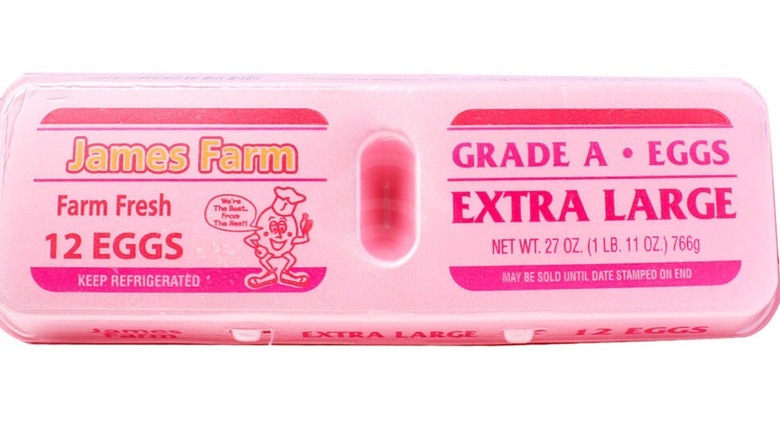
In November 2010, a Salmonella enteritidis contamination outbreak sparked a 288,000-egg recall. The contaminated products had all come from Ohio Fresh Eggs, but they were distributed by Cal-Maine Foods, which was and still is the top producer of eggs in the U.S.
The potentially-contaminated products had gone out to stores under the brand names of James Farm, Springfield Grocer, Sunny Meadow, and Sun Valley in eight states. This time, the FDA uncovered the Salmonella during routine testing at one of Cal-Maine's barns near Hartford, Ohio. While the eggs were supposed to be pulled, they ended up accidentally being delivered to Cal-Maine Foods facilities across the U.S. Luckily, the FDA realized what had happened after reviewing some Ohio Fresh records and was able to recall the products before anyone reported any illnesses.
There were interesting ties between Ohio Fresh Eggs and the two companies involved in an enormous recall earlier that year: Wright County Egg and Hillandale Farms. At the time of the 2010 recall, Ohio Fresh Eggs was co-owned by Orland Bethel, the owner of Hillandale Farms. Plus, Austin DeCoster, the owner of Wright County Egg, had made a $125 investment in Ohio Fresh Eggs back in 2003. After this incident, Ohio Fresh promised better training for its employees so that infected products wouldn't go out the door in the future. However, Cal-Maine Foods would be involved in future recalls and unfair pricing accusations.
Wright County Egg and Hillandale Farms (2010)
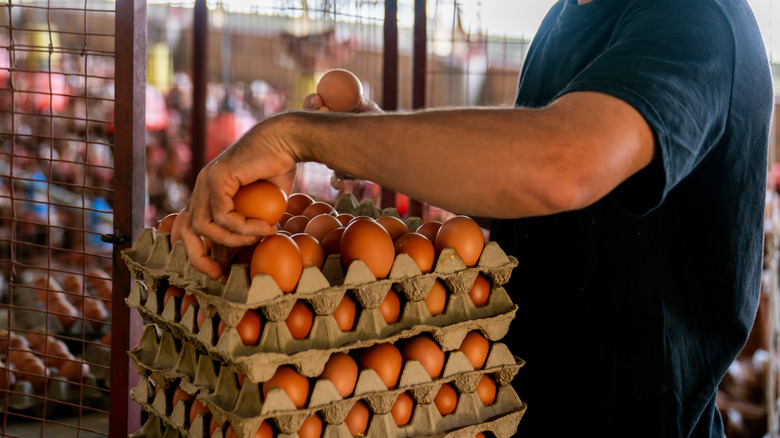
In August 2010, the biggest egg recall in history occurred, with Wright Country Egg recalling 380 million eggs and Hillandale Farms recalling 170 million eggs for a combined total of 550 million eggs pulled from distribution. The number that Wright County Egg recalled alone outnumbers any future recalls. The recall happened after more than 1000 people fell ill with Salmonella enteritidis across the U.S.
All in all, between May 1 and November 30 of 2010, 3,578 Salmonella-related illnesses were reported in 11 states, with a cluster of infections related to people who had eaten in 29 specific locations. Wright County Egg had provided products for 15 of these restaurants, and Hillandale Farms of Iowa seemed to be the source for some of the other outbreaks. Both of these producers were based in Iowa, and the Salmonella strain was the same one.
Wright County Egg had previously been cited during an inspection for the employees touching manure and dead birds without gloves. Also, at the time of the outbreak, neither farm had gone through any inspections by the FDA or the top state food safety agencies. Thus, neither farm was operating under responsible safety standards, with both found to have maggot, rodent, and wild bird infestations as well as Salmonella in the water, equipment, and manure around the feed and eggs.