

10 Tips For The Best Homemade Matcha Latte
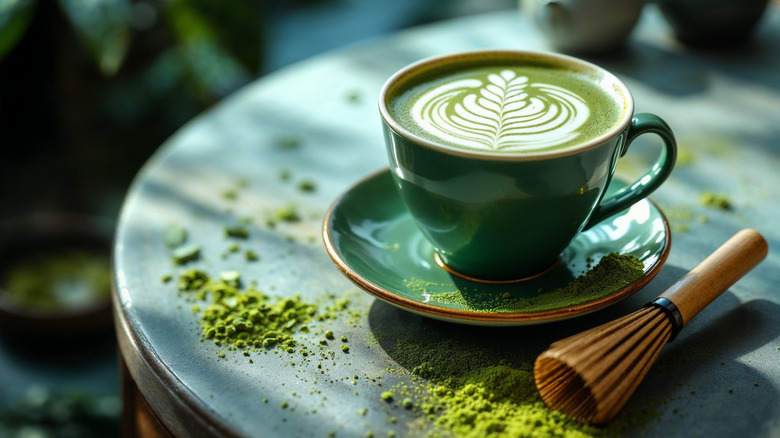
Whether you're looking for an alternative to your cup of afternoon coffee or you just want to see what all the hype is about, matcha is absolutely a drink worth exploring. Matcha has its origins in China and Japan, but it's become increasingly popular outside of Asia in the past several years. There's an excellent chance that you've seen matcha lattes at your favorite coffee shops, and maybe you've even tried making them at home. Although the process of making a matcha latte seems a bit more complicated than turning on your drip coffee maker, it's still very possible to make a great cup of matcha at home.
Perhaps you make matcha lattes on the regular, or maybe you want to try your hand at making them for the very first time. Either way, these tips for making the best homemade matcha latte are guaranteed to upgrade your at-home matcha game. To get the 411 on some of the most essential matcha latte tips you can employ at home, we spoke to matcha experts, including Joshua Kaiser, founder of Rishi Tea & Botanicals; Mike Coulson, founder of Vana Tisanes and Plantae+Fungi; Eijiro Tsukada, CEO and founder of Cuzen Matcha; and Tom Saxon, cofounder of Batch Coffee Club and author of "The Home Barista." Who knows? You may just cut your cafe budget in half once you learn how to make your own incredible matcha latte.
Experiment with different grades and origins of matcha
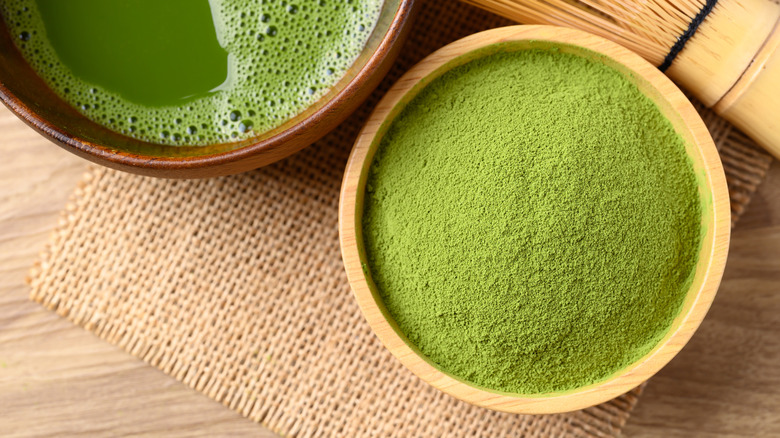
If you've only ever used one type of matcha at home, you're probably missing a lot that the beverage has to offer. That's why it can be a good idea to try different varieties to get a sense of how different matcha tastes. "If you're a fan of making matcha at home and want to elevate your ritual, one of the best ways to easily do that is to experiment with different matcha grades and origins," suggests Joshua Kaiser of Rishi Tea & Botanicals.
Head to a tea shop — or search online for a place to buy tea — and take a look at all the different options available. There, you'll find a wide range of choices. "Maybe you've only used barista-grade matcha and you're interested in ceremonial-grade," Kaiser said. "Trying a new grade or a rare harvest can bring out new flavors you might not experience with your usual matcha. You might even find a new favorite!"
Premium barista-grade matcha is known for its grassy and bittersweet flavors that work especially well for matcha lattes. Ceremonial-grade matcha, on the other hand, comes from the first harvest of tea leaves and therefore is considered to be a higher grade than barista matcha. It tastes less bitter, too. Although it's generally meant to be consumed on its own, without milk, you can try using it for a matcha latte if you want to switch things up.
Use soft water instead of hard water
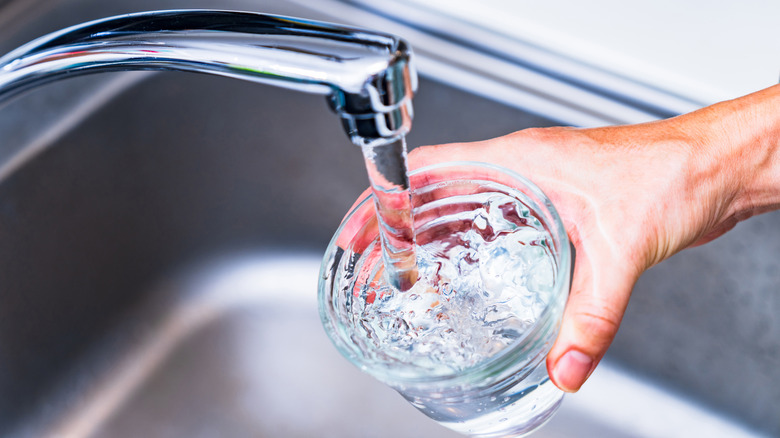
Of course, the quality of the matcha you use plays an incredibly important role in how your matcha latte ultimately tastes. But the other main ingredient in matcha — water — is just as important as the tea itself. "The quality of wet ingredients also impacts the end result of matcha significantly," explains Eijiro Tsukada of Cuzen Matcha. "We suggest using soft water rather than hard water because the heavy mineral deposits in hard water negatively impact the taste, mouthfeel and color of the tea."
So, what exactly are soft and hard water, anyway? Basically, hard water just contains more mineral deposits, including calcium and magnesium, than soft water. Chances are, the water that's coming out of your faucet at home is hard water, since it accounts for 85% of the United States' water supply, according to HomeWater 101. However, it's possible to buy bottled soft water for use in your matcha latte. Look for purified water instead of mineral water, since the latter is hard.
Never use boiling water
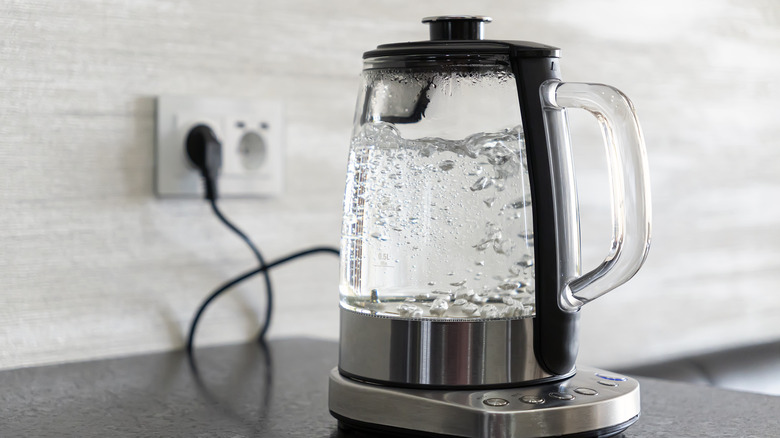
When you're making tea of any kind — including matcha — you may assume that it's best practice to get your water scalding hot before adding the tea to your cup, especially if you're going to be enjoying your matcha latte hot. After all, don't you want it to be nice and steamy when you take a sip? In reality, though, you don't want to use water that's too hot, since that can affect the flavor of the matcha.
"Never use boiling water," says Mike Coulson of Vana Tisanes and Plantae+Fungi. "It will scald the delicate tea leaves and create a harsh, bitter taste." That's not what you're looking for in a perfect matcha latte. Instead, Coulson says, the ideal temperature for matcha is around 175 degrees Fahrenheit. If you can, it's good to get as close to this temperature as possible, preferably with a tea kettle that has an attached thermometer (which is also great for making coffee at home). No worries if you don't have one in your kitchen, though. "If you don't have a temperature-control kettle, a cooking thermometer works great," Coulson says.
Choose a naturally sweet milk
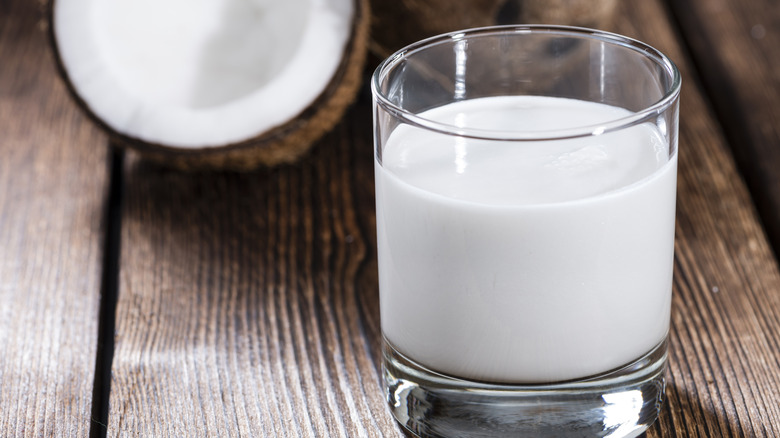
We've covered the tea itself as well as the water. But if you're making a latte, you can't forget about the milk, which is also an essential part of crafting a great matcha latte. Just like with the other ingredients, it's a good idea to be intentional with your milk selection instead of just buying the same kind of milk you always get at the grocery store. "Adding a naturally sweet milk like coconut milk can balance some of the more bitter matcha taste and create a creamier latte," Joshua Kaiser says. It gives some added flavor complexity to your beverage while enhancing the latte's texture at the same time.
But you don't have to opt for coconut milk if that's not your thing. According to Mike Coulson, there are other types of milk that can work well in a matcha latte. "For the best latte, you need a creamy base," he says. "Whole milk is great, but for a dairy-free option, oat milk is the best choice." Plus, oat milk has that sweetness that you're looking for in a solid matcha latte milk. "It froths beautifully and has a natural, subtle sweetness that doesn't overpower the tea," Coulson explains.
Soak your whisk in warm water before preparing the matcha
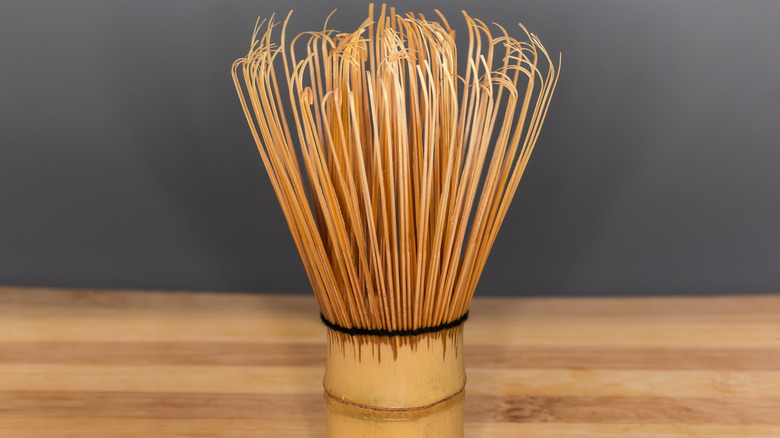
If you've ever seen someone making matcha at a coffee shop or online, you've probably noticed that they're using a bamboo whisk, or chasen, to prepare the matcha powder. Instead of simply pouring water over the powder, they start by whisking the powder with a small amount of water. This tool is used for a few reasons. First of all, it prevents clumping and grittiness in your beverage, which can result in an unpleasant flavor and strange texture. Secondly, it aerates the matcha, releasing some of its more delicate notes and frothing it slightly, creating a smoother sip.
So, yes, you should be using a matcha whisk. But for the best results, don't use it dry. "Soak your whisk in warm water before you start," suggests Tom Saxon of Batch Coffee Club. "This helps soften the bristles and makes for easier whisking and less chance they break."
Make a matcha slurry first
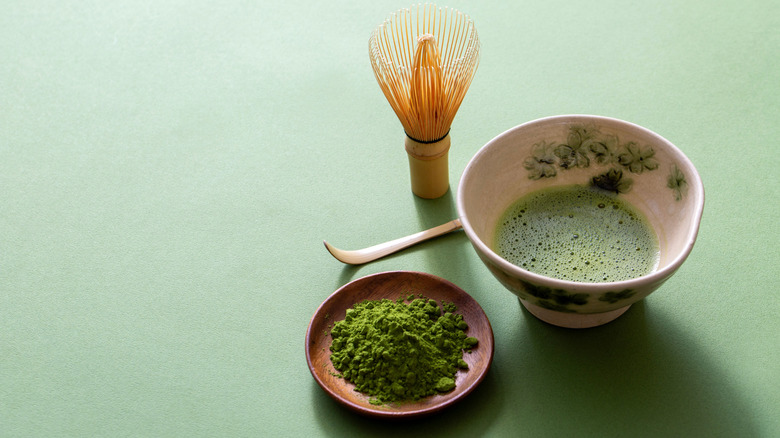
If you've ever made a matcha latte at home and found that it had a strange, clumpy texture to it that you don't get when you buy your matcha at a coffee shop or cafe, it might be because you're not making a slurry with matcha powder and water before you craft your beverage. According to Mike Coulson, you shouldn't just take your matcha powder and put it into the milk without taking any additional steps. Instead, creating that slurry is essential to achieving the cafe-quality latte you're craving.
So, exactly how do you create that slurry? It's a simple process. Start with 1 or 2 ounces of water heated to 175 degrees Fahrenheit, Coulson instructs. Then add the water "to the sifted matcha powder in your mug," he says. "Use a bamboo whisk (chasen) to vigorously whisk in a 'W' or 'M' motion until a smooth, bright-green paste forms and no clumps remain. This ensures the matcha is fully dissolved before you add the rest of your liquid."
Remember to sift your matcha
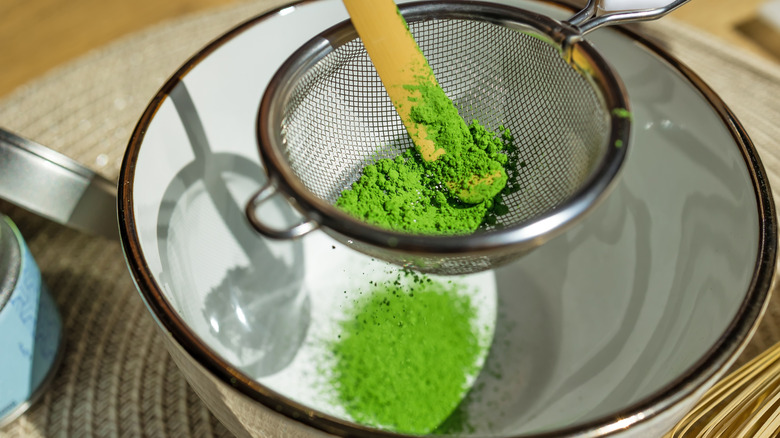
The last thing you want when you go to sip your matcha latte is a big chunk of undissolved matcha powder giving you an unpleasantly bold flavor and strange texture. That's why it's so important to remember to sift your matcha before adding the water to create that slurry. "You should always sift your matcha to remove any potential lumps and ensure the final latte is as smooth as possible," Joshua Kaiser says.
A sifter is very easy to use with matcha. Just position the sifter over a bowl, then add the matcha powder to the sifter, using a spoon to work the powder through it, shaking it back and forth slightly as you go. This process may take a minute or two, but it's worth the wait to get truly smooth matcha powder. Then, as soon as you mix it with water and the milk of your choice, you'll have a creamy matcha latte without any clumps.
Be thoughtful in your choice of sweetener
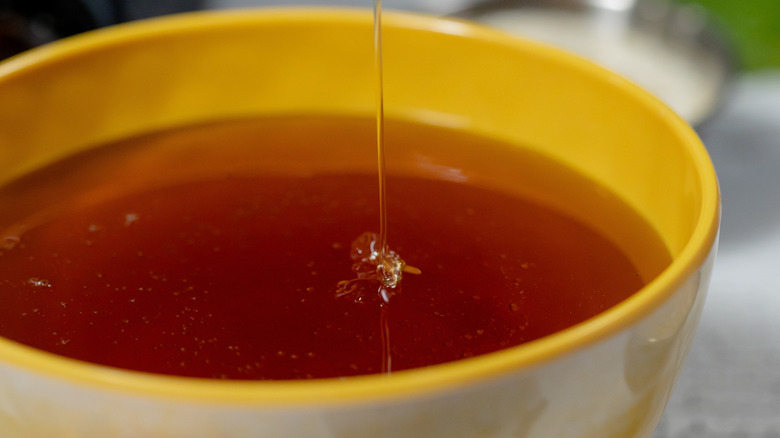
Some people enjoy their matcha without much added sweetness at all, preferring to focus on the flavor of the tea itself. Perhaps all the sugar you need comes from almond or oat milk, so you can really pick up on those mild grassy notes. On the other hand, if you want your matcha latte to be a bit sweeter, there are a few different ingredients you can use to get that extra boost of flavor. Plain white sugar, agave syrup, maple syrup, Stevia ... they're all options when it comes to sweetening your matcha latte.
"Like milks, different syrups and cane sugars carry different flavors, so the choice of sweetener is a personal one," Eijiro Tsukada says. "A hint of vanilla, a sprinkling of cane sugar, or a dollop of maple syrup will all complement the latte in different ways." Think about whether you want sweetness, in which cane sugar might be your best option, or whether you prefer an ingredient with a bit more flavor, like maple syrup. It can completely transform the way your drink ultimately tastes. Looking for a sweetener that tastes extra indulgent? Try making this deluxe brown sugar syrup.
Add warming spices to your cup
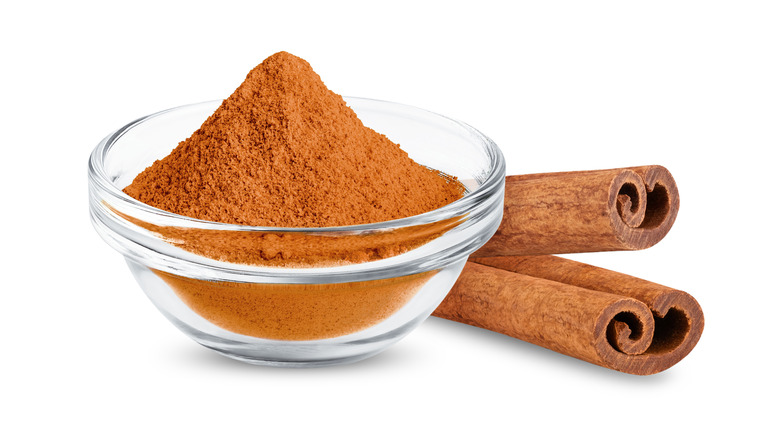
You don't have to stop with milk and sweeteners when you want to add an extra touch of flavor to your matcha latte. Feel free to get creative with spices and seasonings that can take your drink to a whole new level. Mike Coulson suggests adding warming spices to your latte. "Instead of just sugar, add botanicals that provide synergistic benefits," he advises. "A small dash of cinnamon is fantastic, as it adds warmth and can help support healthy blood sugar levels. A pinch of ground ginger is also wonderful for adding a little spice and supporting digestion."
There are plenty of other warming spices from around the globe you can experiment with for those comforting flavors that feel like you're drinking a hug in a cup. You can try ingredients like star anise, cardamom, or nutmeg for an interesting twist on an otherwise simple matcha latte. Just taste as you go to ensure that you're not adding too many competing flavors to the cup.
Try using a coffee creamer
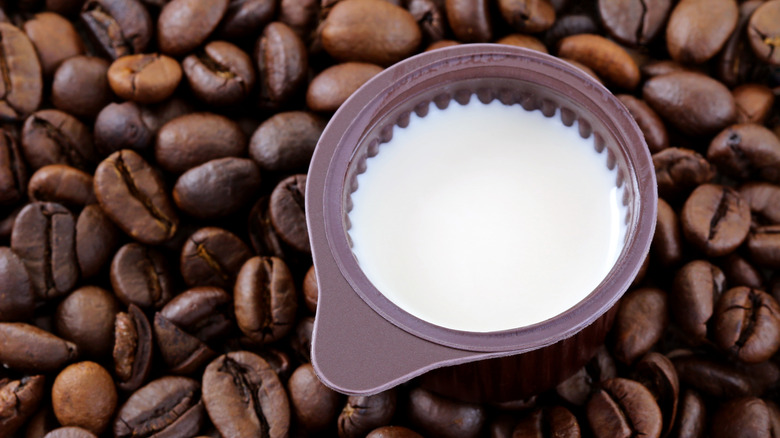
Of course, you may not want to take so much time and spend so much effort tinkering with a bunch of ingredients to give your matcha latte the hint of flavor it needs. If you're looking for a quicker and easier solution, you may want to try a product that you might already have in your fridge: flavored coffee creamer. It may sound unconventional, but hear us out: It'll provide the creaminess and sweetness you're looking for, all in one package. Yes, it gives you a little less control over how much sugar you want to add, but if you like a specific creamer, then chances are, it'll probably taste good in your matcha latte.
If you want to keep things simple, we recommend opting for a vanilla coffee creamer. For a more seasonal take on your matcha latte, opt for a pumpkin spice coffee creamer instead. Either way, taking this shortcut makes your matcha latte routine a bit easier on busy mornings.