

8 Vintage Seafood Dishes That Have Quietly Vanished
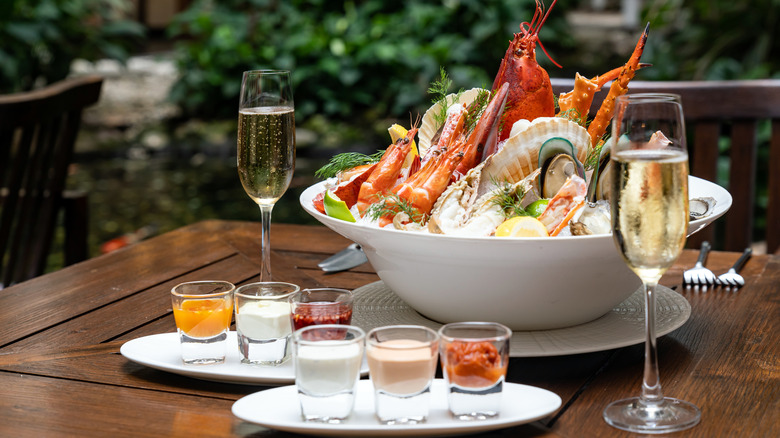
While the fishing industry may be facing challenges, one could argue that there's never been a better time to be a seafood lover. Fast, refrigerated transportation now makes it possible to send fresh fish and shellfish from the coast to supermarkets almost anywhere. More importantly, fishermen can blast-freeze their catch directly on the boat or at a nearby coastal packing plant, preserving peak flavor and freshness and giving it a much longer shelf life. In fact, it was fish that helped popularize frozen food after World War II.
Now that quality seafood is available nationwide and year-round, it's unsurprising that it's so popular. However, as much as we love seafood, it's not immune to fads and trends. The specific seafood dishes we enjoy come and go as trends and dining habits change. With that in mind, here are eight seafood dishes, from homestyle to haute cuisine, that are seldom seen anymore in the United States.
Poached kippers
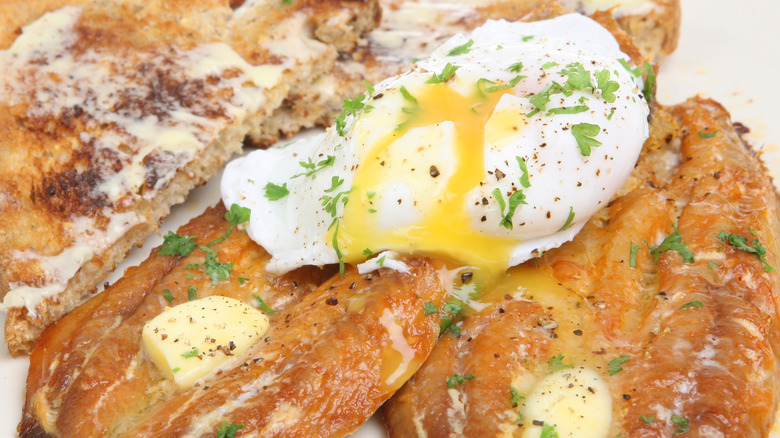
Some of us enjoy cereal in the morning, while others would rather have eggs and toast, or even a nutritious smoothie. Some skip breakfast entirely. So how about this one: a pungent, oily, smoked fish, boiled and buttered, or perhaps simmered in milk. Does that make you lick your lips in anticipation, or scrunch up your face in disgust?
Believe it or not, kippers — a type of cured herring — were a popular breakfast staple for generations of Brits. And why not? They were inexpensive, readily available, and packed with protein — a hearty way to start the day. Besides, bacon is also smoky and fatty, and we're fine with that at the breakfast table.
In fairness, kippers starting losing popularity in the U.K. in the late 1950s, due to a combination of overfishing and younger consumers turning their backs on the "old-fashioned" dishes. Outside of New England, Americans never really developed a taste for them. In North America, kippers usually come canned, and the recent trend of adding tinned fish to your shopping list has made them a more familiar sight in grocery stores. While they're traditionally eaten on toast, they can be used more creatively — for example, as a tasty, pantry-friendly filling for fish tacos. Non-canned kippers have enough of a following to be available online and even in some supermarkets, but don't expect to see them often.
Lobster farce
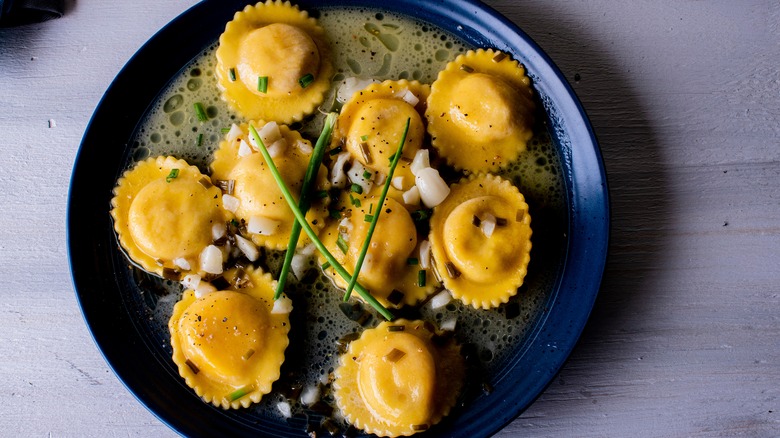
We all have a pretty good idea what "farce" means in normal life (or when we go to the theater), but in the culinary world, it has a much more specific meaning. For chefs, a farce is a dish made by mincing or grinding one of the main ingredients, then combining it with a binder and filler to use as a stuffing.
Vintage cookbooks from the 19th century through the 1930s and '40s often included a farce of diced or minced lobster made with a white sauce, or some other creamy binder to hold it together. It was commonly used to stuff rolled-up fillets of white fish or even the lobster shell. The drop in popularity isn't necessarily because these were bad dishes, but they definitely belong to a time when lobster was less expensive than it is now. Let's face it: these days, if you're going to splurge on the expensive crustacean, you're probably going to choose one of the many lobster recipes that highlight the star ingredient.
That said, one form of lobster farce still appears on fine dining menus – lobster ravioli. If you happen to have leftover lobster, or score a good deal on the canned or frozen kind, it's a luxurious dish you can make at home.
Eel pie
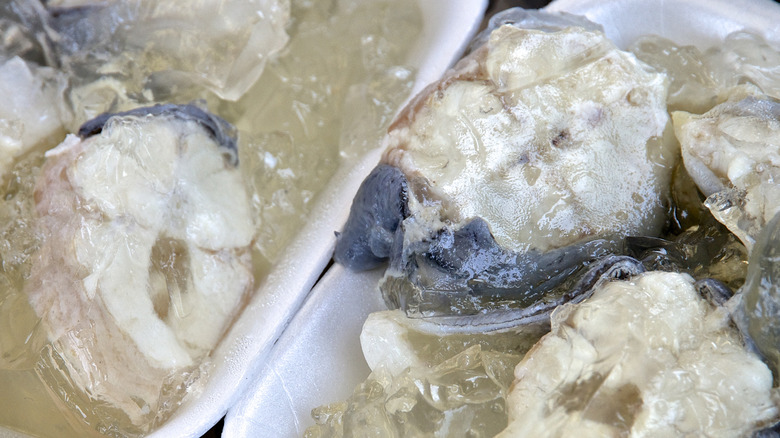
When you think of eels, what's the first thing that comes to mind? If you're a sushi fan, you might picture unagi. If you were a '90s baby, you'll likely think of Ursula's creepy hench-creatures from "The Little Mermaid." Or you might just think, "Ew."
Realistically, while some people feel eel has a pretty high ick factor — probably due to its snake-like proportions — it was once a major food source for Native Americans and early colonists. Eels were even gifted to the Pilgrims, and might easily have come to symbolize Thanksgiving instead of turkey, which would have made holiday dinners very different indeed. The new settlers would likely already have been familiar with the fish from back home, where dishes like eel pie and jellied eels were staples of British cuisine, particularly in London. On this side of the Atlantic, recipes for dishes like eel pie and eel chowder appeared in American newspapers well into the 1930s and '40s. Even back then, London-style jellied eels were probably a tough sell.
Salmon or shrimp wiggle
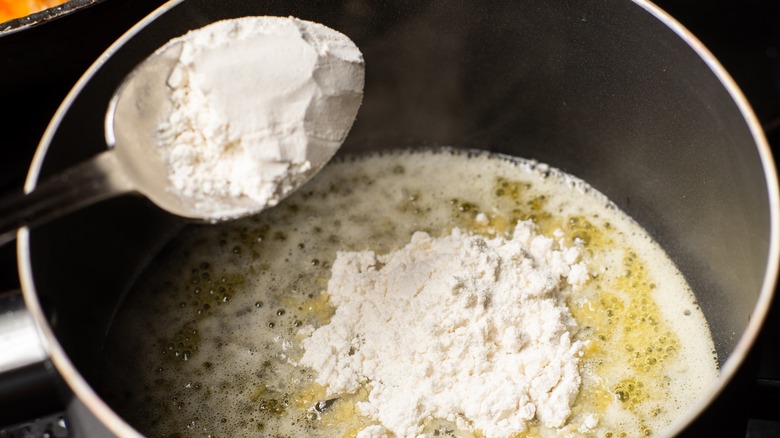
Everyone loves a quick and easy weeknight meal. There are entire websites devoted to fast and simple dishes, and, of course, they're well represented here at Tasting Table. While the need for straightforward, nourishing meals hasn't gone anywhere, some recipes have definitely fallen out of style over time.
Take "wiggle," for example. It was a common feature in recipe books from the first half of the 20th century and came in several variations. It's basically your seafood of choice — salmon and shrimp were two popular options — warmed in creamy sauce with peas and served over toast, rice, or even biscuits. We're not going to lie; it's not that this is necessarily a bad dish, it's just a little uninspired. You could think of it as the spiritual ancestor of those modern recipes that use canned cream of mushroom soup as their sauce base. They scratch the same itch, but at least the canned soup saves you the time and effort of whipping up your own white sauce from scratch.
Fish soufflé
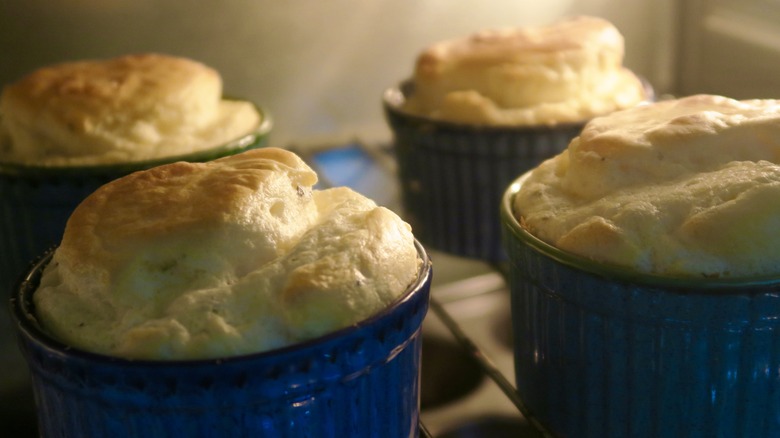
Truthfully, soufflés aren't something most people encounter very often. For home cooks, their reputation as a finicky and intimidating dish to make is a major deterrent. Plus, they need to be served immediately after coming out of the oven. Even for professional chefs who can turn them out without breaking a sweat, this requirement means they aren't well suited to the workflow of most restaurants.
Yet fish soufflés appear in a number of old cookbooks, suggesting they had a measure of popularity at one time. Perhaps leisurely service was more acceptable at fine-dining restaurants back in the day. Home cooks may also have been more willing to tackle a high-risk recipe during an era when entertaining dinner guests was something of a competitive sport. Plus, the very idea of a seafood soufflé – basically puffy scrambled eggs with fish — might seem odd to some modern eaters, while a cheese or vegetable soufflé feels like a more natural combination.
That said, if you decide you'd like to take a crack at making one, the soufflé's reputation for difficulty is somewhat exaggerated. Chefs like Geoffrey Zakarian have shared soufflé tips for beginners often enough, and if you give it a try, you might be pleasantly surprised. Whether you use seafood as your base is entirely up to you.
Kedgeree
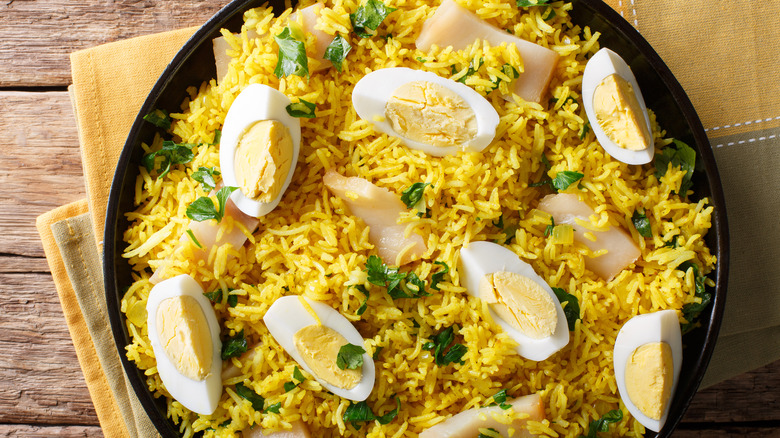
If you're an Anglophile — an avid fan of all things English or British — you've probably heard of kedgeree. The name, like the dish itself, is anglicized from the original and somewhat different Indian dish (spellings vary, since transliteration from other languages is an inexact art). Whatever the spelling, it dates from the early days of Britain's imperial presence on the Indian subcontinent.
So what exactly is kedgeree? Well, it's made from smoked haddock or cod, served on a bed of rice, with a creamy, well-seasoned curry-style sauce and garnished with boiled eggs. It was a popular breakfast item in Victorian England, though like many other favorites from that era, it may no longer seem like a suitable breakfast dish. Still, while uncommon, the dish persists across the pond.
It's hard to gauge how popular kedgeree ever became in America, because it originates in the post-Colonial period and wouldn't have come over with the settlers. However, it got a bump of interest when it was featured in the first episode of "Downton Abbey" in 2010, so there are certainly lots of recipes you can try — here's Tasting Table's recipe for classic British kedgeree if you want to give it a shot. You won't often find it in restaurants unless you live near an enclave of British expats, so making it yourself is likely the best way to try it.
Fish in aspic
There's a certain class of influencers on Instagram and TikTok whose schtick revolves around finding once-popular dishes that seem weird or downright disgusting nowadays. The godfather of this genre is probably Minneapolis-based blogger James Lileks, whose Gallery of Regrettable Food hit the internet way back in 1997.
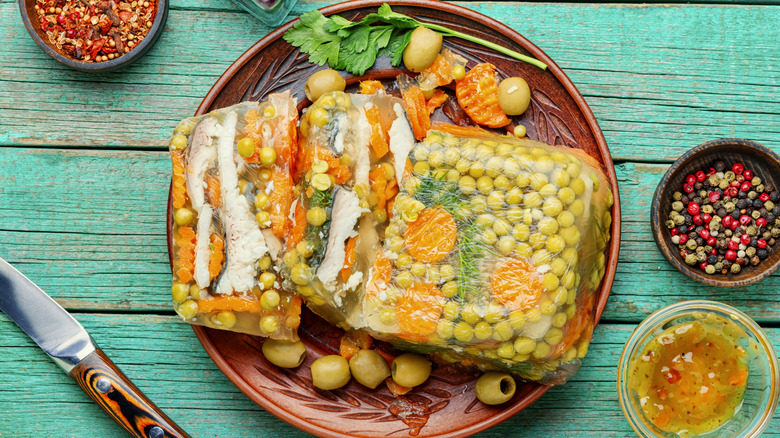
High on the list of regrettable foods is seafood aspic, or any savory foods similarly mummified in gelatin. It's one of those things that modern-day diners can't believe our grandparents ate. Most of us would find it hard to reconcile the idea of sacrificing a can of tuna to such a wrong-headed dish, let alone fresh fish or lobster, unless we're planning to shudder over it theatrically on Instagram. But there's a reason why past generations loved these molded, gelatinous showpieces. Believe it or not, back in the day, this was considered top-tier dining.
Originally, gelatin wasn't something that came out of a box. You know how a really good soup stock will set to a jelly-like consistency? That's thanks to gelatin, which comes from boiling bones, hides, and add-ins like pigs' or chickens' feet, then clarifying the result. Being able to enjoy aspic used to signal that you could afford enough servants to prepare a dish that took a lot of time and effort to make. When it became something everybody had access to, it lost those upscale associations.
Sole Véronique
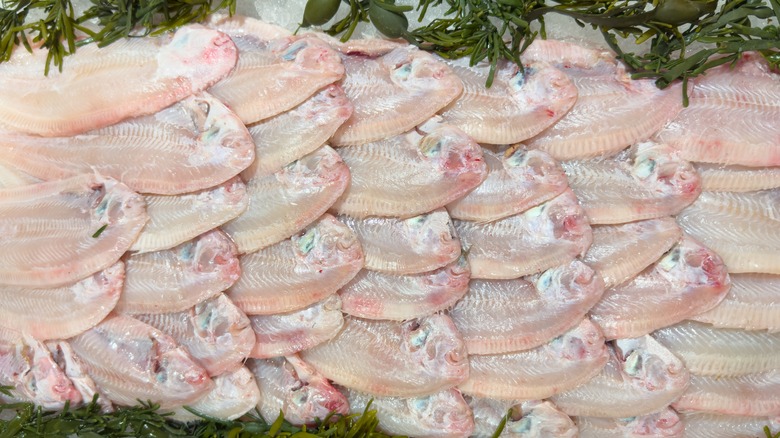
Sole is popular in fine-dining circles because it's an especially delicate variety of white fish. It has to be handled skillfully, otherwise it's easily broken or overcooked. One classic preparation is Sole Meuniere, which famously opened Julia Child's eyes to the glories of French cuisine, and in turn had a big impact on cooking in the United States. Another is Sole Véronique, which — perhaps because it lacks that connection with Julia — hasn't had the same staying power. Still, it's an intriguing and classically French dish, consisting of sole poached in wine, coated in a creamy wine-based sauce, and served with peeled green grapes.
Unlike some well-known dishes, Sole Véronique has an unambiguous origin story. It was created at the turn of the 20th century by Auguste Escoffier, who many consider the father of modern French cuisine. A comic opera called Véronique was one of the big hits of its day and opened in London in 1903 after a successful run in France. Escoffier is said to have created the dish to capitalize on the opera's popularity, serving it at the then-new Ritz Carlton hotel. Grapes with fish may seem like a bit of a stretch, but it's no odder than cranberries with turkey or applesauce with pork, and we know those are delicious pairings.