

8 Tips For Apple Picking This Fall
We may receive a commission on purchases made from links.
As soon as the leaves start to morph into brilliant blazes, that's our sign to grab our cozy sweaters, pumpkin spice lattes, and head out in search of a fall adventure. There's hay rides, spooky movies, pumpkin carving, and scenic saunters through the forest — it's hard to pick a favorite autumn activity. But I think it's safe to say that, for a lot of Americans, the thing they look forward to the most about the season of soup and crisp breezes is apple picking.
I was born and raised in apple country (otherwise known as upstate New York) and, like just about everyone in my hometown, spent some time working at one of the best apple orchards on the East Coast — it's a rite of passage in a town whose official slogan is "home of Applefest."
In this list, I've put my apple-fueled upbringing to the test and outlined some tips and tricks for your next autumn orchard visit. Whether you're going out on your first fruit-focused foray or you're a formidable Fuji forager, these tips will help you get the most out of your excursion, because — believe it or not — there's quite a bit more to apple picking than just snagging a few fruits from a tree and calling it a day. From picking correctly to showing up to the orchard fully prepared, let's learn the ins and outs of America's most adored autumnal activity.
Learn the pricing policy before you go
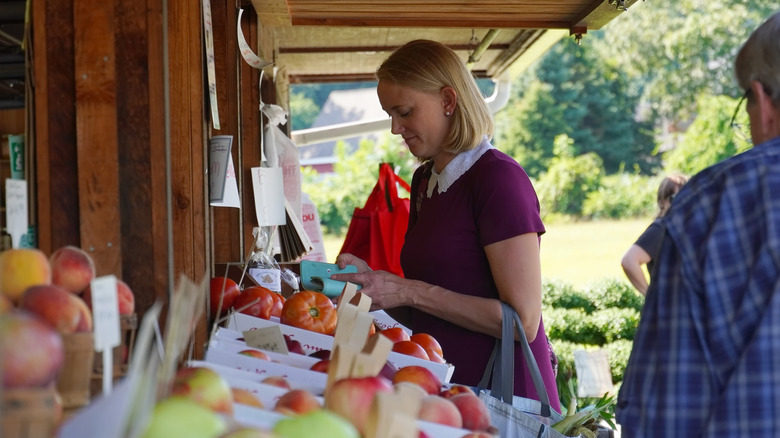
If you've never picked apples before, you're probably wondering how the heck you're supposed to pay for the fruit, when it seems like everyone is just showing up and grabbing as many apples as they want. But there's no one-size-fits-all answer. Every orchard operates a little bit differently when it comes to pricing, so it's important to learn an orchard's policy by calling or visiting its website before showing up.
Typically, an orchard charges for its apples one of two different ways: per pound or per bag. The former policy requires that you pick your apples first, oftentimes using your own bag that you brought from home (but you'll likely be able to purchase a bag in the orchard's store if you forgot yours). Once you're content with the quantity of apples you've gathered, you'll check out before heading to your car. Your apples are weighed, and you'll pay by weight — usually around $2 per pound, depending on how many you buy and the quality of the harvest.
The flat-rate policy involves paying before picking. You'll buy a bag or a bucket from the orchard for a set price, and then fill the bag or bucket with as many apples as you'd like. In this case, you'll be asked not to bring any of your own bags onto the property. It's also important to note that some varieties of apples are more expensive than others, so be sure to ask when you arrive if you'll need a separate bag for some apples so you can pay separately for them.
The early bird gets the... apple
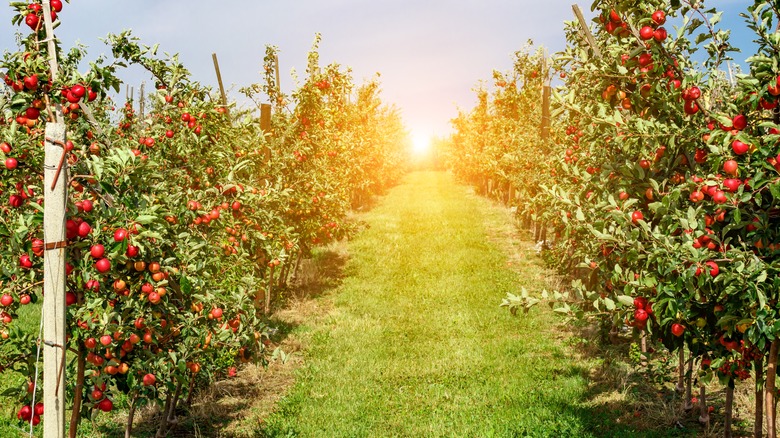
Autumn always feels incredibly fleeting. It's sad to see it fade away so quickly, especially since the brevity of the season means everyone is scrambling to get their fall festivities in. Apple orchards are major victims of the mad fall rush, with the month of October being the busiest time of all. If you're like me and hate crowds, aim for a calm time of day to visit a popular apple orchard.
Midday sees the most crowds, so try to arrive as soon as the orchard is open. Make sure to check the schedule for apple picking specifically, since the orchard's store and pick-your-own sections sometimes differ in opening times. If you show up early, you won't just beat the crowds — you'll have first-pick of the juiciest, ripest apples. Plus, the early morning light peaking through the spindly apple trees makes for some outstanding photos.
Arriving early is a good way to avoid a crowded orchard, but you can take it a step further and try to show up on a weekday, or even a rainy day if you don't mind the mud. Sunny weekends are prime picking time, but on a rainy weekday you and your crew might have the entire orchard all to yourselves, which is worth taking a day off work and getting a little wet, if you ask me.
Dress for mud
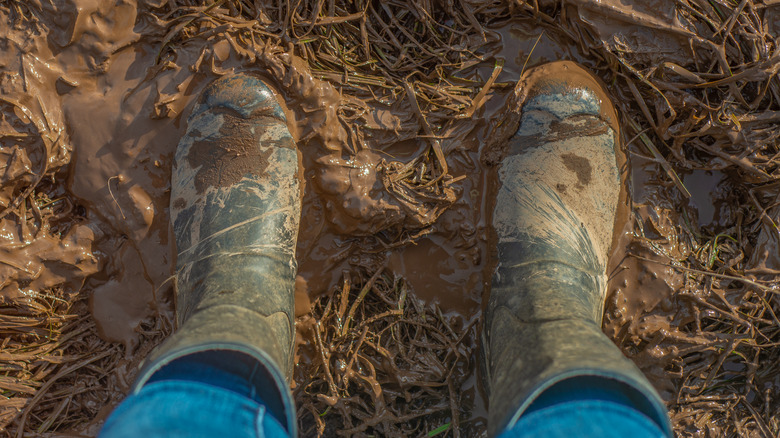
Speaking of mud, whether you show up on a rainy day or not, mud is most likely in the forecast at an apple orchard. The loamy soil that apple trees are planted in is soft, which means foot traffic through the orchard loosens the ground and makes it mushy and wet. So, instead of reaching for your high-heel fashion boots, grab a pair of muck boots or sturdy, waterproof shoes for trudging around in the orchard. I know, I know — they won't look as cute on Instagram, but better some less-than-ideal photos than getting stuck in the muck.
The mud factor is amplified after any sort of rainfall, of course, so play it safe and wear clothes that you don't mind getting dirty. You also never know if the farmers plan to water the trees just before your visit to the orchard, so it's always safe to assume conditions won't be favorable. You'd be surprised at how much a saunter through the orchard can feel like a challenging, wet hike after an hour or two, especially if the orchard is particularly hilly. Good footwear prevents falls and old clothes prevent the dismay of having your favorite autumn outfit ruined.
Get familiar with the different varieties
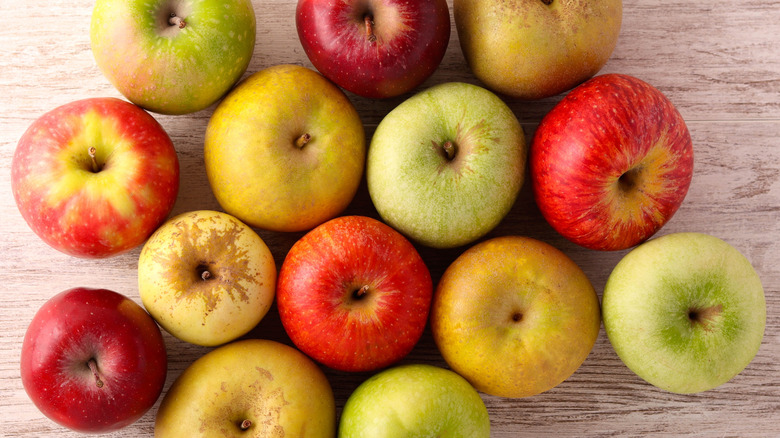
Apple orchards are all home to a wide variety of different apples — sometimes dozens and dozens of different types, some of which might be new and trademarked by the orchard itself. Get to know which apples are at the orchard so you can make room for all the different types you want to take home. It's also wise to know which apples are in season so you don't find yourself wandering through a barren row of trees or a section with only unripe fruit. But don't worry — you'll likely get a map of the orchard when you show up, and it will explain which fruit is ready to be picked and which rows aren't ready yet.
It might seem like an apple is just an apple, but certain varieties are ideal for, say, applesauce, while other varieties make whipping up applesauce harder than it needs to be. Learn a little bit about each type of fruit at the orchard so you can fill your bag with your favorites. Some varieties are softer and less sweet while others are crisp and candy-sweet. If you're looking for a perfectly crisp snacking apple or salad topper, go for Honeycrisp, Gala, or Zestar (the latter being a real sleeper hit and a personal favorite of mine). For varieties that strike the ideal balance between soft and crisp, tart and sweet — the best types of apples for pie, that is — go for Golden Delicious or McIntosh, just to name a few.
Learn the proper picking technique
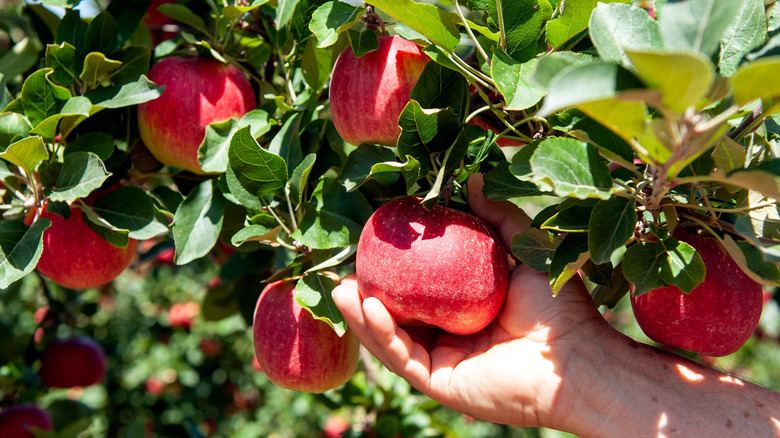
Believe it or not, there is a right way and a wrong way to pick apples. It's not as easy as it sounds to pluck an apple off a tree — not without causing a catastrophic mess, that is. But the proper picking technique is simple to learn, and the farmers at the orchard will be pleased as punch (pleased as cider?) to see you putting it to use.
To pluck an apple like a seasoned pro, simply grab the apple and twist it until it naturally and gracefully detaches from the tree branch — no yanking, pulling, or shaking required. As soon as you attempt to yank the apple to get it off the tree, you'll notice it requires a lot more force than you'd imagine. The forced need to pull it off the tree can make other ripe fruit fall and tumble to the ground. Once those apples are on the ground, they're essentially wasted. No one who shows up to an orchard to pick fruit from trees wants to take anything home that's been laying on the ground, even if it looks fresh and blemish-free. So, to curb apple waste and help make the pick-your-own experience great for guests and farmers alike, always employ the twist method.
Don't pick unripe apples
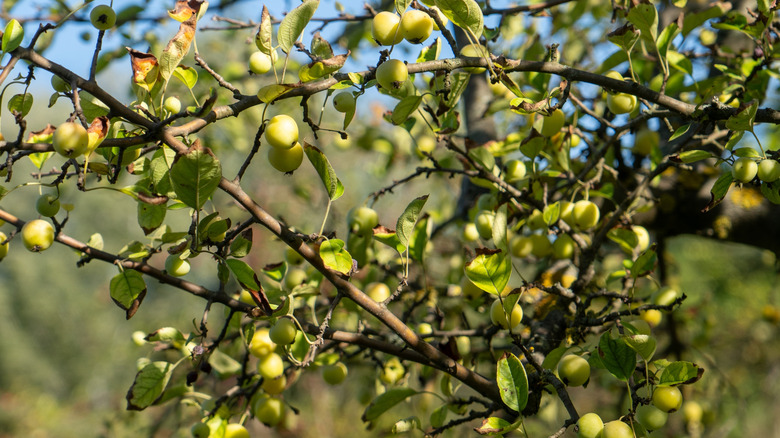
At the grocery store, all the fruit for sale is ripe and ready to be devoured. But the orchard is a wild, lawless land full of tasty and... not so tasty fruit. While you're out browsing the apples on the trees, know what to look for to make sure you're only plucking ripe, juicy fruits and leaving the bitter, unripe baby fruits to mature.
If you're looking for red apple varieties (as opposed to green varieties like Granny Smith), only pick those that are primarily red. If more than 20% of the fruit is covered in green patches, that probably means it still needs some time on the tree. If you're still unsure of an apple's ripeness, put the brown stem rule to use. Check the stem before picking — if the stem is brown — as opposed to green — then it's likely ripe, juicy, and ready to be picked.
There are quite a few reasons to leave unripe apples on the tree. For starters, they don't taste nearly as good as ripe fruit. They're far less sweet and have a strangely chalky mouthfeel. If you accidentally wind up with a few unripe morsels in your bag, you can save them for sneaking into a pie or other baked treat, but don't go out of your way to snag unripe fruit. Leaving the unripe fruit on the tree also means that future guests to the orchard can have fresh apples to pick from.
Opt for a fruit-picking tool, if they're available
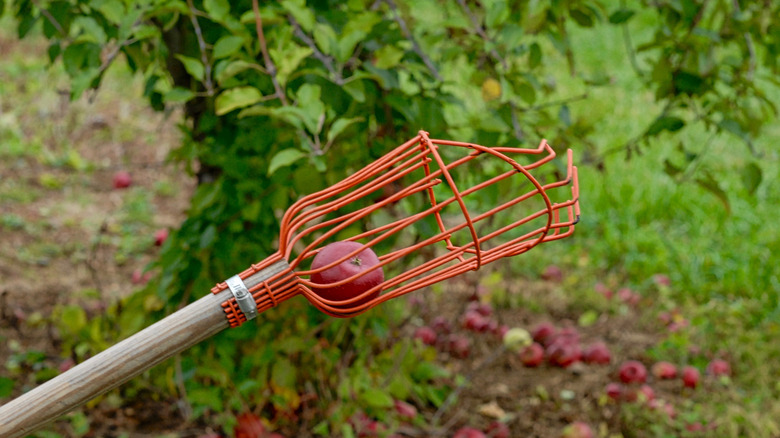
Imagine trudging through row after row of apple trees, only to spot your dream fruit — plump, brilliantly red, and completely blemish-free — dangling just out of reach. Obviously this is a common occurrence on the orchard. But, whatever you do, don't try to shake the apple down. The biggest no-no in the world of apple picking is shaking the fruit trees. Shaking the trees causes too many apples to fall onto the ground and often results in damage to the tree itself.
If you'd like to have access to hard-to-reach fruit, ask about renting a fruit-picking tool. Some orchards rent out fruit pickers — sometimes called picker poles — that resemble a small basket with a claw on the end of a long wooden pole. The metal claw traps the apple inside the basket and gently separates it from the tree branch so you can bring it down. These are especially handy if you arrive at the orchard late or early in the season, when the trees aren't necessarily brimming with fruit.
Be careful when using the picker pole. It's a little heavy and very long, so don't let young children use it, and make sure to supervise older children when they wield the power of the fruit picker. Once you locate your apple and go to pluck it, use caution with the metal basket; it's easy to pierce the apple by accident, so pick slowly and with care.
Have a plan for your apples
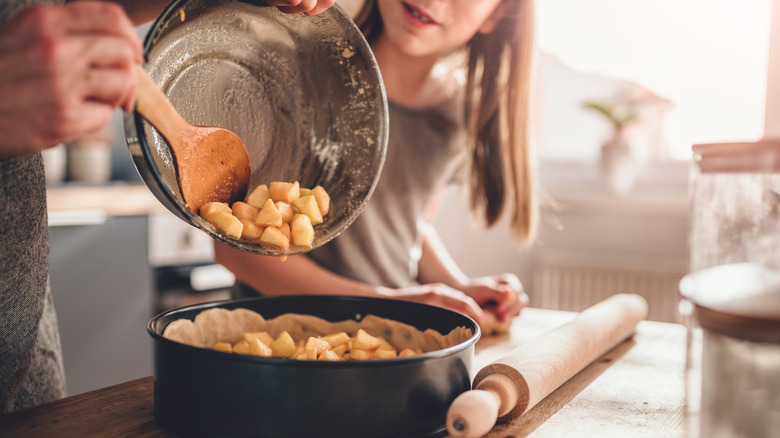
After your day at the orchard, you're going to have a lot — and I mean a lot — of apples. If you bring the whole family, everyone's going to want to do their fair share of picking, so don't be surprised when a plan to take home 10 pounds of apples turns into 40 pounds of fruit sitting in your trunk while you sweat on the drive home trying to figure out what to do with your red, shiny bounty. Excess apple anxiety is real, and one of the most terrifying perils of autumn, but it doesn't have to be that way.
Before you plan your trip to the orchard, assume that your kitchen will be full to the brim with apples as soon as you return home. Make a preemptive plan for foods to make so you can get to work as soon as possible. Gather all the essential ingredients for making mulled cider ahead of time, or stock the pantry with plenty of baking supplies to craft pies, breads, cookies, apple crisp — you name it. Fresh, homemade applesauce tastes eons better than the jarred or canned stuff from the grocery store, and it's a great way to use up lots of fruit before it goes bad. You can get extra creative with your leftover apples and whip up your own apple butter, sweet-and-savory soups, and even dry apple slices in a dehydrator so you can enjoy the literal fruits of your labor well into winter.