

15 Iconic Ice Cream Flavors And How They Were Invented
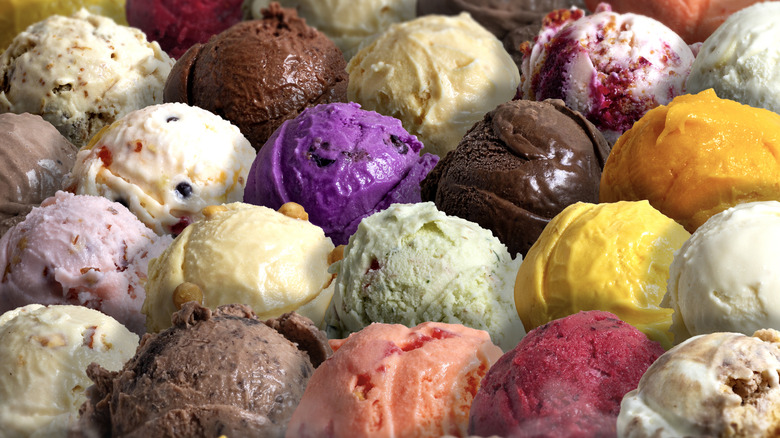
You walk into an ice cream parlor and face a wall of colorful choices: Will it be a decadently rich chocolate chip kind of day? Or will it be something fruitier, like cherry or tutti frutti? At a fancier spot, you might even venture into pistachio or salted caramel territory. No matter what you choose, every scoop has a backstory — some of which might be older (or newer) than you'd expect.
Frozen treats have existed since as early as 4000 BC, when ancient cultures in China and the Middle East enjoyed chilled confections made from milk, rice, and snow. The Tang dynasty left some of the earliest records of frozen milk desserts. By the 1600s, Italian chefs were experimenting with early forms of sorbet and gelato, paving the way for the modern scoop. When ice cream eventually crossed the Atlantic with European colonists, it became a fast favorite, even among founding fathers like George Washington and Thomas Jefferson.
From plain-old vanilla to more modern mashups, ice cream flavors tell a story of innovation that continues to this day. Read on to discover how your favorite flavors came to be the ice cream icons they are now.
Chocolate
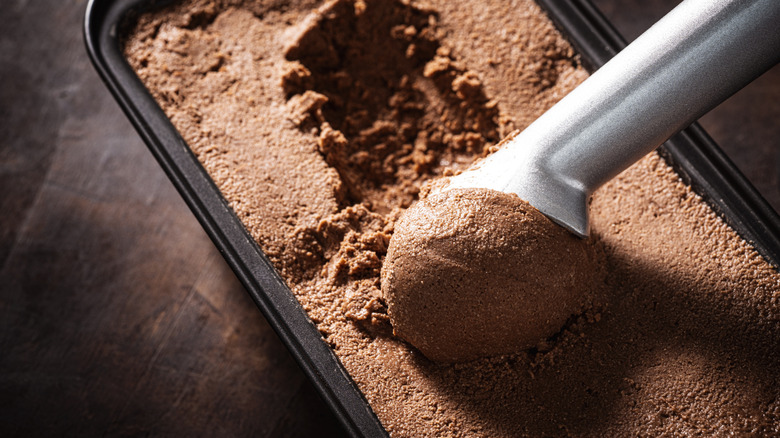
While about 30% of ice cream lovers claim vanilla as their favorite flavor, only 10% pledge their ice cream allegiance to chocolate. Even though vanilla might be seen as the default, chocolate likely came before vanilla as an ice cream flavor — a twist that actually makes sense when you consider how much easier and cheaper it once was to get cocoa than vanilla.
Chocolate's story begins with the Olmec and Maya civilizations of present-day Mexico, where it was enjoyed as a frothy, bitter drink made from ground cacao beans. When Spanish conquistadors arrived in the 1500s, they brought this mysterious beverage back to Europe, where they evolved it into a sweet and spiced luxury enjoyed only by the upper echelons of society. The city of Naples, then part of the Spanish Empire, was one of the first European cities to experiment with chocolate in the kitchen.
In 1692, Neapolitan chef Antonio Latini recorded what's believed to be the first chocolate ice cream recipe in his cookbook "Lo scalco alla moderna" (The Modern Steward). At the time, freezing drinks like coffee, tea, and chocolate was a popular food trend. Latini's version more closely resembled a frozen chocolate mousse, but it marked the start of chocolate being served as an icy treat.
Vanilla
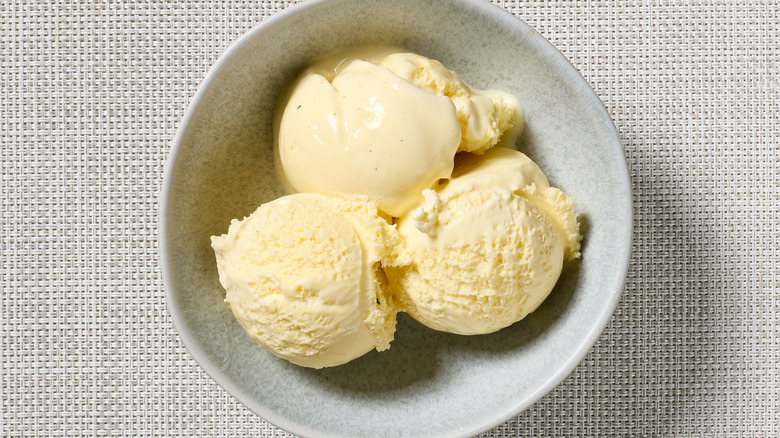
Like chocolate, vanilla originally comes from Mexico, where vanilla seed pods are harvested from the vanilla orchid plant. Spanish explorer Hernán Cortés is credited with bringing vanilla to Europe in the 16th century, but at first, it was mainly used to flavor chocolate. Only until much later did vanilla earn its own spotlight as a distinct flavor.
By the late 1600s, vanilla began appearing in elite European kitchens, particularly in France, where chefs experimented with adding it to creams and custards. Because the vanilla orchid only grew in Mexico, the spice remained rare and expensive for centuries; in fact, it's still the world's second-most costly spice after saffron, as anyone who buys real vanilla extract could tell you! Not until the mid-1800s, when growers learned how to hand-pollinate the plant and artificial extracts were developed, did vanilla become a flavor in its own right.
In the United States, Thomas Jefferson helped popularize vanilla ice cream after discovering it in France. He even recorded the first known American ice cream recipe — and it was for vanilla. Once reserved for royalty, vanilla would eventually become the world's most beloved "basic" flavor, still dominating the ice cream charts to this day.
Strawberry
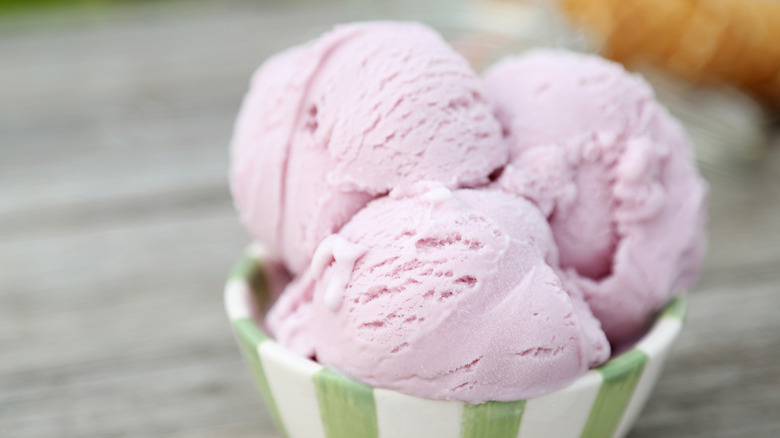
Completing the "Big Three" classic ice cream flavors, alongside chocolate and vanilla, is the prettiest scoop of them all: Strawberry. Strawberry ice cream has been around for well over 200 years. While its exact origin as a flavor is unknown, it famously got the presidential seal of approval in 1813. First Lady Dolley Madison served it at her husband James Madison's second inauguration party, long before freezers even existed. This culinary feat was accomplished using large blocks of ice stored in basement vaults and insulated with hay, in order for all the guests to enjoy this newfound pink-hued flavor.
Like vanilla, strawberry owes part of its rise to America's ice cream-loving presidents: Thomas Jefferson helped make ice cream popular, and the Madisons made it fancier by incorporating fruit. If one thing has stayed consistent in the Oval Office throughout the years, it's that U.S. presidents do seem to enjoy eating ice cream just like the rest of us.
Neapolitan
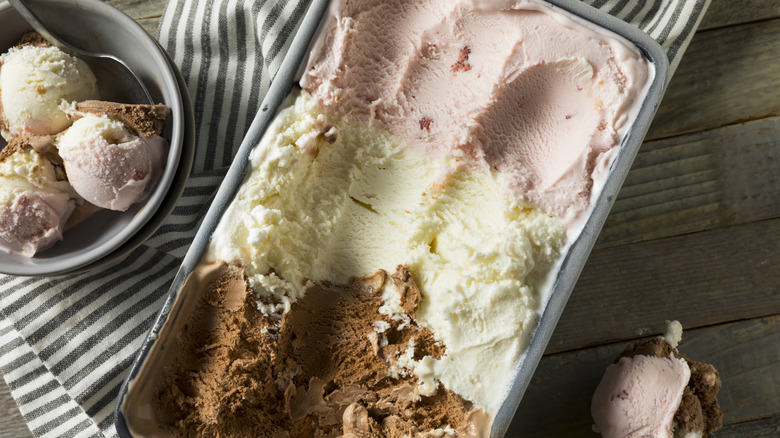
Neapolitan ice cream is instantly recognizable: Three colorful stripes of chocolate, vanilla, and strawberry packed neatly into one tub. Technically, "Neapolitan" doesn't refer to a specific flavor at all — it's the name for any trio of ice creams served side by side, a style inspired by the ice cream traditions of Naples, Italy.
In the 18th and 19th centuries, many of the best ice cream shops were run by Italians, and their creations became known as "Italian" or "Neapolitan" ice creams. Along with their confectionery skills, Italian immigrants brought over a specific type of layered treat called "spumoni," traditionally made with chocolate, pistachio, and cherry. Spumoni was first introduced to Americans around 1870 and often featured bright colors and candied fruit, looking visually similar to the Neapolitan we know today.
Eventually, Neapolitan ice cream came to refer to the trio of pistachio, vanilla, and cherry ice cream in one tub, arranged to look like the Italian flag. Over time, other vendors would adopt it using the more familiar American flavors of chocolate, vanilla, and strawberry as the standard trio. With three flavors for the price of one, Neapolitan was a perfect addition to ice cream parlors across the U.S.
Mint chocolate chip
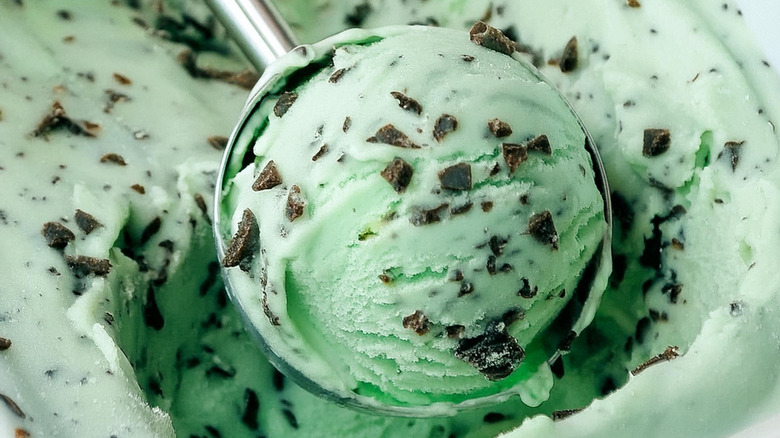
That unmistakable pastel green hue behind the glass can only mean one thing: Mint chocolate chip, one of America's all-time favorite ice cream flavors. Beloved for its refreshing bite and balance of sweet and cool, the signature duo of mint and chocolate shows up everywhere in American desserts, from Girl Scout Thin Mints to after-dinner York Peppermint Patties.
Mint chocolate chip ice cream was popularized in 1973, thanks to a culinary student at South Devon College in England. Marilyn Ricketts entered a competition to design a dessert for the wedding of Princess Anne and Captain Mark Phillips at Westminster Abbey. Her winning creation, originally called "Mint Royale," was a hit, and the combination quickly caught on around the world.
But across the Atlantic, Americans had already been scooping a similar flavor for decades. When Baskin-Robbins opened in California in 1945, one of its original 31 flavors was Chocolate Mint. So while Ricketts may have refined it for royalty, the flavor already had fans in America. Today, mint chocolate chip's refreshing taste makes it a favorite for princesses and plebeians alike.
Cookies and cream
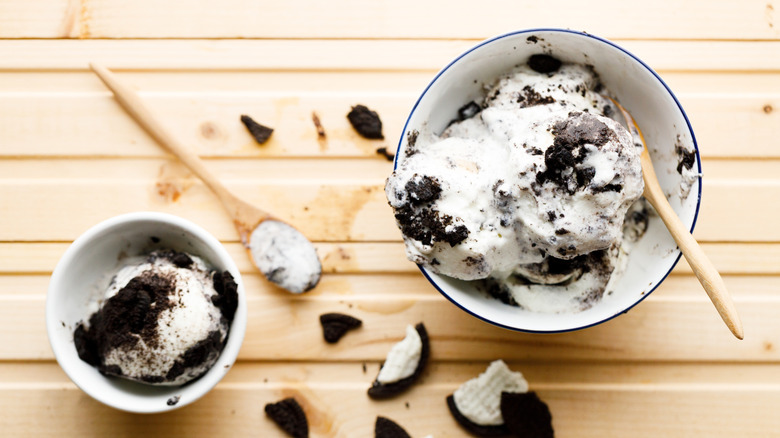
Cookies and cream — basically crushed Oreos embedded in vanilla ice cream — is one of America's most popular flavors. While nearly everyone agrees on how delicious it is, no one can quite agree on who invented it. Some say it was first scooped at an ice cream shop in Oregon, while others point to Massachusetts. Companies like Dryer's, Edy's, Blue Bell, and Herrell's have all claimed at some point to have invented it. But perhaps the most credible story comes from South Dakota State University.
In the mid-1970s, dairy science professor Shirley Seas noticed restaurant staff in Atlantic City mixing Oreo cookies into vanilla ice cream. Intrigued, he brought the idea back to SDSU's dairy lab in Brookings, where students made a batch for the campus cafeteria. Originally called Oreo ice cream, they changed the name to "Cookies 'N Cream" to avoid legal trouble. By 1979, the flavor was born and would only grow in popularity from there.
Though SDSU never patented its creation, students there still proudly claim it. No matter who invented it, cookies and cream was a stroke of ice cream genius.
Rocky Road
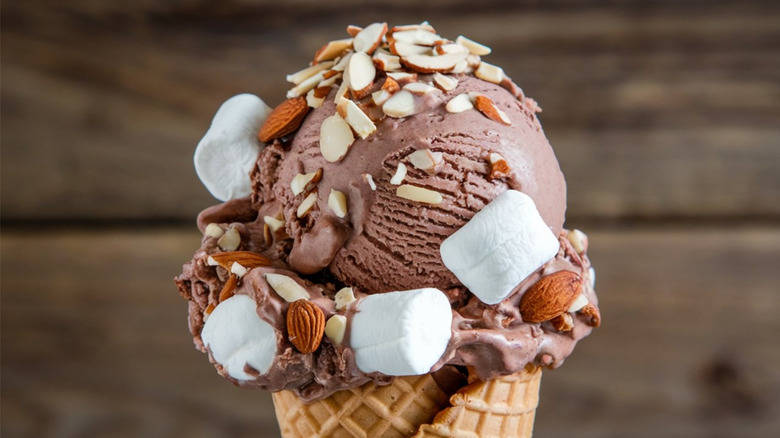
Rocky Road could be considered the ice cream world's first mix-in flavor, blending creamy ice cream with crunchy and chewy additions. According to legend, its creation dates back to 1929, when ice cream maker William Dreyer and candy maker Joseph Edy teamed up in Oakland, California. During the Great Depression — a "rocky" time for America — Dreyer supposedly invented the flavor by using his wife's sewing scissors to cut marshmallows into a chocolate ice cream base studded with walnuts. The duo mass-produced the new flavor, giving the country a bit of sweetness and humor during a bleak decade.
But the name "Rocky Road" may have existed long before. In the mid-1800s in Australia, settlers used the term for a confection of sweets, nuts, and dried fruit; essentially, a proto-trail mix. And just down the road from Dreyer's and Edy's, Fentons Creamery also claims to have invented the flavor, swapping walnuts for almonds in their signature version.
Whoever first dreamed it up, Rocky Road's mix of chocolate, nuts, and marshmallow offered Depression-era Americans a little joy in rocky times.
Butter pecan
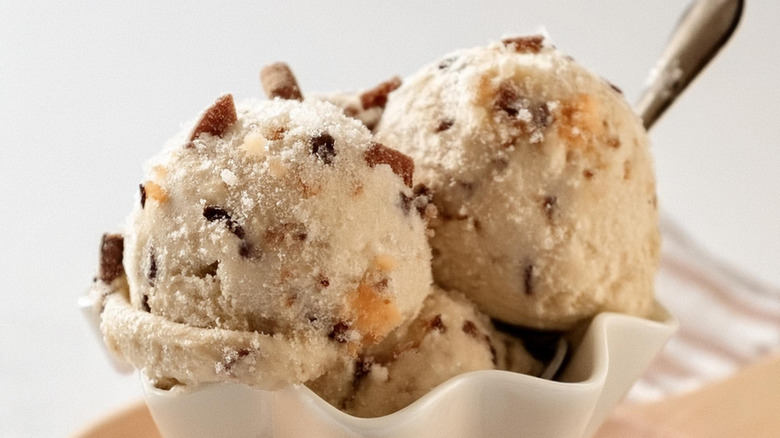
Butter pecan has long been a favorite in the United States, and in 2024, it finally cracked the top five most popular ice cream flavors nationwide. In the South, it's just as popular as vanilla and chocolate, and there might be a few reasons why. Pecans naturally grow in the region, making them an accessible ingredient. However, the flavor's popularity may also be tied to the South's history of Jim Crow-era discrimination.
The exact origin of butter pecan ice cream is unclear, but it may have arisen out of necessity for Black Americans navigating segregated ice cream shops during the Jim Crow era that lasted until the 1960s. As Maya Angelou and Audre Lorde recount in their autobiographies, Black customers were often discouraged — or outright denied — the option of vanilla ice cream, leaving them to choose from other flavors like butter pecan.
According to Darryl Goodner, a host of the Butter Pecan Podcast, which discusses the intersections of race and food: "There is always an undercurrent of racism even in the most seemingly benign issues like ice cream. Butter pecan is indicative of a lot of things about Black people as a culture: When you don't have this option, you figure out the other one." In this way, butter pecan's rise to becoming a top ice cream flavor reflects resilience despite its origins in a dark chapter of American history.
Rum raisin
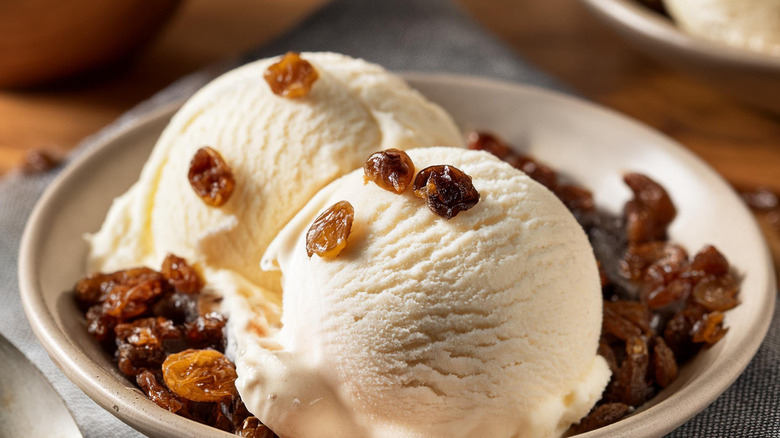
In the U.S., rum raisin might not be the trendiest ice cream option, but it certainly has a rich history. Its origins trace all the way back to Sicily, where the first Málaga gelato was created. Originally made with wine instead of rum, the recipe soaked raisins overnight before folding them into vanilla gelato, offering a sweetly boozy taste. These Málaga raisins are naturally high in sugar, making them flavorful without needing additives.
As a flavor, rum raisin quickly gained popularity in desserts beyond gelato, including custards, puddings, pies, cookies, and cakes. While no single chef, restaurant, or company claims to have invented rum raisin ice cream, U.S. newspaper ads suggest the flavor was circulating by the 1930s. A 1932 Ardmore Daily Advertiser display advertised "Extra Special. Rum Raisin Ice Cream. Entirely New," highlighting the treat's novelty at the time.
Rum raisin later enjoyed widespread popularity in the 1970s and 1980s, and its presence was cemented when Häagen-Dazs introduced its version to the U.S. market in the 1980s. Today, rum raisin remains a classic flavor, appreciated for its blend of sweet raisins and a hint of booziness.
Cherry Garcia
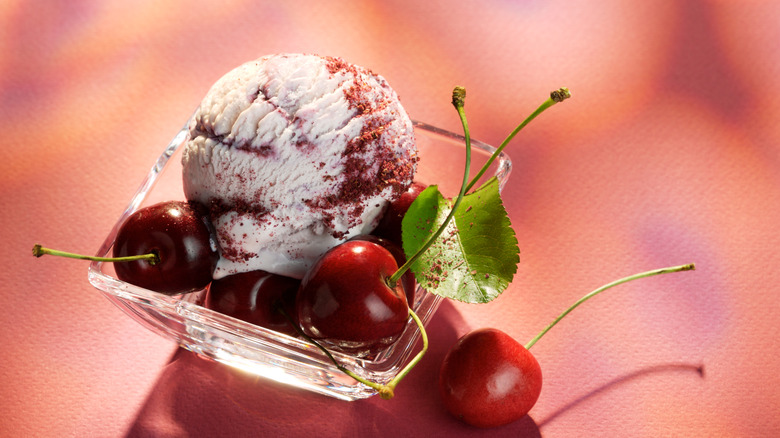
Launched on February 15, 1987, Cherry Garcia quickly earned its place as one of Ben & Jerry's most enduring ice cream flavors. Its origins, however, are as unconventional as the name itself: It came from a devoted fan of both ice cream and the Grateful Dead.
In 1986, an anonymous admirer dropped a note at her local Scoop Shop in Maine, proposing a cherry-based tribute to the Grateful Dead's guitarist Jerry Garcia. She followed up with a postcard to the company's Burlington headquarters: "We're great fans of the Grateful Dead, and we're great fans of your ice cream. Why don't you make a cherry flavor and call it Cherry Garcia? You know it will sell because Dead paraphernalia always sells. We are talking good business sense here, plus it will be a real hoot for the fans."
The fan, later revealed as Jane Williamson, eventually attended a shareholders' meeting as the guest of honor, earning a standing ovation and a year's supply of ice cream. The first eight pints were sent directly to Jerry Garcia himself, who gave them his blessing. According to his publicist, he said, "As long as they don't name a motor oil after me, it's fine with me."
Chocolate chip cookie dough
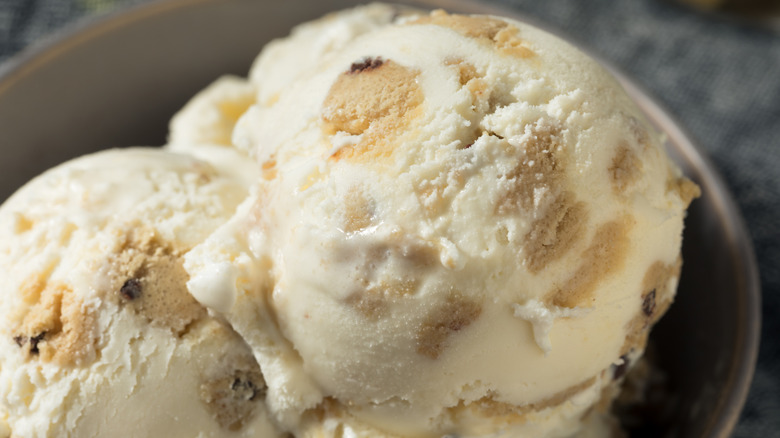
The origin of chocolate chip cookie dough ice cream can be traced back to Ben & Jerry's very first Scoop Shop, located in a converted gas station in Burlington, Vermont. One day, an anonymous fan slipped a suggestion into the shop's comment box: Mix chunks of cookie dough into vanilla ice cream. The team gave it a shot, and the result was an instant hit. Customers couldn't get enough of the chewy, doughy globs of cookie dough swirled throughout the creamy base.
When the flavor finally hit grocery store shelves in 1991, it became one of Ben & Jerry's biggest successes and subsequently inspired countless imitators. Fans have since discovered that Ben & Jerry's version still packs in more cookie dough than any other brand — a real testament to the quality of its product. What began as a playful experiment has become one of America's most widespread and beloved flavors.
Salted caramel
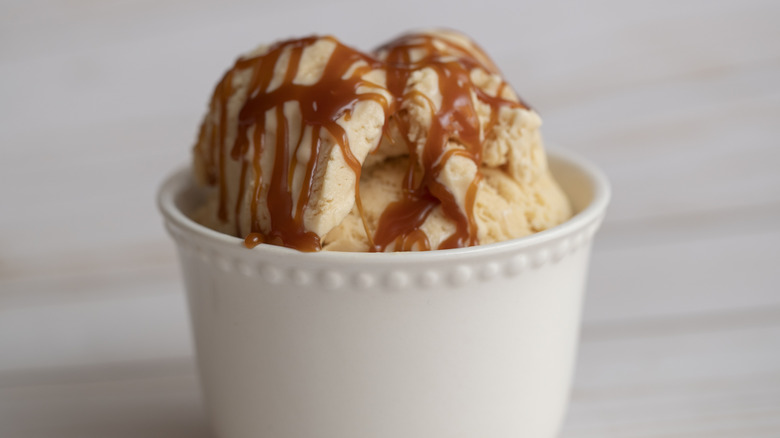
Few toppings can elevate a sundae quite like salted caramel. The perfect balance of buttery sweetness and a touch of salt creates an addictive combination that almost demands a second helping.
Caramel ice cream itself has been around for centuries: The first known recipe appeared in "The Art of Cookery Made Plain and Easy" by Hannah Glasse in 1747. In this iconic antique cookbook, her version involved churning cream, sugar, and caramelized sugar into a simple yet decadent treat.
Salted caramel, however, is a much newer invention. While the idea of pairing salt and caramel first appeared in chocolate confections during the 1970s, the flavor didn't make its way into ice cream until the early 2000s. One of the first chefs to popularize it was Jackie Cuscuna in New York City, who added a pinch of salt to her caramel sauce. Before long, salted caramel wasn't just a topping — it was an ice cream flavor phenomenon. Now, ice cream shops and grocery stores alike carry salted caramel ice cream, appealing to anyone looking to scratch that sweet-and-salty itch.
Tutti frutti
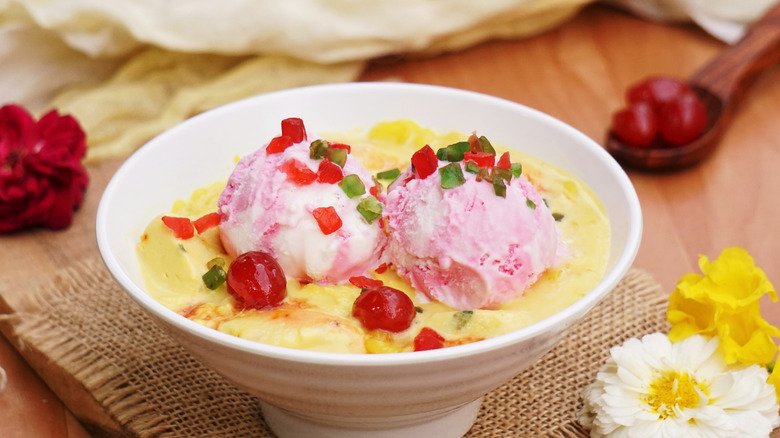
When you hear "tutti frutti," you might think of the Little Richard song before the old-school ice cream flavor. But long before it rocked the airwaves, the flavor it was named after made appearances in ice cream parlors across the U.S.
The phrase "tutti frutti" comes from Italian, meaning "all fruits." In Italy, this referred to a medley of candied or dried fruits finely chopped and often soaked in brandy. This vibrant mix found its way into ice cream, cakes, and pastries, giving them a festive appearance for the holidays. Tiny, bright, and colorful, it was like an old-school Funfetti — without all the artificial dyes.
When the flavor crossed the Atlantic, Americans embraced and reimagined it. In 1950, Kentucky ice cream maker Roy Motherhead famously claimed to have invented tutti frutti ice cream for his daughter, Tutti. But records show the flavor had already appeared in American cookbooks as early as 1874, proving it was around long before. The U.S. may have helped make it a household name, but the idea was purely Italian.
Pistachio
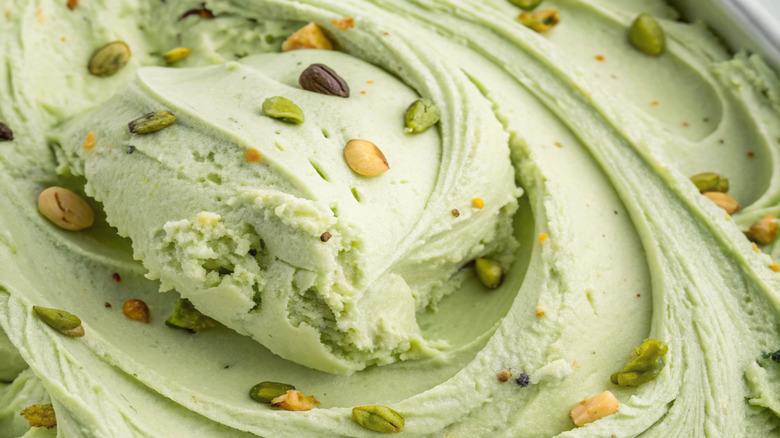
Pistachio gelato has been a beloved treat in Italy for centuries, especially on the island of Sicily, where the world's most prized pistachios are grown on the slopes of Mount Etna. However, when gelato came to the United States and became ice cream, one man in Pennsylvania is said to have invented the pistachio ice cream flavor. James Wood Parkinson, a Philadelphia restaurateur, is said to have whipped up the first batch sometime around 1940. The flavor soon spread to ice cream parlors across the country, charming taste buds with its delicate balance of sweet cream and salty nuttiness.
Interestingly, not every scoop of pistachio ice cream actually includes pistachios. Many early recipes relied on almond extract and green food coloring to emulate that signature look and flavor. Even so, pistachio remains a timeless favorite today, gracing menus from old-school soda fountains to Häagen-Dazs cartons in every grocery freezer.
Birthday cake
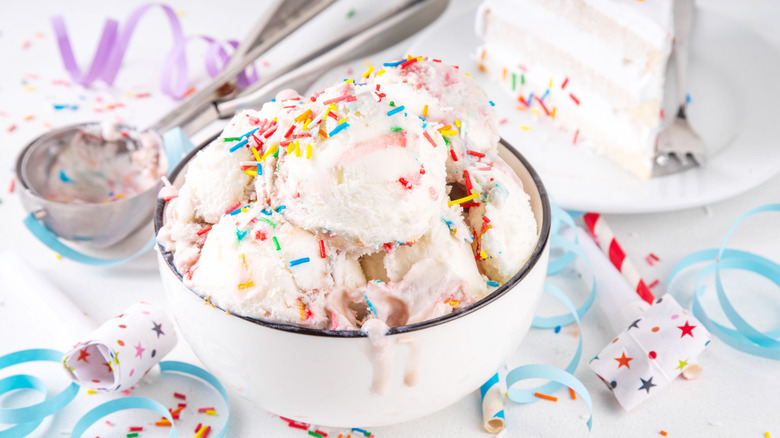
Ever wondered what makes birthday cake ice cream different from plain vanilla? It's essentially vanilla with a twist — somehow sweeter, more powdery, and a little extra artificial in a way that evokes childhood nostalgia. Rainbow sprinkles are often folded in, adding bursts of color and crunch, and the flavor itself sometimes carries hints of almond or cherry, giving it that unmistakable "cake batter" vibe.
The origin of birthday cake ice cream is murky, as with many indulgent flavors, but it's become a favorite for kids and nostalgic adults alike. Cold Stone Creamery claims to have introduced the Cake Batter ice cream flavor in 2003, but the concept of fun, sprinkle-filled cake goes further back. In 1989, Pillsbury launched their famous Funfetti cake mix, with colorful sprinkles already mixed in, laying the foundation for the flavor's eventual popularity.
By the 2010s, The New York Times was reporting on the resurgence of everything birthday-cake-flavored, proving that this playful, sugary scoop remains a perennial favorite. For both kids and adults alike, birthday cake ice cream carries a little extra magic.