

A Chef's 13 Secret Ingredients For Shockingly Good Caramelized Onions
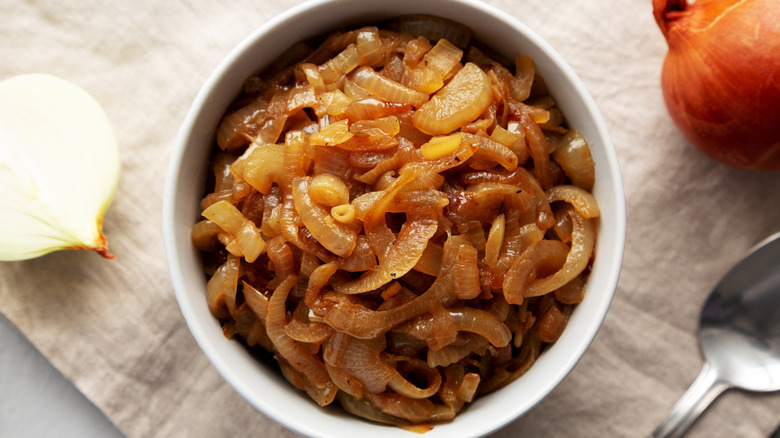
As a chef and recipe designer, I'm often surprised by how many recipes suggest cooking onions for just five minutes before adding other ingredients. Of course, there's a time and a place for al dente onions that retain a slight crunch and some bitterness. However, if you're looking for a buttery sweetness, then it's best to caramelize the onions, which takes patience. It's worth the extra time and effort, though, to create melt-in-your-mouth, ultra-sweet onions that will enhance your final recipe. In addition to patience, there are many chef-approved ingredients that should be on your radar if you want shockingly good caramelized onions.
Whether at work or home, I enjoy thinking outside the box and cooking with unique ingredients that bring balance to my recipes. Most savory dishes can be elevated with umami, while vinegars and other acids are essential for a well-rounded mouthfeel. I also like to try out alternative sweeteners that have more interesting flavors than plain white sugar. Caramelized onion recipes benefit from experimentation too and can be tweaked to fit your taste preferences or match a specific dish. Use one or more of these secret ingredients to create the caramelized onions of your dreams.
Brown sugar
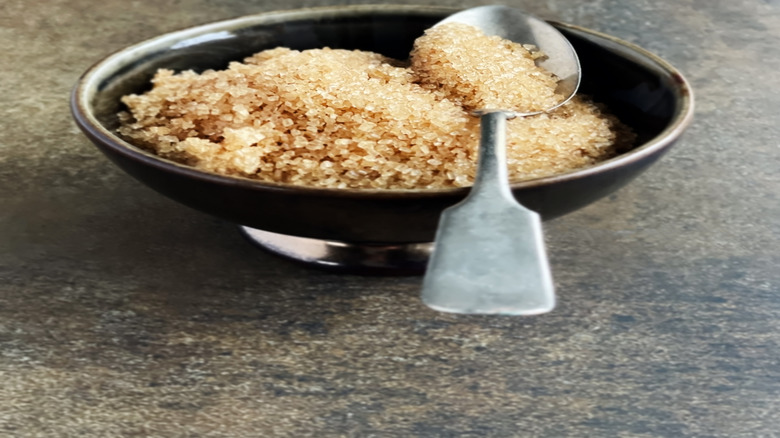
When making caramelized onions from scratch, you'll want to use a rich fat, like extra virgin olive oil (EVOO), or a combination of EVOO and butter. Grass-fed butter is always a great choice, as it has a sweet, slightly grassy undertone and tends to be ultra creamy. Besides fat, which helps to brown the onions, your next goal is to sweeten the onions. They will sweeten naturally with heat, but if you'd like to give them an extra sugary kick, I recommend using brown sugar over white granulated sugar. This is because the molasses in brown sugar helps to reproduce the smoky, caramelized elements of the cooked onions while enhancing the overall flavor.
This simple addition will elevate your caramelized onions when used in moderation. The goal is not to create a dessert-style dish but to subtly enhance the natural sugars of the vegetable. For two large onions, half a teaspoon of brown sugar is plenty. Personally, I'd use a little less when working with sweeter onion varieties, like Vidalia or Maui onions. However, if you don't have the time to wait for the onions to fully caramelize, then feel free to add more to counter the bitterness.
Balsamic vinegar
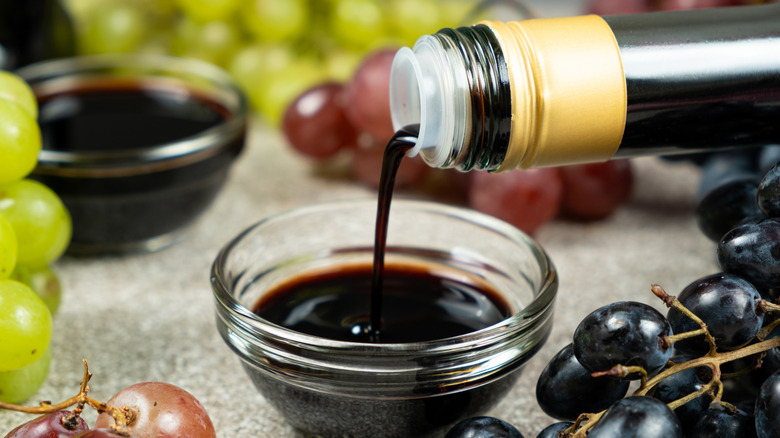
Perhaps one of my favorite additions to caramelized onions is balsamic vinegar. When I taste my cooking and sense that something's missing, it's usually acid. Acidity helps to create a rounded mouthfeel, and while onions have a natural acidity, this is often lost during caramelization. Vinegar becomes sweeter as it reduces and can even thicken into a sticky syrup. Balsamic vinegar is particularly famous for being rich, sweet, and tangy, and it can give your onions a punchy, mouthwatering intensity while deepening their color.
You'll want to add the balsamic vinegar about 10 minutes before the onions finish caramelizing. If you add it too soon, it may stick to your pan and burn; add it too late, and it will retain too much of the acidity that we are looking to cook off. Just a splash of vinegar for a full pan of onions will do the trick. Balsamic vinegar can also speed up the caramelization because it immediately sweetens the onions once added, and the extra liquid will help them soften more quickly. These bold-flavored caramelized onions are great in salads, pair well with gamey meats and earthy vegetables, and work with many pasta dishes. Typically, if the dish pairs well with red wine, you should consider adding balsamic vinegar to those onions.
Bourbon
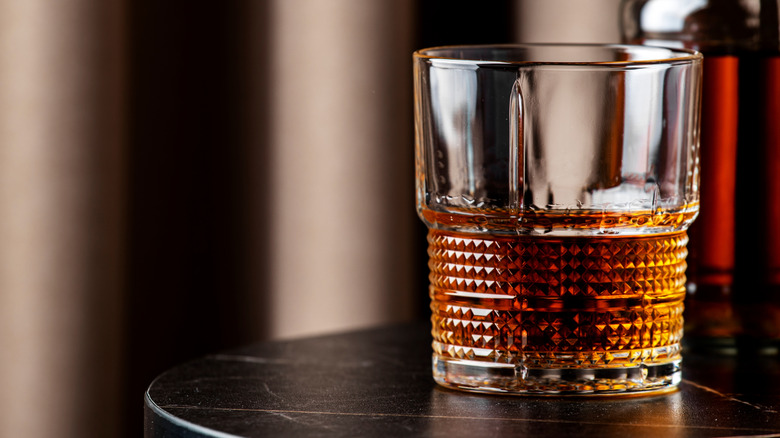
Adding alcohol to your caramelized onions can greatly improve them. Cooking with alcohol can intensify flavors. It does this by helping to release the aromatic compounds of the food into the air, triggering our olfactory glands, and creating a richer dining experience. Our sense of smell greatly contributes to how we perceive flavor, which is why if you hold your nose and eat something, it's extremely hard to taste it. So, when bourbon is added to caramelized onions, it not only imbues the onions with the heavenly flavors of the whiskey but also enhances the flavor of the onions themselves.
Bourbon is known for its smooth vanilla and caramel notes and often has a sweet, honeyed finish. Some expressions also have touches of stone fruit or nuts. These bourbon notes help round out the flavor of the onions, boost the complexity, and add a slightly smoky aspect. Use just a splash of bourbon and let it simmer with the onions for at least 15 minutes to allow the alcohol enough time to start cooking off. This will leave behind those heavenly flavors without the sharp intensity of the whiskey.
Maple syrup
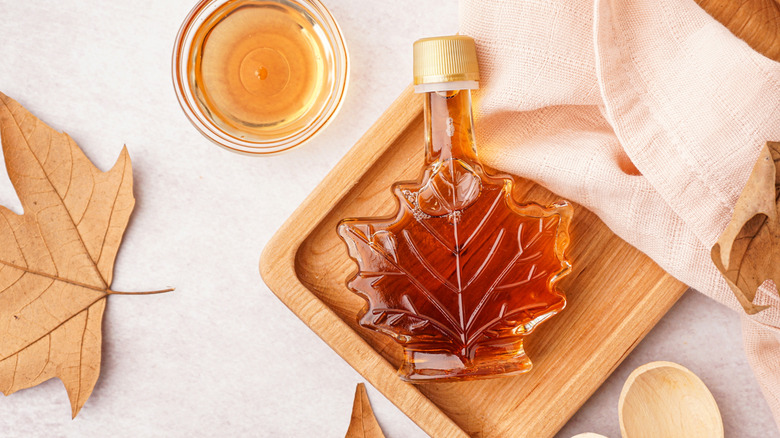
As a born-and-raised Vermonter, I use maple syrup in just about everything. Seriously, I don't even own a bag of white sugar because I use maple syrup in my cakes, cookies, marinades, and coffee. One of the best uses of maple syrup in savory cooking is to enhance the sweetness of caramelized onions. Plus, the supporting flavors complement the caramelization of the vegetable beautifully.
Pure maple syrup, for those who haven't grown up around it, is nothing like imitation maple syrup. It has a unique, smoky flavor, a bold sweetness, and a slightly woody aspect. Some describe it as reminiscent of burnt sugar, but not as bitter. The syrup has already been reduced, so it won't thicken much more when added to onions. Since one tablespoon of maple syrup contains around 12 grams of sugar, you won't need more than a drizzle if you're cooking two large onions. The onions will sweeten on their own thanks to their natural sugars, so the syrup will simply serve as an enhancement. The darker the syrup, the bolder the taste, so I suggest opting for Grade A Dark or Very Dark maple syrup for the most flavor.
Honey
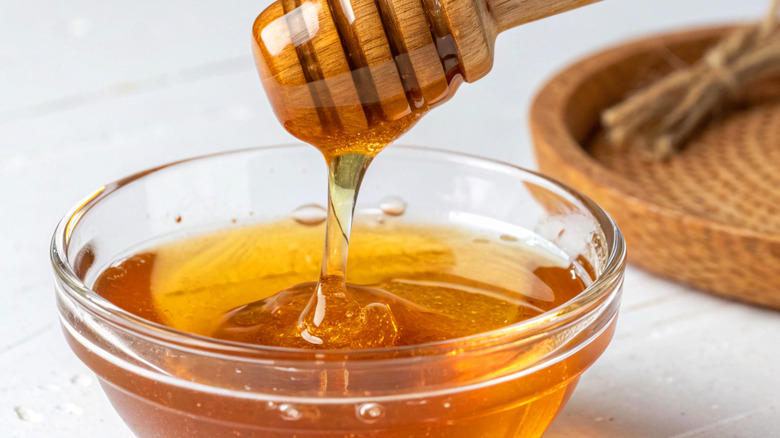
What I love about honey is its rich, rounded mouthfeel that spreads over the palate and nearly reaches your nose. It's floral and botanical, light yet rich, and has a pleasing earthiness. The complex flavor, combined with the intense sweetness, makes it ideal for adding to caramelized onions. The almost stone fruit-like aspect adds a dimension that white sugar just can't match. However, since honey is ultra-sweet, you'll want to add just the smallest drizzle. Too much can be overpowering, and we're not trying to make candied onions.
Any standard honey will work, but there are various different types that you can try. For caramelized onions, consider a darker variety like buckwheat honey or smoky chestnut honey. As you'll only be using a tiny amount, it's worth investing in a higher quality jar, and make sure you're buying 100% pure honey for the richest flavor. For a vegan alternative, you can try using vegan lab-made honey, apple-based honey, or even agave syrup.
Red wine
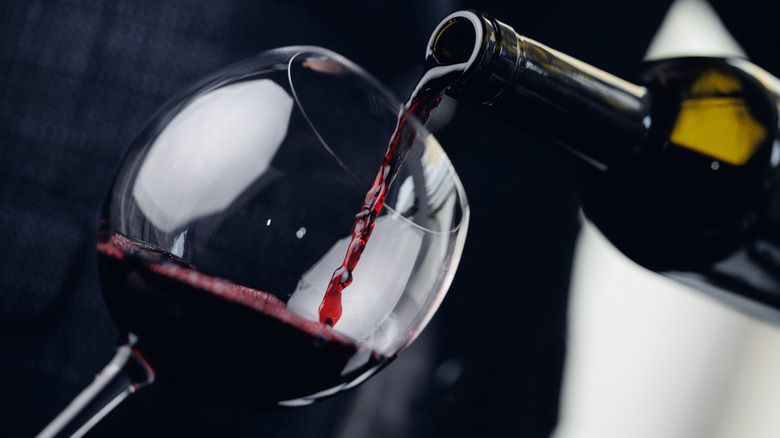
Red wine is one of the most commonly used alcoholic beverage in cooking. There's a reason it's so popular — it has the ability to enhance flavors with a sharp dryness and fruity undertones, while adding just a hint of bitterness. It increases the complexity of dishes without being overpowering, and it's perfect for deglazing your pan. A dry red wine is usually my go-to, especially when caramelizing onions or making traditional French onion soup. A light pinot noir is a reliable choice, but a well-rounded merlot or cabernet sauvignon will also do the trick.
When cooking your onions in fat and salt, let them stick to the bottom of the pan. Then, use a splash of red wine to deglaze the hot pan, which will help release the caramelized bits from the base. This process can be repeated a few times. The wine will also darken the onions, giving them a warmer hue. Be sure to use high-quality salt and extra virgin olive oil, and don't rush. You'll need to add the wine early to allow enough time for the alcohol to cook off; otherwise, it may overpower the dish.
Miso paste
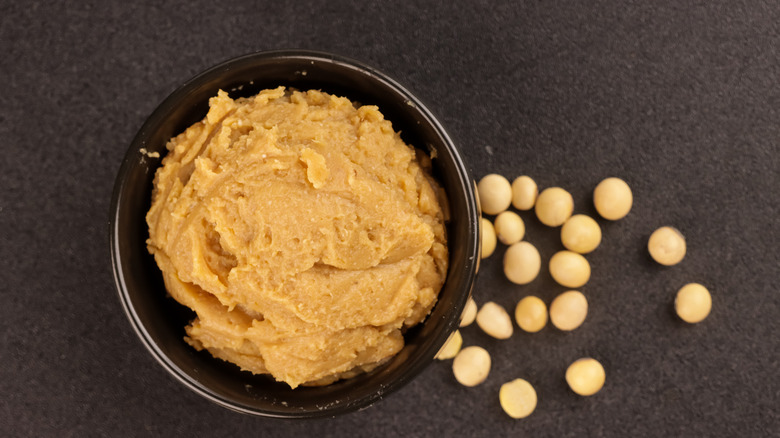
In my opinion, miso is underused in Western cooking. It's an instant flavor booster, providing a savory umami kick that enhances your dish without overpowering the more delicate tasting notes. Its use is often limited to soups and Asian-inspired recipes, but miso's potential is much greater. You can easily incorporate miso paste into your pasta sauces, salad dressings, and marinades, so it's worth keeping a jar in your refrigerator at all times. Plus, it's the perfect ingredient for making delicious caramelized onions.
The rich, fatty combination of butter and miso is exceptional. Umami can be described as extremely savory and is often overlooked in recipes. Intentionally increasing umami can add a gourmet depth of flavor and a meaty undertone to your caramelized onions. If you're unfamiliar with miso, that's okay. Let's break down the basics: Miso comes in different varieties, ranging from light miso to red or dark miso. The darker the color, the more intense the flavor. Consider using a light miso in your caramelized onions, as you'll be able to use more of it, and the texture is pleasingly creamy. A red or dark miso might overpower the onions unless used in moderation.
Sherry
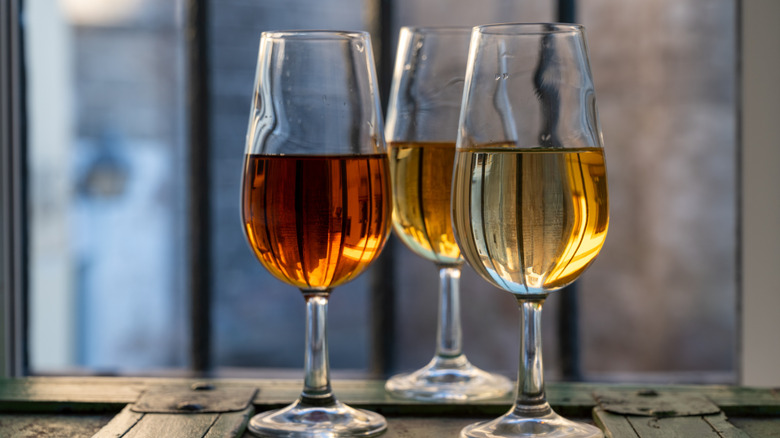
When making caramelized onions, sherry is another type of alcohol worth considering for deglazing your pan. While it's flavor can vary significantly, you'll want to opt for a dry, crisp sherry over one that is syrupy sweet. However, you can certainly use a smaller quantity of sweet sherry for ultra-sweet caramelized onions. It's ultimately a matter of preference, but whichever sherry you choose, you'll want to add it early enough to allow the alcohol time to partially cook off.
For those who just don't know where to start when it comes to sherry, let me catch you up. It's a type of wine with a rich history and can be enjoyed on its own, with food, or used in cooking. The flavor can vary greatly among bottles, brands, and regions; for cooking, I recommend an Oloroso or Palo Cortado sherry, as these tend to be dry, robust, and nutty. However, feel free to use whatever you have on hand. Just give it a taste first to be sure it pairs well with the onions and the rest of your recipe. This will also help you to gauge how much sherry to use. Remember, don't overpower the dish; just use it as an enhancement.
Broth
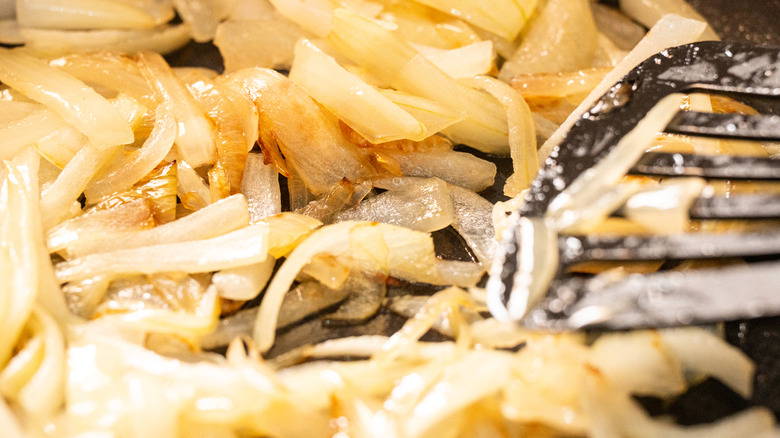
Broth is a classic ingredient in most foolproof caramelized onion recipes. It provides a salty, umami-rich base for your onions to simmer in, helping them to break down and reduce. While many people use whatever broth they have on hand, the type you choose will dictate the overall flavor of the onions, so it's important to choose carefully.
The flavor of store-bought broth varies from brand to brand, so when using one you haven't tried before, taste it first. Beef, poultry, vegetable, and miso broth all have unique characteristics that impact the overall flavor of your dish. My go-to brand is Better Than Bouillon – because it's a paste, I have better control over how much I use and can fine-tune the flavor without ending up with excess liquid. It has an authentic taste, and it's more convenient than buying quarts of liquid broth. Keep in mind the salt content of any broth you choose, as a low-salt broth will require extra seasoning, while a salty broth may be fine without. Oversalting can ruin a dish, so start with less than you think you'll need, and increase the amount slowly while tasting frequently.
Tamari
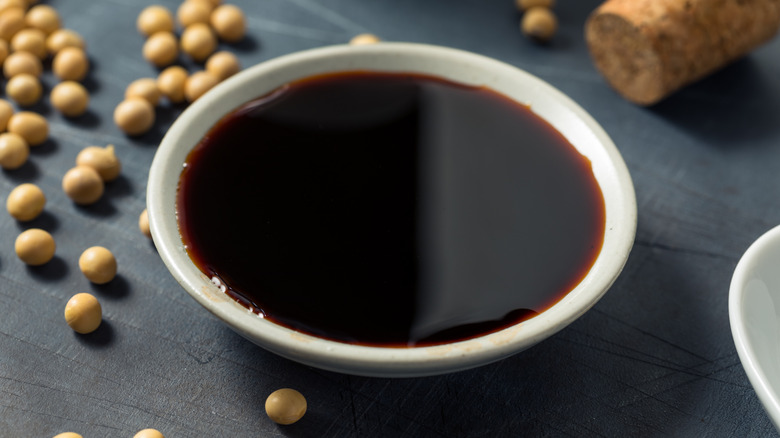
Instead of using salt in your caramelized onions, consider a more flavorful alternative. Tarmari is a Japanese soy sauce that's naturally gluten-free. It tastes similar to regular soy sauce but typically doesn't contain wheat. It's an umami-rich, ultra-salty sauce that you can use to greatly enhance the flavor of your caramelized onions. The meaty, savory aspects will do more for your recipe than salt alone, and will it give those onions a darker, richer appearance.
Beyond the salty notes, tamari has an undertone of sweetness that blossoms when combined with the caramelized onions. You can use tamari with a fat for more savory caramelized onions, or use it alongside a smoky sweetener like brown sugar, molasses, or maple syrup. When adding more than one ingredient to caramelized onions, do so in moderation. Bold, competing flavors can easily steal the show, when the onions should be the star.
Molasses
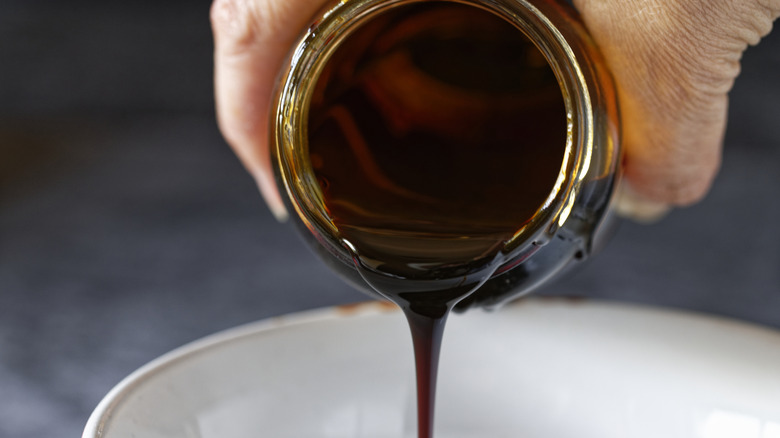
Molasses is the liquid byproduct of sugar refining, and it's the ingredient that sets brown sugar apart from white sugar. While you can use brown sugar to boost the flavor of your caramelized onions, the two have notable differences. Brown sugar is sweeter and mellower, while molasses is bolder, earthier, smokier, and more bitter. Molasses is also extremely sticky and can elevate the texture of the caramelized onions.
Molasses will give you many of the same flavors you'd get from brown sugar, but they're bolder and less sweet. The natural sweetness of the onions will still develop if you cook them for long enough. There are three different types of molasses, each with its own character and strength. Blackstrap molasses is the most intense and least sweet, while light molasses is sweeter and has a more delicate flavor. Dark molasses falls somewhere in between. All three work with caramelized onions, but my favorite is blackstrap, used in moderation.
Beer
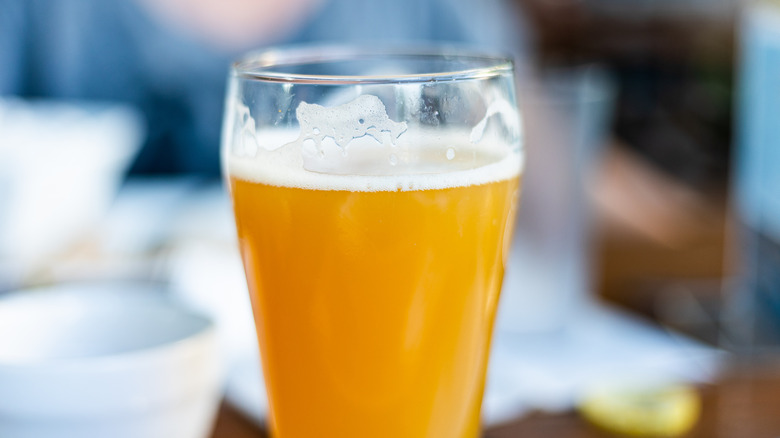
Much like wine, beer can be used to deglaze your pan when making caramelized onions. Instead of having wine's fruity undertones, beer is more yeasty and hoppy. Of course, the flavor differs depending on which beer you choose to cook with. I recommend picking a beer that you could drink alongside the finished dish. If your dish has strong flavors, choose a stout, dark ale, or IPA. For lighter dishes, opt for a light beer, perhaps a lager with notes of citrus. If the onions aren't part of a larger recipe, then go with a beer that you prefer the taste of, as you know you'll enjoy it, and you can drink the leftovers.
Of course, you'll want to double-check that the folks you're cooking for are not gluten-free — if they are, you'll want to use a gluten-free beer. The same goes for people who abstain from alcohol — in this case, you should choose a non-alcoholic beer that will deliver the flavor you're looking for. Use just a splash to help sizzle the caramelized bits of onions right off the pan, repeating the process several times if needed.
Marmite
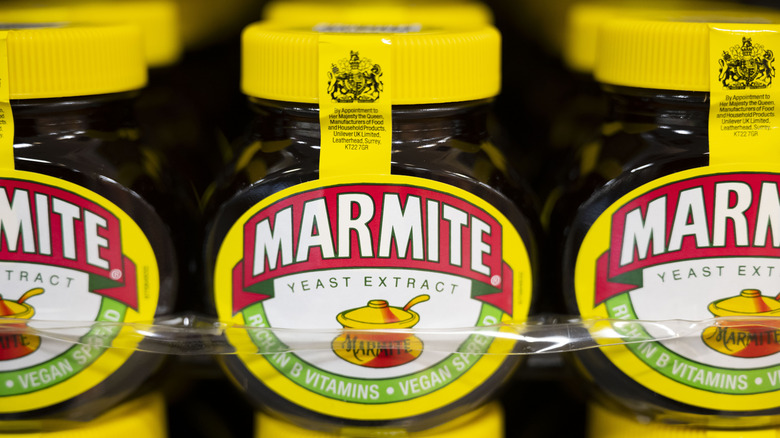
Unless you've been to the U.K. or are into British cooking, it's unlikely you've used a lot of Marmite in your cooking. You can occasionally find it in the international section of U.S. supermarkets, otherwise you'll need to look in specialty food stores or search online. Made from yeast extract, Marmite is a thick, dark paste, that's typically spread on toast, but it can be mixed into food. It's essentially a beer brewing byproduct that's been named and sold as a condiment. The savory spread is rich in umami flavors and extremely salty.
Marmite is known for being a "love it or hate it" kind of food, so if you've never tried it before, have a small taste before adding it to your caramelized onions. You can mix it with water to create a broth and use that to reduce the onions until they are soft and caramelized. You may not need to use extra salt if you're adding Marmite to your onions, so be sure to taste frequently during the process. Also, it's worth remembering that because Marmite is made from a beer byproduct, it is not gluten-free.