

16 Popular Swiss Dishes You'll Regret Not Trying Once
Prior to a recent 10-day trip, my understanding of Swiss cuisine barely extended beyond cheese and chocolate — which was enough for me, honestly. But while tasting my way through various cantons in Switzerland, I discovered that these state-like regions offer a wealth of culinary diversity.
Capuns, a spätzle dough-made dumpling wrapped in chard leaves, was a delicious find in Graubünden. Cholera, a savory pie famous in Valais, was another unexpected delight. The same goes for an Appenzeller gingerbread cookie known as biberli, which I sampled on my flight just before touching down in Zürich.
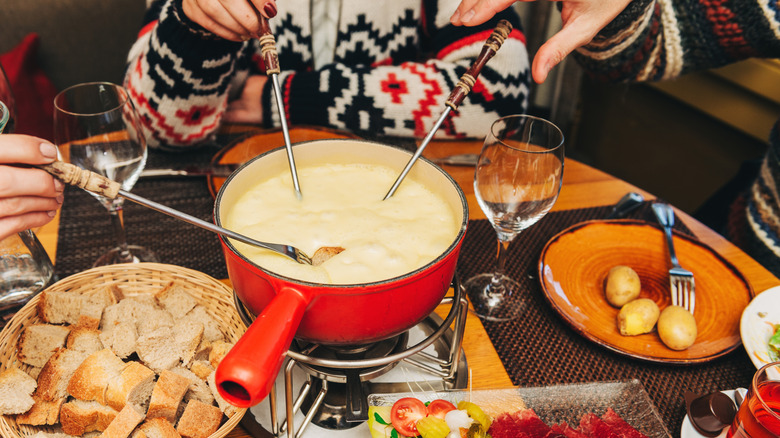
Of course, favorites like fondue and raclette made it to my belly, as did another cheesy specialty: älplermagronen. Picture a gooey plate of macaroni and starchy potatoes, all smothered in melted Gruyère. I'm not sure that a more comforting meal exists. Whether planning a trip abroad or visiting your local Alpine eatery, here are the Swiss dishes you'll regret not trying once.
Fondue
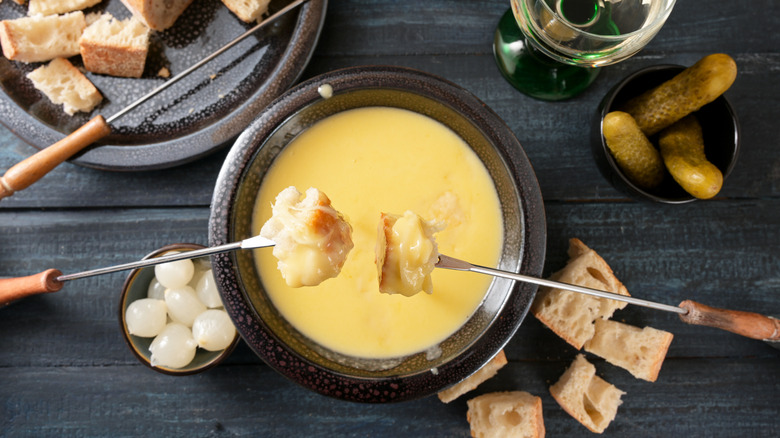
Derived from the French word meaning "to melt," fondue is one of Swiss cuisine's greatest joys. The warm, comforting dish is most often made with white wine and traditional fondue cheeses, such as Emmenthal, Gruyère, Vacherin Fribourgeois, and Appenzeller cheese.
Spear a cube of bread or a boiled potato, then swivel your long metal fork into the bubbling pot of goodness. Called a caquelon, the vessel continues to emit heat while you dine, keeping the mixture melted. If you notice some browning towards the end of your meal, snuff out the flame, then eat the remainder of the cheese as a crisp cracker — a pro tip I learned while dining in Leukerbad, Valais.
To help break up the heaviness of the dish, pickled gherkins and pearl onions are often served as accoutrements. Portions are also generally intended for at least two, so plan to order this with a partner, but keep fondue etiquette in mind. Your dipping fork is for serving, not eating from.
Raclette
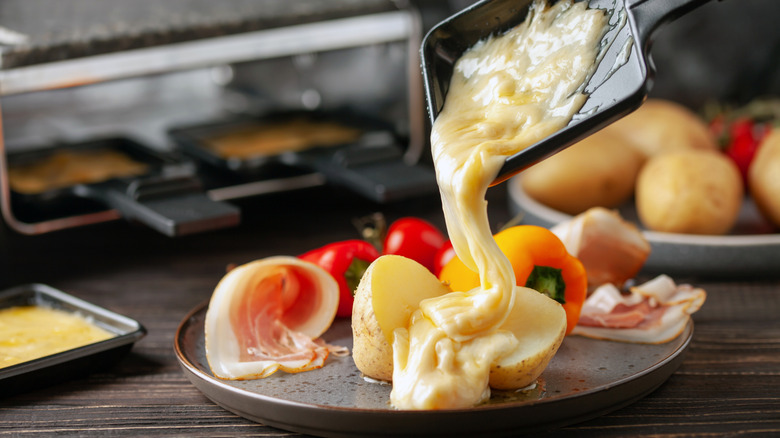
Though both are centered on melted cheese, there are key differences between fondue and raclette. Namely, the latter specifically involves raclette cheese, which offers a balanced saltiness and mild nutty flavor. It also has a more pungent aroma, particularly when warmed.
Based on the French word meaning "to scrape," raclette is often served in one of two ways. Traditionally, in the France-bordering canton of Valais, where the dish originates, melted raclette is scraped directly from a heated wheel of cheese.
But more often at restaurants, a cast-iron raclette grill will be brought to your table. The underside of the appliance features rectangular trays that allow diners to melt slices of cheese. Meanwhile, use the top section to grill slices of meat and vegetables. Once cooked, transfer these foods to your plate and scrape the warm, gooey gold over top. Pickled side dishes add to the interactive meal, which, like fondue, is best shared with friends.
Rösti
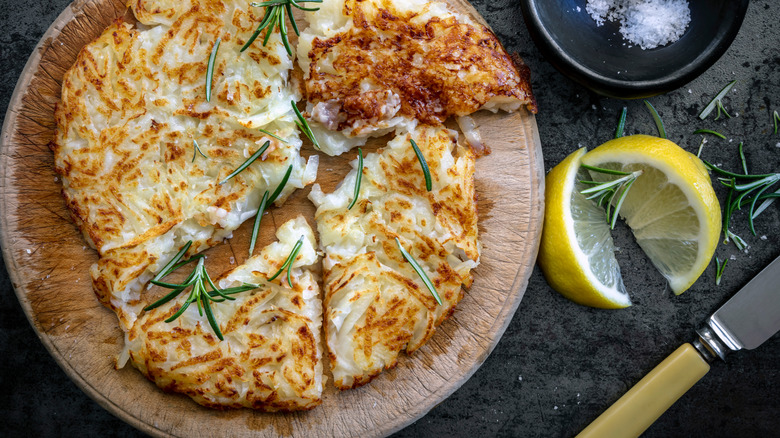
When I first ordered rösti in Switzerland and the dish arrived at my table, I immediately recognized it as hash browns. Yes, the two dishes involve grated and fried potatoes. But rösti and hash browns have notable differences — and personally, I'm now a bigger fan of the former.
Because it often uses boiled potatoes and is fried as a thick disc, rösti offers a softer texture than the golden shreds that most Americans are familiar with. Still, fat plays a role in making perfect rösti. Thanks to the use of butter, it has a nice crispness to its exterior, too.
Eat rösti as a side dish or as a main course when topped with additional ingredients. Traditional recipes vary by region in Switzerland. For example, the central canton of Bern incorporates cheese, onions, and bacon. Since rösti is so versatile, chefs also take creative liberty. While traveling in Valais, I had one version featuring gorgonzola, pear, and onions that was absolutely delish.
Älplermagronen
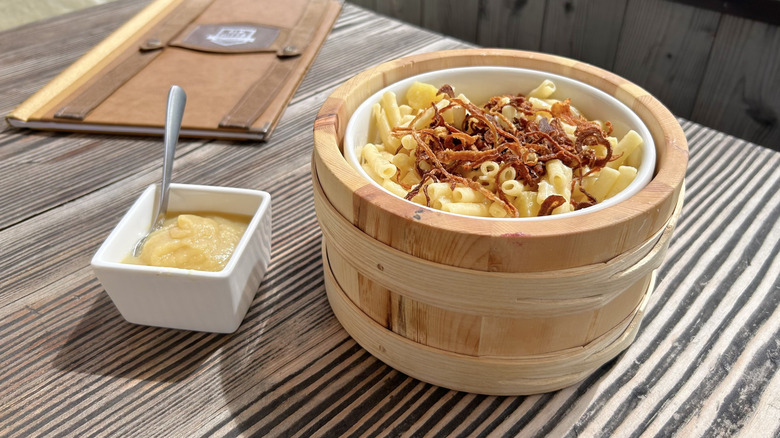
Fondue and raclette may be more famous, but if I had to recommend only one Swiss dish, it would be älplermagronen. Though I always love to try new things, I had to order it twice on my recent trip. Both times were after long, scenic hikes, and trust me, there's nothing more comforting after being out in the cold.
Älplermagronen is a humble dish consisting of tubular pasta, potatoes, cheese, cream, and a crunchy topping of caramelized onions. It's like American mac and cheese, but better. The meal is also traditionally served with applesauce, a nice complement to the rich main course.
Translated from German to "alpine herder's macaroni," the dish is believed to have originated in the central cantons of Luzern or Uri. Because pasta is lightweight, älplermagronen was a staple among shepherds who spent long periods in the mountains. Heavy potatoes were added later as the recipe's popularity spread to the Swiss Plateau. Today, you'll also see versions made with cured meats like bacon, cervelat, and landjäger.
Capuns
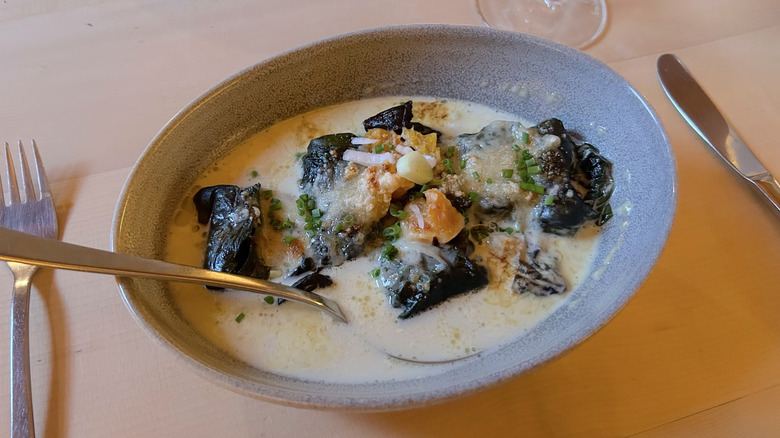
Guides to Swiss foods often overlook capuns, and so when I was traveling in Switzerland, this rustic dish wasn't on my radar. Fortunately, a wonderful server at a restaurant in Laax gave me an introduction. This regional specialty hails from the canton of Graubünden and specifically, the western Surselva district.
Basically, capuns are Swiss dumplings. Recipes vary, but generally, Swiss chard leaves are wrapped around a mixture of spätzle dough and dried meat. Common protein selections include bündnerfleisch, an air-dried beef that's produced in Graubünden, as well as a local air-dried pork sausage known as salsiz.
When dining in Laax, I opted for a vegetarian version made from cheese and dried stone fruits, specifically plums and apricots. In traditional fashion, the capuns were simmered in a rich, yet light broth made from bouillon and cream. I spooned up every drop and am still dreaming of the dish. It was the most unique selection I made on the trip and definitely one of my favorites.
Swiss cheeses
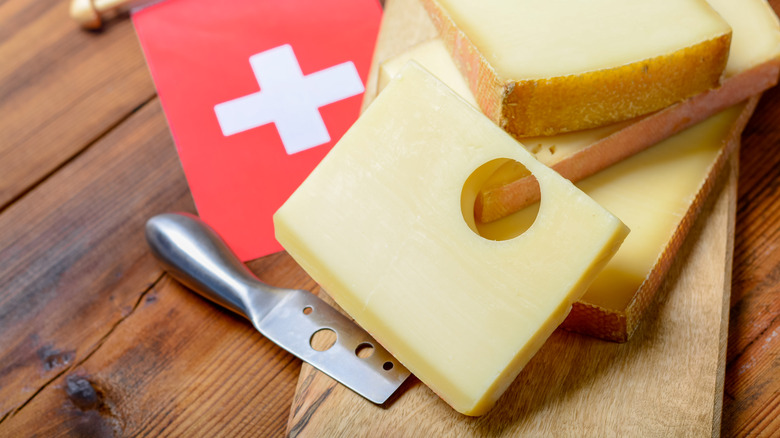
Any idea which country eats the most cheese? If you guessed Switzerland, you are absolutely correct. I ate my weight in dairy on my recent visit and saw countless cows grazing in the mountains (you hear them first with their big, clanking bells). These happy, grass-fed herds produce the finest milk, which, in turn, creates the most delicious assortment of cheeses.
Of course, there's what Americans think of: Swiss cheese with its iconic large holes. But that pale yellow, semi-hard variety is actually a particular type of Swiss cheese called Emmentaler, which comes from the canton of Bern. The holes are naturally developed during maturation, a process that creates a range of sweet and tangy flavors. Many will also recognize the robust taste and aroma of Gruyère, a hard cheese that has been made in the Fribourg canton since the 12th century.
Another classic Swiss cheese, Sbrinz, dates back 500 years. This extra-hard cheese from central Switzerland ages for at least 18 months, resulting in various textures and an intense flavor. If you like bold cheeses, I'd also recommend Appenzeller. Aged with a secret herbal brine, this hard cheese from the northeast offers a sweet-savory complexity. I also really love Tomme Vaudoise, a delicate soft cheese produced in Geneva and the western Vaud region.
Dried meats
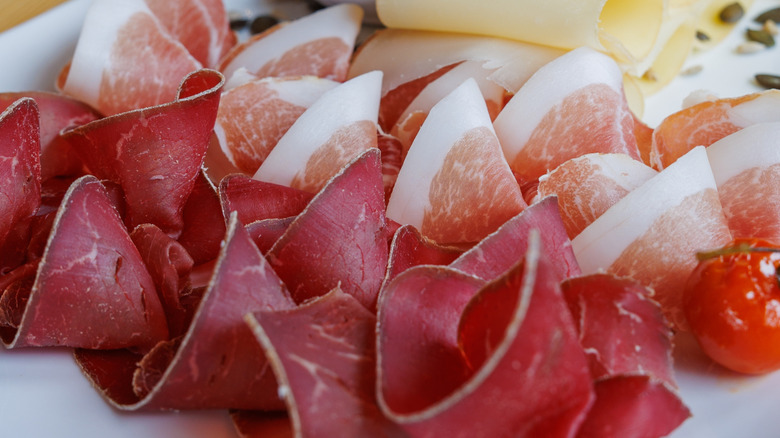
Meats were once cured in preparation for long, cold winters and hence, are a staple in Swiss alpine regions. Walliser trockenfleisch from the canton of Valais is one such delicacy that dates back to the 14th century. Legs of cattle are dry rubbed with salt, spices, and herbs, then left to air-dry for six weeks. Sample a few slices with rye bread and my new favorite among Swiss wines: a dry, fruit-forward Fendant from the same region.
Bündnerfleisch is a similar type of air-dried beef that's famous in the Graubünden canton. It appears in recipes like capuns and is often served with raclette, but can also be enjoyed on its own. Savor salty, umami-rich notes along with a lean, tender texture.
Meanwhile, landjäger offers a firm chew that's similar to jerky. This rectangle-shaped, smoked, and dried sausage is traditionally made from pork and beef. Lard, red wine, sugar, and spices add to its robust flavor.
Birchermüesli
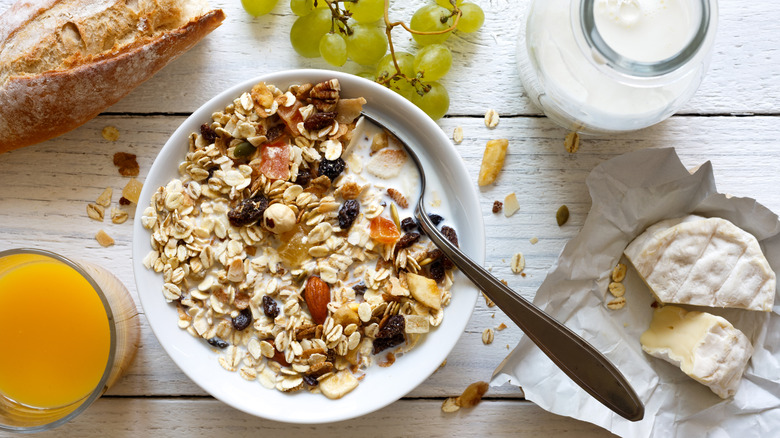
I ate müesli almost every morning while in Switzerland, and it's become a new staple in my home kitchen. Though I'm sort of late on the trend. For decades, the cereal has been available in American grocery stores and loved for its healthy, whole ingredients. But the breakfast dish, also known as Birchermüesli, actually dates back more than a century.
A proponent of raw foods, Swiss doctor Maximilian Oskar Bircher-Benner is credited with creating the original müesli recipe featuring oats, sweetened condensed milk, lemon juice, grated apple, and chopped nuts. Today's iterations vary, but still emphasize raw oats (making müesli different from granola).
Because it's traditionally eaten cold with either milk or yogurt, müesli also differs from oatmeal. Some, like Bircher-Benner, prefer to soak their oats overnight. Personally, I like to use quick-cooking oats and simply pour my milk on top just a few minutes before eating. Select your favorite toppings or opt for my go-to combination: pumpkin seeds, almonds, and sunflower seeds, plus dried fruit like golden raisins and apricots.
Swiss chocolate
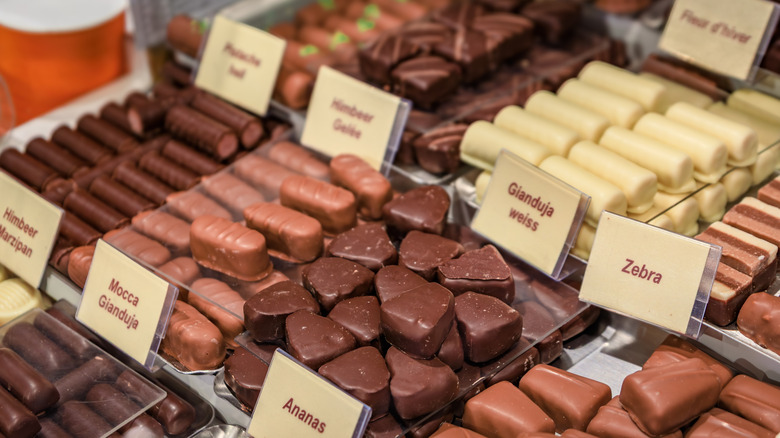
In addition to eating the most cheese, Switzerland consumes the most chocolate per capita of any other country in the world. Those flying into Zürich must pay a visit to the Lindt Home of Chocolate. But even if you aren't planning to go abroad anytime soon, Lindt Lindor truffles are a quick grocery trip away.
The same can be said for Toblerone, an iconic honey and almond nougat-infused chocolate bar. Its unique triangle-shaped pieces take inspiration from the Matterhorn, the country's most famous mountain.
But there are many more Swiss chocolate brands beyond those available globally. Ovomaltine bars deliver a delicious malty crunch, and while less popular, I had to go home with a bar filled with Röteli, a cherry liqueur produced in Graubünden. There's also Cailler, the country's oldest chocolate producer. It offers options for every preference, including dark varieties, which are far less frequent to come by, given most locals' preference for creamy milk chocolates.
Bündner Nusstorte
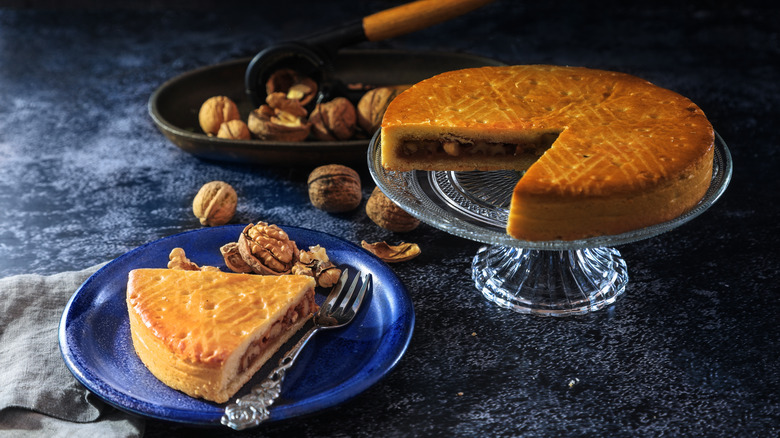
I stumbled upon this classic Graubünden pastry while at a bakery in Chur, the oldest city in Switzerland. Similarly, the Bündner Nusstorte (pronounced noose-tore-ta) has a storied past. Due to limited farmland and food scarcity in the late Middle Ages, people in the canton's Engadine valley emigrated, with some temporarily settling in Périgord, France. This region is famed for its walnut production, and the Engadiner Zuckerbäcker, or confectioners, took note.
Aiming to extend the shelf life of similar French sweets, they created the Bündner Nusstorte with a special shortcrust pastry, plus a sweet combination of caramelized walnuts, cream, and honey. This lasting freshness has made the rich, round tart a popular souvenir and one I highly recommend taking home should you ever visit Switzerland.
Though you may be able to find it locally, as few Swiss desserts are as iconic. Keep in mind that it's also referred to as an Engadiner Nusstorte in German, which, alongside Italian and Romansh, is one of three official languages in Graubünden.
Cholera
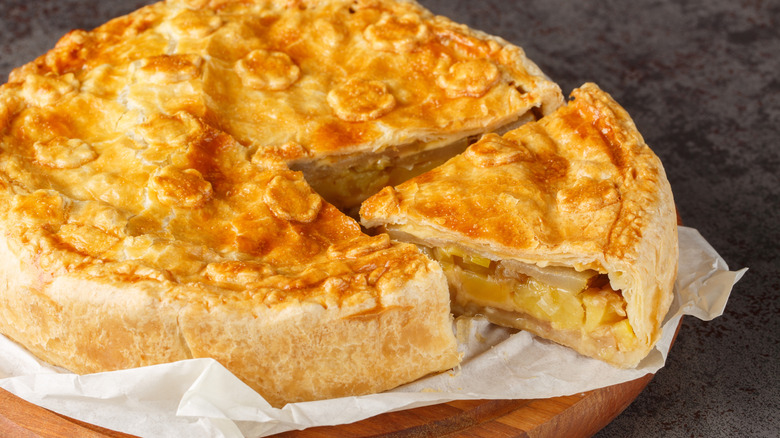
Wherever I travel, I ask locals for regional food recommendations — and in Leukerbad, cholera came up several times. Indeed, this dish shares its name with the infectious disease, which overtook the canton of Valais in 1836. For this reason, some believe that its name refers to how people of that time survived the pandemic, using what little food they had available in their gardens and cellars to make a meal. However, linguists believe that the name derives from cholära, which translates to an oven's warming chamber in the local German dialect. In early recipes, this is likely where the dish rested before being baked.
Cholera is a meat pie made from a flaky shortcrust or puff pastry. Its filling varies but traditionally emphasizes local, seasonal ingredients like onions, leeks, hard cheese, dried meat, and fruit, such as apples or pears. Slices look somewhat similar to French quiche, but no eggs or cream appear in cholera. Rather, potatoes add a creamy element to the dish and provide Swiss chefs a tasty way to use up leftovers after the fondue pot runs dry.
Zürcher Geschnetzelte
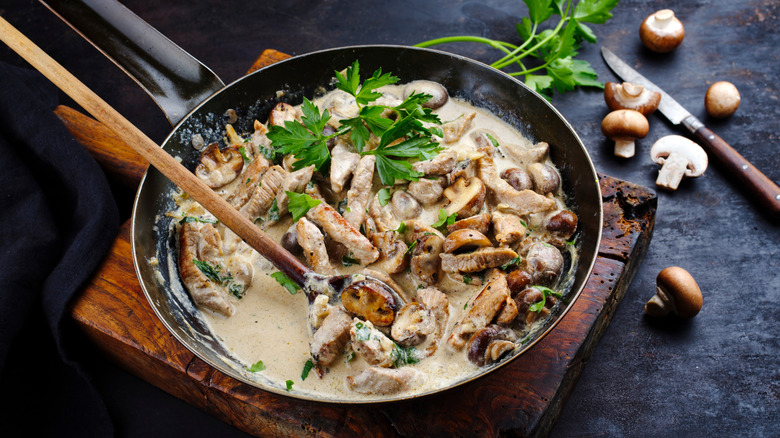
Comfort foods around the world vary, but all deliver a distinct sense of warmth. For those who have spent time in the canton of Zürich, this dish may also bring back fond memories, despite being relatively new to Swiss cuisine. Cookbooks first featured the stew in the late 1940s, and quickly, diners fell in love with its stick-to-your-ribs appeal.
Now a classic in both home kitchens and local restaurants, Zürcher geschnetzelte (or Züri gschnätzlets in the Swiss-German dialect) is a rich ragout traditionally made from tender strips of veal, often sourced from the hip or flank. Veal kidneys are a standard addition to the dish as well. Dusted in flour and lightly fried in butter, the meats are then simmered in a seasoned blend of white wine, stock, and cream. Onions and mushrooms add to the hearty dish, which is often served alongside rösti. A dry glass of Swiss white wine is also a delicious complement.
Luzerner Chügelipastete
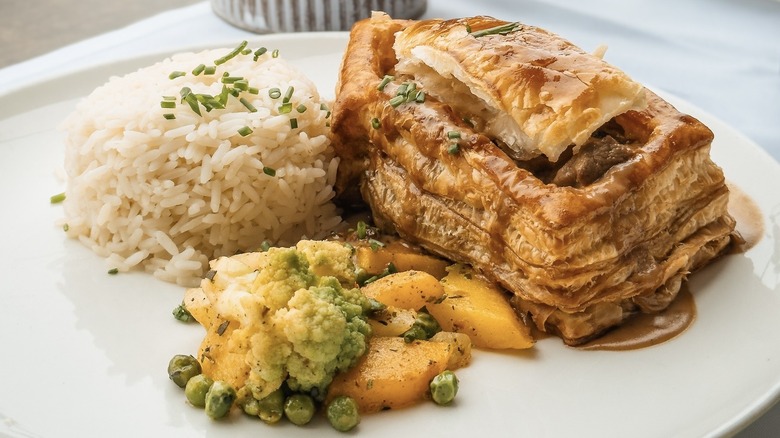
Of the destinations I recently visited in Switzerland, Luzern is the most well-known among American tourists. But few are familiar with chügelipastete, a specialty that dates back to the 18th century. It's also often referred to as Fritschipastete in honor of Bruder Fritschi, the iconic figure of the Luzern carnival season. Labor-intensive to make, this vol-au-vent was historically reserved for that celebration, a local holiday known as Berchtold Day, and the most distinguished guests. But now, this delicious item is more commonly available at restaurants throughout the canton.
Luzerner chügelipastete is a savory pie featuring a buttery puff pastry shell. You'll probably never guess what sweetbreads are, but this is the traditional protein choice for the dish. The organs of calves are paired with brät, another likely unfamiliar meat made from veal. It's smooth in texture and shaped into meatballs — appropriate, given that chügeli translates to "little balls." A creamy white sauce, mushrooms, and spirit-soaked raisins add to the flavorful ragout.
Berner platte
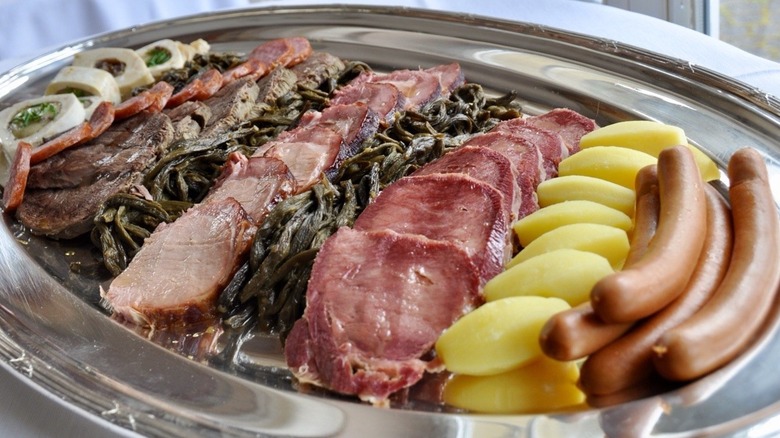
Across all cultures, there's one sure way to celebrate a victory: food. When the Bernese army won the Battle of Neuenegg against the French, the town came together for a grand feast. The date was March 5, 1798, and so most provisions were preserved meats. These included smoked pork loin and bacon, ox tongue, bone marrow, pork knuckle, boiled beef, and Berner Zungenwurst sausages.
Many of these proteins appear on the Berner platte today. The same goes for its traditional side dishes. Sauerkraut adds a tangy brightness to the pork loin and speck, while boiled potatoes and dried, buttery green beans round out the buffet. As its name suggests, this platter hails from Bern, the capital city of Switzerland. Some menus throughout the canton may also refer to it as a Berner teller. Regardless, be sure to order this with a few friends. It delivers the same indulgent experience as it did on day one.
Marroni
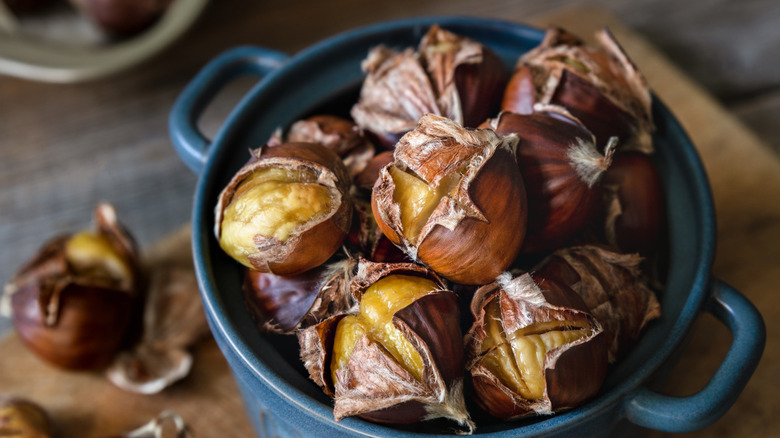
As one of the most popular types of nuts, chestnuts are familiar to many around the world. But they hold a particularly special place in Swiss cuisine. Known locally as marroni, these tender treasures have a millennia worth of history in the southernmost canton of Ticino. Grains didn't grow well in its upper alpine valley, but chestnut trees were bountiful. Hence, the nuts became known as the "bread of the poor" and were a staple throughout the Middle Ages. They served as an addition to sweet and savory recipes, and even acted as a flour substitute.
Today, marroni are most often enjoyed when roasted over an open fire. Many associate chestnuts with Christmas, but in Switzerland, stalls are set up from October through March. Find them in busy areas like train stations and shopping districts. You know you're close to one when the aroma of charcoal and warm, sweet nuttiness hits you.
Gingerbread
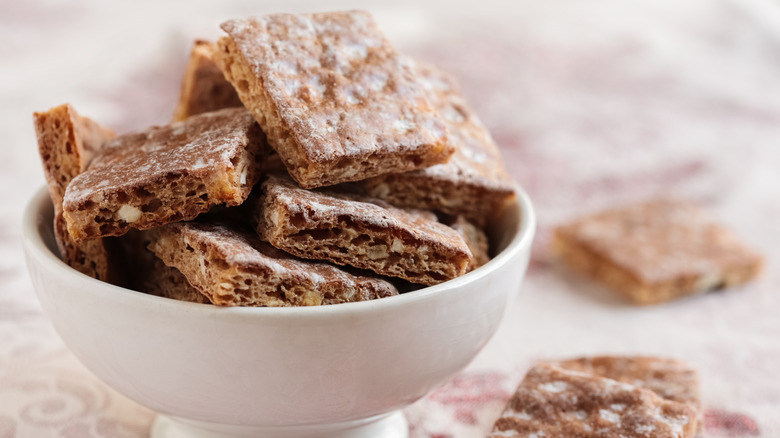
While most popular during the holiday season, gingerbread can be found in Switzerland year-round. Take the Berner Honiglebkuchen as an example. Many bakeries in the country's capital and surrounding cantons regularly offer this honey gingerbread cake. Shapes vary, but the sweet is often recognizable by a white icing bear, piped on top as a nod to the region's coat of arms.
Basler leckerli also incorporates the traditional spice blend of cinnamon, nutmeg, and cloves, plus honey, candied citrus, almonds, and a generous amount of kirsch. These rectangular gingerbread cookies first appeared in the city of Basel in the 15th century and remain a local specialty to this day.
My first introduction to Swiss gingerbread was in the form of Appenzeller biberli, a treat distributed on my direct Edelweiss flight from Denver. I ate plenty on that commute, but this gingerbread cookie was one of my favorite bites. Filled with a marzipan-like almond paste and embossed with various designs, these honey-sweetened biscuits hail from the canton of Appenzell. I highly recommend adding them to your list of Swiss foods to try.