

3-Ingredient Pan Con Tomate Recipe
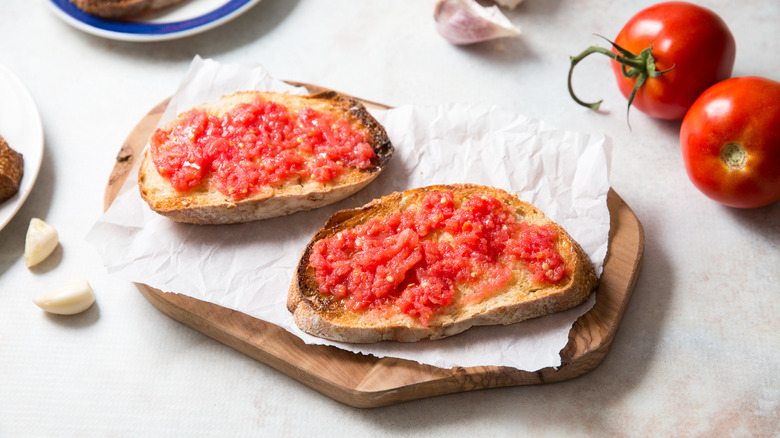
Pan con tomate (bread with tomato) proves it doesn't take a long list of fancy ingredients or complicated cooking techniques to create a mouthwatering dish. Known as pa amb tomàquet in Catalan, this simple tapa hails from Catalonia in northeastern Spain. It's said pan con tomate originated as a way for peasants to moisten dry bread while utilizing the region's abundance of tomatoes and keep hunger at bay between meals. Nowadays, it's regarded as a traditional tapa in both Catalan and Spanish cuisine, working just as well as a homemade snack as it does in a fancy establishment.
It couldn't be easier to make this delicious dish, and recipe developer Michelle Bottalico's version of pan con tomate takes less than 15 minutes to make with a few basic steps involving minimal ingredients. The best advice we can offer for such a simple dish is to reach for the best quality ingredients, as their flavors and textures will take center stage here. This recipe will come in handy when you need a bite that's satisfying, comforting, delicious, and economical all at once.
Round up the ingredients for this 3-ingredient pan con tomate
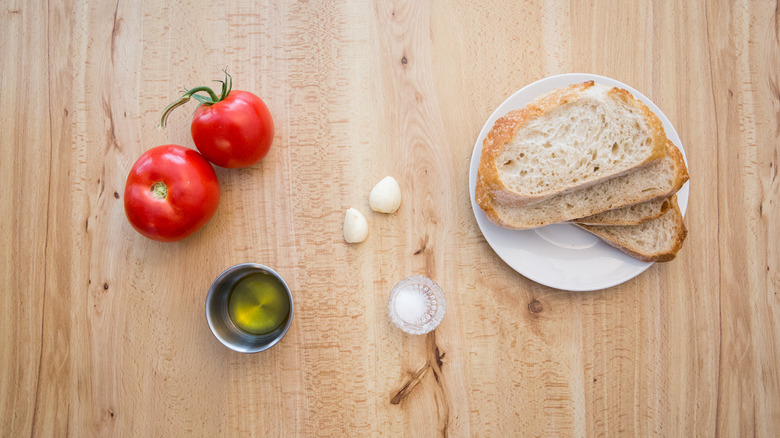
For this recipe, you will need rustic bread. Peasant-style or artisan loaves will give the best results. You'll also need garlic, salt, and extra-virgin olive oil. Finally, make sure you have ripe tomatoes for the best flavor and texture. Look for round tomatoes that are moist and pulpy inside. Vine-ripe tomatoes are a good choice.
Step 1: Get the bread ready for the 3-ingredient pan con tomate
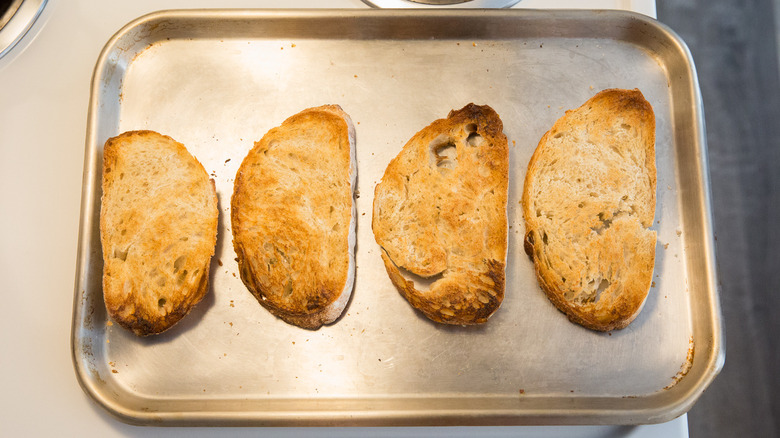
Toast the slices of bread using a toaster, pan, or oven broiler until browned and crisp.
Step 2: Rub with garlic
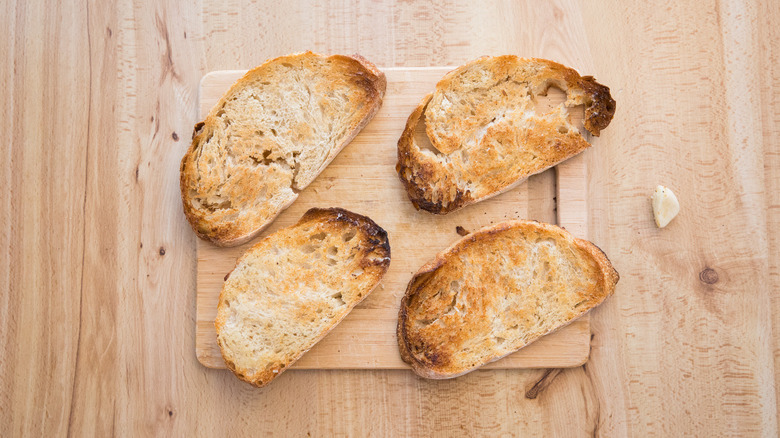
Once the bread is cool enough to handle but still warm, rub the garlic on one side of each slice, rubbing longer if you want a stronger garlic flavor.
Step 3: Prepare the tomatoes
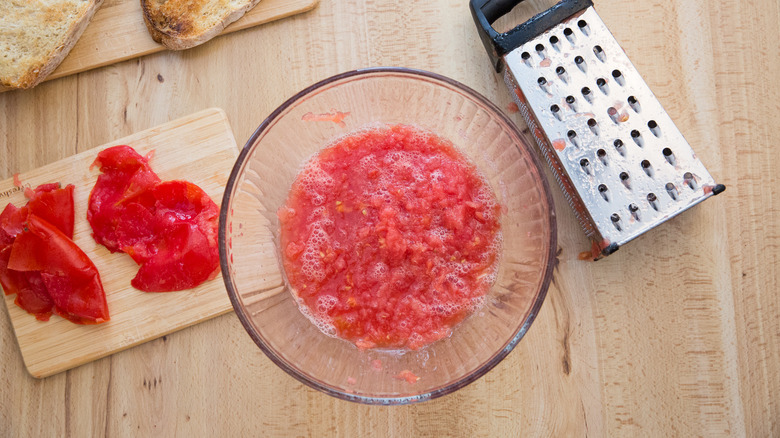
Grate the tomatoes into a bowl. Discard the skins.
Step 4: Mix with salt
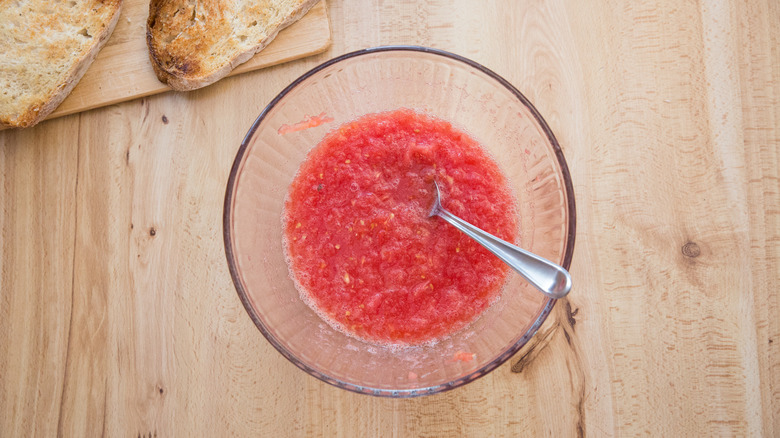
Add the salt to the grated tomatoes and mix well.
Step 5: Top the bread with the seasoned tomatoes
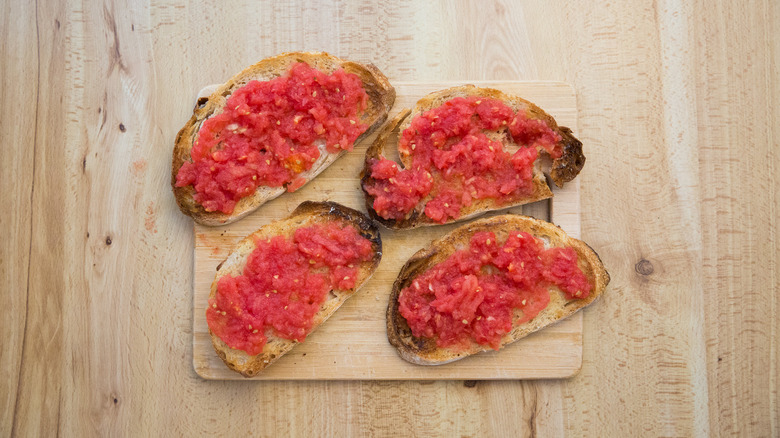
Spoon the tomato mixture onto the bread without including too much liquid, leaving just a border around the edge.
Step 6: Serve the 3-ingredient pan con tomate
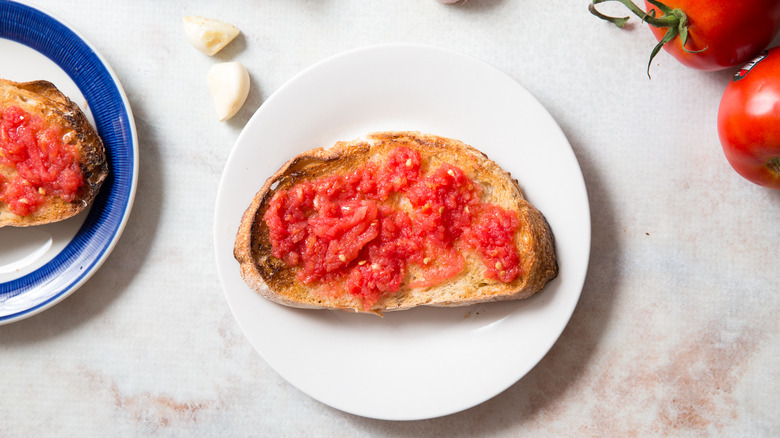
Drizzle extra-virgin olive oil on top and serve.
What to pair with this 3-ingredient pan con tomate
3-Ingredient Pan Con Tomate Recipe
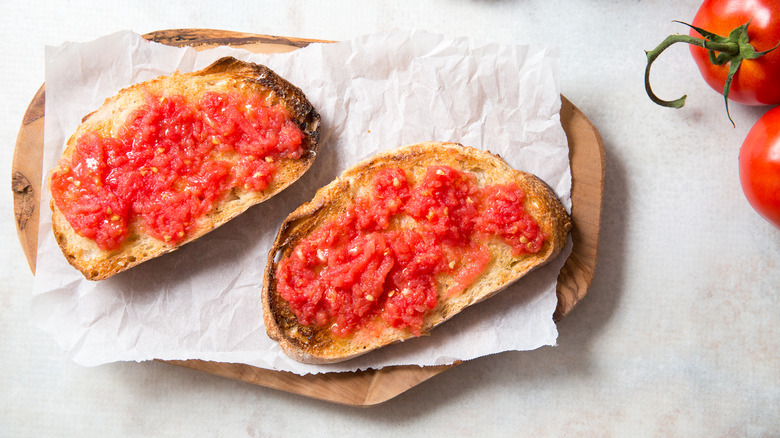
While this pan con tomate recipe is absurdly easy to make, it yields a delicious tapa that's garlicky, fresh, and has the perfect blend of textures.
Ingredients
- 4 slices rustic bread
- 1 large clove garlic, peeled
- 2 ripe tomatoes, halved
- ¼ teaspoon salt
- Extra-virgin olive oil, for drizzling
Directions
- Toast the slices of bread using a toaster, pan, or oven broiler until browned and crisp.
- Once the bread is cool enough to handle but still warm, rub the garlic on one side of each slice, rubbing longer if you want a stronger garlic flavor.
- Grate the tomatoes into a bowl. Discard the skins.
- Add the salt to the grated tomatoes and mix well.
- Spoon the tomato mixture onto the bread without including too much liquid, leaving just a border around the edge.
- Drizzle extra-virgin olive oil on top and serve.
Nutrition
| Calories per Serving | 103 |
| Total Fat | 2.7 g |
| Saturated Fat | 0.4 g |
| Trans Fat | 0.0 g |
| Cholesterol | 0.0 mg |
| Total Carbohydrates | 16.6 g |
| Dietary Fiber | 1.9 g |
| Total Sugars | 3.3 g |
| Sodium | 216.3 mg |
| Protein | 3.7 g |

How is pan con tomate different from bruschetta?
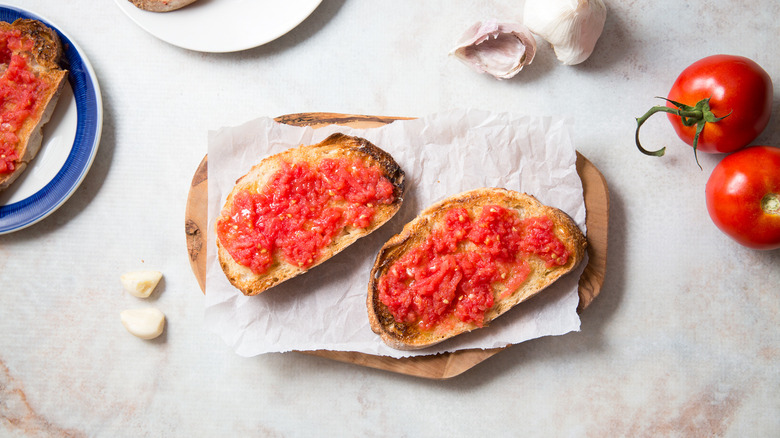
Spanish pan con tomate and Italian bruschetta are two similar dishes that consist of toasted, crusty bread rubbed with garlic and topped with a tomato-based mixture. They also share the same core ingredients: bread, garlic, olive oil, salt, and tomatoes. Both bruschetta and pan con tomate should never be assembled ahead of time to prevent the tomato topping from soaking into the toasted bread and making a soggy mess. This is especially important for pan con tomate since its tomato topping is more liquidy than bruschetta's. And yes, their main distinction lies in the consistency of the tomatoes.
Pan con tomate uses larger tomatoes that are turned into liquidy, mashed pulp. It's achieved by grating the tomatoes, though sometimes the tomatoes are cut in half and rubbed directly onto the bread instead. The grated tomatoes are mixed with salt before they're spread atop the bread. When making bruschetta, small tomatoes like cherry tomatoes are chopped and mixed with olive oil, salt, and fresh basil — the latter giving the Italian dish an additional ingredient not present in pan con tomate. The topping is then spooned onto the bread, piled higher than the pan con tomate's spread. The difference in consistency and texture also results in distinct mouthfeels.
Are there other variations of pan con tomate?
Pan con tomate is a simple and delicious classic, but you can add other ingredients if desired to incorporate more flavors or personalize the dish according to your taste. Common additions include thin slices of Iberian or serrano ham on top of the tomato before serving, though prosciutto can also be used. Some richer variations include topping the pan con tomate with crumbled or sliced soft goat cheese, Manchego cheese, or anchovies.
You can also consider topping with sun-dried tomatoes, roasted red pepper, or slices of ripe avocado. Olives, capers, and fresh herbs like basil or parsley would contribute a burst of flavor as well. Whether you add additional toppings or not, a drizzle of balsamic vinegar can add an elevated sweet and sour taste to complete the dish.
Don't be afraid to opt for smaller types of bread if serving pan con tomate as a tapa, though we do recommend choosing something sturdy enough to hold up to the moist topping. Keep this slicing tip for crusty bread in mind for the best results: Tilt the loaf on its side before attempting to cut slices. This will make it easier to control, and for more delicate loaves, the knife won't squash the top.