

18 Foods People Ate During The Great Depression
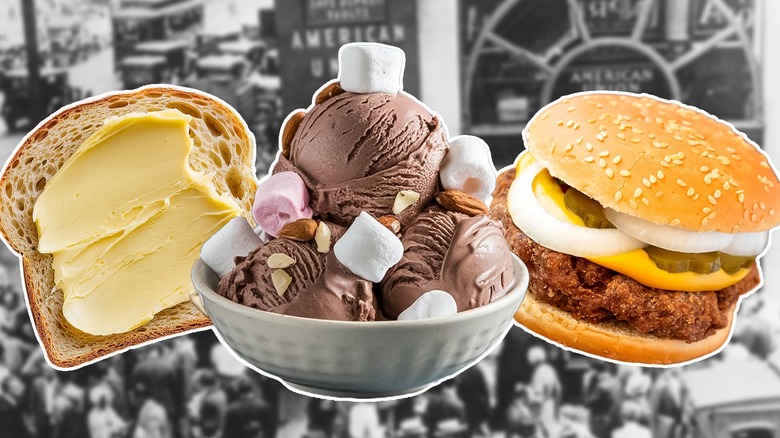
The 1930s are remembered as one of the toughest eras in American History. The nation was in disarray, banks were shuttered, unemployment had skyrocketed, and food was scarce. We call it the Great Depression for good reason. While it wasn't the first major economic downturn that Americans faced — the "Long Depression" lasted from 1873 to 1899 — it was the absolute worst, starting with the stock market crash of 1929 and ending finally in 1939. Two U.S. presidents held office during that period, Herbert Hoover and Franklin D. Roosevelt. In truth, things only began turning around in 1941 with the industrial boom of World War II.
Several factors contributed to food scarcity during this time, forcing Americans into breadlines and soup kitchens. Those who could afford ingredients had to prepare them in inventive ways. Staying fed was a daily challenge for Americans, but it inspired the creation of versatile, budget-friendly recipes still enjoyed today. Here are 18 foods people ate during the Great Depression.
Bread and butter sandwich
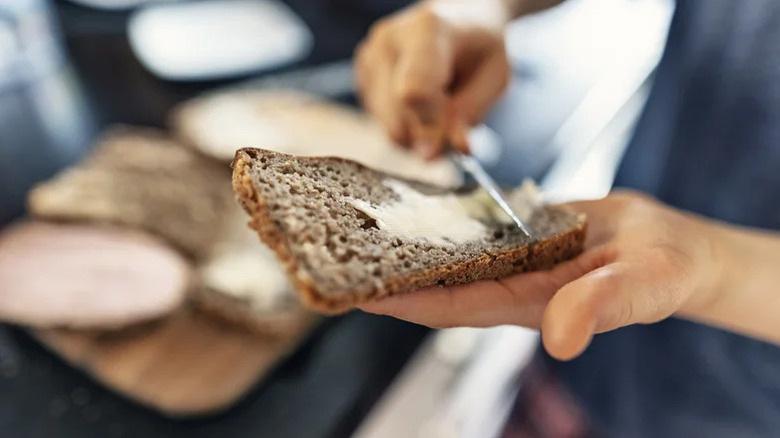
The simple bread-and-butter sandwich was part of the White House menu during Franklin D. Roosevelt's presidency, which included eccentric dishes like cold jellied bouillon stew and deviled eggs with tomato sauce. In a show of solidarity, the First Lady decided that the White House would only serve food that reflected what everyday Americans ate, and with the help of the housekeeper Henrietta Nesbitt, set about crafting a menu of meals costing no more than $7.50, composed of unusual recipes that earned the White House kitchen a notorious reputation.
At the time, most American meals were limited to bread, canned goods, beans, and potatoes because those were the easiest foods to find. According to a factsheet that shows Depression-era prices, created by the Van Buren County Iowa Genealogy, the cost of a 16-ounce loaf of bread in 1933 was 6 cents, and butter was 24 cents per pound. Comparatively, one pound of chicken cost 18 cents, putting butter among the more expensive foods. To save money, Americans made butter at home with the cream from bottled unhomogenized milk delivered by a milkman.
Peanut butter bread
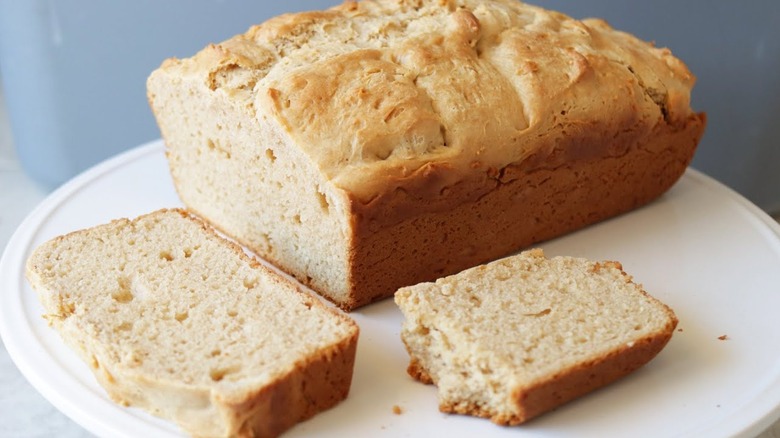
Without a reliable supply of yeast and eggs, Americans were forced to experiment with alternative ingredients. Peanut butter bread is one of several yeast and egg-free breads commonly baked during the Great Depression. The recipe includes flour, sugar, baking powder, milk, and peanut butter, which, at just 10 cents per pound in the 1930s, was a popular protein option, as meat had become expensive. People who didn't have milk could use water instead, making peanut butter bread an economical choice for the time, and even by today's standards.
Although eggs were available at the price of 12 cents per dozen, cash in general was hard to come by for the average American, many of whom lost their money to bank closures. The drop in prices also prevented farmers from making a livable wage, pushing them into bankruptcy, and later to strike. It all contributed to a climate of uncertainty that made common ingredients scarce or simply unaffordable.
Kraft mac and cheese
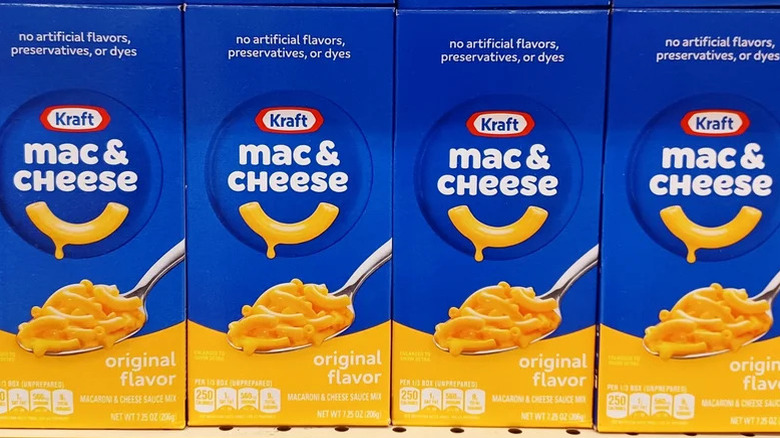
Kraft Mac and Cheese was introduced in 1937, attracting customers with its long shelf life, ten-minute cook time, ability to feed a family of four, and cost of only nineteen cents. Following January 1942, people could purchase two boxes with one ration point, which were points issued to citizens that could be paired with cash to buy high-demand foods in limited supply. By all metrics, it was the perfect Depression-era product. Over 50 million boxes of Kraft Mac and Cheese were sold during World War II.
James L. Kraft created it using a method of processing cheese, invented in 1913 by Swiss scientists Walter Gerber and Fritz Stettler. Kraft's method melted the cheese under high heat temperatures, but rather than using sodium citrate as an emulsifier like Gerber and Stettler did, he blended it with sodium phosphate and dehydrated it, resulting in the cheesy powder we know and love. Today, Kraft Mac and Cheese is still a popular, affordable option for families.
Slugburger
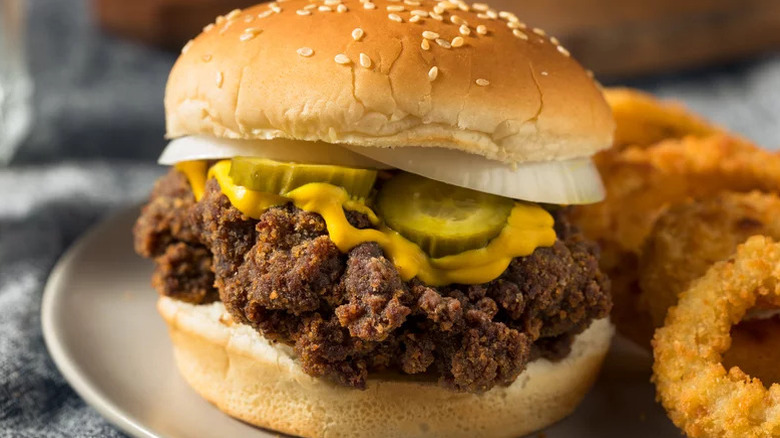
While it doesn't have the most appealing name, the Slugburger, thankfully, is slug-free. Instead, it's a fried 5-cent burger made of ground beef or pork, blended with soy and flour. The addition of soy and flour was part of a trend during the Great Depression, where people would add "extenders" to meats. The slugburger was invented around 1917 by John Weeks, who originally called it a "Weeksburger," though people also referred to it as a "doughburger."
The word "slug" is believed to have derived from the slang term for "nickel," which is how much Weeks charged for one. They're denser than traditional burgers and are deep-fried in lard or oil, giving the perfect combination of affordable and filling. As a testament to the enduring legacy of the slugburger, Corinth, Mississippi, the city where Weeks made them popular, holds an annual Slugburger Festival.
Peanut butter-stuffed onions
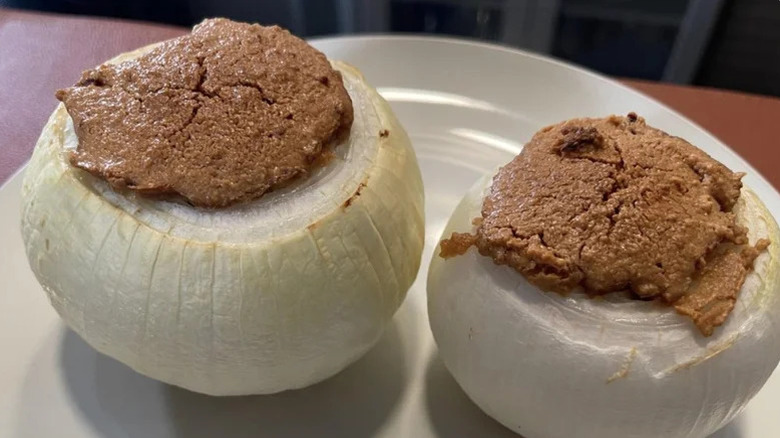
Along with substituting ingredients, Depression-era conditions forced Americans to combine unlikely ones. Peanut butter-stuffed onions are a result of such resourcefulness, an unusual pairing that would put even the most adventurous eaters to the test. However, a closer look at how it was prepared may pique your interest. It wasn't eaten raw, but rather roasted for an hour until the peanut butter was creamy and bursting from a hole in a lightly caramelized onion. People would also blend bread crumbs into the peanut butter for texture.
The recipe was originally proposed by the Bureau of Home Economics, which invested heavily in advertising it nationwide. Those who've tried it say it tastes like savory peanut butter. The sweetness of the butter overtakes the tangier notes in the onion, and the breadcrumbs add a crunchy touch that helps break up the monotonous consistency.
Hoover stew
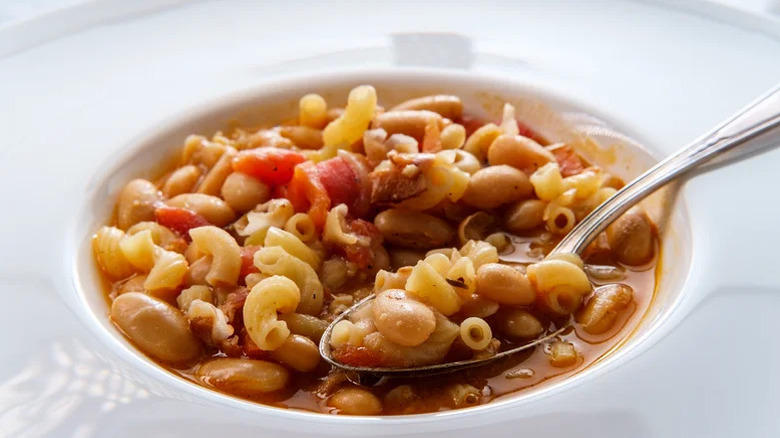
Named after U.S. President Herbert Hoover, who held office from 1929 to 1933, Hoover stew is a hodgepodge recipe made from whatever canned foods are on hand. It mainly consists of macaroni, hot dogs, tomatoes, and corn. In a pinch, corn could be swapped for beans, noodles for macaroni, and creamed chipped beef was used if hot dogs weren't available. It's a cheap and versatile dish, and still a good money-saving option today.
In the early years of the Great Depression, Americans grew frustrated with the federal government for not offering sufficient assistance and blamed President Hoover. The public outrage led to the trend of using "Hoover" to describe cheap dishes and certain aspects of homelessness. For example, homeless encampments were called "Hoovervilles," the newspapers that the homeless used as blankets were called "Hoover blankets," and "Hoover flags" referred to empty pockets that were turned inside out. Along with Hoover stew, Hoover gravy was another low-cost food named after the president.
See's Candies
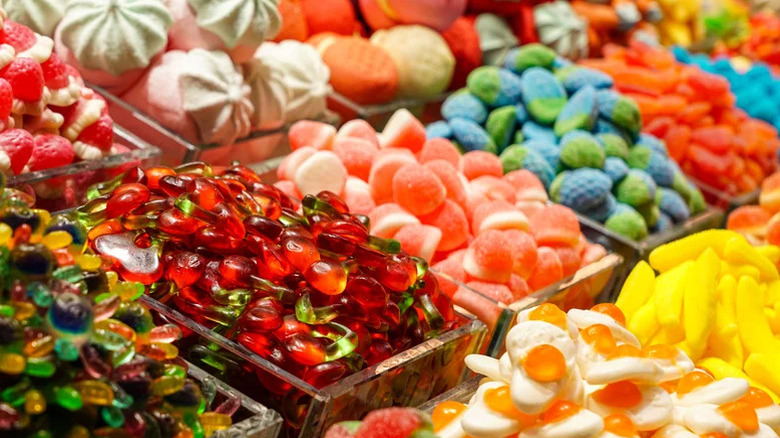
See's Candies began in Los Angeles in 1921. Opened by Charles See, who sold candies made to his mother's original recipes, it quickly became a hit. The company grew to over a dozen locations before the arrival of the Great Depression, which, if not for See's business savvy, would've derailed the company. While his competitors continued to sell candy for 80 cents per pound, See started charging 42 cents per pound for pre-paid orders over 50 pounds. The move laid the foundation for the company's "Volume Discount" pricing model, which it still uses today.
Struggling families who could no longer afford pre-Depression prices could still enjoy candies, and considering the conditions, that probably did wonders for morale. That said, See's bulk discount candy idea wasn't the first of its kind. Penny candies, which were introduced by F.W. Worthworth Co. in 1879, also allowed customers to purchase candies in bulk for one cent each.
Fun-size Halloween candy
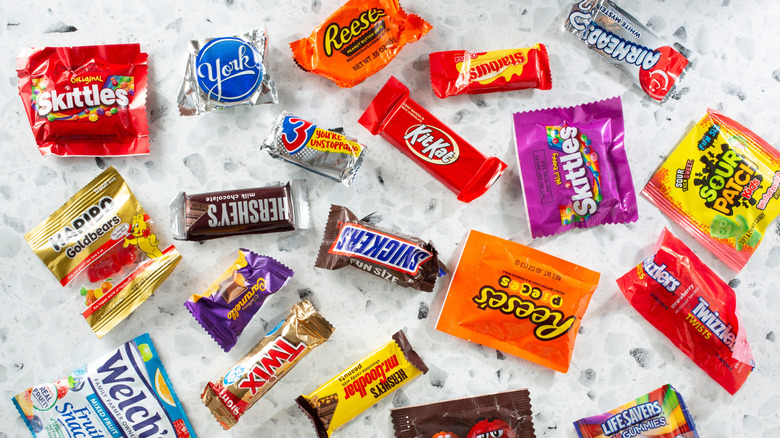
There was a time before fun-size candies filled the plastic jack-o-lanterns of young trick-or-treaters. The candy industry struggled to maintain normal production levels during the Great Depression due to an ingredient shortage. In response, the Curtiss Candy Company, maker of Butterfinger and Baby Ruth, decided to test "junior" versions of its bars, inventing individually-wrapped fun-size bars.
The actual term "fun size" was coined in 1968 by Mars, maker of Snickers, M&Ms and Twix, after joining the junior trend in 1961. Mars attempted to trademark both it and the word "fun," but was only able to secure the former. Fun size, nonetheless, became the most common way that people refer to small versions of candies of any brand. Eventually, more companies hopped on the bandwagon, many hoping to seize an opportunity to increase sales during Halloween, which is why we associate fun-size candy with trick-or-treating.
Banana Bread
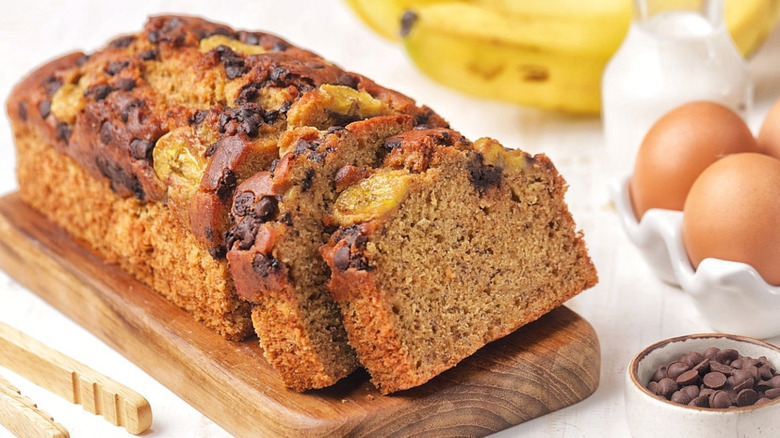
If there's one food worth thanking the Great Depression for, it's banana bread. As ingredients became more scarce, Americans began baking loaves with whatever was available — liver, beans, the aforementioned peanut butter bread, and other yeast-less varieties. Loaves were cheap and filling ways to stretch food, and bananas worked perfectly in them.
During the early 1900s, advances in refrigeration made it much easier to import bananas in bulk, which was around the time that home cooks first truly started experimenting with bananas in the kitchen, leading to the rise of banana bread. Baking powder had been invented years prior, in 1856, and was an affordable yeast replacement, which also contributed to the popularity of quick breads. A cookbook from 1933 named "Balanced Recipes" contains one of the earliest printed banana nut bread recipes.
Chocolate Depression Cake
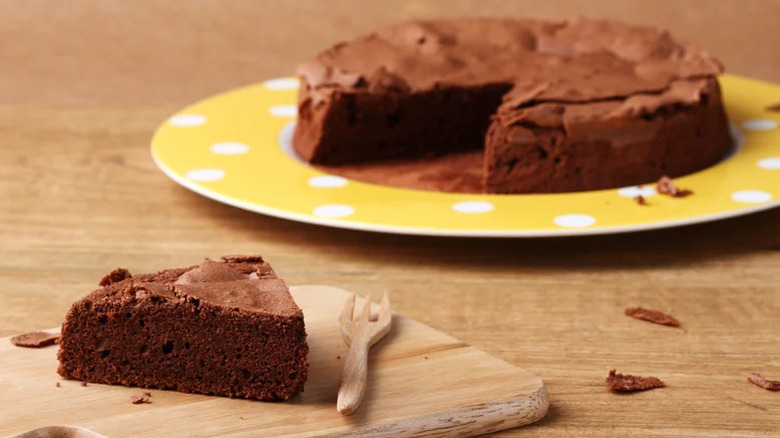
Depression Cake goes by many names — Impossible Cake, Cockeyed Cake, Wonder Cake, Crazy Cake, and Wacky Cake — and was a vegan dessert before the term "vegan" was coined. It's a cake that only needs one baking pan and doesn't require milk, eggs, or butter to riseInventive Americans figured out that what it needed instead was vinegar, baking soda, and oil. Its affordability and simplicity made it possible for people to enjoy something sweet, despite limited funds and access to ingredients.
Today, we'd refer to Depression Cake as a basic vegan chocolate cake, which makes it not only inventive for the time but pioneering as well. Considering how much we've learned about dairy-free baking since then, and the wide range of milk substitutes for cooking, Americans are probably better-equipped to adapt to Depression-like conditions, if we were unfortunate enough to experience them now.
Rocky Road Ice Cream
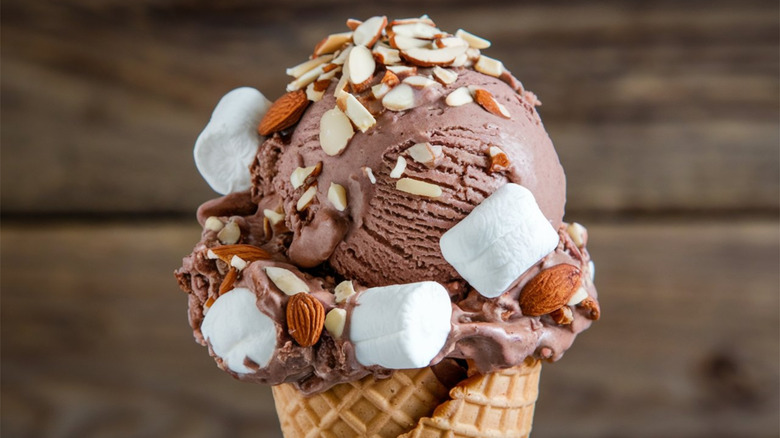
With its chewy marshmallows and crunchy almonds, creamy chocolate Rocky Road ice cream was developed in 1929 by William Dreyer and candy maker Joseph Edy, the founders of Dreyer's ice cream. It was introduced one year after the company launched, and the name was inspired by the 1929 stock market crash. Dreyer used walnuts during his initial test, but switched to almonds after showing it to Edy. The flavor would go on to become a top-five favorite among ice cream fans, still enjoyed today.
This story, however, has a plot twist. Another Oakland-based ice cream shop, named Fentons Creamery, claims to be the real inventor of Rocky Road. Melvin Fenton, the grandson of Eldridge Seth Fenton who founded Fentons Creamery in 1894, is allegedly Rocky Road's true creator — though this claim is also contested, with other accounts naming a Fentons employee, George Farren, as the creator. The true origin of Rocky Road seemingly gets more complicated as you dive deeper, but one thing we all can agree on is that it's a certified classic. Dreyer's now sells a line of Rocky Road-inspired ice cream flavors.
Mock chicken
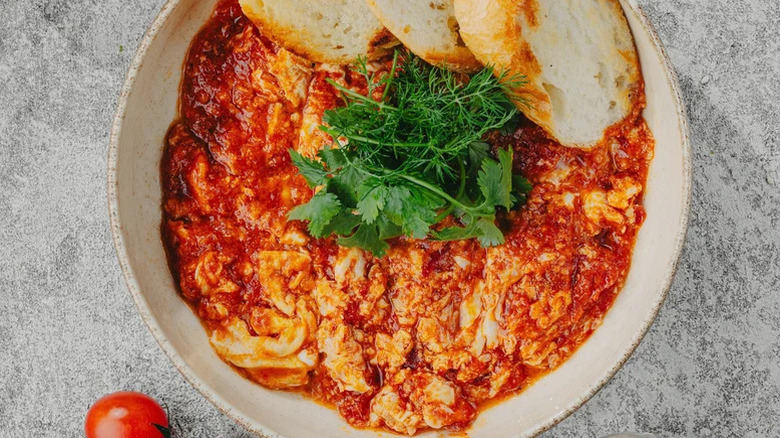
With culinary inventions like Depression cake, peanut butter bread, and mock chicken, the Great Depression may have inadvertently helped lay the groundwork for veganism. Mock chicken contains egg, so it isn't vegan; however, it might as well have been from the perspective of Americans during the 1930s. Unless you were one of the few with money, meat was mostly inaccessible, and people who owned chickens kept them alive for their eggs. Mock chicken substitutes actual chicken with egg, combined with boiled and peeled tomato, onion, and butter.
To make it, onions and tomatoes are fried in butter and scrambled together with egg. Interestingly, it was served cold with a slice of bread. It's unknown who came up with the name or how it came about, because clearly, it's closer to a scramble than to real chicken. That said, imagination goes a long way when you're trying to survive day to day.
Hasty pudding
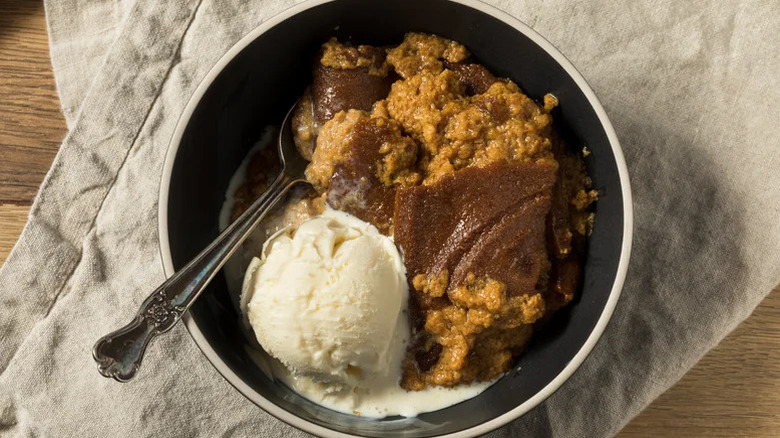
One of several desserts on Eleanor Roosevelt's budget-friendly menu, hasty pudding is a versatile custard porridge. The name "hasty" comes from how simple the recipe is, rather than how fast it can be prepared. It was created around 1599 in England, originally consisting of butter, plain flour, fresh milk, egg, nutmeg, cinnamon, and brown sugar. When the recipe arrived in America, preceding the Great Depression by more than 133 years, the English flour was replaced with Indian cornmeal because it was more affordable and accessible. As a result, people also refer to hasty pudding as Indian pudding.
Interestingly, despite "hasty" being the name, it could take over an hour to prepare, according to a 1796 recipe from Amelia Simmons's book, "American Cookery" (the first-ever cookbook published in America). Her recipe included a half pound of raisins, showing how customizable hasty pudding could be. This iconic American dessert has been referenced in such historical pieces as the "Yankee Doodle" song from the 1700s and Joel Barlow's 1793 poem about being homesick for New England.
Water pie
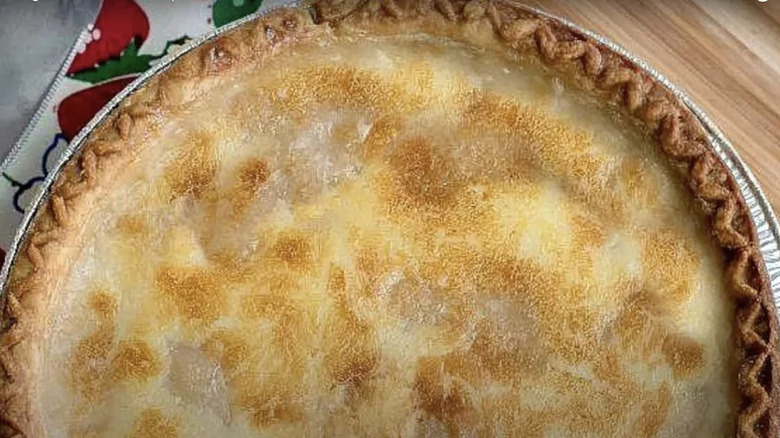
Water pie doesn't sound very appetizing, but it was often the closest thing to dessert many Americans could afford during the Great Depression. A vintage pie most people don't remember, water pie was also called "hard times pie," it's made with just water, butter, sugar, flour and vanilla extract. Like peanut butter bread and hasty pudding, it was a product of situational ingenuity.
More specifically, water pie was just one of what Americans called "depression pies," which included several simple quick-bake recipes like vinegar pie, buttermilk pie, and mock apple pie with crushed, cinnamon-sprinkled crackers. Water pie has a custardy consistency and a customizable flavor profile that can be altered on the fly when faced with unpredictable circumstances, though now it's largely a vintage pie no one remembers.
Sweetbreads
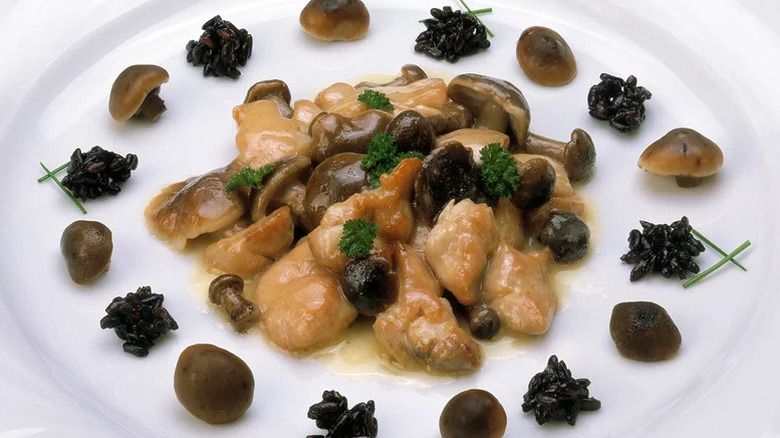
Sweetbreads aren't the sweet pastries they sound like, but rather the thymus or pancreas of a calf or lamb. They are surprisingly mild-flavored, rather than gamey, and take to seasonings well. At one point, President Franklin D. Roosevelt was forced to eat sweetbreads six times a week and had even complained about it to his wife, Eleanor. Clearly, FDR had his limits when it came to supporting her virtuous menu-overhaul. The First Lady and their housemaid, Henrietta Nesbitt, made every attempt at showcasing the versatility of sweetbreads, preparing them broiled, braised, and creamed with mushrooms.
That said, FDR wasn't the only one adding more organ meats to his diet; Americans started consuming them more as the price of regular meat increased. For example, the famous silent-era actress Nancy Caroll shared a sweetbread and mushroom patties recipe in the Photoplay's Cookbook published in 1929.
Mulligan stew
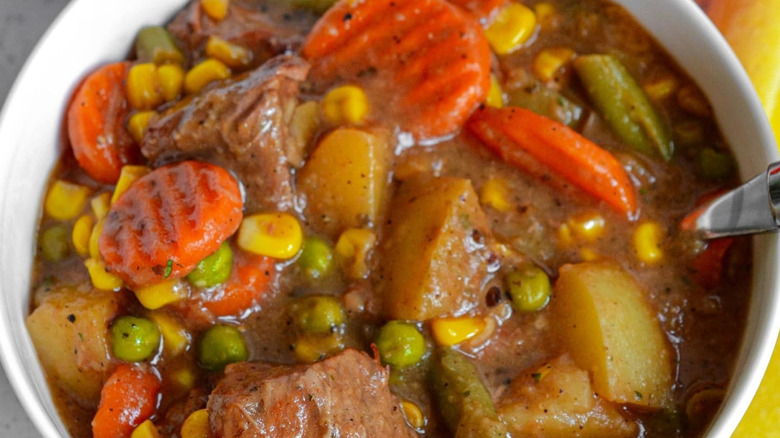
Mulligan stew, or "hobo stew," was another popular budget-friendly go-to during the Great Depression, made of literally whatever canned meats and vegetables were available. As a result, no single recipe is the same. For instance, one Mulligan stew recipe from 1940 includes corned beef, onion, canned sweet peas, ketchup, salt, pepper, and crushed hardtack (which are dense, long-lasting crackers eaten as survival food during the Civil War).
To give an example of how bad the conditions were during the Depression, people would sometimes add lint from their clothing into the stew to make it heartier. Apparently, loose-leaf tobacco was another common ingredient, added for its flavor. Like the usage of "Hoover" to describe the harrowing environment, the "hobo stew" variation of the name was inspired by "hobos," which is what homeless people were called. Homeless encampments were also called "hobo jungles."
Dandelion salad

Clara, the nonagenarian host of Great Depression Cooking With Clara, says that during the 1930s, dandelion greens were nutritious and easy to find growing wild, which made them popular. She'd simply forage for them in her yard, at the park, or any area they were growing, remove the roots and dead leaves, clean up the good ones and voilà, she had instant greens for salad or to incorporate into cooking
Foraging for dandelion greens was a common practice for many Americans. They offer a long list of health benefits like vitamins C, B, and A, calcium, magnesium, potassium, and carotene, to name a few. Beyond being nutrient-dense, dandelion greens can be eaten solo as a simple salad, paired with other leafy greens, or served with braised meats. You can also use them to make a one-of-a-kind pesto.
The poorman's meal
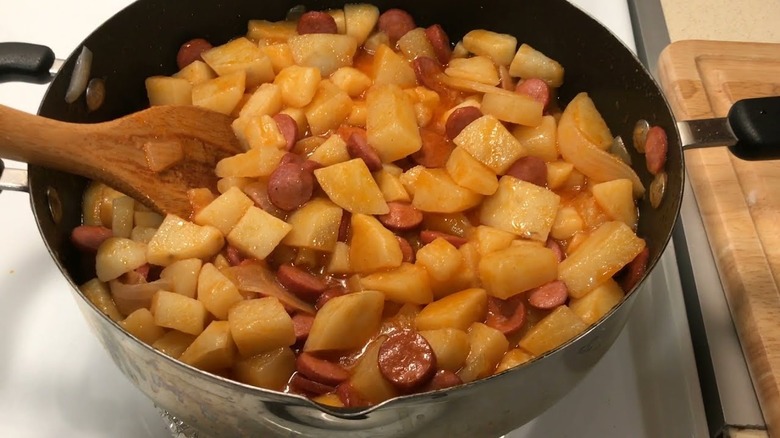
If the Great Depression taught Americans one thing, it was how to eat economically. Leftovers were transformed into inventive recipes and disparate ingredients were combined in ways they hadn't been before. The poorman's meal is one such dish, made from potatoes, onions, salt, pepper, and either leftover hot dogs or burgers. Other variations might've included corn, garlic, or cream of mushroom soup. People used fresh hot dogs and burgers when available, and if they weren't, sometimes cubed spam (really, whatever meats they could procure), resulting in a hearty dish reminiscent of shepherd's pie.
Compared to some of the other foods eaten by Americans then (like deviled eggs with tomato sauce) the Poorman's Meal is a gourmet dish. Even better, it can be spruced up with vegetables, cheeses, and sauces. And yes, that does include tomato sauce.