

15 Old-School Snacks Everyone Ate In The '70s
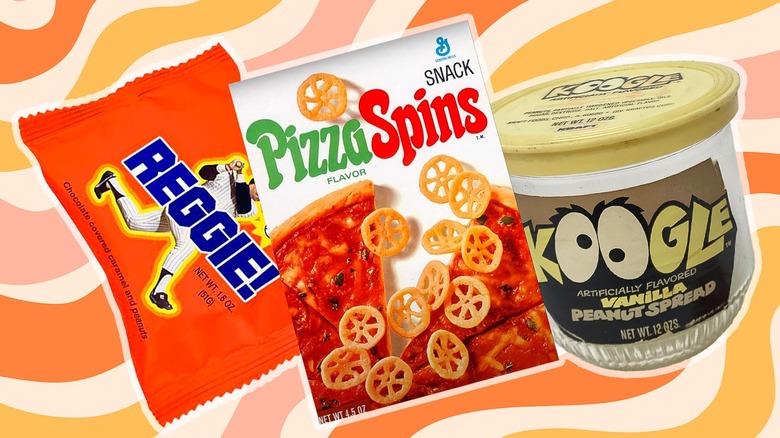
Whether you remember them or not, there were lots of interesting 1970s snacks that were popular throughout the decade. Perhaps you grabbed some on a work break, found them as a special treat your mom packed in your school lunch, enjoyed them as an after-school snack, or treated them like dessert.
Half of these 1970s snacks have stood the test of time in one form or another, whether staying on the shelves year after year or blipping in and out of existence. Four of the snacks have stayed popular over the decades and have never gone away; a couple more made a few comebacks, albeit never permanently, and two more have disappeared but have copycat versions available outside the U.S. Meanwhile, the other half have seemingly disappeared forever. Our list of 16 old-school 1970s snacks will probably leave you wishing you could try a few that aren't around anymore, but the good news is that some you may have forgotten still are around to help you indulge your craving.
Dunkin' Donuts' Munchkins
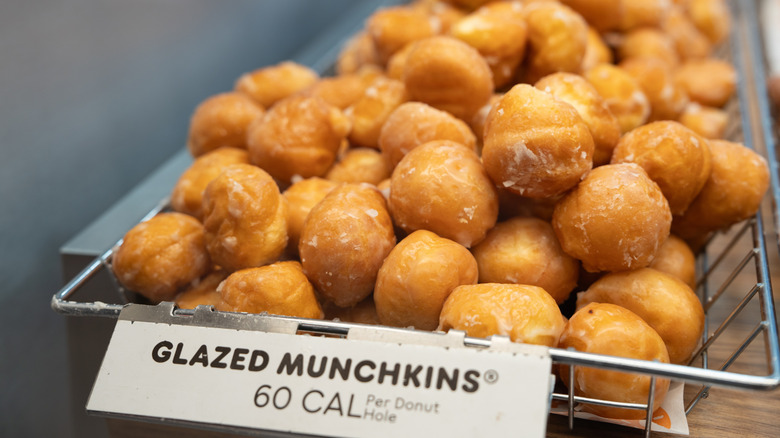
Dunkin' Donuts' Munchkins, which are still popular decades later, were a popular 1970s snack that everyone enjoyed. While Dunkin' didn't invent donut holes, its idea of selling bite-sized versions of its larger donuts really took off in the early 1970s, and for multiple reasons. First of all, they came in a smaller portion size than larger donuts, which some people preferred since five Munchkins were about the equivalent of a single donut. Since you could mix and match flavors, it meant you weren't restricted to deciding on just one flavor when you had a finite amount of stomach space for donuts. Plus, they started out at just $0.19 for a bag, which made them even more popular.
They eventually got rebanded as Munchkins after the company did a trial run to see whether they sold better as donut holes or Munchkins. The Munchkin name won out, with its connection to "The Wizard of Oz," appeal to kids, and size reference. In fact, the company's new marketing campaign deliberately targeted kids, and was successful enough that the company started making 10% of its sales just from Munchkins in the 1970s.
Cup Noodles
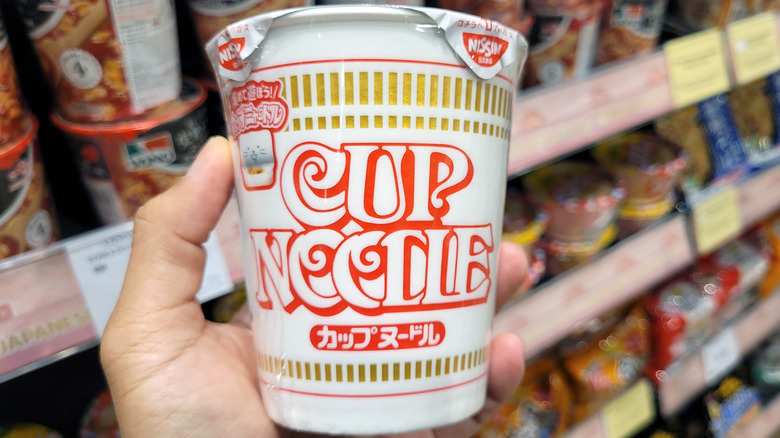
Cup Noodles were super popular in the 1970s and are still very much around. The whole instant noodle idea started in Japan in 1958, when Nissin Foods' Cup Noodles grew out of post-WWII Japan's need for cheap food made out of available ingredients. All you had to do was add boiling water, and these "magic noodles" (known formally as Chicken Ramen) were ready in just a couple of minutes. By 1971, the creator of the noodles, Momofuku Ando, had an idea to expand his product overseas as Cup Noodles.
Those early Nissin Cup Noodles from the 1970s came in a styrofoam cup, with a noodle block filling part of the cup and room for hot water to cook them. They were convenient as a meal or a snack and have continued to be popular through the years; they even went to space in 2005 as Space Ramen. You can still find them throughout the world, where they have been imitated in a variety of ways. However, Nissan has tried to keep up with trends internationally by creating over 150 flavors to satisfy palates everywhere.
Kraft Koogles
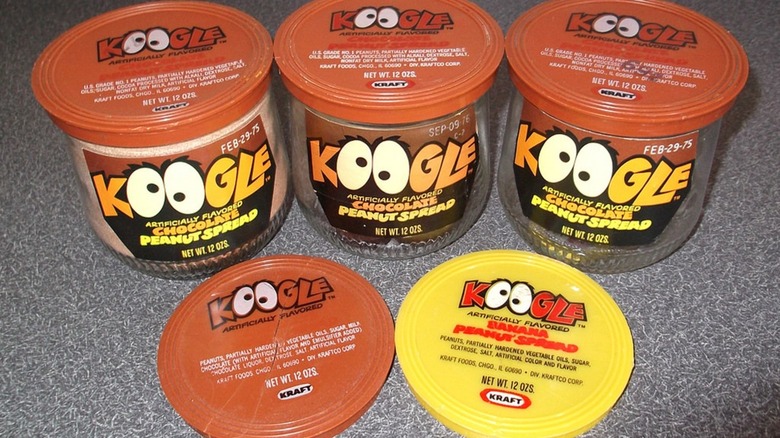
These days, the most exciting peanut butter you're likely to see is the occasional bottle of peanut butter and jelly swirled together. However, in 1971, Kraft introduced a flavored peanut butter brand called Koogle. You could choose from flavors like cinnamon, chocolate, banana, and vanilla peanut butter. Sure, you could add those flavors to your peanut butter on your own today, but it's so much easier when your peanut butter comes that way in the first place.
Not only was this peanut butter flavored, but it was sweet and had a fun logo with googly eyes. It also advertised that it wouldn't stick to the roof of your mouth like regular peanut butter, so it appealed to kids on various levels. It possibly met its demise from being more expensive and not being all that healthy. However, other sweet spreads like Nutella have thrived, so we're left wondering why Kraft Koogle disappeared by the end of the decade.
Pizza Spins
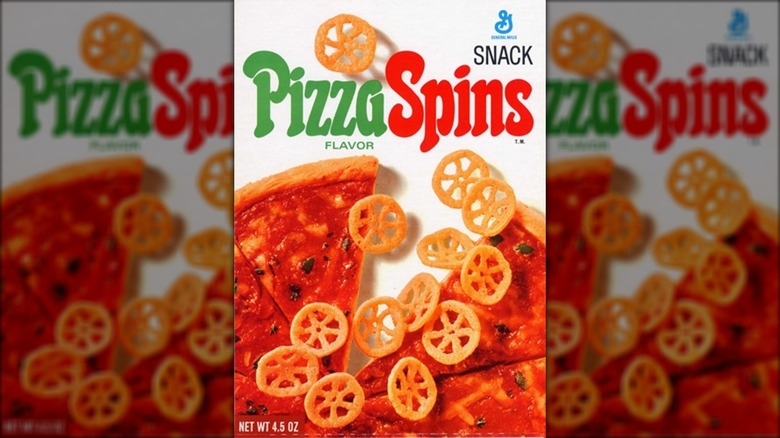
Pizza might not have been easy to come by for everyone in the 1970s, but you could enjoy the flavors of pizza in this General Mills snack any time. While Pizza Spins were invented in 1968, everyone was eating them throughout the following decade. Who didn't like the idea of a snack that tasted like pizza?
These small bite-sized corn-based snacks were cheese, tomato, and pizza spice flavored. They look more like little wagon wheels to us, but we can see where they were going with the idea. The box itself was green, white, and red, which was supposed to bring to mind the colors of the Italian flag. Unfortunately, the company discontinued the snack in 1975 and has never brought it back. So, if you didn't get to enjoy Pizza Spins in the 1970s, you're out of luck and can only imagine what this snack might have tasted like. In fact, the vintage pizza snack has been gone so long that many people have just forgotten about it altogether, but there are a few fans still wishing it'd make a comeback. One of the closest things fans have found is the Mexican Bocadeli Trompetas de Pizza.
Kraft Squeez-A-Snak
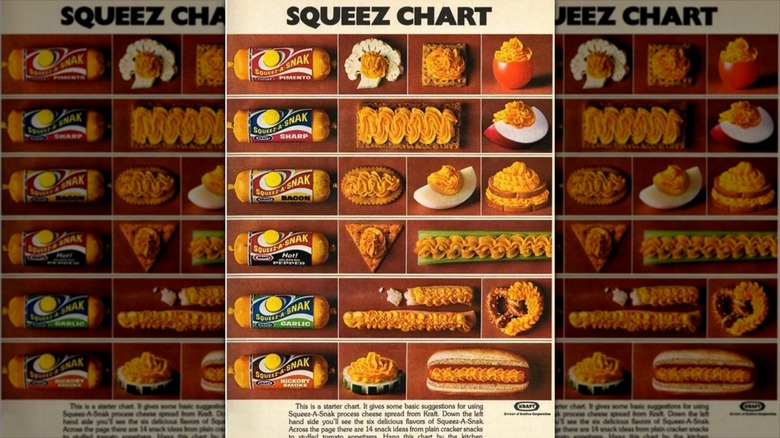
Kraft Squeez-A-Snak wasn't the first processed cheese spread to hit shelves, but it was certainly a popular variety in the 1970s. This version didn't come in an aerosol can, though. Instead, it came in a plastic tubular package like ground sausage, with a port on the top side for squeezing it onto whatever deserved a bit of processed cheese. Thus, the name Squeez-A-Snak was a fitting one.
The notable thing about Squeez-A-Snack was the star-shaped nozzle that delivered cheese to your crackers, nachos, baked pretzels, or other cheese-conveyance food. This meant the cheese came out looking like you'd used a fancy cake icing tip instead of a plastic tube. It came in six different flavors: pimento, sharp, bacon, hot pepper, garlic, and hickory smoke. While those on social media who remember it from the '70s often remember it fondly, they report that the flavorings tasted very artificial, but that kids seemed to like it. After all, it's always fun to squeeze your food.
Reggie Bars
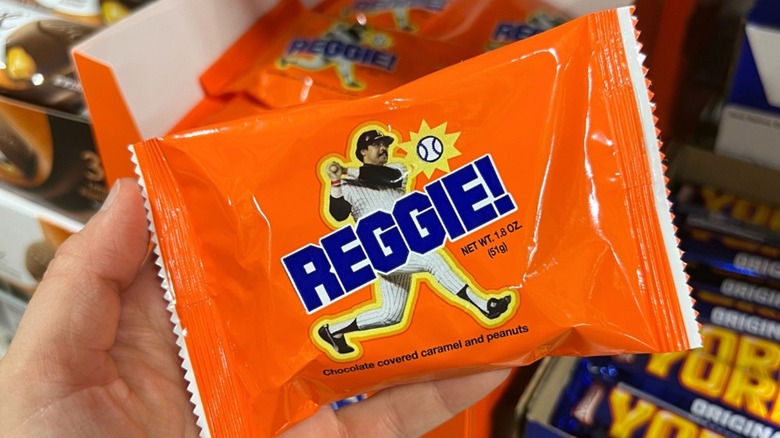
In 1977, Reggie Jackson joined the New York Yankees, then hit three home runs to help them win their first World Series game in 15 years. When the New York Yankees played their first game in 1978, every attendee got a Reggie! bar, which led to them throwing their bars onto the field in celebration after Jackson hit a home run. Reggie! bars were all the rage that year, making 11 million dollars in the New York area alone.
The candy was more of a patty shape than a bar, but the name held. It was made from milk chocolate, peanut butter, caramel, and roasted peanuts. The bars stayed popular but were discontinued in 1981, after the Curtis Candy Company had some financial problems. The Clark candy company brought them back temporarily in the 1990s, each with one of three limited-edition Upper Deck baseball cards inside. They made another comeback in 2023, so it seems that nostalgia brings them back every now and then.
Jell-O Pudding Pops
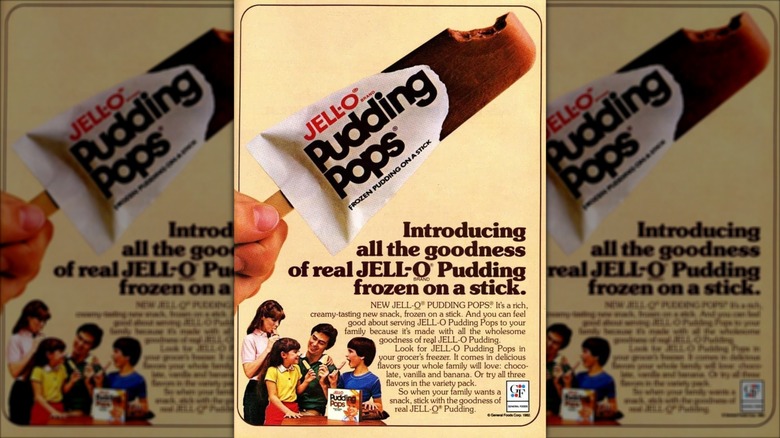
Every kid in the 1970s and 1980s saw enough Jell-O Pudding Pops commercials to either beg their parents for them or try to make homemade ones. The idea of a smooth and creamy pudding in popsicle form was just irresistible.
They started out in test market areas in 1978 and did well enough to go mainstream in 1979. However, the company had advertised recipes for how to make these using Jell-O pudding since the 1960s, so customers had been primed with advertising long before the commercial version showed up in the freezer aisle. Just like Jell-O's pudding, its Pudding Pops came in flavors like chocolate, vanilla, butterscotch, and even banana. And the company made bank with them, making $100 million in sales the first year and tripling that amount by the fifth year.
Unfortunately, Pudding Pops have been just a memory since they were discontinued in 2004, yet plenty of people still think back with pleasant nostalgia for the frozen treat. However, if you're wondering what happened to Jell-O Pudding Pops, customers just weren't buying enough of the frozen treat to keep making them.
Jell-O 1-2-3
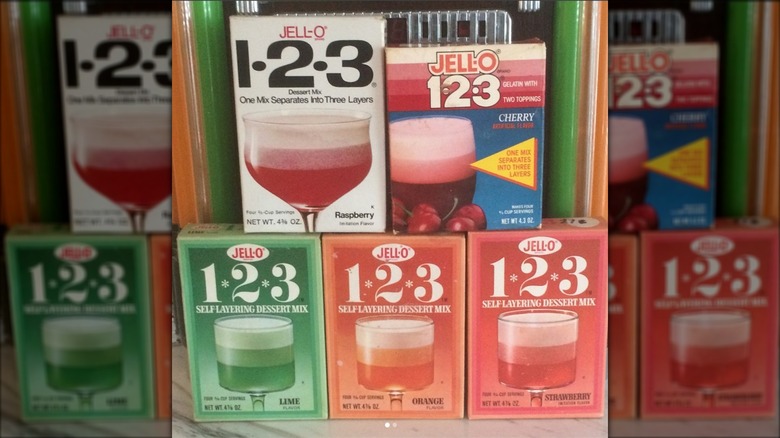
Jell-O 1-2-3 came out in 1969, and everyone was eating this snack by the 1970s. The beauty of this gelatin dessert was that all you had to do was mix the powder with boiling water and let it cool in the fridge for three hours, and it magically separated into three layers. Previously, if you wanted a three-layer gelatin dessert, you'd have to let each layer set before adding the next layer, so 1-2-3 took a lot of the work out of making a layered gelatin dessert.
The other neat thing about this dessert was that each layer had a distinctive texture. It was only the bottom layer that was true Jell-O; the middle layer was more creamy and pudding-like, and the top layer looked like whipped cream, but was more fluffy and spongy. It came in strawberry, raspberry, and cherry, along with two citrus flavors of lime and orange.
As 1-2-3 lost its novel appeal, it started disappearing from stores in most regions of the U.S. by the middle of the 1980s, and the last box vanished from shelves in 1996. Since then, they've only returned as a DIY pudding pop mold kit.
Betcha Bacon
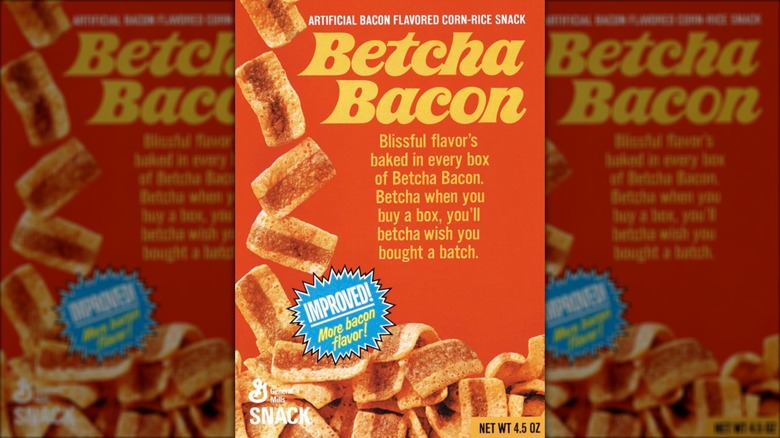
General Mills put out a bacon-flavored snack in the early 1970s called Betcha Bacon. The snack itself looked like mini pieces of bacon, but it was made with corn and rice with artificial bacon flavoring. You could also catch a little cheddar cheese and buttermilk in the flavor profile, which was an interesting twist. Despite all the print and television advertisements claiming that Betcha Bacon's flavor was "blissful," they must not have been blissful enough because they never made it out of the '70s.
Ultimately, the company discontinued making Betcha Bacon after some four years, so it wasn't something people were eating all through the '70s. Even after attempting to improve it by adding more bacon flavor, it just wasn't flying off the shelves like the company had hoped. The concept seemed to work better in the U.K., where you can still get a similar bacon-flavored corn snack called Frazzles.
Chocodiles
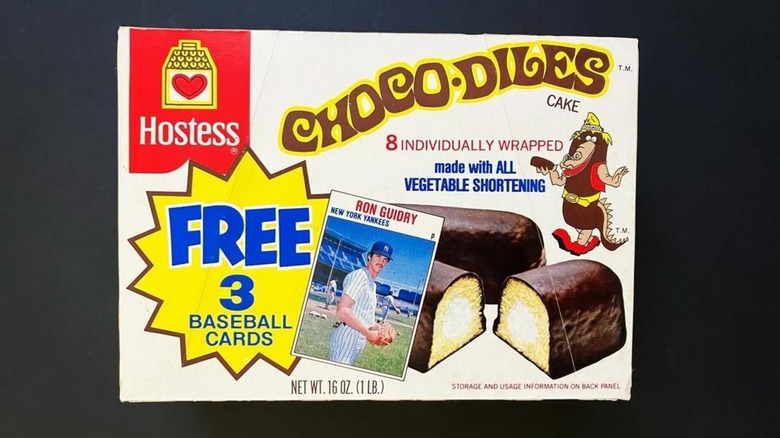
Twinkies had been around for over 40 years when they got a chocolate makeover in 1977 as Chocodiles. The idea was simple. You had a regular yellow sponge cake Twinkie with its ordinary white cream filling, but with a new chocolate coating on the outside. Over the years, there have been Twinkies with chocolate sponge cakes, but these are not the same as Chocodiles.
Chocodiles came with its own mascot: Chauncey Chocodile, the crocodile. He appeared not only on the box, but also in commercials for the snack, offering Chocodiles to everyone he met. Granted, he never became a popular snack mascot and has largely been forgotten.
Chocodiles have made a few comebacks, both with and without the original name. For a while, you could find Fudge Covered Twinkies, and then there were DingDongs x Twinkies Mashups that were similar in texture but not in shape. While their most recent return was actually as Chocodiles, Chauncy Chocodile was nowhere to be found. Instead, the mascot is a cartoon Twinkie dressed as a cowboy, which is nowhere near as fun as a crocodile mascot.
Marathon Bars
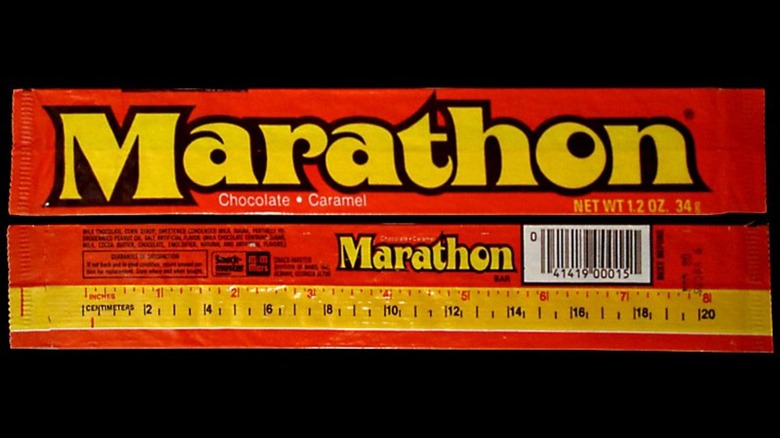
Marathon bars had their run throughout the 1970s and the beginning of the 1980s. It's one of those discontinued candies that you still hear people speak fondly of today, but you know you're not likely to ever get to try one. When it came out in 1973, it had a ruler on it so that you could see just how long it was – an impressive 8 inches. Even though we have king-sized candy bars now, most tend to be closer to 7 than 8 inches long.
Marathon bars were different in other ways, too. It had a loosely braided type of structure that featured chocolate and chewy caramel. The idea behind the name was that it took a long time to eat it, supposedly equivalent to running a marathon.
Interestingly, Cadbury launched a similar candy bar in the 1970s called the Curly Wurly, which is still available in the U.K. Meanwhile, Marathon was discontinued in the U.S. in 1981. Some snacks just weren't as popular with U.S. consumers as they were internationally.
Space Food Sticks
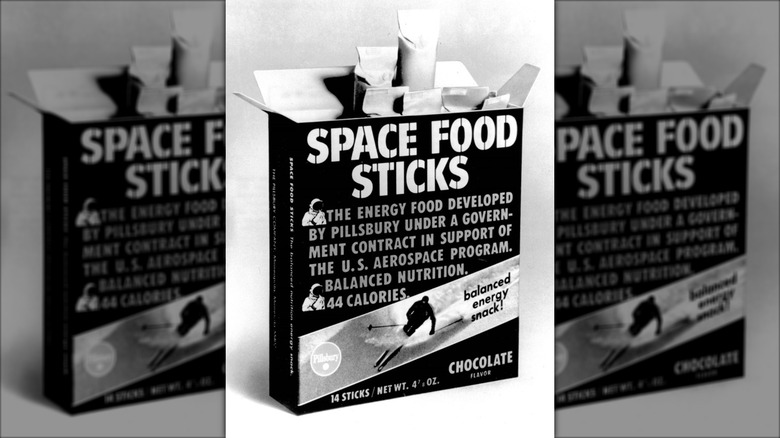
With the U.S. landing on the moon for the first time in 1969, there was quite an outer space craze in the snack realm (and elsewhere) in the 1970s. Space Food Sticks were more than just a part of that trend; this snack actually went to outer space on several missions, starting in the previous decade. In fact, the original packaging said that this snack was "the energy food developed by Pillsbury under a government contract in support of the U.S. aerospace program." It promised "balanced nutrition" from its 44 calories.
These energy snacks were developed not to crumble, so that the astronauts wouldn't have crumbs flying around the cockpit in their space missions. Of course, space-centric advertisements for Space Food Sticks had everyone wanting to try them in the 1970s. Not only did they come in chocolate, but you could also get them in caramel and peanut butter flavor, too. It wasn't long before Pillsbury changed the name of this snack to Food Sticks and changed the marketing as well. Some time in the 1980s, they disappeared completely.
Space Dust Sizzling Candy
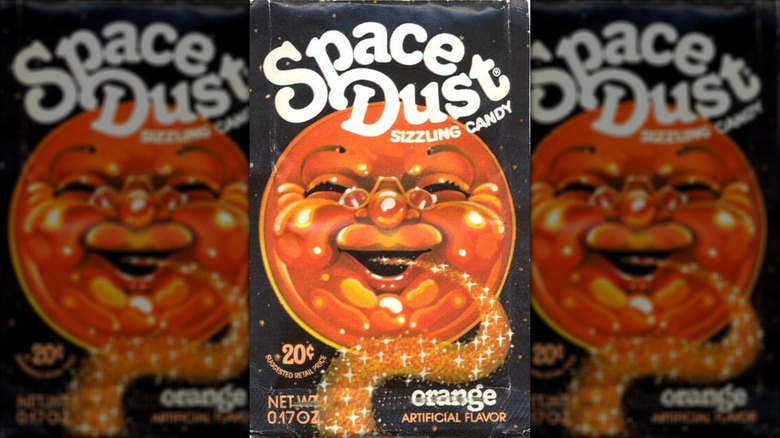
Another snack capitalizing on space travel in the 1970s was Space Dust Sizzling Candy, a popping candy that started life as Pop Rocks, but didn't last as long. The candy actually started as General Foods' attempt to make instant soda drink tablets in 1956. While the resulting carbon-dioxide-infused tablet didn't work all that well to turn water into soda, the creator noticed that they sizzled and crackled in his mouth. He added flavor to it and patented it in 1961, but General Foods didn't do anything with the idea until 1975, when it launched the candy as Pop Rocks. Then, in 1978, the company decided to try crushing the Pop Rocks into powdered form and calling it Space Dust Sizzling Candy. The flavors even had space-related alliterated names like Galactic Grape, Orbital Orange, and Cosmic Cherry.
While Space Dust was even more popular than Pop Rocks for a while, it lost momentum after being renamed Cosmic Candy. Parents complained that Space Dust sounded too much like the illegal drug Angel Dust and was encouraging drug culture. Then, both Pop Rocks and Space Dust were discontinued after rumors started that eating them and drinking soda at the same time would make your stomach explode. While Pop Rocks managed to eventually make a comeback, Space Dust Sizzling Candy ended up joining the ranks of retro snacks most of us have forgotten.
Jelly Belly
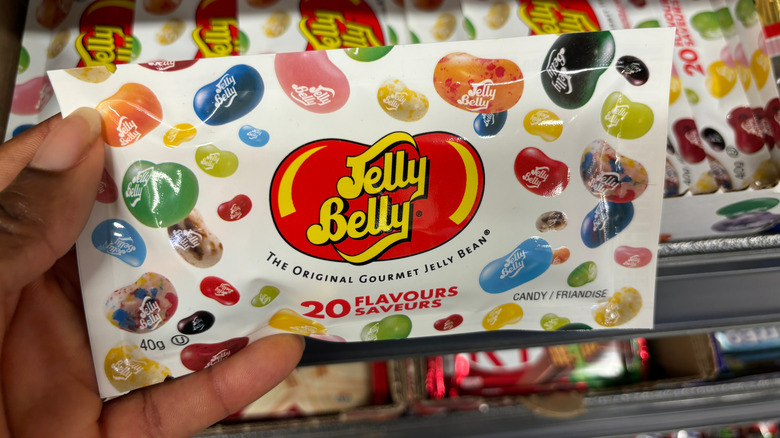
While Ronald Reagan's love for Jelly Belly jelly beans made them popular during his presidency in the 1980s, everyone was already eating them in the 1970s. While the company that makes Jelly Belly had already been making jelly beans (even small ones) for a while, it didn't come up with the idea of miniature-sized Jelly Bellys until 1976.
Jelly Bellys started out with only eight ordinary flavors, such as cherry, grape, lemon, and tangerine, as well as licorice. However, the company also had some more unconventional flavors like root beer, cream soda, and green apple. The company hasn't stopped expanding its flavor offerings ever since and has remained popular. Despite all the new flavors that have come out over the years, one of the original flavors — "very cherry" – remained the best-selling one until buttered popcorn overtook it in popularity for a brief five years between 1998 and 2003. Licorice is still in the top five, though.
Hunt's Snack Packs
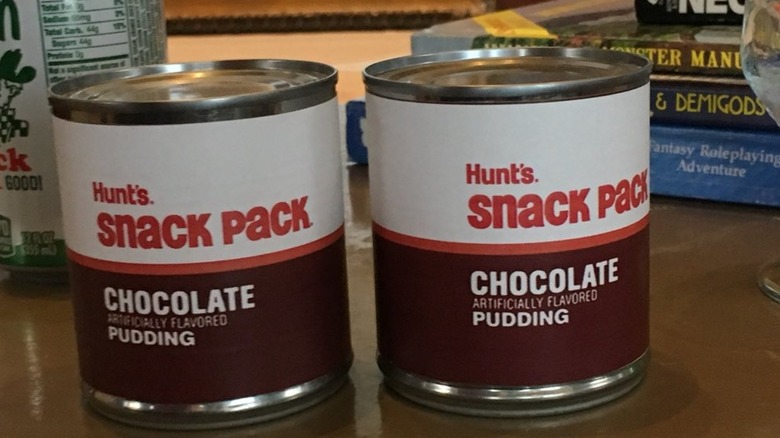
Hunt's pudding Snack Packs were created in 1968 and remained popular throughout the 1970s and beyond. They often showed up on picnics and in school lunches from home as a special treat. You may still run across some in the snack aisle at the grocery store these days, but they somehow hit differently coming out of their original pull-tab tin cans, and we'd swear they were tastier back then, too. We like the fact that they contain real milk and that they've never contained high fructose corn syrup, either, making them seem like a better sweet treat choice than some others.
Back in the 1970s, they came in eight flavors, and some are still available today, such as chocolate, chocolate fudge, vanilla, lemon, and butterscotch. There was also banana, which eventually evolved into banana cream pie. The brand switched to plastic packaging by 1984, but consumers have continued to request a return to the original metal Snack Pack containers.