

How To Choose The Best Grill For Your BBQ Needs
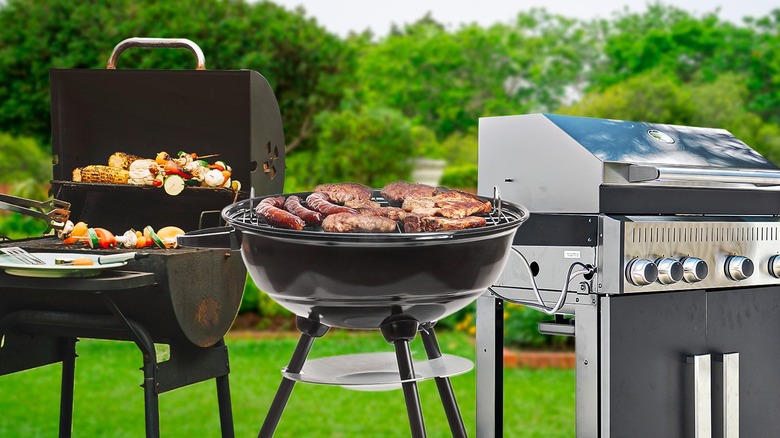
There's something romantic, perhaps even therapeutic, about making a meal on a grill. Maybe it's because it's done outside, maybe it's the flavor of the charcoal and smoke that envelops every nook and cranny of whatever you're making, or maybe it's the classic grill marks that make a simple burger or hot dog look incredible. If you are as much of a grilling romantic as we are but don't have a grill of your own yet, we've got great news: there's a grill out there for you.
There are a lot of different types, styles, and sizes of grills to choose from, and depending on how often you grill, what you're cooking, your budget, and the amount of space you have to work with, you can find the one that suits your grilling needs. You're just a griller, standing in front of a variety of different grills, asking which one is just right for you.
We sat down with Matt Abdoo, co-owner of Pig Beach BBQ and a firm believer that there is "nothing quite like live fire to hit the soul of a human," to pick his barbecue-infused brain on the subject. We got the inside scoop on figuring out how to choose the right grill based on these different factors, and to generally talk about why grilling is one of the best ways to prepare food. Whether you're looking to grill burgers and hot dogs, Italian sausage for sandwiches, or salmon and veggies for kebabs, or you want to smoke a rack of ribs or chicken wings to tender, falling-off-the-bone perfection, there's a grill out there to turn your summer, fall, spring, and even winter into a hot grill one.
For smaller groups and spaces
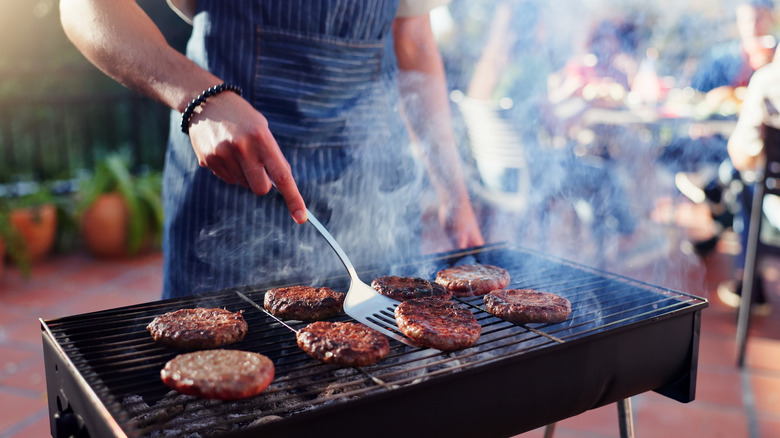
For anyone who lives in a city and has accepted the fact that the real estate market leaves you no choice but to rent, having a home grill may seem like a charcoal-laden pipe dream. Fear not, my lease-holding friends — you have options! Let's start with apartment dwellers who are lucky enough to have a balcony or rooftop space. For this, Matt Abdoo recommends a smaller tailgate style grill, something that can fit a few bourbon burgers, hot dogs, and chicken breasts and thighs. And before you think, "Hey, what about an electric grill that I can use indoors?" Abdoo would like you to move past that thought pretty quickly. Sorry, George Foreman grill, it's not you, it's us. Even in a small space, you should have the option to maximize flavor, and an electric grill just isn't going to get the job done.
If your outdoor space is limited, you can get a small charcoal grill, like Weber's 14-inch Smokey Joe charcoal grill, or Weber's Go-Anywhere gas grill or Weber Traveler, both of which use minimal propane. And if size really is a deciding factor, the tailgate style grills are designed for travel and portability, meaning once you're finished, you can fold them up and put them away for next time. That same travel-style grill can even be taken out to a local park if grilling on a balcony or rooftop isn't an option — just make sure you pack enough charcoal or propane for the journey to get your proteins nice and hot.
For bigger groups and spaces
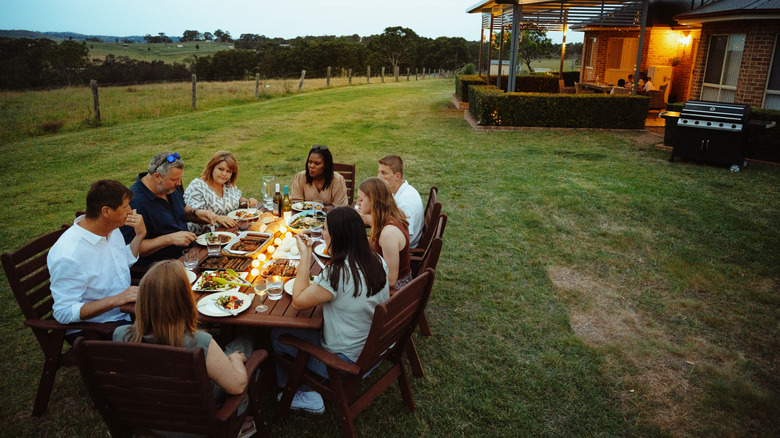
If you are lucky enough to have backyard space, you can invest in a backyard grill. If you've got a big family to cook dinner for, you'll want a grill that can accommodate all that extra food. For Matt Abdoo, who has a family of four that enjoys the fruits of his grilling labor, having a grill that can get dinner on the table in a quick and reliable manner is the ideal scenario. For him, that kettle charcoal grill or the three-burner gas grill will more than get the job done. But what if you're the house that is the go-to grilling house? You're the one hosting the weekend barbecues, the outdoor parties, and the Sunday night dinners? You need a grill that can stand up to the heat.
In this situation, you'll need to look for a grill that has more BTUs (British Thermal Units), or heat energy. The bigger the grill, the more BTUs required, meaning you can throw more food on there without worrying that there isn't enough heat to accommodate everything. You could opt to buy more than one standard-size charcoal or gas grill, or you can just get something larger, like a ranch-style grill that can handle more food. Abdoo notes that these bigger grills get expensive, but if you're getting a lot of use out of it, it's a worthwhile investment.
For the classic burgers, hot dogs, and chicken
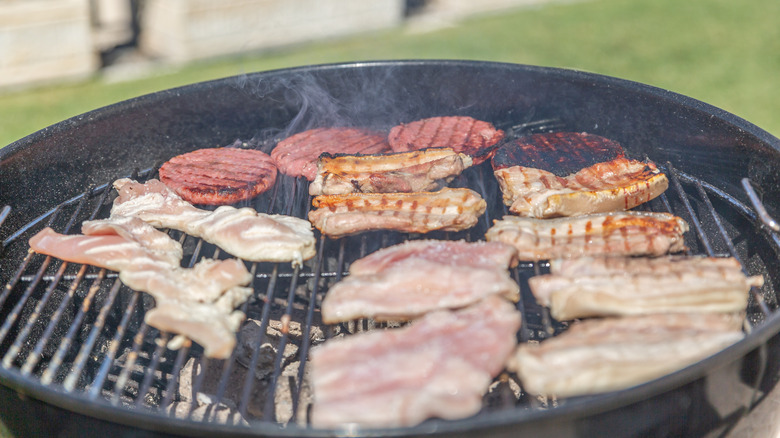
When a lot of us think of grilling, we think of the classics. Burgers, hot dogs, kebabs, and perhaps a few chicken breasts to accommodate the non-red meat eaters more than fits the bill. For those of us who fall into this category, Matt Abdoo recommends a charcoal grill, both for flavor and budget. But hey, what about a gas grill? Isn't it just as flavorful as the charcoal grill, and as budget-friendly? In short, not really. Not only do gas grills not deliver the same flavor as using charcoal, they do tend to run more expensive than the charcoal alternatives. That isn't to say that a gas grill is a lesser product — not by a long shot. However, if you're looking for that specific smokey, charred flavor on your grilled meats, the charcoal grill really is the best option. With the charcoal grill comes a little more work, like heating up the charcoal in a chimney starter before you even start to think about putting food on the grill.
Abdoo sums it up relatively simply, "Charcoal is always going to give you the best flavor." So, while the gas grill saves you time and effort by not having to wait for the charcoal to heat up, you end up sacrificing the charred flavor that makes a burger or a lamb kebab so darn tasty. There's no wrong choice, necessarily; it just comes down to deciding what your priorities are.
For the low and slow meats
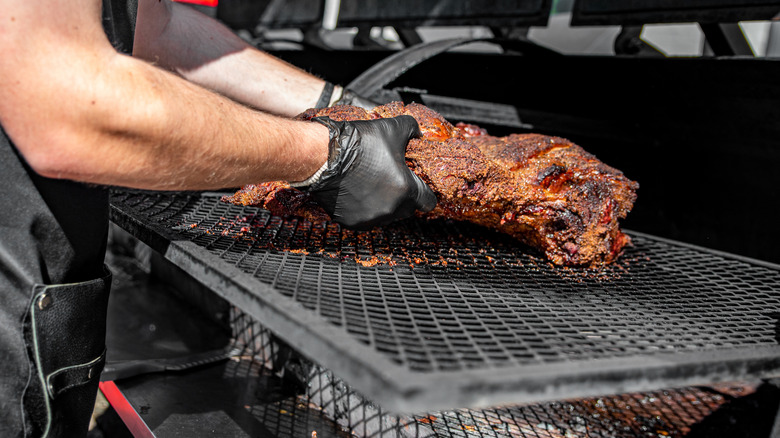
Burgers, hot dogs, and kebabs are the go-to meats we think of when it comes to grilling, but there's an entire world of meats to choose from that can benefit from an extended cooking time. Enter the pellet smoker. If you want to start slow-cooking ribs, pork shoulder, beef brisket, and the like, a pellet smoker may be just the grill for you. However, it's important to understand that a pellet smoker and a charcoal or gas grill are not the same thing.
First off, unlike a gas or charcoal grill, which use direct heat to quickly cook and sear, a pellet smoker uses indirect heat, resulting in a lower, slower cooking process. The heat source differs, too. While a charcoal grill uses coal briquettes or lump charcoal and a gas grill uses propane or natural gas, a smoker burns compressed wood or pellets.
Matt Abdoo uses cherrywood, hickory, or a combination of both to smoke ribs, brisket, turkey breast, sausage, and wings at Pig Beach BBQ, imparting a distinct, savory flavor into each meat. Brands abound, but Abdoo is a firm believer that when it comes to purchasing a quality smoker, you should trust the big names in the business rather than a brand you've never heard of. Weber, Blackstone, Traeger, and Big Green Egg are just a few of the big names on the market, and if you do choose to get a smoker from one of the big brands, you could be spending anywhere between $400 and $5000.
For the budget-conscious
Remember when we told you that if you want to get all the benefits of smoked meats, you'll need to spend a pretty penny on a quality smoker? Well, that's still true, but that doesn't mean that you can't achieve grilled greatness on a budget.
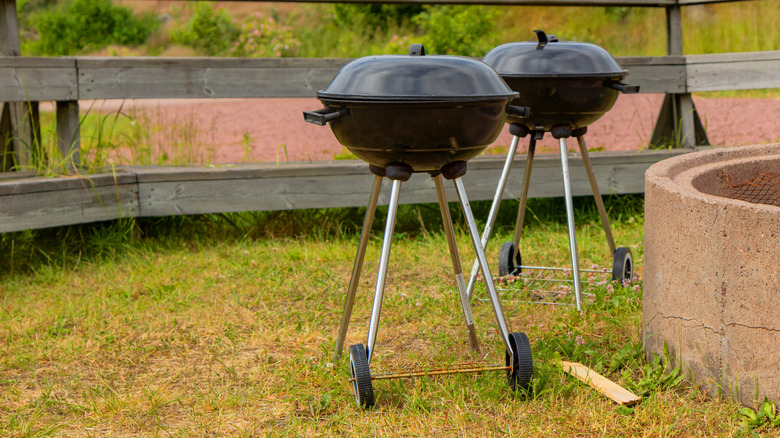
If you've got the space for a big grill but don't want to spend several hundred or even a few thousand dollars on one of the bigger real estate items, you're in luck. Depending on the size, a kettle charcoal grill will run you between $100 and $550 from Weber, or between $80 and $270 from Napoleon, and a 15.5 lb bag of Royal Oak hardwood lump charcoal will cost another $18 from Home Depot. This is considerably less than what you would spend on a gas grill (between $250 and $1000 from Weber) and an 11 lb tank of propane ($87 from Lowe's) that needs to be refilled regularly, especially if you're grilling several times a week. Plus, you can store and reuse your charcoal once or twice before needing entirely new briquettes, meaning you won't need to buy new charcoal as often.
But what if you want that impressive pellet smoker but don't have the budget for one? That's okay, says Abdoo, because that charcoal kettle grill is capable of smoking, too. By using a bag of charcoal that is infused with wood pellets, like the charcoal and hickory blended pellets from Royal Oak, you can get all the benefits of charcoal grilling, combined with that slow, deeply smoked flavor that a quality smoker delivers. As long as you're able to keep an eye on the temperature, you can slow cook on a charcoal kettle grill at will without the heavy price tag.
For the tech and gadget lover
When it comes to cooking, it seems like there's a gadget or a gizmo for everything. Why pay attention to something on the stove or in the oven when you can employ a techy toy of some kind to do the work for you? Grills, it turns out, are not exempt from tech innovation, and unlike a lot of kitchen gizmos that have one use and aren't really all that useful to begin with, the ones you'll find on the newest grills and smokers are pretty darn helpful.
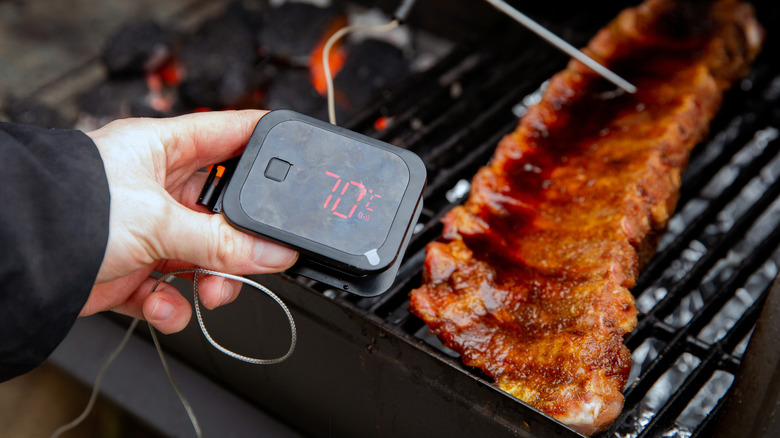
One of the most daunting tasks of grilling is getting the temperature just right, so rather than playing around with the lid and air holes, checking the temperature every 15 minutes, and ultimately crossing your fingers and hoping for the best, turn your grill into a smart one. Weber's Genesis Ex-335 Smart Gas Grill uses smart technology to send food temperature alerts to your phone in real-time. Additionally, you can jazz up your grill with several aftermarket purchases, like a digital thermometer or a meat temperature probe.