

9 Luxury Wines Sold At Costco That'll Cost You A Pretty Penny
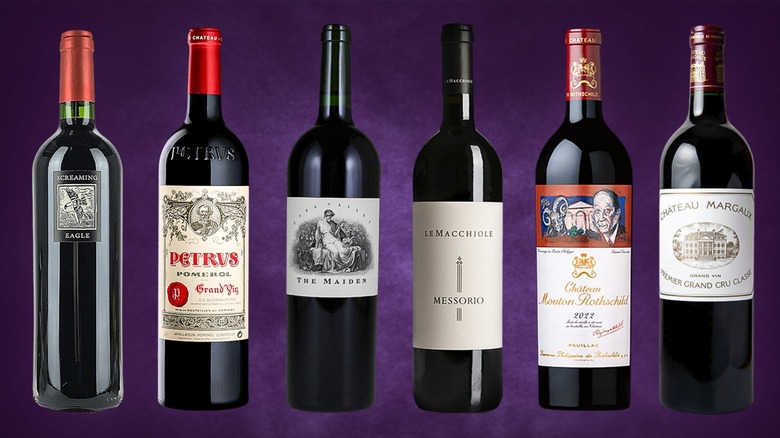
Costco offers its members big box convenience when stocking up on essentials, often with more affordable pricing than other retailers. However, Costco is also the land of luxuries, selling items such as caviar, American Wagyu beef, fresh black truffles, premium scotch, and high-end wine. Rare gems from some of the finest producers in Bordeaux, Napa Valley, Champagne, and beyond are available at Costco, including the nine selections featured. I have spent the past 20 years as a Certified Sommelier and wine journalist. I can attest to the quality of each of these offerings.
When considering a purchase of these expensive wines, it's best to check how Costco has stored the wine. Light, heat, and vibrations can mark the death of a stellar wine bottle. Walking the Costco aisles and seeing premium bottles without temperature control under the store's fluorescent lighting in high traffic areas gives me pause. When storing and aging wine, the bottles should be held in cool, dark locations with some humidity away from light and vibration. Although Costco's inventory constantly rotates, some of these high-end bottles may sit on store shelves for long periods, causing spoilage. And, some state's laws may prohibit returning a bad bottle.
In addition to these bottles, California buyers within driving distance to Costco's North Hollywood business center can buy select high-dollar wine sets, including first growth Bordeaux and Dom Pérignon. These wines cost between $1,199 to $37,999, with the latter being a 30-bottle vertical of Chateau Latour Premier Cru Bordeaux .
Château Margaux Premier Grand Cru Classé
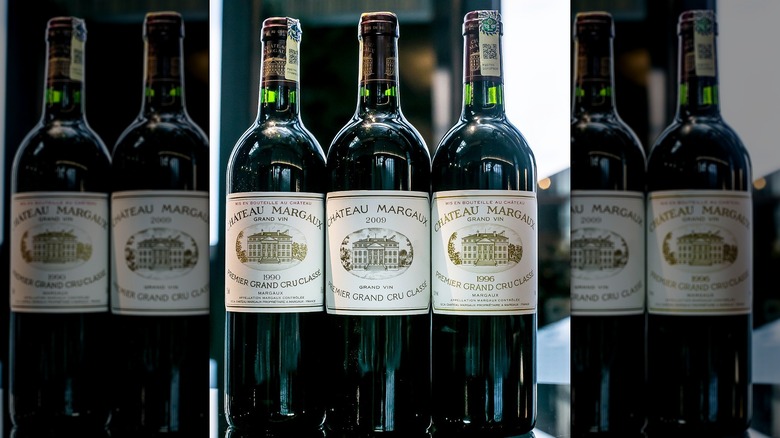
Château Margaux is one of Bordeaux's exquisite sites. Located on the Left Bank of the Garonne River within the Médoc region of Margaux, the area's wines are cabernet sauvignon dominant. Château Margaux's began as an agrarian business growing grains in the 1500s. In 1572, the Lestonnac family began transforming the estate into vineyards that today spans almost 655 acres. Over the years, dignitaries and celebrities have expressed their love for Château Margaux including the third President of the United States, Thomas Jefferson, and modern-day NBA star Jimmy Butler. When the French Emperor Napoleon III created the Bordeaux Classification in 1855, Château Margaux was one of four estates to receive Premier Cru status as a first growth wine, the highest-tier of quality. Château Margaux was the only estate to receive a 20 out of 20 score.
The Margaux terroir, specifically the soils, helps the winery produce such exceptional wine. The area has well-draining gravel soils over limestone or gravel over clay, specifically the Margaux mound, where the best vineyards lie. The winery produces 80 different wines to make the final blend of Château Margaux every vintage. Cabernet sauvignon contributes powerful structure to the wine, merlot adds softness and finesse, while assisting Bordeaux varieties add complexity and character, with dark fruits, earthy undertones, and a mineral-rich core. While it is not inexpensive, Costco's $549 price feels like a bargain for a wine of such refinement, quality, and pedigree.
Château Mouton-Rothschild
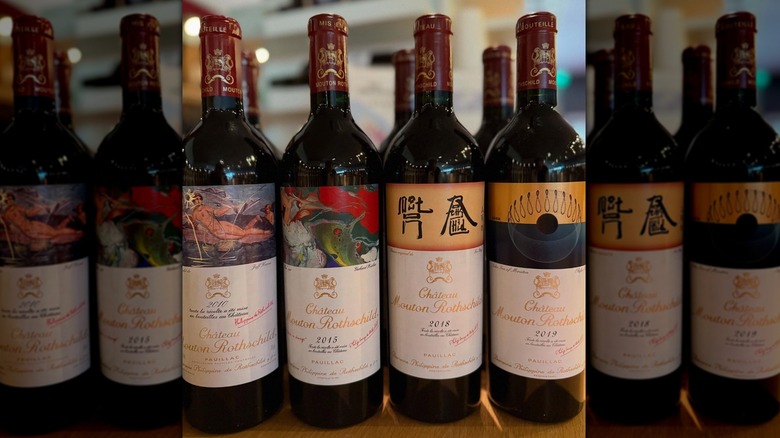
When Napoleon III named the first four wineries classified as Premier Crus in 1855, Château Mouton-Rothschild was not included. However, after decades of petitioning for its quality by Baron Philippe de Rothschild, the Left Bank winery moved to first growth status in 1973. Decades later, a bottle of Mouton-Rothschild epitomizes the quality of the terroir and the dedication of its proprietors. The cabernet sauvignon-dominant blend with its signature blackcurrant flavor shows power, complexity, and concentration that is able to age for decades. Select Costco locations sell the 750-milliliter bottle for $569.00 or a three-liter jeroboam for $2349.99.
The Médoc winery lies in the Pauillac region near first growth neighbors Château Lafite Rothschild and Château Latour. Mouton Rothschild's 207 vineyard acres contain well-draining, gravel-based soils, mostly planted to cabernet sauvignon with supporting Bordeaux varieties. Vines dig deep into the earth for nutrients, developing structure, complexity, and tannic character.
While remaining traditional, Rothschild's quest to achieve Premier Crus status led to years of innovation and ingenuity in the vineyard, winery, and business. Rothschild took the initiative to bottle the wine for merchants at the Château, instead of sending the wine in barrels to ensure its high caliber. Rothschild began commissioning artists to create the Château Mouton-Rothschild label as early as 1924, showing beauty outside the bottle as well as in. Each unique label has depicted original artwork from artists such as Pablo Picasso, Charles Hockney, and the current King of England, Charles III.
Screaming Eagle Cabernet Sauvignon
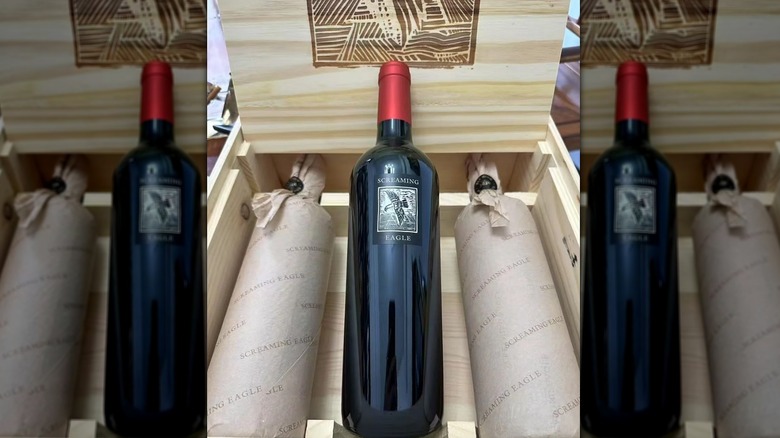
In the 1990s, a group of Napa wines earned "cult cabernet sauvignon" status. These wines were of a particularly high quality, often only available by allocation in limited amounts, increasing their demand and contributing to their exceedingly high price. Screaming Eagle was and is one of the finest. Jean Phillips started the project in 1986 when she purchased land in Napa's Oakville area near the Vaca Mountain range. Today, Oakville is home to fellow top brands like Harlan, Promontory, Dalla Valle, and the historic To Kalon vineyard.
Phillips released 175 cases of the inaugural 1992 vintage of Screaming Eagle in 1995, selling for the unheard-of price tag of $75. Today, that bottle is almost $10,000. Renowned winemaker and Napa Valley local, Heidi Barret, was the original winemaker on the 100-point wine, showcasing Oakville's terroir by harnessing the robust power of the cabernet sauvignon fruit, creating a wine with finesse, elegance, and opulence. That initial rating from wine critic Robert Parker helped Screaming Eagle gain notoriety and a following. And, with it, a price that has continued to climb to make it one of the most expensive in America.
In 2006, Phillips sold the brand to Charles Banks and Stanley Kroenke. Today, Kroenke is the sole proprietor of Screaming Eagle. He has followed in Phillips' footsteps, keeping the premium wine in high demand with limited production and a costly price. Costco locations are offering this rare wine in three 750-milliliter bottle-sets for between $6399.99 and $8599.99.
Harlan The Maiden Cabernet Sauvignon
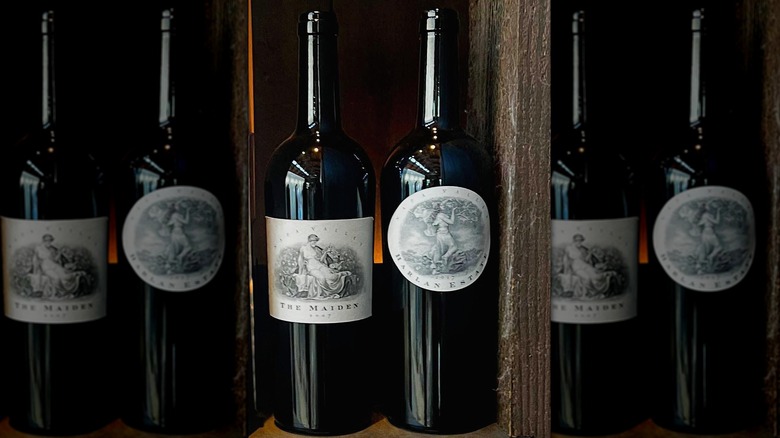
Around the same time as Jean Philips purchased her Oakville property, entrepreneur and vintner Bill Harlan purchased his property not far away in Napa on the benchland above Oakville near the Mayacamas Mountains. His goal was to create a first growth American wine. The search for the place to make this dream a reality began in 1972. It took him years to settle on the optimal vineyard location.
The vineyard location he found was a rugged spot covered with forests. However, its hillsides were ideal for his initial plantings of Bordeaux varieties, which he began in 1985, adding more land and vineyards over the years. He did this while focusing on not disturbing the natural ecosystem to ensure the land's future sustainability. The steep, east-facing slopes of vineyards lie at elevations ranging from 225 feet above sea level to 1225 feet, with a mix of soil types, microclimates, and sun-exposures. Each element of the terroir contributes to Harlan wine's extraordinary character.
With meticulous precision, Harlan and his team, including winemaker Bob Levy, craft the high-scoring Harlan Estate Cabernet Sauvignon and its voluptuous sister label, The Maiden, from his Oakville estate. Where Harlan Estate is highly concentrated and age-worthy, The Maiden has supple, finessed structure, aromatic complexity, velvety texture, and approachability, particularly in its youth. The limited-production Harlan Estate wine will set you back around $1,500. The Maiden is less than one-quarter of that. Its average current release cost is $325, similar to Costco's $319 price.
Veuve Clicquot La Grande Dame Brut Champagne
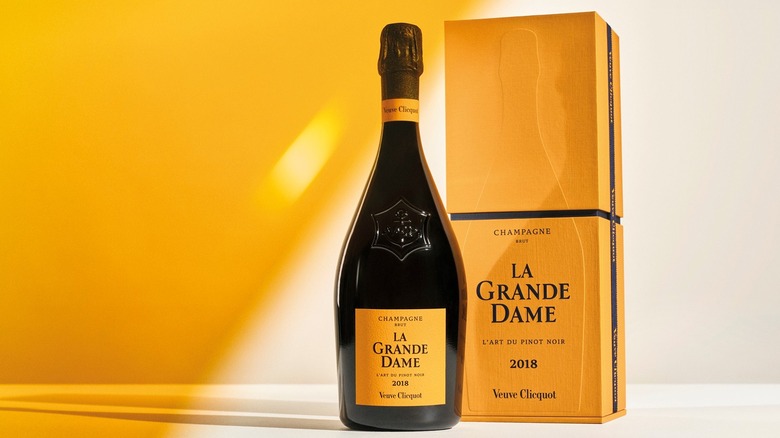
La Grande Dame from Veuve Clicquot is more than a brut-style Champagne. It is a toast to the ground-breaking, innovative entrepreneur who changed the landscape of Champagne, challenging the norms, Barbe-Nicole Clicquot Ponsardin. Madame Clicquot was widowed at 27 and, instead of stepping back from her husband's winery when he passed, she took over the business, leading it to become one of the most recognizable brands in the world while working with technological innovation and skilled business acumen. Although she was plagued with turmoil and difficulties early on, her fearless determination catapulted Veuve Clicquot to become a symbol of quality and luxury.
In celebration of the winery's 200th anniversary, and to honor its matriarch, Venue Clicquot released the inaugural vintage of La Grande Dame Champagne in 1972 playing into the widow's as la grande dame of Champagne nickname. The dry, brut-style, traditional method, sparkling wine typically blends 90% pinot noir with 10% chardonnay from the winery's predominantly Grands and Premiers Crus sustainably farmed vineyards. The wine ages a minimum of seven years in the bottle en tirage on the lees, spent yeast strains, giving texture and richness to the wine while imparting brioche and marzipan notes. Although the aging time is lengthy, the wine has exceptionally fresh vibrancy. La Grande Dame's mineral-rich flavor profile is ideal with shellfish, such as fresh oysters, grilled prawns, or butter poached lobster. Costco's $199.99 price offers a bit of savings to the average retail price of $213.
Petrus Pomerol Grand Vin
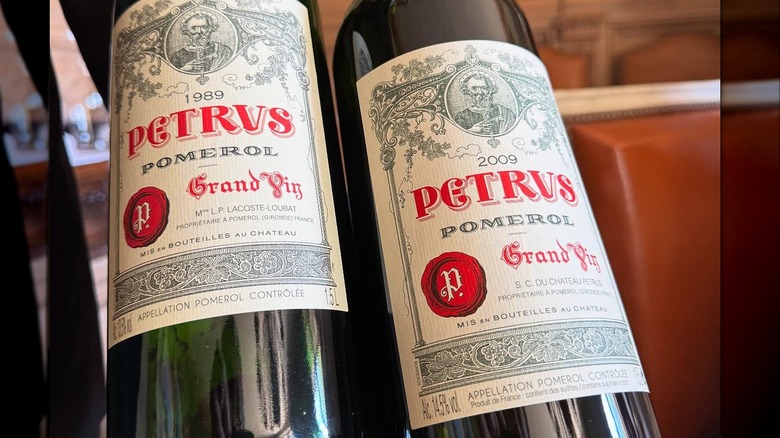
Cabernet sauvignon may be the variety you think of when considering the expensive wines of Bordeaux. However, one of Bordeaux's priciest selections is actually a merlot. Costco sells a 750-milliliter bottle of the 2009 vintage from Petrus for $5699. Petrus lies on the Right Bank of Bordeaux within the Pomerol region. Merlot accounts for two-thirds of the total plantings within all of Bordeaux, and 85% within Pomerol. The area's clay soils are ideal for merlot as they hold water well, lending texture and body. Gravel soils provide good drainage while bringing elegance.
Petrus sits at the top of the Pomerol plateau with vineyards planted 100% in blue clay subsoils. Historically, the wines have also been composed of 100% merlot. Although merlot wines can have a softer style than their cabernet sauvignon cousin, Petrus is a bold and powerful, yet beautifully balanced wine. The palate is plush and pure, with savory fruit flavors, pairing well with game dishes, such as slow-braised lamb shank or osso buco.
While the history of Petrus goes back over 275 years, it was within the past 80 years that the winery has gained the prominence it holds today under the former ownership of Madame Loubat, and her wine agent turned current owner, Jean-Pierre Moueix. Moueix and his children, who run the operation today, have a long dedication and commitment to maintaining the care of Petrus, focusing on precise vineyard management and attention to detail in the winery, ensuring exclusivity, consistency, and prestige.
Le Macchiole Messorio
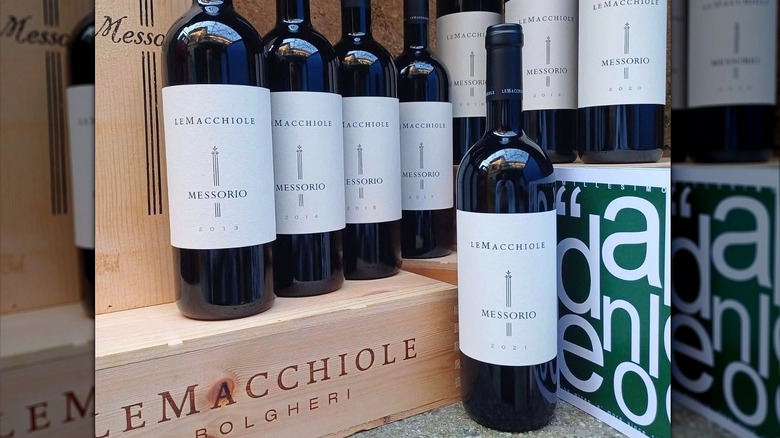
Following traditions can be necessary in wine making, particularly in Old World regions that have strict governing laws put in place by governmental leadership. However, following traditional practices doesn't always yield the finest, most tasteful wine. Beginning in the 1960s and legalized with the Indicazione Geografica Tipica (IGT) quality designation in 1992, select winemakers within Tuscany wanted more from their wines. They were striving to craft higher-quality selections using international grapes. This was the birth of the super Tuscan wine.
These wines often have more structure, concentration, and full-flavored character than wines typically from the region. They can contain Tuscany's signature variety, sangiovese. Still, the wines are not required to include the grape. One wine that does not is Le Macchioli Messorio, a 100% merlot wine from Tuscany's Bolgheri area within Maremma near the Tyrrhenian Sea. Fruit from the winery's 86 acres of vines throughout the region goes into the wine's production. Messorio is a merlot wine for cabernet sauvignon lovers. Instead of being soft and round, Messorio is full-bodied and powerful, with mineral instensity from the sandy clay loam and gravel soils, influenced by proximity to the sea. Though the merlot is bold, it is also polished, aromatic, and rich, melding black fruit, savory herbs, and espresso. The characteristics make it one of the best wines to pair with steak, lamb, or other game dishes, such as Bistecca alla Fiorentina or rack of lamb. Messorio's average price is $243, making Costco's $149.97 price a bargain.
Dom Pérignon Vintage Champagne
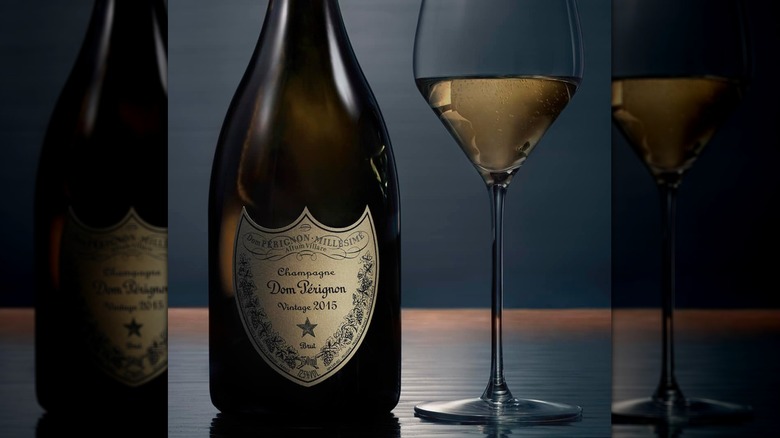
We have a Benedictine monk born in 1638 to thank for helping bring alluring, elegant Champagne to life. Dom Pérignon was not the first to craft sparkling wines; that happened in the south of France within the Limoux cellars of the Abbey of St. Hilaire. However, Pérignon significantly advanced the traditional method of sparkling wine production as the cellar master of the Abbey of Hautvillers in Champagne.
Today, Dom Pérignon Champagne is the premier winery of the Champagne powerhouse, Louis Vuitton Moët Hennessy (LVMH). LVMH owns or is a partner in Armand de Brignac, Krug, Ruinart, Mercier, Veuve Clicquot, and Moët & Chandon Champagne Houses, in addition to Dom Pérignon. However, Dom Pérignon stands out due to its history, provenance, and dedication to perfection. Many Champagne wines are a non-vintage blend of the current harvest's fruit and previous vintage fruit. Dom Pérignon, however, is always a vintage Champagne. They will not release a wine if the year's fruit does not meet their quality requirement.
This pursuit ensures each vintage of Dom Pérignon displays structure, concentration, and precision, each coming together in harmony. The refined sparkling wines is a blend of chardonnay and pinot noir. It ages in the bottle for at least eight years creating an aromatic, toasty, creamy, bright wine. The ideal pairing is Dom Pérignon Champagne and caviar. The wine's fresh acidity balances the caviar's salty richness. Costco sells the wine for $257.99.
Champagne Perrier-Jouët Belle Epoque Rosé
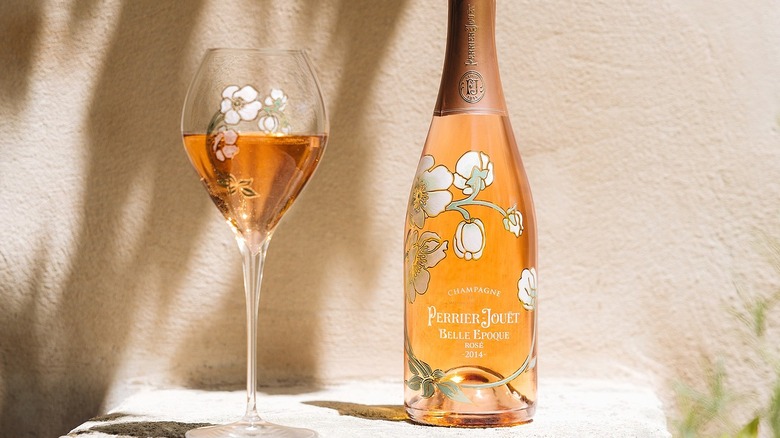
The eye-catching floral anemone etching that adorns each bottle of Perrier-Jouët Belle Epoque Brut Rosé pays homage to the love of art and nature of founders Pierre Nicolas Perrier and Rose Adélaïde Jouët. The couple founded the Maison in 1811. In 1902, French Art Nouveau artist Émile Gallé designed the arabesque work for the winery, further tying art and nature together in a luxurious bond. The anemone represents biodiversity and the role all nature's creatures play in ensuring a balanced ecosystem.
The signature floral style is the foundation of Perrier-Jouët Champagne. Perrier-Jouët Belle Epoque Brut Rosé blends 50% pinot noir, 45% chardonnay, and 5% pinot meunier. Showcasing the enticing aromas of peony, rose petal, and wild berries, the wine has crushed cherry, fresh peaches, and citrus flavors that balances a delicate elegance with complex, concentrated character. It has precision with playfulness, wrapped in a pretty pink hue. The wine is delicious with a fresh fruit tart. The first release of the wine was in 1981. The current release is available for $329.99 at Costco.
From its start, Perrier Jouët uses chardonnay as a primary variety, predominantly from fruit growing in Champagne's premier Côte des Blanc vineyards. The chalky soils of these vineyards are ideal for chardonnay as they promote mineral-rich character while maintaining freshness. As a vintage Champagne House, the Maison only produces a wine in years where the harvest is flawless, or close to it.