

15 Classic Peasant Foods From Around The World

Today, the world is filled with Michelin-level chefs, social media recipe developers, and bloggers who consistently come up with impressive, innovative, and delicious ways to prepare food. And we're grateful. Without them, we wouldn't have dishes like smoked watermelon ham or the viral TikTok cucumber salad. Thank goodness.
But if you're looking for simple, flavorful, timeless dishes that are as hearty and comforting as they are delicious, you need to look at peasant food. Over the centuries, the poorest members of society have created some of the world's most beloved dishes. In fact, without the Neapolitan peasant population, we probably wouldn't have pizza. And honestly, we don't want to imagine a world without that unifying dish.
To illustrate just how much of an impact people like farmers, herders, and rural villagers have had on the food landscape, we've highlighted some of the best peasant dishes we could think of. From Irish stew to paella to Chinese hot pot, there is truly something for everyone.
Irish stew
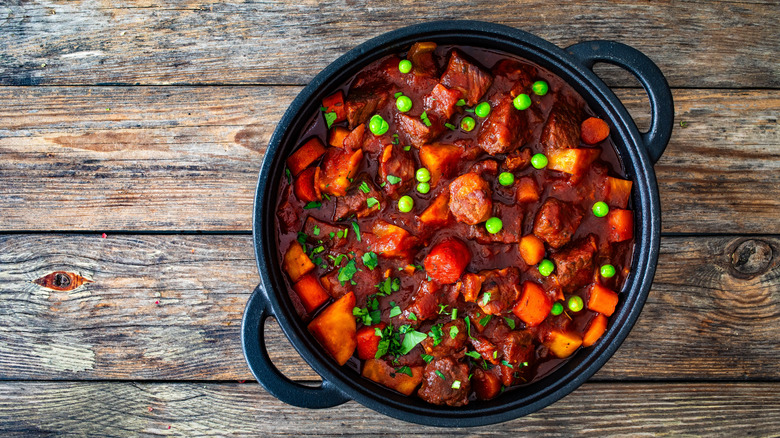
Irish stew, a staple on dinner tables and restaurant menus across Ireland, is hearty, rich, and nourishing. It's the perfect cozy dish for the fall and winter months, when the weather is usually wet and chilly across the Emerald Isle. Now, Irish stew is often made with a mix of beef and sometimes Guinness (for an extra creamy broth), but centuries ago, when it was first eaten by the poor, Irish stew looked quite different.
If you know anything about the history of Ireland, you'll know that the Irish people have not had an easy ride. Even before the potato famine, many people across the country struggled to survive, with more than 2 million living in poverty. This meant that food was less about taste and more about sustenance. Peasants and farmers, who raised sheep, started to throw mutton, potatoes, and root vegetables into a pot to cook together. This would make the food stretch further, and it was a practical, hands-off way to cook, too. Irish stew was born.
Over the years, as the Irish fled the famine, they took the stew with them around the world. The recipe evolved to include different ingredients, like beef, as sheep weren't so readily available in North America. Today, some make vegan Irish stew with mushrooms or plant-based beef, for example, while others opt for chicken or pork. But, regardless of the ingredients, Irish stew is always a hearty, warming winter choice.
Shepherd's pie
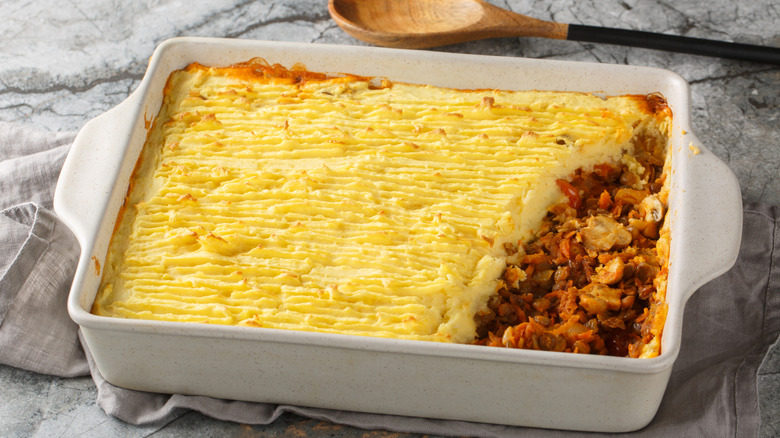
Another comforting, hearty dish to come from the British isles is shepherd's pie. As the name has already let on, it was usually eaten in rural communities, by shepherds and their families across Scotland, England, and Ireland. There is some contention over exactly where in the British isles it originated. The pie, which is basically a stew of vegetables and mutton topped with mashed potatoes, was a simple and easy way to make food go further. It was usually made with leftover potatoes and meat to avoid anything going to waste.
Shepherd's pie is almost identical to cottage pie, which was also eaten by poorer communities in a bid to use up leftover ingredients. The only difference? Cottage pie is made with beef, rather than mutton or lamb.
Today, shepherd's pie and cottage pie are still eaten by British families, usually in the fall and winter months. However, the recipe has changed over the years, and everyone has their own take on the classic peasant dish. Some prefer to make it with lentils and sweet potato mash, for example, while others opt to swap the beef for umami-rich mushrooms.
Goulash
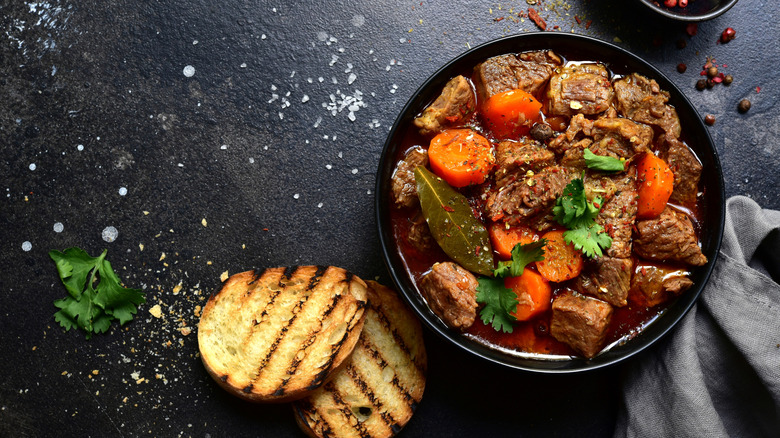
In its simplest form, goulash is just a hearty stew made with meat and spices. But depending on where you are in the world, it'll be served slightly differently. In the U.S., for example, you'll find American goulash, which is a combination of tomato sauce, beef, and macaroni. In the Czech Republic, goulash consists of beef and onion gravy served with dumplings. German goulash is similar, but often served over spätzle noodles. But none of these places actually invented goulash. That credit goes to Hungary, where it began with cattle herders.
In fact, it was some of the poorest members of society, the gulyás, who first came up with the dish (which is where the name goulash comes from). The gulyás were groups of cowherds who would spend long periods traveling across Hungary with their horses, dogs, and cattle. When one of their cows died, they would stew the meat with onions and black pepper, which was eventually swapped for red chilies, and goulash as we know it today was born.
Paella
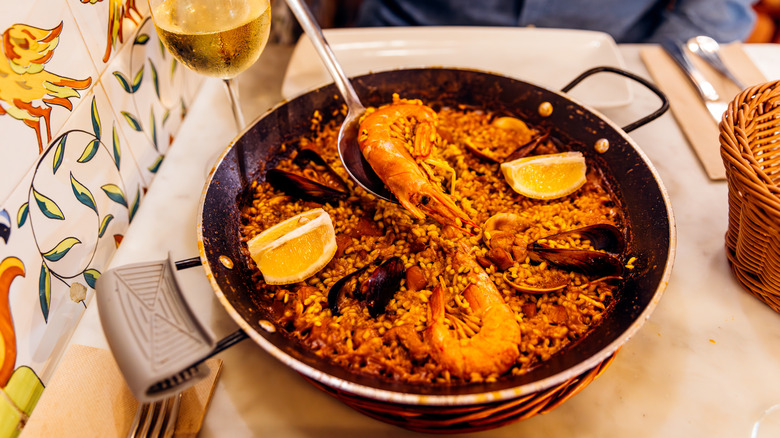
Paella is the most famous dish to come out of Spain, there's no doubt. It is the country's unofficial national dish, sold in most of its restaurants, where it is usually shared with friends or family and eaten from the pan. But there was a time when paella was eaten only by the country's poor. Yes, paella, despite all of its lavish presentation today, started as a peasant dish.
In fact, paella's roots stem back hundreds of years, to the 14th and 15th centuries. Back then, paella was usually eaten for lunch by Valencian farm workers, purely because it was easy to prepare with readily available ingredients. Many different meats and vegetables would be mixed with rice to make paella. Sometimes, it included rabbit or chicken, for example, while other times it was snails and tomatoes.
Today, seafood paella, prepared with ingredients like saffron, squid, garlic, paprika, prawns, and tomatoes, is one of the most common and popular varieties. But it's unlikely that those Valencian farm workers were responsible for creating this version of the dish; it was probably a result of paella's popularity spreading out from Valencia to nearby coastal communities over the centuries.
Gazpacho
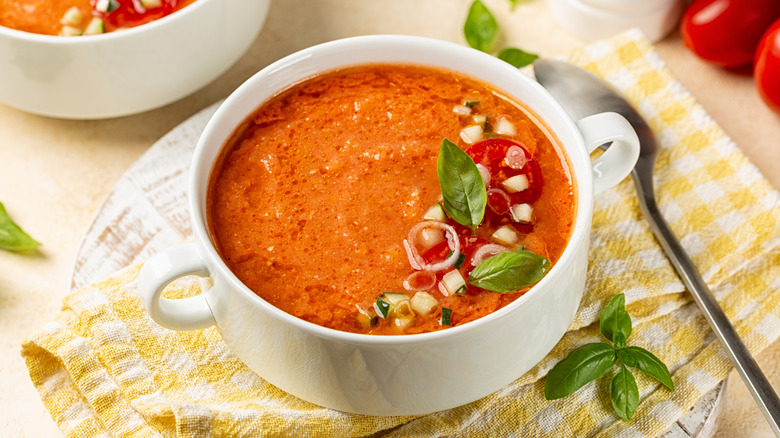
Gazpacho is another famous and beloved Spanish dish. The cold, creamy soup is usually made with a mix of tomatoes, peppers, cucumbers, onions, garlic, olive oil, and vinegar, and eaten during the hot summer months, often with bread on the side.
The soup is full of flavor, but the ingredients are simple, and that's because it was originally eaten by Andalusian farmers, who had access to limited foods. They weren't the first to come up with the idea for cold tomato soup (that likely came from the Moors or the Romans), but they did alter the recipe to make it their own. That's why many of the ingredients for traditional Spanish gazpacho are distinctly Andalusian. The region is still known for its tomatoes today, as well as its garlic and olive oil. In fact, Andalusia is the biggest producer of olive oil in the world.
Today, gazpacho is made in many different ways. In fact, the term is now generally accepted to mean cold soup. You can make green gazpacho, for example, with Thai chiles and avocado; Mexican gazpacho with jalapeños and lime; or Moroccan gazpacho, with cherries, pistachios, ras el hanout, and mint.
Ratatouille
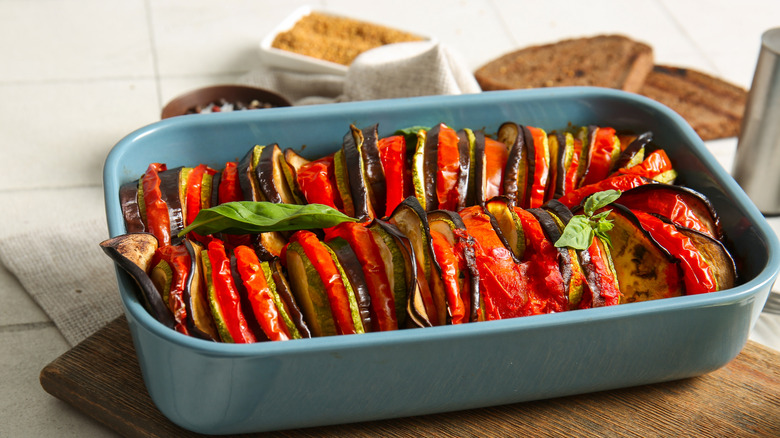
For many, it is impossible to think of ratatouille without thinking of a certain film and a certain rat. But the French were eating ratatouille long, long before the Pixar movie hit our screens in 2007.
The dish, which is a simple and flavorful plant-based stew of olive oil, herbs, and vegetables like eggplant, tomatoes, and zucchini, was first created in Provence in southeastern France. It was likely prepared by farmers in the countryside for a long time before it made it into written record in the 19th century. Back then, it was a good way to use up vegetables at the end of the summer, before they started to spoil.
Today, ratatouille is loved for its Mediterranean flavors. You can prepare it the classic way, of course, but many chefs and home cooks have their own tips and trucks. Chef Daniel Boulud has a unique take on ratatouille, for example, which features unpeeled eggplants, and sautés each vegetable separately before slow-cooking everything together.
Pasta puttanesca
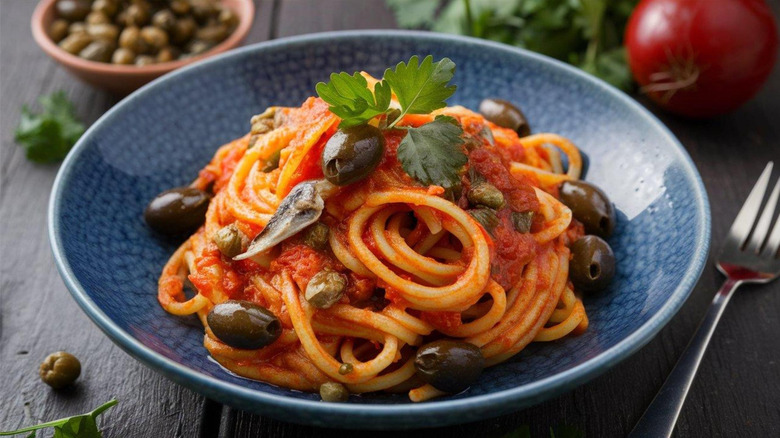
Cucina povera, which translates to "kitchen of the poor," is an Italian cooking technique that emphasizes frugality and involves making the most of each ingredient. It originated from Italian rural peasant populations, who had no choice but to cook this way. Many dishes were born out of cucina povera, but one of the most famous is pasta puttanesca.
Puttanesca, which is made with a simple combination of black olives, capers, garlic, chilis, tomatoes, olive oil, and herbs, was likely first created in Naples in the middle of the 20th century. There are a few different origin stories, but one of the most famous is that it was created by sex workers. Some believe it was cooked between clients for the sex workers to enjoy, while others believe it was offered to the clients themselves. Wherever it came from, the truth remains that puttanesca is a flavorful example of Italian cucina povera cuisine.
Pizza marinara
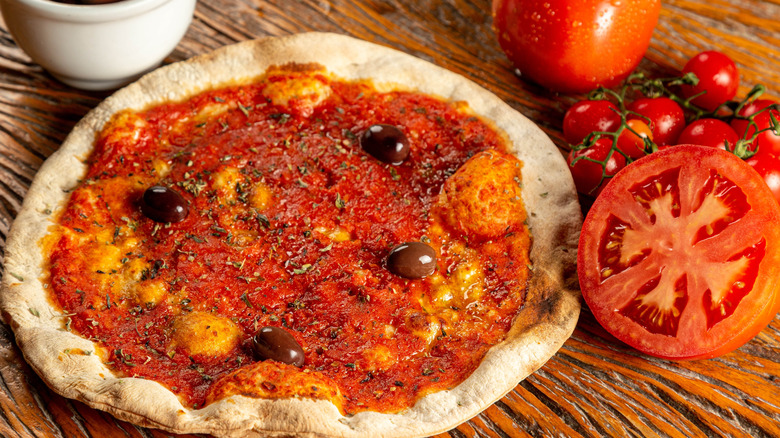
Even more famous than pasta puttanesca is, of course, pizza. And just like the former, this classic world-famous dish was likely born out of cucina povera, again, in Naples. However, its roots go back much further.
In the 18th century, the base of pizza was spread with herbs, olive oil, garlic, and marinara sauce, to make a pizza marinara. In fact, there was no mozzarella cheese in the original recipe at all. It sounds plain, but this pizza was packed with flavor (and is still eaten across Naples and other Italian cities today). Pizza was commonly eaten as street food by Naples' poorer populations, and it was also a hit with visiting sailors (which is likely where the name "marinara" came from).
Pizza may have started as a peasant dish, but it evolved quickly. In the late 1800s, it was even enjoyed by royalty. In fact, after visiting rural villages around Naples, Queen Margherita fell in love with the simple dish. She loved mozzarella on hers, and pizza margherita was born.
Pasta e fagioli
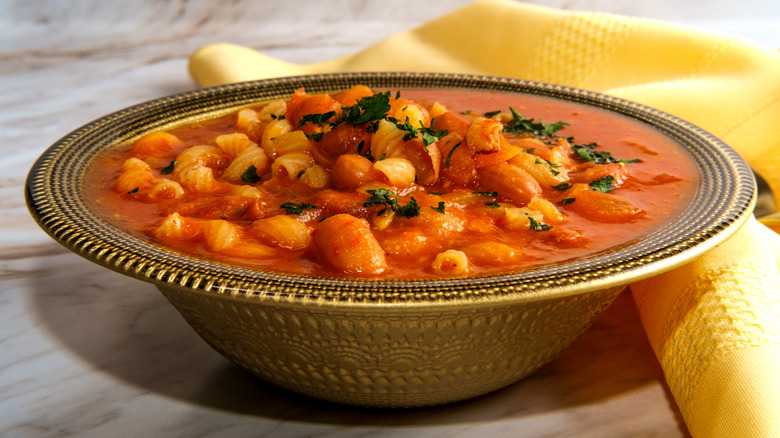
Another outstanding example of cucina povera is pasta e fagioli, which simply translates to "pasta and beans." The dish is basic in its ingredients list (which is usually a combination of beans, vegetables, herbs, pasta, and stock), but not in flavor. Known as pasta fazool in Italian-American dialect, it is equal parts aromatic, rich, nourishing, and, as with most peasant food, incredibly hearty.
Pasta e fagioli has been around for a very long time, maybe even since the ancient era. Today, you'll find it served on family dinner tables and restaurants, but once, it was mainly eaten by farmers and laborers, who needed something affordable and nutritious to get them through long hours of manual labor.
There are different regional ways to make pasta e fagioli. Tuscan versions, for example, are usually creamier, while in Bologna, it's often made with pancetta. Neopolitan renditions of the dish tend to go heavier on the tomatoes (this is very similar to how many Italian-Americans make it, too).
Panzanella
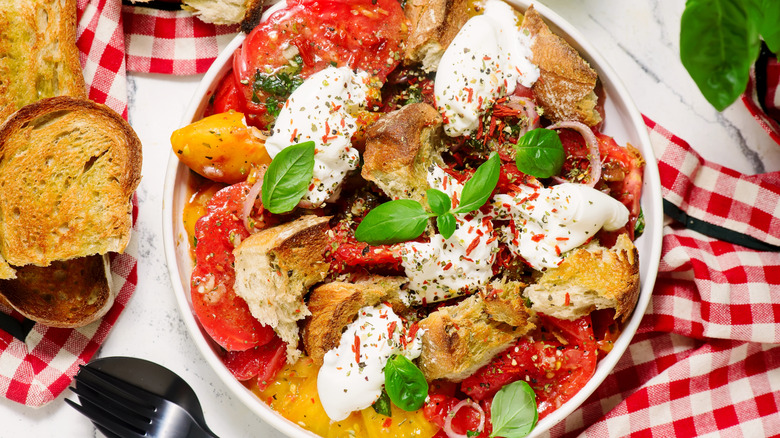
Our final example of cucina povera is panzanella, a type of salad that is made with tomatoes, onions, vinegar, and stale bread. It has been eaten for centuries in Italy. In fact, one of the earliest written descriptions of panzanella was in a 16th century poem, but it was likely eaten long before this.
Panzanella is a distinctly Tuscan dish. It was first invented by farmers, who needed a way to use up old bread. But back then, it was probably tomato-free. Believe it or not, while tomatoes are now a common thread through countless Italian dishes, they haven't always grown in the country. In fact, they didn't arrive there from the Americas until around the 15th or 16th centuries.
Today, there are many different twists on panzanella salad. While plenty enjoy it the traditional way, some like to make it with beef and noodles, for example. Others add sweet potato to the mix to make it a fall dish, and some combine it with Kalamata olives and feta to make a Greek fusion version of the recipe.
Golabki

Cabbage rolls are a common dish across Europe. Bulgarian sarmi, for example, is made with cabbage, veal, pork, rice, and yogurt, while Lithuanian balandeliai is green cabbage stuffed with ground meat and vegetables. In Poland, stuffed cabbage rolls are called golabki.
The simple dish usually involves a combination of tomato sauce, ground meat, and rice, which is cooked and stuffed into cabbage leaves. However, there are many variations on the recipe. The first golabki likely didn't contain meat at all, but was instead filled with a simple blend of buckwheat and potatoes. This is because, like many cabbage roll recipes across Europe, golabki was invented by poorer people in Poland, a very long time ago.
In fact, some variation of golabki was probably first made in the Middle Ages. It grew in popularity, largely because it was cheap and easy to make, and the ingredients were easily accessible. Cabbage, in particular, was one of the limited foods that was widely available to peasant populations.
Birria
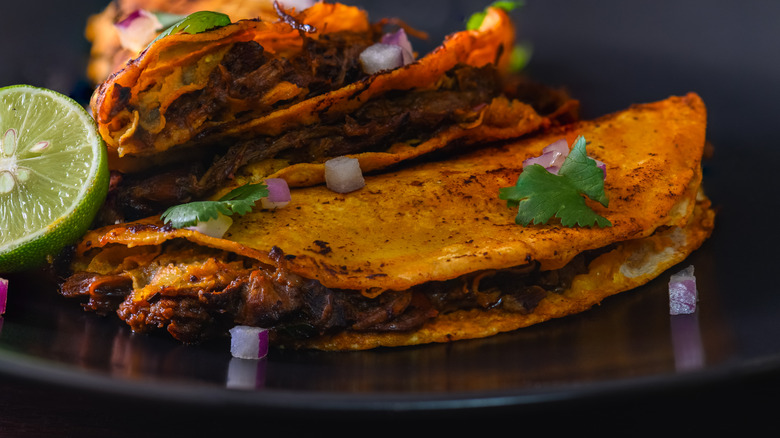
Birria tacos are a firm favorite both in Mexico and in the U.S., but birria, which originated in the Mexican state of Jalisco, wasn't actually first created to be eaten in a tortilla. It was actually created to control an invasive species: Goats.
When Spanish colonizers arrived in Mexico in the 16th century, they brought goats, who procreated at a rapid rate. The goats were destroying their much-needed crops, so the people of Jalisco decided to do something about it. They started killing the goats for food and stewing the meat with herbs and spices to improve the flavor and texture. Much, much later, in the 1900s, people outside of Jalisco started selling the stewed goat meat, known as birria, on the streets of cities like Tijuana, and its popularity grew.
Today, birria isn't usually made with goat meat. Instead, it's often made with beef or even plant-based alternatives like jackfruit or oyster mushrooms. But, regardless of the ingredients, the same slow-cooking technique, cultivated centuries ago, is normally used to create the signature flavors and tender textures of birria.
Makki di roti
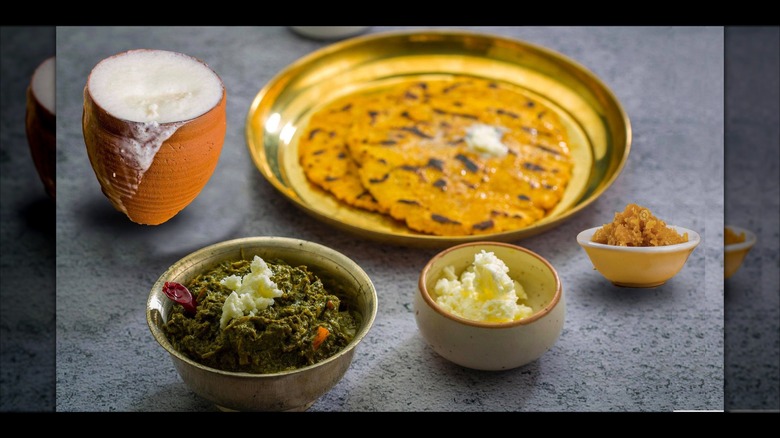
Indian cuisine is famous the world over for its rich curries and zesty chutneys. Recipes vary from region to region, and even from family to family, but each dish is flavor-packed thanks to the country's signature spices like cumin, turmeric, and coriander. But another vital component of Indian cuisine is the bread, which is essential for soaking up all of that incredible flavor.
Makki di roti is one example of a hearty Indian flatbread. It comes from Punjab, where it was likely first eaten by peasants and farmers, and is usually made with a simple combination of fresh cornmeal, water, oil, and salt. The ingredients are combined into a dough, flattened by hand, and cooked on a griddle to make a delicious roti. The bread is usually served with a Punjabi mustard greens curry called sarson ka saag, which again, was likely first developed by Punjabi farmers to fuel them through their long working days and weeks.
Chinese hot pot
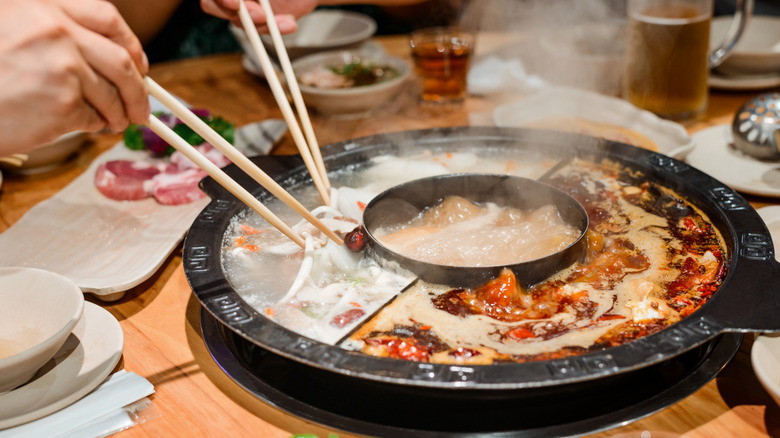
Similar to Spanish paella, hot pot is usually a communal dish. It consists of a bubbling, umami-rich, aromatic broth, which is placed in the center of the table alongside various ingredients, like dumplings and vegetables, that are used for dipping. There are a few origin stories for Chinese hot pot, but one of the most common is that it was first eaten by the poor who lived on the river outside the city of Chongqing. Back then, it was usually made with the innards and blood of local animals.
Others maintain that hot pot as we know it today was not invented in China, but by Mongolian horsemen. The story goes that more than 1,000 years ago, these men would use their helmets to cook meat in broth over open fires. Whichever origin story is correct, the fact remains that hot pot is still a beloved dish today, served across China and in Chinese hot pot restaurants across the U.S.
Fasolada
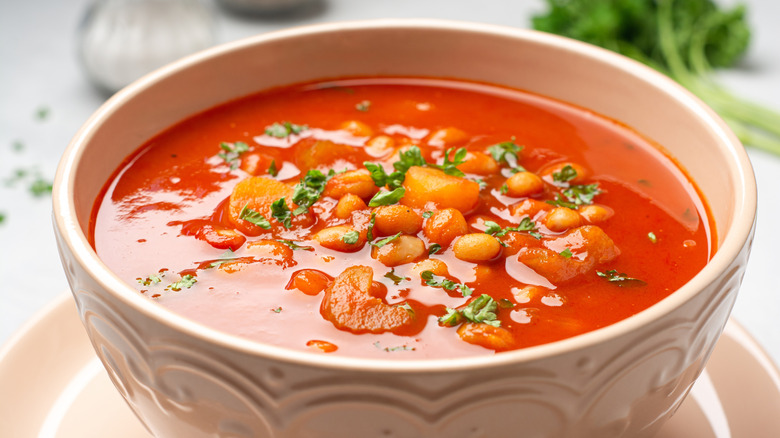
According to Greek myth, fasolada was first created by the hero Theseus after he slayed the minotaur. The truth is far less dramatic.
This creamy, hearty white bean soup, which usually features a mix of vegetables and aromatic herbs, was likely first created during the ancient era to celebrate the end of the harvest. Even then, it was probably a peasant food. In the years that followed, fasolada was still usually eaten by the poor because of the relatively inexpensive and accessible ingredients. Today though, fasolada is a source of national pride for many people, particularly in rural communities. The rich bean soup is packed with flavor, easy to whip up, and incredibly comforting and nourishing during the winter months.
Fun fact: The name fasolada comes from fasoli, which means beans in Greek. As well as fasolada, beans feature in many traditional Greek dishes. Another example is gigantes plaki, which is basically giant beans cooked in a rich tomato sauce.