

The Cabinet Mistake That Could Tank Your Kitchen's Value Down The Line
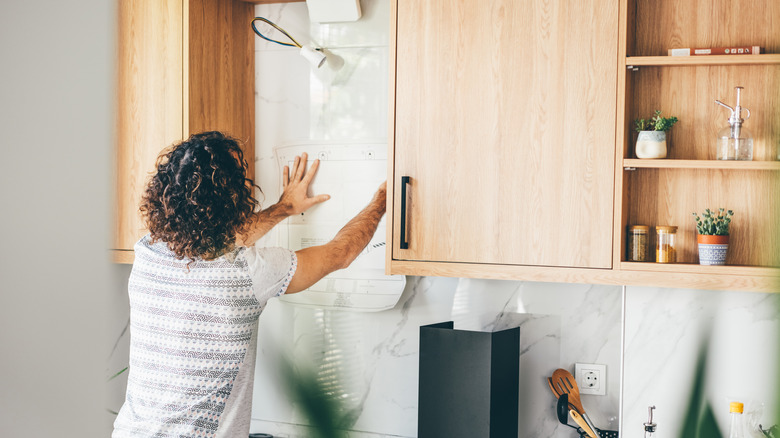
Renovating your kitchen can be pricey, and cabinets are often the most expensive part of a kitchen remodel. It's tempting to want to try to save money by choosing inexpensive materials and refurbished or used fixtures. Installing used kitchen cabinets may not be the best choice, however. Used cabinets that were not specifically designed to fit your kitchen's layout and architecture will stand out like a sore thumb and can potentially tank your home's value.
While used cabinets might initially seem like a great way to keep your kitchen renovation affordable, you could end up spending more money down the line. Used cabinets that don't function properly or fit your kitchen perfectly could lower the resale value of your home. Depending on the cabinet design, material, and installation process, they might also need more frequent repairs. For instance, if you're doing a DIY kitchen remodel and don't account for uneven walls or unique architectural features when installing used cabinets, the doors could hang crooked or the cabinets might not be structurally sound.
If you're fixing design flaws in your kitchen before selling your home, you're much better off installing new stock kitchen cabinets or custom cabinets. Converting your old kitchen cabinets to open shelving may also be less expensive than installing full kitchen cabinets. Another affordable option is to explore paint-free ways to update outdated kitchen cabinets. Before installing used cabinets in your kitchen, weigh the pros and cons and hire a skilled contractor or craftsman for proper fit and installation.
Why you might not want to buy used kitchen cabinets
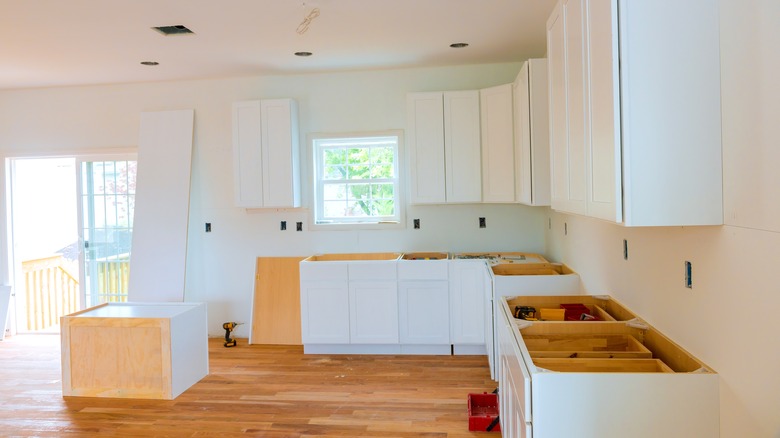
If you're looking for affordable kitchen cabinets, it's easy to understand why used ones would seem appealing. Yet they may also come with a host of problems beyond just reducing your home's resale value. For one, used cabinets have already suffered from a lot of wear and tear over the years. This means you're more likely to have to immediately replace hardware such as hinges and knobs, and you might even have to repair or replace cabinet doors and shelves.
If you don't do so right away, you definitely will need to in three or four years — or if you decide to sell your home. That means your cabinets may end up costing almost as much as new ones when all is said and done. Another potential problem is that the cabinets might have been installed in a smoking home and may be contaminated with toxic residue that would be costly to clean off. One of the biggest mistakes to avoid when renovating your kitchen is choosing outdated materials that are inappropriate for your kitchen design.
Old cabinets might instantly make your newly-renovated kitchen look shabby. Plus, unless you're working with a skilled contractor or craftsman, the cabinets might not fit perfectly in your kitchen. And if they don't fit properly, they won't look very good. Problems with placement and fit could also affect the function of the cabinets and eventually increase the wear and tear on each element. Over time, this can cause problems like uneven cabinets, doors that won't stay closed, and loose hinges.