

The Pros And Cons Of 8 Kitchen Flooring Materials, Explained
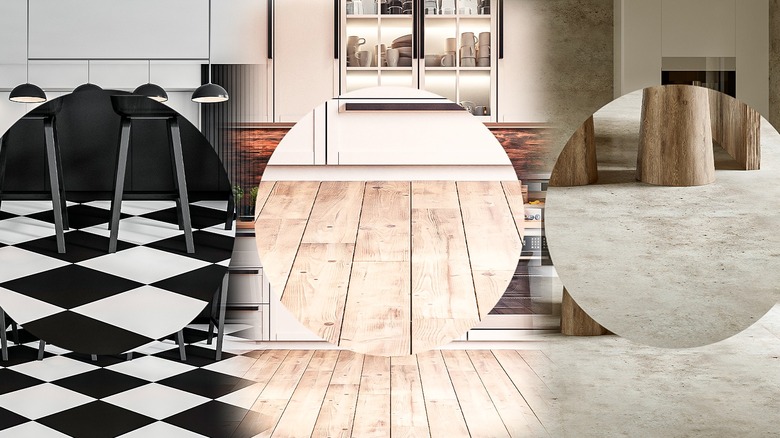
Kitchens are often the heart of the home, which means deciding on a functional and pleasant kitchen design is key to your enjoyment of the space. Whether you're building your kitchen from scratch or doing some renovations to spruce up the space, flooring is a pretty fundamental component. Once you've sorted through buying cabinetry, choosing a kitchen backsplash material, and figuring out what appliances to get, picking what you lay underfoot is equally essential.
Aside from dominating the visual ground, you'll also be walking on it every day. If your house is home to several people, that's countless steps of wear and tear daily — and that's before you consider spills and other accidents. If you're on a tight budget, you'll want to focus your choices on something durable yet affordable, and if you've got a bit more to spend, you'll have a few additional options to pick from.
In order to help you make your decision, we're looking at common kitchen flooring materials and assessing the pros and cons. Don't worry, you won't find carpet as a suggestion. There's not a single winner among them, since they all have varying qualities that will make them better suited for some households versus others. We'll consider durability, price, comfort, and aesthetics, among other features, to guide you in your selection.
Tile
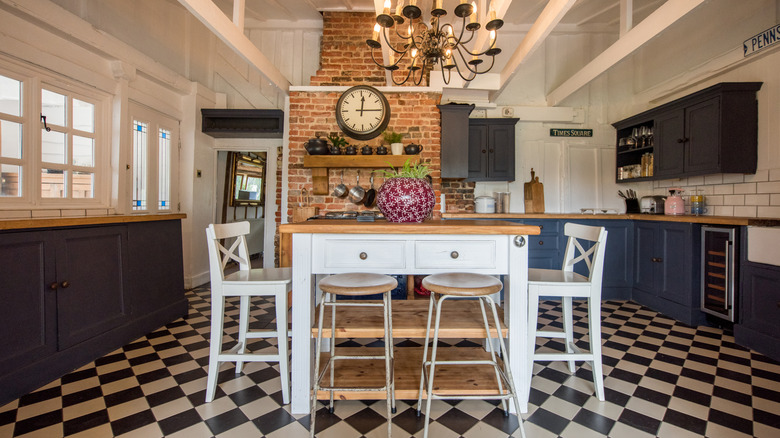
Tiles are a sleek option that many homeowners choose for their kitchen, thanks to their hardiness, variety, and easy maintenance. Plenty of materials can be used for tiles, including ceramic, porcelain, and natural stone. Typically, the tiles are waterproof or can be sealed, so if you have an accidental spill, you can simply wipe it up without worrying about damage. Meanwhile, they come in several shapes and sizes, like squares, rectangles, and hexagons, as well as many colors, whether you choose painted tiles or naturally hued stones.
Unfortunately, what makes tiles so durable is also what makes them quite uncomfortable when standing for a long time. You might not notice it if you're walking around, but if you're standing in place at your kitchen counter prepping meals day after day, it'll become clearer. You can use a floor mat in the areas where you stand the most, but it's worth keeping in mind if you spend a lot of time cooking. Plus, if you're clumsy, chances are whatever you drop on the tile floor will break. Tiles can get pretty slippery if you spill liquids, which is important to keep in mind if you have little kids running around.
Tiles are also pretty cool to the touch, which is a great feature in the summer or warmer months, but could feel cold when temperatures drop. However, they are a good candidate for underfloor heating, so you can counter the chill with this feature or a rug.
Hardwood
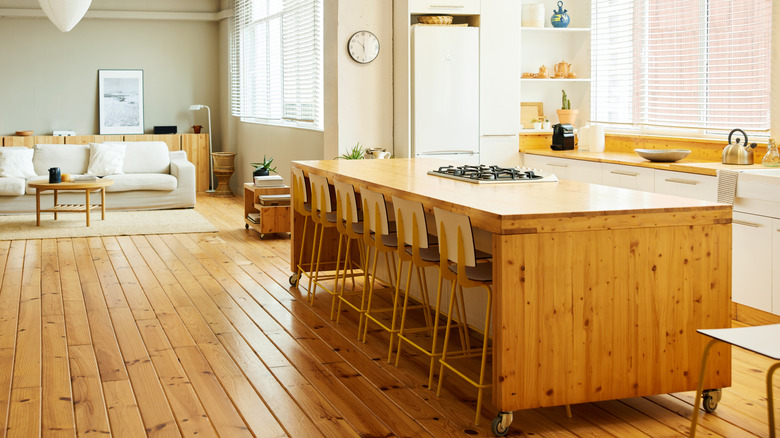
Hardwood flooring is a classic and timeless choice, but it requires maintenance and care to keep it looking good. That said, if you look after it well, it can last beyond your lifetime. Part of its appeal is the fact that it can be refinished several times to spruce it up without having to go through a reinstall. If you like buying quality materials and maintaining them for decades, hardwood is an excellent option. It also comes in a wide range of natural colors, fitting into most interior design styles. Although it's not common to install hardwood flooring solely in your kitchen, you might choose it if your kitchen flows into the living or dining room in an open floor plan.
Unless you can source it secondhand or reclaimed, hardwood is not ideal if you're working with a tight budget. However, if you look at the cost over time, it makes sense if you're choosing flooring for your forever home. Although hardwood can handle some wear and tear, it doesn't do well with water damage. If you quickly wipe up a light spill, it's not a big deal. But if you fail to notice a leak or leave water sitting anywhere on your kitchen floor, you'll have to deal with the consequences. Wood typically swells when wet, which can cause the planks to warp, making the surface of your floor uneven. Not to mention, if water gets through the cracks between the boards, it can cause issues with the subflooring.
Engineered hardwood

Some people choose engineered hardwood over hardwood, since some of its properties can make it a more advantageous option. It still consists of a real hardwood surface, but it's glued to layers of wood veneer, which helps counter some of the drawbacks of solid wood. Its construction makes it a bit more affordable than solid wood (though not as affordable as other options), and it's more resistant to changes in temperature and humidity. If you're searching for something that looks like hardwood to install in the kitchen, where ambient conditions can fluctuate, engineered hardwood is a good compromise — though it's still not impervious to water.
Engineered hardwood is easy to wipe clean (just avoid harsh chemicals) and fairly hardy against wear and tear, as long as you choose sturdier types of wood. However, though you can refinish higher-quality engineered hardwood, this isn't the case for all products, and it can't be done to the same extent as real hardwood. Chances are the surface will scratch and dent over time, and you won't be able to keep refinishing the planks forever. Additionally, due to the finish, some types of engineered hardwood can fade in the sunlight, which is worth keeping in mind if you choose a dark-colored wood and have plenty of windows and natural light.
Laminate
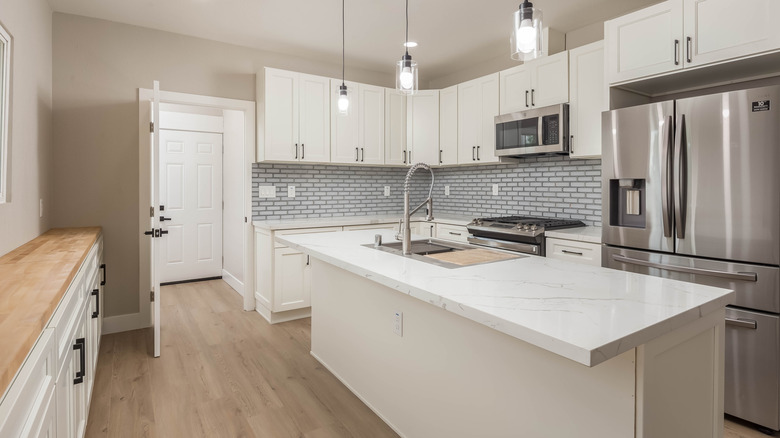
Laminate comes in a wide variety of styles, making it a great choice for most kitchens. It's often made with medium- or high-density fiberboard, which consists of processed wood and other layers like a melamine resin surface for durability. It can be made to look like wood, natural stone, and tile, all while costing less and requiring less upkeep. This makes it a desirable choice for a kitchen renovation, especially since it's pretty easy to install.
Laminate is priced depending on its quality, and it's worth picking something at least mid-range for extra durability. Higher-end laminate may be more scratch-resistant and potentially even water-resistant, which is advantageous in any busy household. Although it offers plenty of variety and easy upkeep, you can't refinish laminate if it starts to wear over time, so it's important to maintain it if you want to increase its longevity.
If you're aiming for a kitchen made up of natural materials, then laminate can stand out like a sore thumb, since it's distinctly pretending to be something it's not. Nevertheless, if real hardwood and stone are out of your budget, you can still achieve a similar look by using it.
Vinyl

Vinyl comes in lots of shapes, sizes, and quality levels, making it a versatile option for many kitchen renovation projects. Whether you want a solid color, funky pattern, or something to mimic a natural material, there's a vinyl flooring that will do the trick. Luxury vinyl flooring typically comes in planks or tiles, whereas lower-end products come in a roll. Either way, it's made with multiple layers, including PVC (a plastic polymer) and polyurethane resin. These materials give it a water-resistant finish and heightened durability, making it an excellent choice for a high-traffic kitchen.
Vinyl is relatively soft compared to other options, which is comfortable for standing for long durations but less ideal if you're placing heavy furniture and items on the surface. For example, if it's the flooring under your fridge, chances are the appliance will leave marks. Additionally, it can be affected by long-term sunlight exposure, causing it to fade over time. Nevertheless, for a low-cost and highly durable kitchen flooring, vinyl has a lot going for it.
Concrete
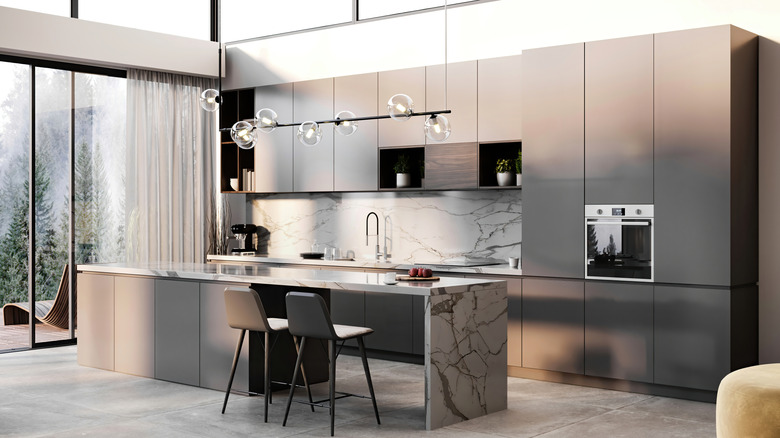
Done well, concrete flooring can add an edgy industrial or minimal vibe to your kitchen. Concrete doesn't have to look like the gray floor in your garage either; it can be painted, stained, polished, and stamped to create a range of styles. It's definitely sturdy enough to handle a lot of wear and tear, though you might find you break a few more items if you're prone to accidentally dropping plates. It still needs to be regularly sealed or waxed to keep it looking smooth and nice without cracking over time. Cleaning it with a damp mop works fine for the rest of the time.
Unless you have in-floor heating, concrete will be quite cold, just like tile. This can be a bonus cooling system if you live in a warm climate, or quite chilly if you live somewhere with lower temperatures. Also, the hard surface can be uncomfortable to stand on for lengths of time, so you may want to use a mat, runner, or rug in the most trafficked areas. This is also helpful if you tend to splash a lot of water on the floor while doing dishes, since polished concrete can quickly become slippery. All the same, concrete can be a suitable flooring choice for kitchens, thanks to its durability.
Cork
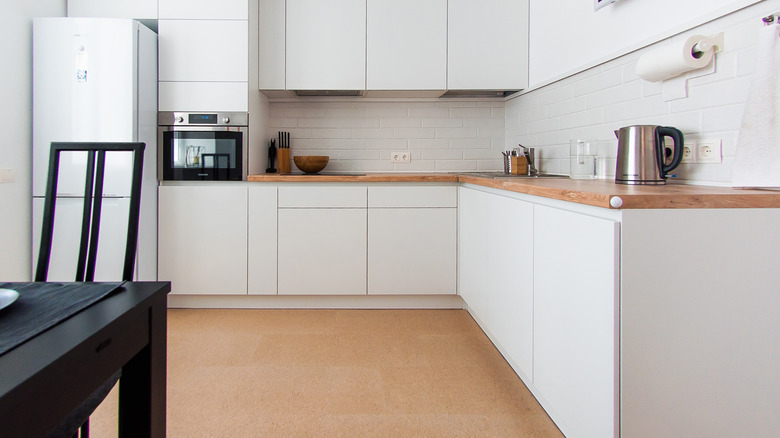
Cork is a great option for adding warmth and comfort to your kitchen, thanks to its natural charm. It feels good underfoot due to its thermal insulation and softer nature. It also offers insulation against sound, making it a good option for apartment building kitchens. Not to mention, it's pretty straightforward to install and is usually quite affordable. As well, cork tends to be an eco-friendly flooring solution that is easy to keep clean.
The same quality that makes it comfortable to stand on can be a downside for its durability. Since cork is relatively soft, it can get worn out pretty easily compared to harder materials. That said, it can be refinished or spruced up over time, but it requires a bit more care to keep it looking good for years. Another issue, if you're installing it in a kitchen that receives a lot of natural light, is that it is prone to fading with repeated exposure to sunlight. Nevertheless, the faded look of cork also has its charms, so whether or not that affects your decision to install it is up to personal preference.
Linoleum
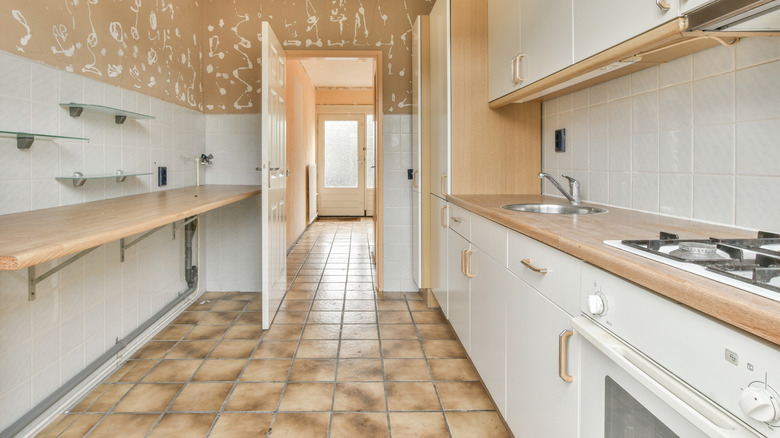
Linoleum has been around for a long time, though in recent decades its popularity has dwindled. It's gaining momentum once again as an affordable and practical flooring option that is durable to regular wear and tear and resistant to water — making it suitable for high-trafficked areas like kitchens. Plus, it can be easily cleaned with a damp mop, making upkeep simple. Additionally, linoleum comes in a vast range of colors and patterns, allowing you to pair it with pretty much any interior decor, whether you're going for a modern or vintage look. The colors are less prone to fading than other materials, making it a solid choice for long-term use.
It also happens to be an eco-friendly material if you're looking to prioritize sustainability in your kitchen remodel. Linoleum is made with linseed oil, cork dust, wood flour, resin, and other natural components, meaning it's biodegradable too. This mixture of materials feels soft underfoot, adding to the comfort of using it as a flooring choice. However, it can be slippery when wet, so it's important to tread with caution.
Linoleum's softer nature makes it susceptible to denting from heavy furniture or appliances. Still, it tends to resist lighter scratches, so with proper care it can continue to look good after many years. Sealing it every few years can help prolong its lifespan, and for optimal results, it's best to have it installed by a professional.