

10 Unexpected Fish And Fruit Pairings That Actually Work

With so much fruit available, it's a shame not to use it in our cooking. Many savory applications of fruit may surprise you. Fruit might not be the first food that comes to mind when you're looking to cook fish or seafood, but it's an underrated pairing. The sweetness and even acidity, in certain fruits, complement the mild sweetness of quite a lot of fish dishes. As a culinary-trained cook, I had the experience of cooking food across the world and learning how fruit and fish are allies in various cuisines and kitchens.
Fish is a protein that can be a little intimidating to experiment with different flavors, and that's understandable. Many people stick to obvious flavor pairings like lemon and garlic, or even blackened seasoning, when they're marinating or seasoning their fish. Arguably, the focus is often on trying to mask the "fishiness" element. However, once you step out of your comfort zone, you'll find that there is a whole world of ways to cook and serve fish that can be exciting and even enhance their natural seafood taste. Fruit is especially fun for those who enjoy some sweet elements in their meals. For professional cooks like me, it's always exhilarating to try a new flavor combo that takes a dish to the next level. These are some unexpected fish and fruit pairings that actually work.
Halibut and nectarines
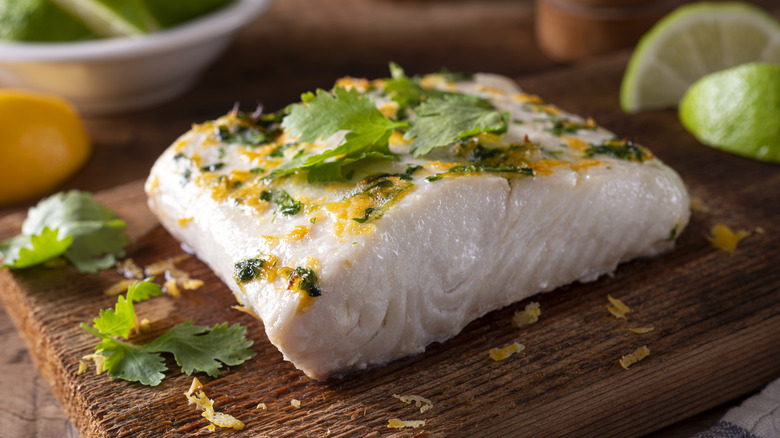
Halibut is often a crowd pleaser because of its mild and clean-tasting flesh. It's a great fish to introduce to kids who aren't confident about eating seafood yet, or even to someone who doesn't like it. It's not very "fishy" and has an almost buttery note to it. This makes it the perfect type of fish to serve with something light and fruity like nectarines, which are lightly perfumed with a fresh taste. Plus, you can be strategic with which nectarines you use. For example, if you're making a fruit compote-like sauce to serve with your halibut, you can go for riper nectarines. But if you're serving them uncooked, in the form of a salsa or a nectarine pickle, choose harder ones that have a bit more bite to them. They won't be too juicy or overly sweet.
If you're looking for some help getting started, give this halibut carpaccio with nectarines, radish, and lime recipe a try. It's deceptively simple for such a fancy and impressive dish. The work is all in the slicing of the halibut and the nectarines. As it's a carpaccio, the goal is thin slices of everything. Use a mandolin and firm nectarines to achieve this. Then, the rest of the process is all about combining the ingredients, dressing together, and voilà.
Tuna and mango
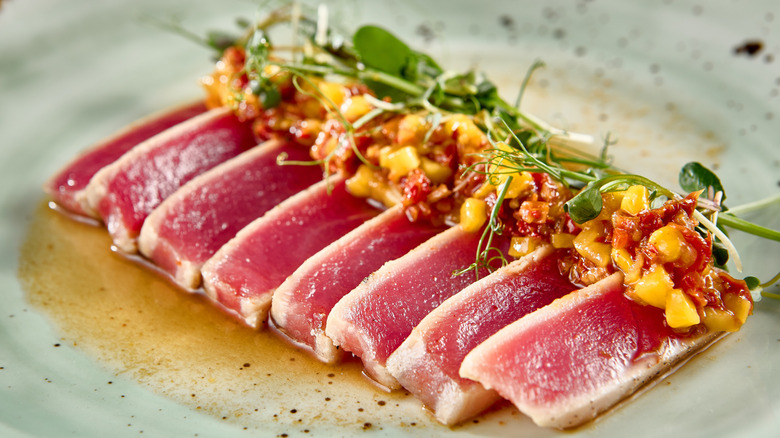
This is a combo you may have already come across, as it's especially popular in a poke bowl. Fresh tuna is on the milder side of fish, and it shines when it's matched with bold flavors. Mango is a tropical fruit that certainly brings out the best in tuna. While citrus can be a bit too harsh in its acidity for a delicate dish like tuna, mango can enhance it without overpowering it. It's bright and sweet, and it adds so much excitement to tuna, whether you're having a poke bowl, a spicy tuna roll, or a seared tuna steak.
If you're wondering how to incorporate mango into your tuna dish, it's pretty straightforward. You can simply cut up some small mango cubes and mix them into a rice bowl with chopped raw tuna and some other veggies. Tomatoes and cucumbers work, or even some edamame beans and some cut-up nori. Alternatively, you can use it in a mango salsa to top your seared tuna steak with. Mango works nicely in salsa, especially if you get one that isn't too soft yet and can hold its shape when diced into smaller pieces. Mix that with some red onion, cilantro, and chopped chili. Then dress the salsa with some lemon or lime juice or vinegar, and you've got yourself a zesty mango salsa that you might want to put on more than just your tuna steak.
Fish tacos and grapefruit salsa
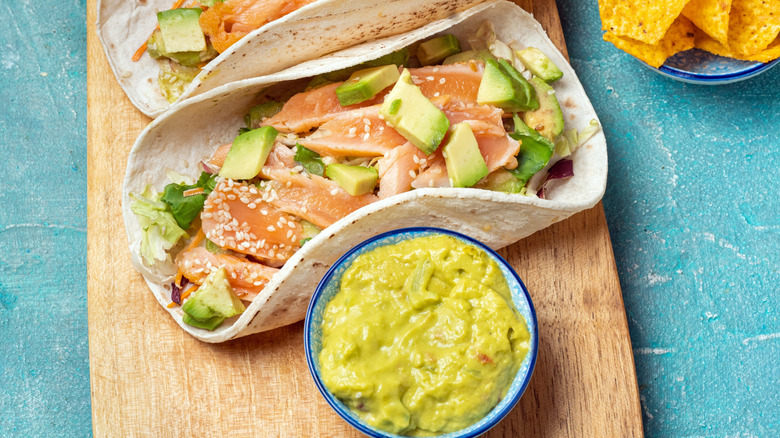
Fish tacos are another popular dish to add fruit to. Fish tacos provide a natural opportunity for adding fruity, sweet, and acidic toppings to bring your tacos to life. They can be made with various types of fish, but cod makes for a reliable choice. It's easy to cook, relatively affordable, and generally always available. It's also a pretty neutral-tasting white fish that flakes beautifully when cooked well. These flakes are great texturally for tacos, and you can brighten them up with a fruity salsa.
Choosing a citrus fruit like grapefruit can be rewarding because it not only brings an interesting flavor profile to your tacos, it also offers some bitter and sweet notes to the mix. Grapefruit is bursting with fragrance, and it's a major upgrade to simple fish tacos. Prepare your fruit by separating the segments and removing any seeds and thick parts of the pith. Cut them up into bite-sized pieces, ready to be mixed into your salsa. Your salsa can have things like jalapeños, onions, bell peppers, herbs, radishes, and more.
Apple and tuna salad
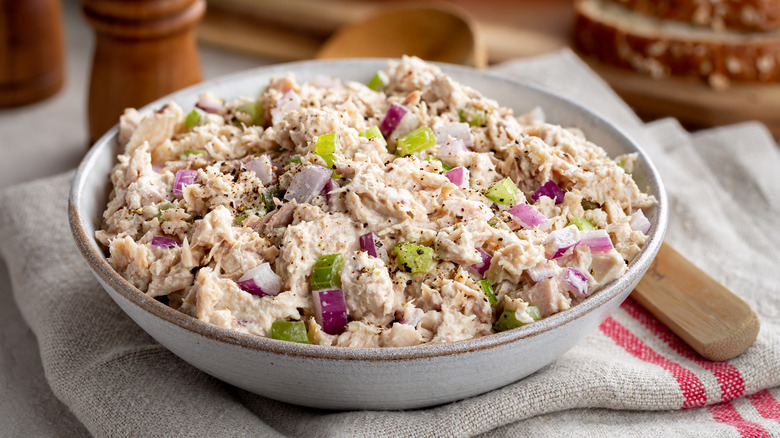
Tuna is an interesting fish as there's such a big difference between fresh and canned forms. Fresh tuna is pretty upscale, mild in flavor with a bright pink flesh, while canned tuna is a pantry item that we reach for when we need to whip up something quick, filling, and cheap. Both types are delicious in different ways, and both with fruit. Apples are a great addition to tuna salad. Some firm, tart apples bring a pleasant lightness to a creamy tuna salad. Chopped apples provide a nice crunch, much like chopped celery, onions, or cucumber, which is always desirable in a good tuna salad. This textural variation is what takes a mushy tuna mix into an elegant salad that can be served in a sandwich, wrap, or even with chips.
A simple apple tuna salad is a classic meal to whip up for lunch or dinner, and it's in anyone's wheelhouse. Simply chop the apples along with the other fresh ingredients. I like to use green apples because of their sharpness, but feel free to use whichever apples you have on hand. Then, mix everything in with some mayo, lemon juice, or whatever tuna salad dressing works for you.
Ceviche with passion fruit
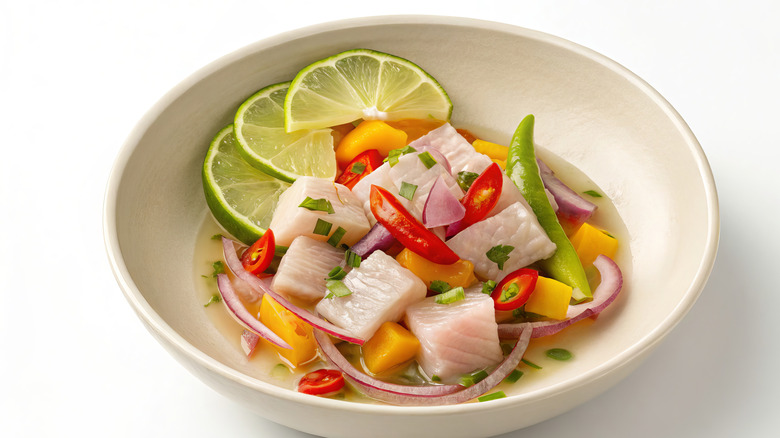
Another popular dish we may find fish and fruit together is ceviche, which is a Peruvian raw fish dish that's a favorite for many across the world. When it's too hot outside to cook anything, ceviche is the perfect no-cook solution. Plus, a zingy ceviche with some bold, fruity flavors can be just the thing to eat when you've lost your appetite. It's light, refreshing, and will "appetize" you in no time. Many types of fruit work in ceviche, but passion fruit is one of my favorites. It's a small but mighty little package, bursting with flavor. The sweet and sour element of passion fruit is tantalizing in a ceviche. It's acidic enough to nicely dress the fish, and its punchiness will make your taste buds sing.
There are many types of fish you can use for ceviche. Some common choices are yellowtail, halibut, and cod, but others like tuna also work well. In truth, ceviche is pretty customizable according to your preferences, and you can use just about any type of fish, as long as it's fresh and high quality.
Barramundi and pineapple
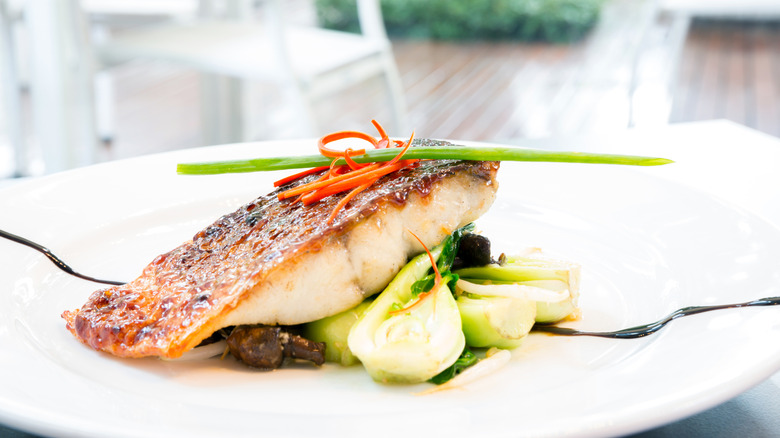
Perhaps a lesser-known fish to some is the glorious barramundi. Super popular in Australia, barramundi is a dream to cook and even better to eat. This white fish is mild, yet meaty, with a more pronounced flavor than something like cod. It lends itself to grilling, but is just as good oven-baked or pan-fried. It goes great with different toppings, and is a good fish to pair with pineapple. Pineapple suits the type of fish that can stand up to it and not get drowned out by its fragrant, tart flesh. Barramundi does this excellently.
So, how do we pair the two together? There are a number of ways to do so. You could grill a whole barramundi, with some grilled pineapple slices on the side, for your next outdoor barbecue. Or even grill the fish directly on top of the pineapple slices for the sweet juices to infuse into it as everything cooks. Alternatively, prepare a fresh pineapple salad to serve alongside your baked or pan-fried fish as a side dish. Shake some chili flakes onto the pineapple chunks and throw in some cucumber, lettuce, red onion, and red bell pepper to complete the salad. For a warm application (and an even more creative twist), make some pineapple chutney by slow-cooking pineapple with whole cumin and coriander seeds.
Swordfish and orange

Swordfish doesn't only have a cool name and shape, but it's an underrated fish in my opinion. It's meaty, similar to tuna in the sense that it has a firm texture and is great when seared. It's also ideal for making fish skewers or grilling. Swordfish, in my experience, has a relatively fatty mouthfeel, so it needs a bit of citrus to cut through that. While lemon and lime are wonderful with swordfish, I think orange makes for a more interesting fruit to go with it. Oranges bring the acidity that swordfish requires, while also adding a sweet brightness that balances out the meatiness — reminiscent of something like duck a l'orange. By using the orange zest or rind, you can even add a pinch of bitterness, which makes everything even more well-rounded.
The best thing about oranges as a fruit is how well they go in various sauces. With grilled swordfish, I love to do an orange, ginger, and soy sauce glaze, using the whole fruit, including orange juice, zest, and segments. Then, let it get cooked out until it's a thick and sticky glaze. This is especially delicious with a piece of seared swordfish, or as a basting sauce for barbecue swordfish.
Salmon and berries
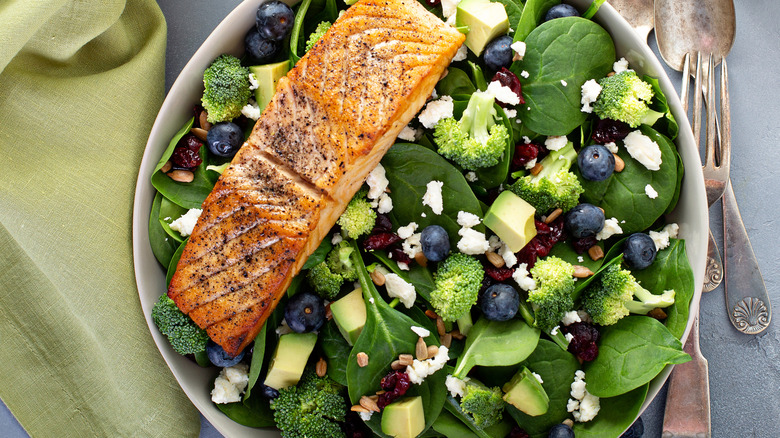
Salmon is one of the most versatile types of fish out there, and many home cooks have become well-versed in preparing it. It's delicious smoked, raw in a poke bowl, or in sushi, and it's equally as beloved baked, pan-fried, or seared. With all these different ways of eating salmon, it should come as no surprise that the fish goes well with all sorts of fruit. Perhaps the best of the fruits that go with salmon are berries. Whether red, black, or blueberries, berries are earthy, deep, and delightfully tart, complementing the richness of salmon perfectly. Plus, they're just sweet enough to highlight the salmon's natural sweetness. The pink-orange salmon with the red, blue, pink, or purple hues of these different berries is so visually striking, I'd want to bring them together just for how beautiful everything looks. Luckily, the taste is great too!
There are many ways to put these ingredients together. Raw berries would suit a smoked, cured, or raw salmon salad well, while a berry jam could be great on a lox bagel with some cream cheese. You could also cook down some mixed berries into a compote to pour over your next baked salmon dinner. Don't be afraid to throw in some woody herbs along with your berries, too. Thyme, rosemary, and dried mint are all a good match for a berry-based sauce, and help with the sweet-to-savory transformation.
Mahi mahi and dragon fruit
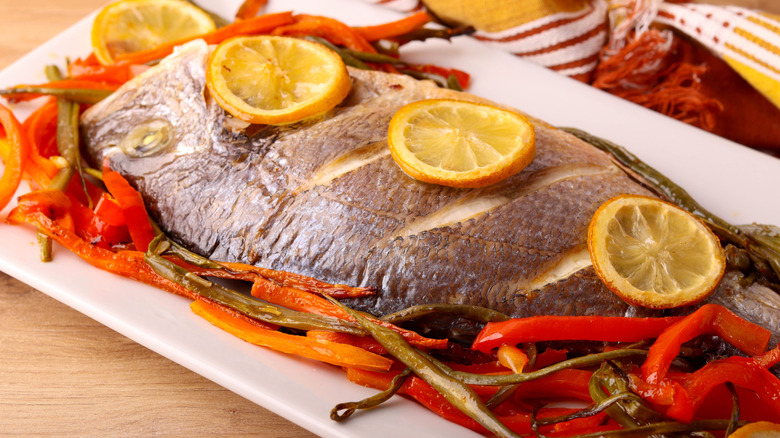
Dragon fruit tends to get a bad rap for being on the flavorless side of things. Perhaps the disappointment is because expectations have been set high by their dramatic and colorful appearance. However, dragon fruit is the unexpected pairing your fish needs. Sure, it's no mango or pineapple, but ripe dragon fruit is incredibly refreshing, and its mellow fruitiness actually makes it quite suitable for having with fish. It's especially good with a fish like mahi mahi, which is relatively delicate, and would easily be outshone by more pungent foods. Mahi mahi is a tender and flaky, white fish. I've found it to be quite versatile, as long as you make sure to treat it with some care and not overcook it.
Dragon fruit is best when fresh and raw, so it's an obvious choice for making a fruit salsa to top your fish with. Mahi mahi, whether cooked as fillets or whole, would benefit from a zesty dragon fruit salsa. Mix in some jalapeños and a vinegar-based dressing to complete your dragon fruit salsa and spoon it over your mahi mahi. For even more of a tropical feel, serve your mahi mahi fillets in the empty dragon fruit skin. It's too alluring not to be used in a fun way in your presentation.
Cod and citrus
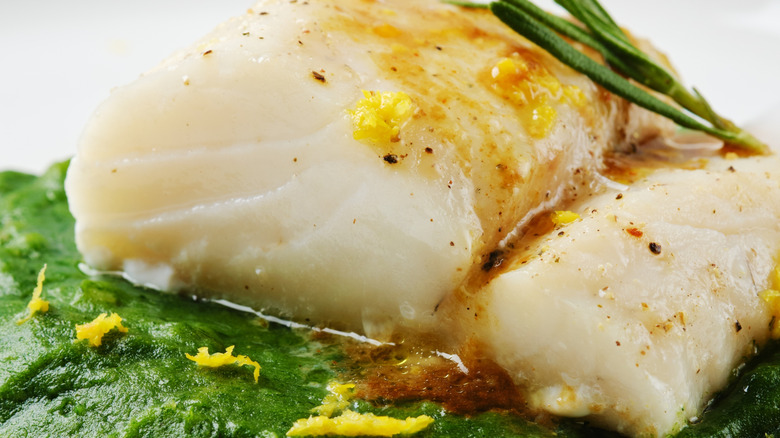
Cod is one of the most common types of fish that people cook, and it's clear why. It's affordable, readily available, and easy to cook. It's also a crowd-pleasing fish that kids tend to love too. It has a clean flavor that isn't too "fishy" and lends itself to all sorts of preparations. This clean flavor does well with simple dressings, seasonings, and pairings. That's why citrus is a lovely choice that works with cod in most preparations. I like the freshness of lemon with cod, and it can give you a feeling of being by the sea, even if you're far from it.
Limes also work just as well, and for a fruit that's so close to lemons, they give the dish a different dynamic. They're more aromatic, with complex bitter and sweet notes that still allow the cod to shine through. The juice from your citrus fruit is an easy way to dress your cod, but don't forget the zest. This is where all the fragrant natural oils and aromas are, and adding in some zest will bring those to the cod.
I prefer to make some oven-baked cod fillets with a light brushing of olive oil, salt, pepper, and some lemon or lime. I grate some zest to rub into my fish fillets before they cook, and then I squeeze some juice on the cooked fillets once they come out of the oven. It's a hit every time.