

20 Tips You Need When Cooking With Pork
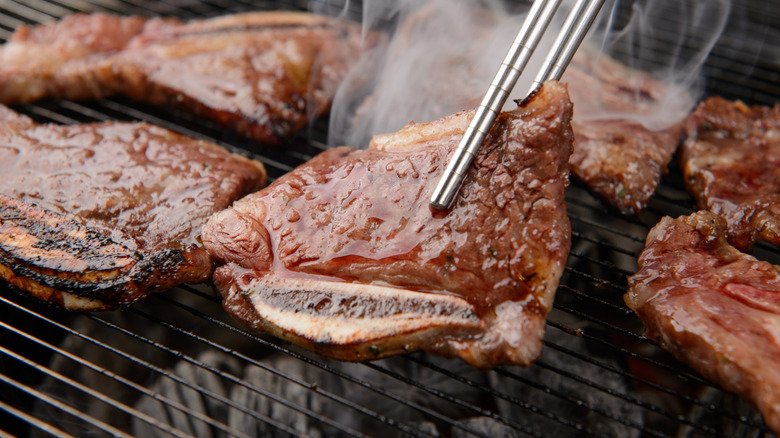
You can tell a lot about a country by taking one look at the types of meat it eats. Many Americans are fond of beef, chicken, and pork. Somehow, despite its popularity, pork often seems to be an afterthought. There are big chains pumping out burgers and fried chicken every day, but pork? Not so much.
Admittedly, it's hard to compete with the glamor of a top-notch steak or the versatility of chicken. But pork brings a lot to the table in every sense. Breakfast wouldn't be breakfast without bacon, ham, and sausage, and pork is the focus of classic, traditional barbecue. Better yet, it's never been easier to find once-niche cuts of pork like the collar or rich, fatty belly. Here are some of the top tips you need to keep in mind when preparing this beautifully versatile meat.
Know the differences between similar cuts
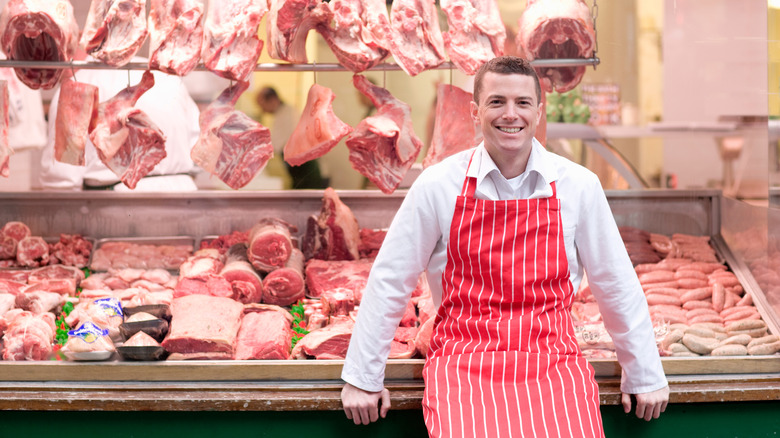
Pork loin and tenderloin. Spare ribs and baby back ribs. Pork butt and pork shoulder. Many cuts of pork have similar names or appearances. Some of the most important things to know when you're cooking with pork are the differences between similar-sounding or -looking cuts.
The difference between pork loin and pork tenderloin is probably the hardest one to figure out. Both cuts are fairly lean and come from the same part of the pig. But that's where the similarities mostly end. Pork loin is a much bigger cut, typically weighing four or five pounds, while tenderloin typically weighs about one pound. Pork loin also has more fat and it tends to require a longer cooking time.
The difference between spare ribs and baby back ribs can also be difficult to suss out. The biggest differences are size and meatiness. Baby back ribs tend to be shorter and meatier, while spare ribs are longer, flatter, and less meaty. However, spare ribs tend to be fattier, making them more flavorful.
The shoulder of a pig is cut into two different parts: pork butt and pork shoulder (which is sometimes called "picnic shoulder"). Pork butt comprises the upper part of the shoulder located behind the shoulder blades. Because this part of the shoulder does less work than the lower part of the shoulder, pork butt is much fattier, and as a result, more flavorful.
Match your cooking method to your cut
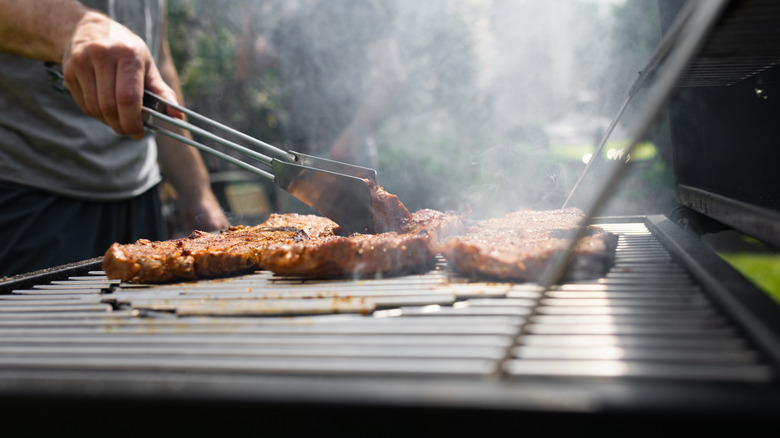
We've talked a bit about the differences between similar-sounding pork cuts. The next step is learning which cooking method is best for any given cut. That takes a bit longer, but there are some quick rules to help you get a handle on it.
First, look at how fatty it is. Lean cuts, like the loin and tenderloin, are best when cooked quickly. They're among the best cuts of pork to grill, broil, or pan-sear, but they're not great for slow cooking. Fattier cuts like the shoulder or belly are better suited to slow cooking, whether that's oven-braising or going in your smoker.
Another thing to look at is toughness. The loin isn't a hard-working muscle, for example (as it just supports the spine), but pork legs, shanks, and shoulder all get used a lot and are, as a result, very tough. That's why the shoulder is usually slow-roasted or used for barbecue, leg steaks are pounded into tenderness for schnitzel, and shanks are usually braised until they're falling-apart-tender (the good news is that these chewy parts are some of the most flavorful cuts of pork). When in doubt, you can't go wrong by hitting the "Cuts" section of the National Pork Board's website for guidance.
Make sure your cuts of pork are sized consistently
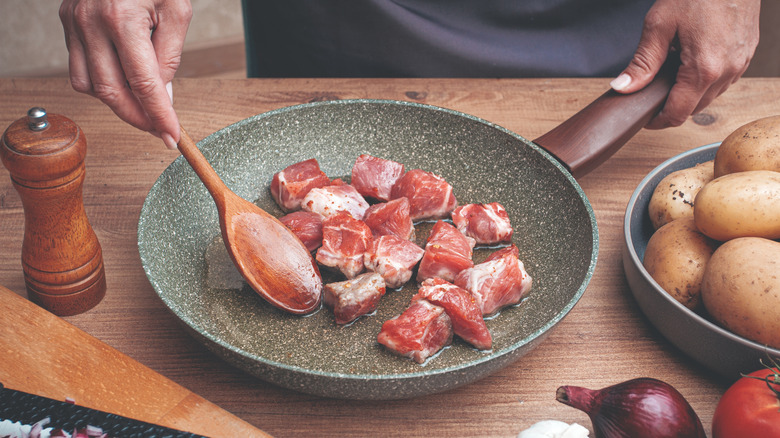
Have you ever wondered why chefs (on TV, and in the real world) are so militant about accurate knife cuts? It's because unevenly-sized pieces won't all be done at the same time, so in a worst-case scenario, you can end up getting undercooked and overcooked food on the same plate.
That's why, if you're buying multiple packs of chops to throw on the grill this weekend, you should try to get them cut to the same thickness. Thick chops and thin chops need to be cooked differently. Similarly, if you're choosing a couple of pork shoulder butts to smoke for pulled pork, you'll want to choose pieces that are about the same shape and thickness. The heat from your smoker penetrates the meat at the same rate, so a thicker butt will take longer to cook than a thin one. It's basic physics.
Keeping your cuts all the same size is most important when you're planning a stir-fry or skewered kebabs. Those pieces are going to cook pretty quickly, so if they aren't all the same size, some will rapidly become overcooked and dry. If you aren't confident in your knife skills, you can usually ask the butcher or meatcutter (even at a supermarket) to cut a piece for you.
Know the correct cooking temperature
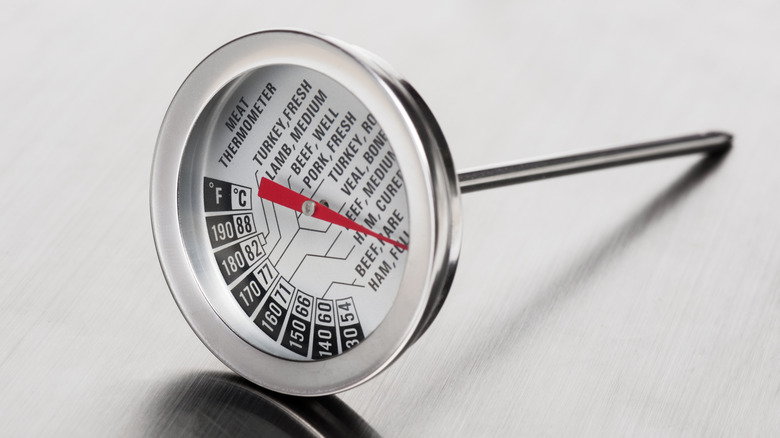
If you hated pork as a kid because it was always dried out and tough to eat, you should know that people were probably overcooking pork for many years. The current recommended internal temperature is 145 degrees Fahrenheit, but for many years, the recommended temperature had been much higher: 160 degrees Fahrenheit.
Experts had been recommending the higher temperature out of an abundance of caution. Raw pork can harbor parasites that cause trichinosis, a debilitating disease. In the 1920s and 30s, trichinosis was prevalent, but improved conditions in the meat industry have significantly lowered the risk of contracting the disease. The USDA tacitly acknowledged this lower risk when it updated its recommendations to include the lower temperature.
In fact, 145 degrees F is the ideal temperature for perfectly cooked pork. A University of Illinois study found participants consistently preferred pork cooked to this temperature compared to pork cooked at 160 degrees F. So the next time you cook pork, insert your meat thermometer into the center of the cut and remove it from the heat if you see a temperature of 145 degrees F or higher.
Leave the fat cap in place
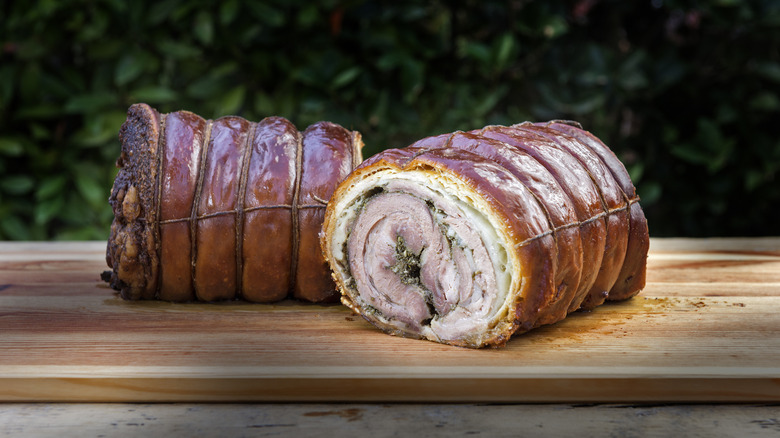
Some cuts of pork, like rib chops or the shoulder, have a lot of marbling in them. Others, like pork loin, are quite lean, but have a thick rind of fat (the "fat cap") on the outside. Shoulder cuts often have both.
Marbling is fat that's inside the muscle itself, and it's what makes rib chops and (beef) rib steaks so lush and delicious. It's why people choose those cuts. But the fat cap on the outside of pork chops and roasts doesn't get a lot of love, and some cooks just automatically cut that off. Honestly, it's a mistake. You don't have to eat that thick slab of fat (and probably shouldn't), but it does serve a couple of purposes.
If you're doing a full shoulder for pulled pork, for example, that fat cap provides some insulation to help keep the cooking time slow. If you're cooking a pork loin roast, the fat cap helps keep the lean meat from overcooking and becoming dry. You don't need to leave it all on, of course. Trimming it thinner and scoring it in a criss-cross pattern will help the fat render out and leave a thin, crisp, tasty surface (you like crispy bacon, right?) that amps up the flavor and enhances your seasonings.
Brine lean cuts to prevent the pork from drying out
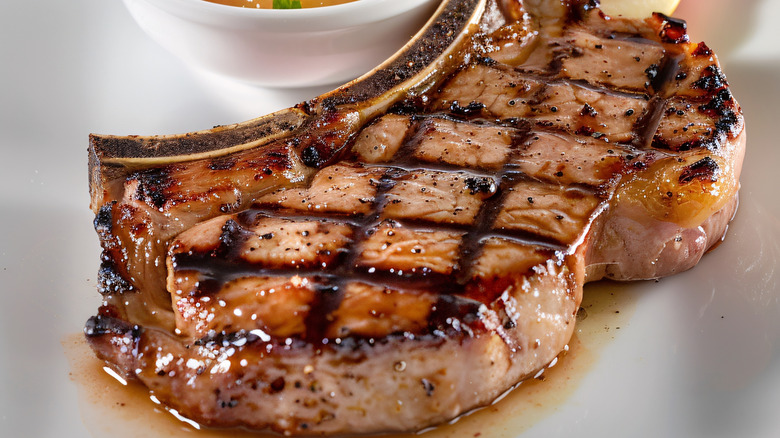
Pork chops usually come from the rib, loin, or sirloin, which are all pretty lean and tender. "Lean" and "tender" are both good things, as far as most of us are concerned, but there is a slight problem: Lean pork is pretty easy to overcook.
So how do you cook pork without drying it out? Well, it helps if you avoid slow-cooking lean cuts (which lack moisture-preserving fatty marbling) and always cook to the right temperature. But to stack the odds in your favor, it pays to brine your pork chops. It's not a complicated process. Mix water and salt together, along with other flavorings like sugar, vinegar, or spices (they're optional, but good), and then leave your pork in the brine for at least 30 minutes, or up to an hour per pound. If that's too much fuss, you can just sprinkle the chops liberally with coarse salt (called dry brining) at least an hour before cooking.
Salt changes the structure of the pork's protein molecules slightly, helping them trap moisture. This both flavors the chop and keeps it juicy. Many cooks favor dry brining because it's easier and doesn't add water to the chop — the moisture it retains is all from the pork itself, meaning you aren't diluting its flavor.
Make sure the surface of your pork is dry before searing it
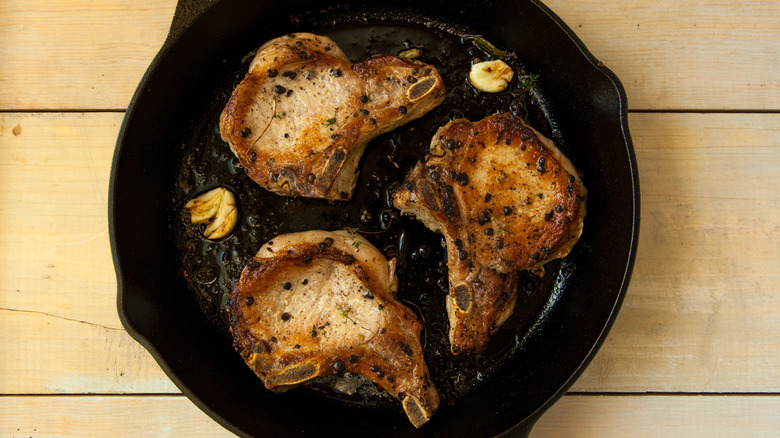
If you spend a lot of time on sites like this one, you'll see plenty of tips for getting the perfect sear on your steak. You'll have to dig a bit deeper to find tips aimed specifically at pork chops, but that's okay. Pretty much all of the same advice applies, and the end result is the same: a tender, juicy cut of meat that's extra-delicious because of its deeply browned exterior.
One of the most important tips is to make sure the surface of your pork chops is completely dry before you slap them into that hot pan (or onto the grill). Why? Because browning can't start until the moisture cooks away, and browning is the whole point. So use a piece of paper towel to blot it really dry, especially if you've marinated or brined your pork before cooking it.
This is a good reason why you might skip traditional wet brining for pork chops and choose dry brining instead. Dry brining won't leave the surface of your chops completely wet. At most, there may be a hint of moisture, which is easy to blot. The result? A well-seasoned, flavorful chop that browns beautifully and develops a richly seared crust.
Avoid excessive trimming before smoking pork
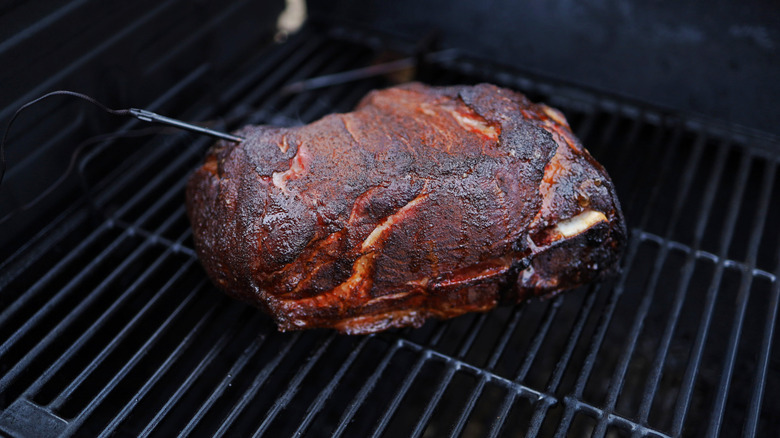
Before smoking a cut of pork, you might be tempted to trim away extra fat or connective tissue, but smoking is a low-and-slow cooking process that does magical things with these tissues. The last thing you want to do is trim them away.
So, what are the best cuts of pork that you should be smoking? Pork shoulder is a very cheap cut and smoking it doesn't take much effort. You may be tempted to cut away any pork skin, but hours in a smoker will turn it into a crackling, savory treat. Pork collar is another great cut for smoking, and you should absolutely leave on the outer layer of attached fat because it adds flavor. Ham hocks are more associated with stews and braises, but they are a great cut for the smoker. In fact, ham hocks are used to make the iconic Oktoberfest dish schweinshaxen.
Trotters are the one cut of pork that requires a bit of trimming, of a sort. Pigs' feet often come with a bit of hair on the toes that you should probably remove with a disposable razor. Unless you like the taste and texture of smoked hair, that is.
Season skin with salt to crisp it up
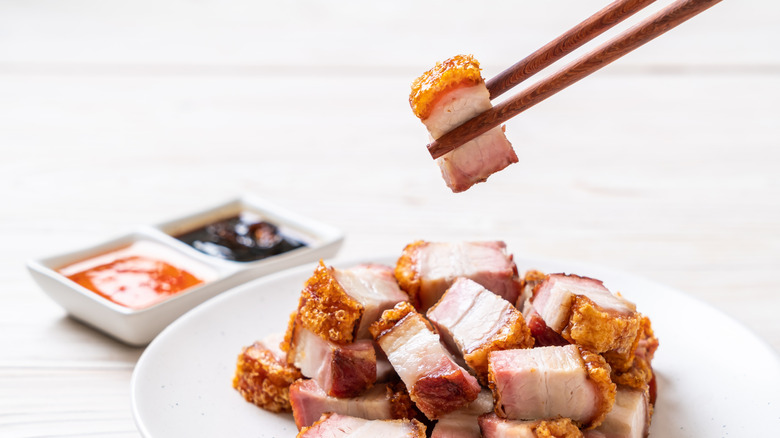
The truth about pork rinds is that there are actually made from crispy pig skin. But did you know you can easily make crispy pig skin right in your kitchen? Pork shoulder and pork belly are popular cuts that often come with the skin attached. To crisp up that skin, use a sharp knife to score it diagonally at half-inch intervals and then heavily rub the skin with salt and pepper. After you've scored and seasoned your skin, you can smoke it or roast it at a low temperature to get that crispy texture.
Crispy pork skin is also a hallmark of porchetta, a decadent and classic Italian dish. Made from pork loin wrapped in skin-on pork belly, porchetta has become a fashionable dish, and a number of chefs have put their own spin on it.
Use apple cider in a pork braise
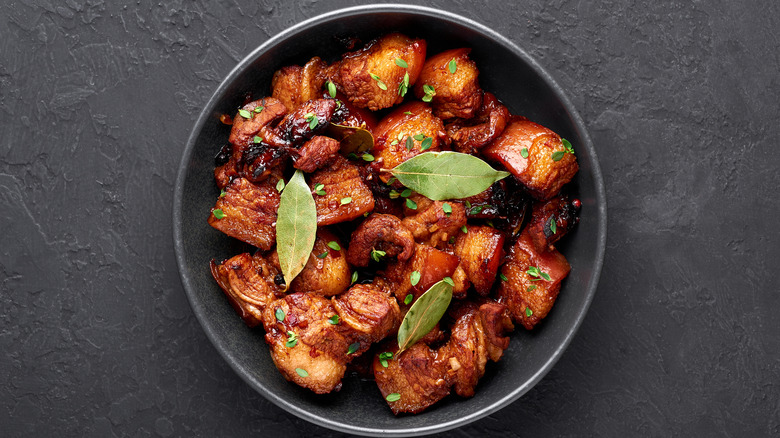
Imagine a whole roasted pig or a pig's head on a buffet and you'll probably picture an apple stuffed into its mouth. Although was don't serve pigs this way as much as we used to, pork and apples are a classic pairing that never gets old. It can be traced back to a time when savory dishes like pork were often served with sweet sides made from fruit.
Fortunately, you don't have to roast an entire animal to enjoy this delicious combination. Our pan-seared pork chops with parsnip-apple puree recipe is an elegant way to combine apples and pork. It takes pork chops and applesauce to the next level by incorporating spice into the puree and basting the chops in rosemary-infused brown butter. You could also use apple cider to braise pork or employ apple cider vinegar in our easy pulled pork recipe. Likewise, a splash of apple cider can work wonders when reheating pulled pork.
Pair pork chops with more than just apples
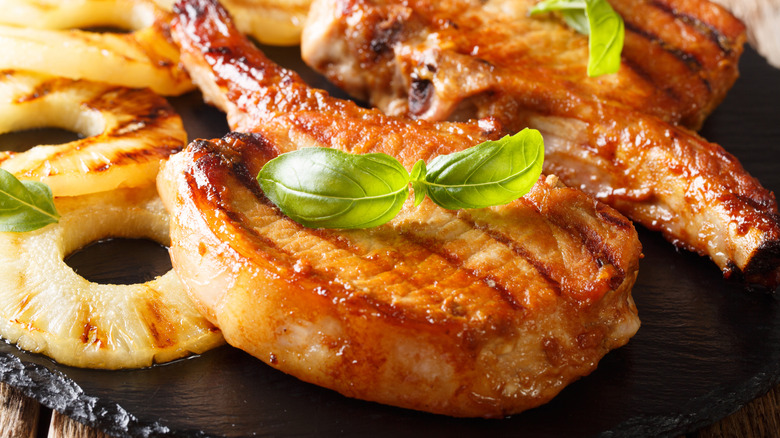
Although apples are a classic pairing with pork chops, they are a very versatile cut of meat that pairs well with other fruits like peaches and pineapples. Pairing peaches with pork chops is a particularly good idea in summer when the fruit is in season. If you're looking for a sweet-savory spin on pork chops and peaches, toss peach slices in a pan on medium heat for 4 or 5 minutes, and then create a sauce by adding white wine and a knob of butter. If you're more into a kick, spicy peach salsa can cut through the richness of pork chops with acid and heat.
Ham and pineapple on pizza gets a bad rap, but the combination of pork and pineapple is a solid one. In many Asian cuisines, pineapple is used to create a sweet and sour sauce that goes with all kinds of pork dishes. If you're looking to try this pan-Asian combination, check out our pineapple pork loin recipe.
Cook thin pork chops hot and fast
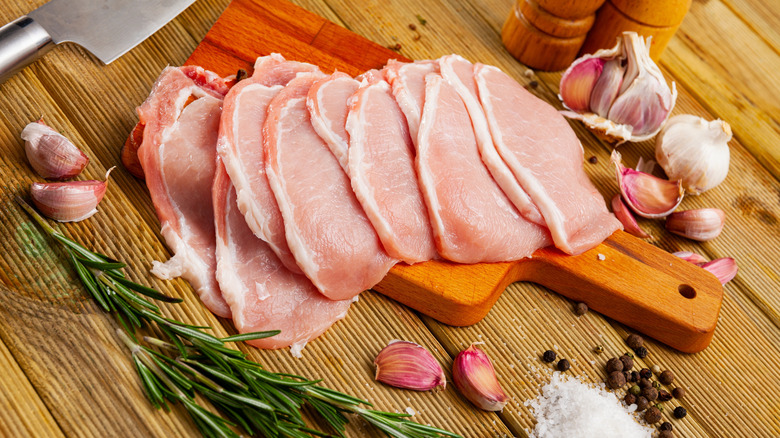
We've already explained that pork is at its best and juiciest when it's cooked just to the USDA's recommended temperature of 145 degrees Fahrenheit, which leaves it faintly pink inside. That's relatively easy to do with nice, thick chops, but that's often not what you'll find at the supermarket. So how should you handle thin-cut chops?
Well, there are some foods that need to be cooked at high heat, and skinny chops are one of them. If you cook them at the same heat you'd use for a thicker chop, they'll be overcooked by the time you get a good sear. So instead, you'll need to crank up the heat and really give them a good blast to brown them quickly.
If you're cooking them on your grill, crank the gas to its maximum (or adjust the vents on your charcoal burner for maximum airflow) and let it heat up, lid down, until the grates are super-hot. The grates are where most of your searing comes from, so you need them to be well-heated. If you're at your stove, use a nice, heavy skillet (ideally cast iron, carbon steel, or stainless steel), and bring it slowly up to at least medium-high before you start adding chops to the pan. Either way, sear one side and then cook the other for just long enough to cook it lightly (picture an over-easy egg).
Use pork shoulder cuts for pulled pork
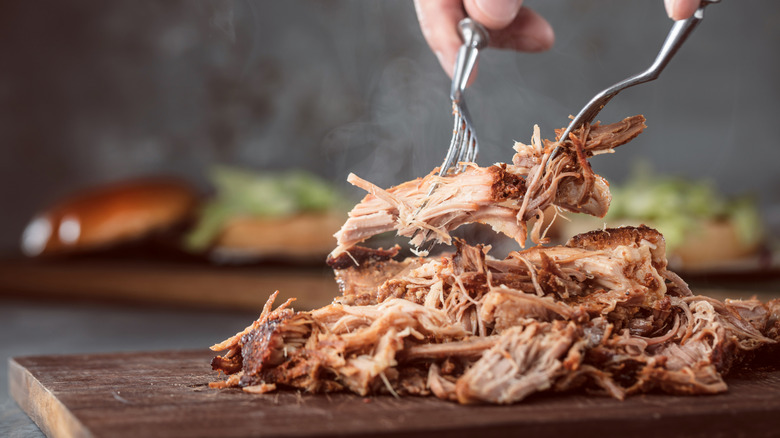
When Homer Simpson referred to the pig as a magical animal, he was probably thinking about pulled pork, one of the most versatile and forgiving kinds of meat. Whether you're smoking, slow braising, or pressure cooking, it's almost impossible to overcook pulled pork. It can be used in all kinds of dishes from nachos to bao buns, and it doesn't get rubbery when you try to reheat it. However, you can't get good pulled pork from just any cut of pork.
The best cuts of meat for pulled pork are shoulder cuts, which include the aforementioned picnic shoulder and pork butt. These cuts have a lot of fatty and connective tissue that can be broken down by low-and-slow or pressure cooking. While both cuts are great, pork butt — or Boston butt — is the better of the two cuts because it typically has more fat. These cuts are typically sold as large chunks of meat weighing multiple pounds. For the sake of convenience, you can easily use a single pork butt to make a big batch of pulled pork with basic seasoning and then use the meat in many different dishes, adding seasoning accordingly.
Remove the tough silver skin from pork tenderloins
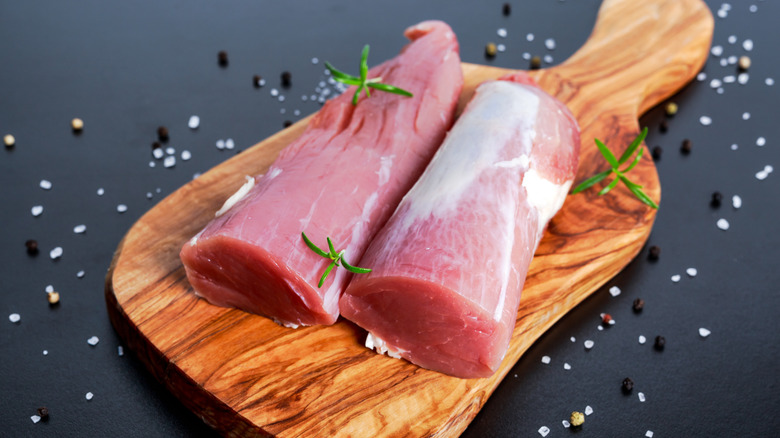
Pork tenderloins are one of the higher-cost cuts, by weight, but that's deceptive. They have no bone in them and barely any fat, so you get to eat almost every bit of it. We say "almost," because there is one thing that needs to come off if you're going to fully enjoy your meal.
If you look at the tenderloin, you'll see that it's narrow, round, and tapered at the ends. You'll also notice a pale-colored membrane along the top. That's called the silver skin. It doesn't soften or melt as you cook the tenderloin, so it's always best to remove it. Chefs like Michael Symon remove the silver skin by sliding the tip of a thin knife blade underneath it, angling it upward (so it presses into the membrane, not the underlying meat), and then sliding it to the end to create a sort of pull tab. Then, they tug on the flap of silver skin with one hand, while following it with the knife (again, angled upward) until the whole piece is removed.
You'll find a similar layer of membrane on the underside (the bony side) of racks of ribs. It's also called silver skin or sometimes the "fell," and you'll enjoy your ribs more if it's removed. The easiest method is to loosen one end with your knife and then grip it with a paper towel to pull it all the way off.
Pork loin will take on all kinds of seasonings
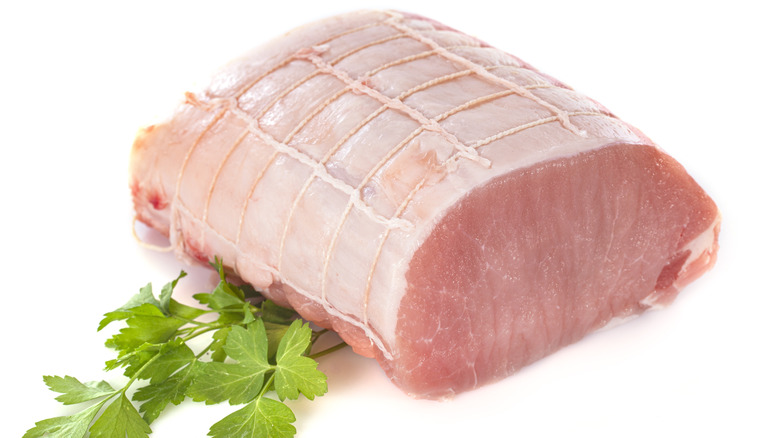
Pork loin has a very subtle pork flavor and because of that, it's able to take on all kinds of seasonings and flavor profiles. When seasoning pork loin, you can go two different routes: a marinade or a dry rub. Because a marinade contains an acid like vinegar, it can help to tenderize the pork loin as it imparts flavor. If you cut your pork loin into thin slices, a 12- or 24-hour marinade can be enough to tenderize the meat to use faster cooking methods. A dry rub, on the other hand, only imparts flavor, making it more important to use a low-and-slow cooking process.
If you want a perfect marinade for pork, you should use one based on apple cider vinegar. We like a pork marinade that also includes mustard, time, olive oil, lemon juice, salt, and pepper. But you are also free to come up with your own. Just make sure it contains an acid, some type of fat, and whatever seasonings you like.
The two key ingredients in a dry rub are salt and sugar. Other seasonings can be added based on personal preference. Our three-ingredient dry rub recipe couldn't be easier. Simply mix together garlic salt, brown sugar, and hot smoked paprika.
Add sauce to barbecue ribs at the perfect time
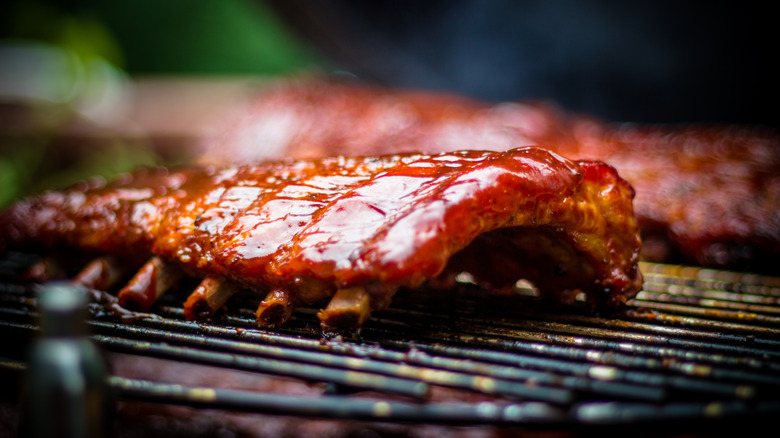
Barbecue sauce is so delicious you may have the urge to slather as much as possible on your ribs, starting as early as possible. However, you shouldn't sauce your ribs too early, especially if you're using a sugary sauce. If you do, you'll char the sauce and pass on burnt flavors to your ribs.
The best time to add sauce to ribs depends on the heat you're using to cook them. If you are cooking them low and slow, at about 225 degrees Fahrenheit, you can apply sauce as early as 30 minutes before the end of your cook time. If you are using a higher temperature that isn't blazing hot, you should wait until about 10 to 15 minutes before your ribs are done.
You could apply barbecue sauce earlier than that, but you should first water it down to dilute the amount of sugar that could potentially get burned. Better yet, add flavor by using a dry rub, instead, and avoid the risk entirely. Then, once your ribs are done cooking, you can go ahead and apply a coating of undiluted sauce.
Slow cook for tender pork belly
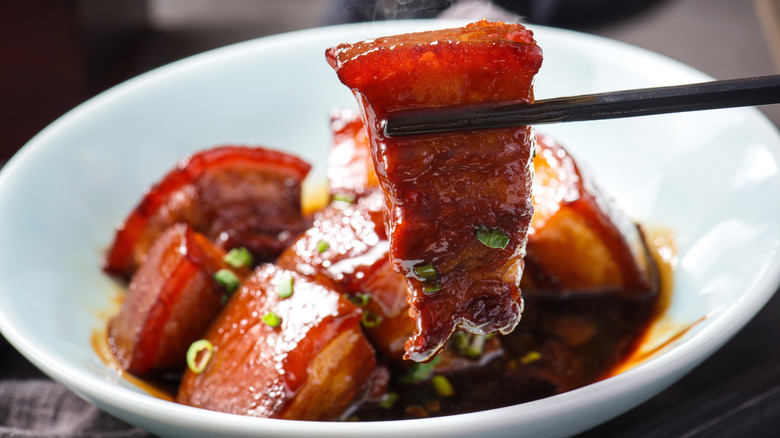
Skinless pork belly contains two layers: a layer of fat and a layer of tough muscle. One of the biggest mistakes you might be making with pork belly is cooking it at high heat. To achieve tender, melt-in-your-mouth pork belly, you need to cook it low and slow. Smoking, braising, or roasting at low heat melts collagen in the muscle layer, tenderizing it. Because the muscle layer is so tough, the cooking process can take around 4 hours, possibly more. If you are smoking or roasting, you'll have to baste the belly as it cooks to prevent it from drying out. If you've done it right, your cooked pork belly should be easily pierced with a fork. Let your pork belly rest for 10 to 15 minutes before serving it.
While properly cooking a pork belly with basic seasoning is a great thing, this cut is incredibly versatile and you can dress it up in many different ways. Taste the Pacific islands with a Kalua pork belly recipe, which involves marinating the belly in a blend of soy, mirin, chicken stock, and aromatics. Or enjoy the Thai culinary staple moo palo, which is pork belly braised in a spicy stew and served with boiled eggs.
Velvet pork before using it in stir-fry
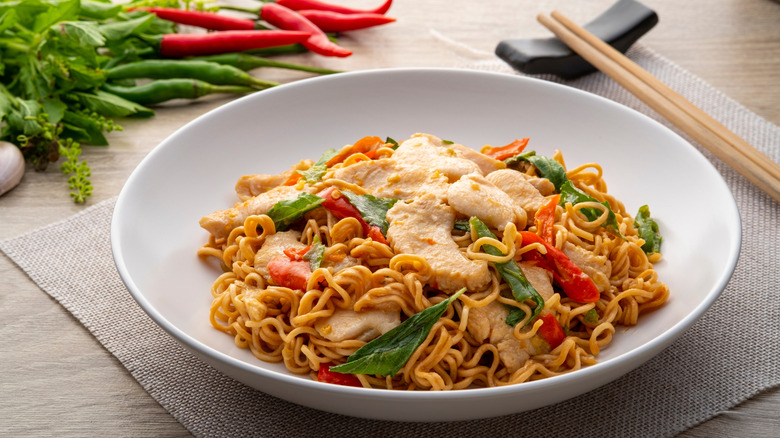
Velveting might sound like a technique related to upholstery, but in the world of cooking, it's an Asian marinade technique that gives stir-fried pork that signature silky texture. Starch is the essential part of a velveting marinade, with the two most common starches being cornstarch and tapioca. Other ingredients of a velveting marinade include soy sauce, Chinese cooking wine, and oyster sauce. Some restaurants use baking soda in their velveting marinade to act as a meat tenderizer. If the cut of meat you are using is already fairly tender, like pork loin, don't bother including baking soda in your marinade.
Some cuts of pork take better to velveting than others. Thinly sliced pork shoulder or pork butt contains a lot of fat and therefore a lot of flavor. Pork loin is easier to cook, but the lack of fat means it dries out quickly. Boneless country ribs are another great option, especially for people who don't mind large streaks of fat in their meat. In addition to velveting pork, you also might want to consider adding an unexpected ingredient to your next stir-fry: ketchup.
Use all of your favorite appliances for cooking pork
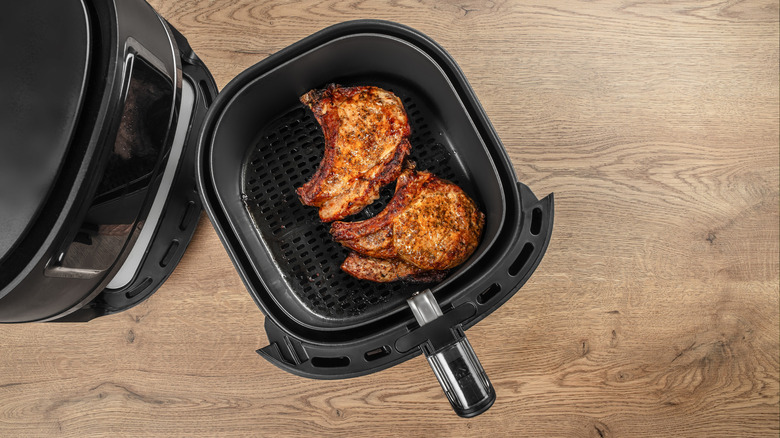
We've talked a lot about the different cuts of pork and how best to cook them. What that translates to, in a word, is versatility. For every cooking method you love, there's a cut of pork that works beautifully.
So let's take that thought a step further, because it also applies to every cooking appliance you love. Got an air fryer? Well then, air-fry your pork chops (or use it to make burnt ends from a piece of pork belly). Is the Instant Pot your thing? Use it for a high-speed version of your favorite slow-cooked pork recipe, or smoked hocks with beans or sauerkraut. A slow cooker, or a countertop oven (aka "turkey roaster"), can give you an easy-peasy version of pulled pork without the fuss of using your smoker.
Even that old Foreman Grill you've been toting around since your dorm-room days is pork-friendly. It's great for grilling chops because the simultaneous heat from above and below cooks them quickly and evenly. Also, the grill's much-hyped fat-rendering prowess is ideal for cooking breakfast sausage. So look past the grill and your skillet, and try them all!
Store and reheat your pork the right way
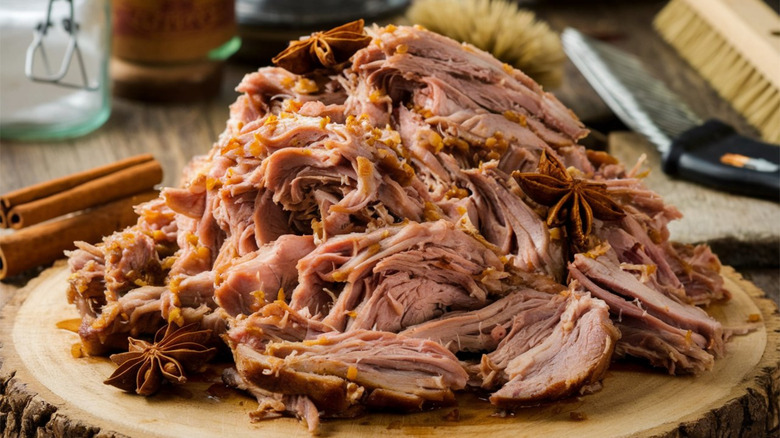
Pork, like any other meat (and most proteins in general), is considered "high risk" when it comes to food safety. That's why the USDA and FDA publish guidelines on how to handle these foods safely.
Handling your pork safely starts at the supermarket. Meat needs to stay cold, so you should make a habit of hitting the butcher counter last. Keep an insulated bag in your car to bring it home in, and refrigerate it right away. Fresh pork will last three to five days at refrigerator temperature, or you can freeze it for later use. Cooked pork is good for three to four days, or — again — you can freeze it. Food-safe storage containers or zip-seal bags are fine in the fridge or freezer, and vacuum-sealed bags are even better.
You'll need to bring your leftovers up to a temperature of 165 degrees Fahrenheit for food safety, but the best method to do so is not widely known. Like your cooking method, it depends on the cut. To reheat pork chops or tenderloin, try wrapping them in a moist paper towel and microwaving at reduced power. If they were cooked in sauce, gently reheating them in their sauce works nicely. To reheat pulled pork, you'll want to go low and slow in a liquid, like broth or apple juice.