

5 Benefits Of Using A Drip Coffee Maker
We may receive a commission on purchases made from links.
There was a time when drip coffee was the lifeblood of homes, restaurants, and offices across the country. Prior to the release of the first domestic model in 1972, coffee was made by time-consuming manual pour-over, or more likely a stovetop percolator that resulted in bitter coffee full of sediment. Then came a machine that not only automated the process, but also produced a better-tasting cup of coffee.
Just two years later, drip coffee makers accounted for half of all coffee machines sold. Even as late as 2010, they remained as the most popular style of coffee maker. It's only much more recently that other brewing methods have started to encroach on their market share. Drip coffee might not have the glamor of espresso or the speed of a single-serve machine, but depending on your preference, it could still be the best option for you and your household.
When weighing up the pros and cons, it's usually comparing drip coffee makers with Keurigs. After all, these single-serve machines are designed to replicate the drip experience. But you should also consider the pros and cons of all brewing methods to see how drip coffee stacks up against espresso, French press, and the manual pour-over. If you've been looking for a reason to dust off that old drip machine or treat yourself to a brand new appliance, here are some benefits to drip coffee makers that you might have overlooked.
Drip coffee is cheap
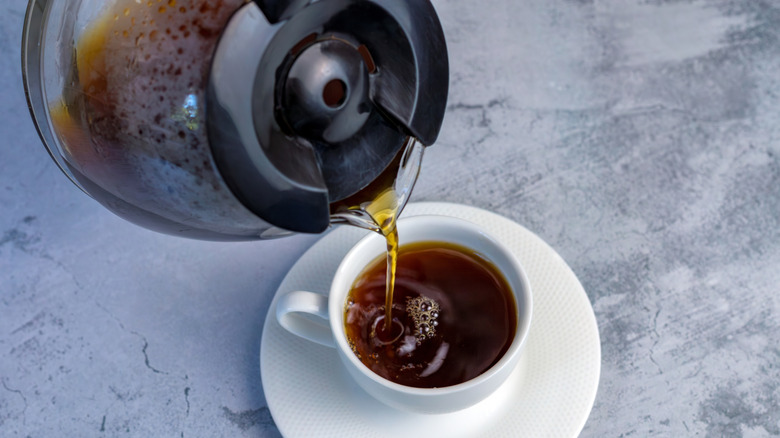
What's considered cheap can be fairly subjective. But when taking into account both the upfront cost of the machine and the ongoing cost of coffee, the drip coffee maker comes out ahead of some of the most popular home brewing methods. The fact that drip machines use ground coffee rather than single-serve capsules is where you get the most significant savings. Drip coffee usually comes in at less than 50 cents per cup, compared to K-Cups potentially costing over $1 per serve. Even if you only drink one coffee a day, you could be looking at spending $250 less per year with a drip machine.
Brewing drip coffee is also more affordable than making espresso at home, at least until the cost of the machine has paid for itself. You'd be hard-pressed to find even a budget espresso machine for less than $100, and then you need to consider a grinder that can be possibly more expensive. You can pick up a perfectly respectable drip machine from a known brand for a third of the price. The best-selling Black + Decker 12-Cup machine will set you back just $34.99. The only option that's potentially cheaper than drip is a manual brewing method such as French press or pour-over, both of which use ground coffee. But this will depend how much you spend on the coffee maker and any extra equipment you need.
Drip machines are convenient and consistent
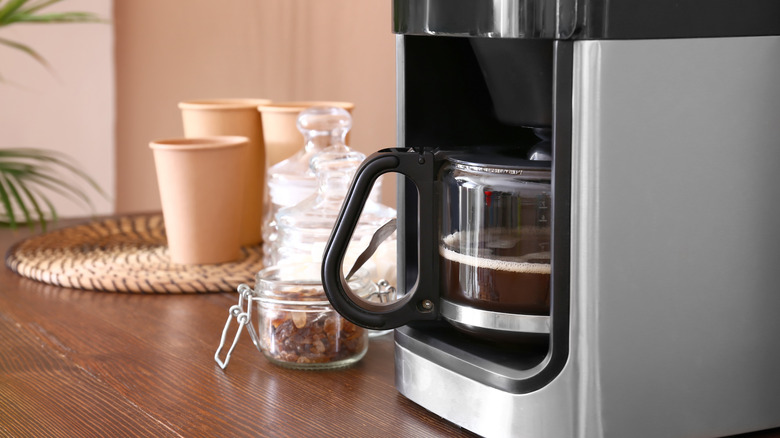
Single-serve coffee machines might be seen as the epitome of convenience, but drip coffee makers have a lot going for them in this regard too, as filling up the water reservoir and adding the coffee is a pretty simple process. And once you hit the button, the whole thing is hands-off. These steps are pretty hard to mess up. If you can measure out the same amount of coffee and water each time, the machine will deliver the same results. Some of the best drip machines might have the ability to customize your brew with water temperature or bloom time, but even these options are as simple as pressing a button. In other words, those extras aren't something you'll have to work out yourself.
To make a manual pour-over, you'll need to go through the additional steps of grinding fresh beans, boiling the water, and possibly even weighing the water to get the ratio spot-on. Home espresso will require grinding, tamping the grounds, then pulling the shot — and steaming milk if you want a café-style drink. With many drip machines, you have the added advantage of being able to program the appliance to turn on at a particular time, so you'll have a hot pot of coffee waiting for when you wake up. No other coffee brewing method is going to do that for you.
You have more coffee choices
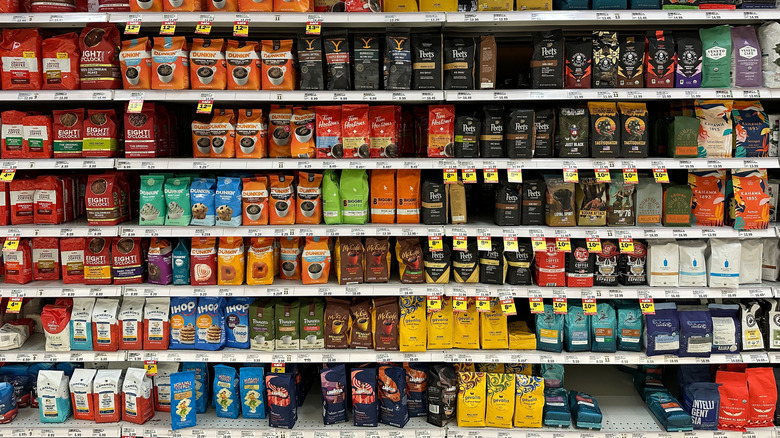
Opting for a drip coffee maker gives you so much flexibility when it comes to the coffee you use. You'll be able to experiment by finding your favorite brand, roast levels, coffee-growing regions, or small-batch coffee roasters. Among these, you also have a wide range of price points from supermarket to specialty. If you've used a single-serve coffee maker, you'll know that no matter how many capsule offerings are out there, you're limited by the brand — and sometimes even the model of your machine.
Brewing with drip coffee also has an advantage you might not be aware of. Most pre-ground coffee you find is a medium grind, which is ideal grind size for drip machines. You can pick pretty much anything off of a grocery store shelf, and it will work for you. On the other hand, espresso needs a fine grind, which means getting it ground to order from your local coffee roasters or grinding it yourself. Likewise, if you have a French press, you'll need to grind your own coffee to a coarse grind, with a medium or fine grind likely to pass through the holes of the mesh filter.
It's easy to brew for a crowd
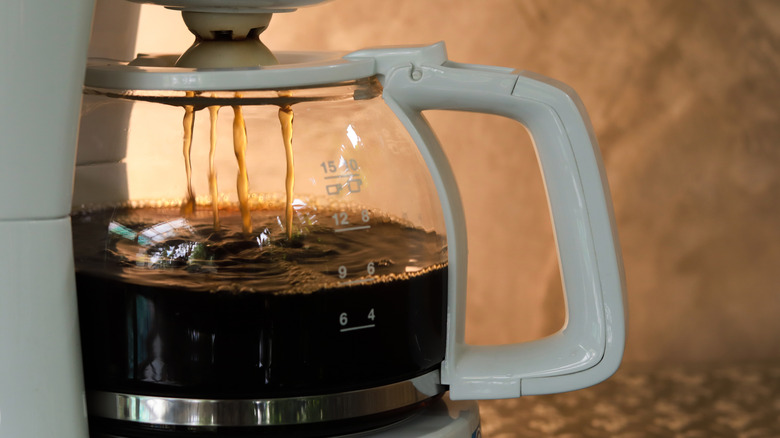
If you've ever been in a long queue for a latte, you'll know that making cups of coffee one at a time can be very inefficient. That's why the batch-brewing capability of drip coffee makers made them so popular in offices and restaurants. The capacity on a drip machine is usually up to 12 cups, with some larger options making up to 14 cups. Regardless of how much coffee you're making, the effort required from you is exactly the same. The brew time for a full carafe might be slightly longer than a half carafe, but there's a clear advantage to having all that coffee ready at the once. Breakfast is infinitely more pleasant if you don't have half the family impatiently waiting for their cup.
Even if you live on your own, a drip coffee maker can be handy if you like a lot of coffee. And with a mini drip maker like the Mr. Coffee 5-cup Switch, it doesn't need to be made in excessive amounts. Put it on to brew once and you can happily sip away the morning as the machine keeps the coffee hot for you. There are some manual large-capacity coffee makers that allow you to make multiple cups of coffee at once, like the French press or Chemex. However, unlike with a drip machine, it's very difficult to keep this coffee warm after brewing.
Filters reduce unhealthy oils
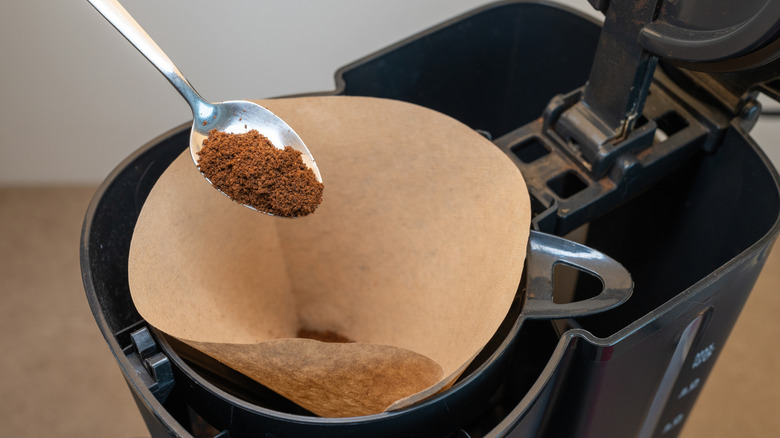
When we talk about oils in coffee, we're not concerned about high fat content — coffee contains just 0.04 grams of fat per 8-ounce cup. But there are two oils that naturally occur in coffee that can have potential downsides for your health. Cafestol and kahweol are what's known as diterpenes. While these fats don't contain cholesterol themselves, they have been shown to raise cholesterol levels in the body. This is especially true when they're consumed regularly or over long stretches of time, which is exactly the situation that arises when you start every day with a coffee or two.
The good news for fans of drip is that the paper filters you place in the machine help trap some of these diterpenes as the coffee brews. This can make it a healthier option compared to something like French press or espresso. Although these methods do use metal screens or filters, the holes are much larger, and allow more of the coffee through, including the oils. On this note, be aware that if you switch to a permanent mesh filter for your drip machine (either to cut down on waste or save money on making coffee), you won't get the same oil-reducing benefits. This might not be a deal breaker if you are in otherwise good health, but if you're already dealing with high cholesterol, a switch to drip coffee could be worth considering.