

12 Old-School Vegetable Dishes That Deserve A Comeback
Just like with anything else, food trends come and go. There are dishes you probably ate as a child that you haven't thought about in forever, and there's a good chance that some of the dishes you cook today you'll rarely revisit 20 years from now. Sometimes, we like to take a walk down foodie memory lane to look at iconic recipes from the past, and that's just what we're doing here, focusing specifically on vegetable dishes.
Some of these dishes might sound delicious to you, and maybe you'll even get inspired to try something new for dinner tonight. And who knows? You may even remember some of these dishes from your own table from back in the day. Alternatively, you may wonder why anyone would eat some of the foods that appear on this list in the first place. Either way, learning how people used to eat gives us a unique glimpse into the past that you just can't get from a history book. These are the old-school vegetable dishes that deserve a comeback.
Stuffed celery
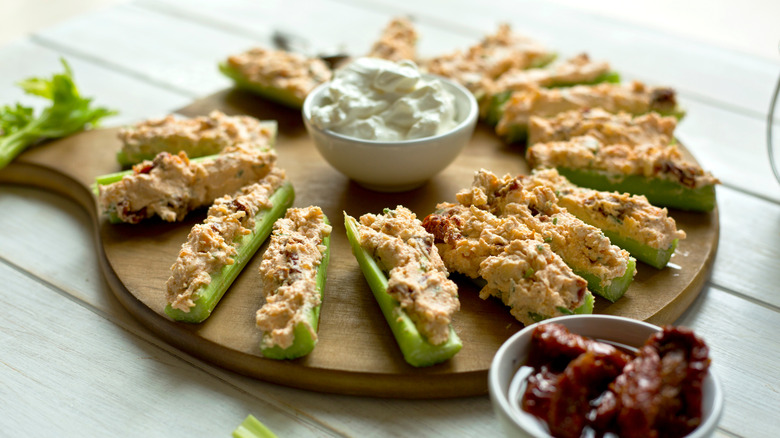
Celery is often regarded as an undesirable vegetable ... at least until you prepare it in a creative way. But once upon a time, it was the star of a beloved vintage vegetable appetizer. It's called stuffed celery, and it gained popularity in the United States in the 1920s and '30s. But what, exactly, was the celery stuffed with? Generally, it was filled with some sort of cheese, such as cream cheese, mixed with other ingredients like olives or pineapple. Roquefort was also a reportedly popular cheese choice for stuffed celery. Alternatively, the celery could also be stuffed with different types of seafood, like crab.
Honestly, it sounds like a dish with serious potential. We may not love the idea of stuffing celery with pineapple specifically, but a cream cheese and olive mixture sounds absolutely delicious. Plus, it seems like a pretty simple dish to prepare, making it ideal for a quick snack or crunchy appetizer.
Although you're probably not going to see stuffed celery on most tables today, echoes of this dish persist in modern-day American food culture. Another take on the dish, ants on a log, which involves stuffing celery with peanut butter and topping it with raisins, has found its place as an after-school snack. Maybe it's time to give the OG a try, too.
Jell-O vegetable salad
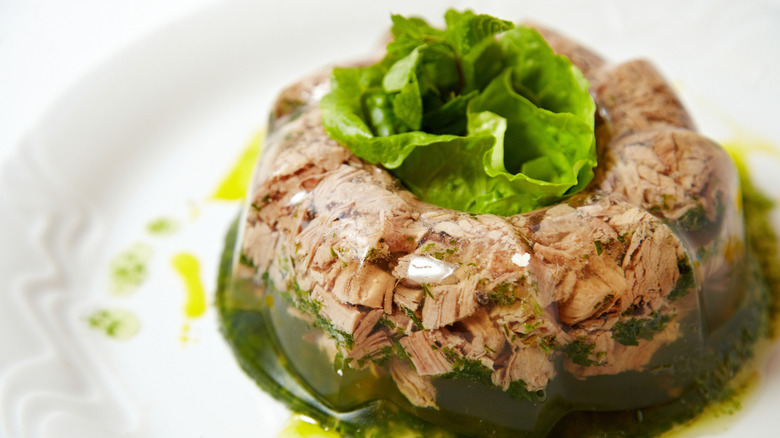
Out of all the odd-looking vintage dishes circulating on the internet, few are as bamboozling to younger folks as Jell-O salads. This isn't really one dish but rather a whole category of dishes in which home cooks would stuff Jell-O (yes, the dessert Jell-O) with various vegetables, such as carrots, onions, peppers, and celery. Sometimes, even shrimp, tuna, or other meats would appear in these recipes alongside the vegetables, making for a more substantial bite. What's most shocking, though, is that these recipes often called for flavored Jell-O, like lemon, creating an interesting combo of sweet and savory, all playing together in one jiggling mass.
We're not too sure how we feel about the fruity-flavored Jell-O in these recipes, but otherwise, the contrasting textures seem like they would make for an interesting bite. You get the crunch of fresh veggies along with the wiggly chewiness of gelatin in a single mouthful. Sure, it might not be for everyone, but for the more adventurous among us, it's an old-school vegetable dish that may be worth trying.
Harvard beets
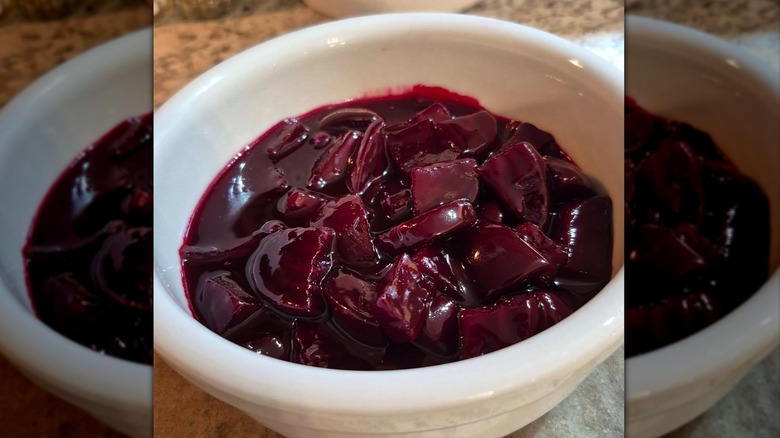
At Tasting Table, we have plenty of beet recipes for you to check out whenever you want to indulge in the colorful, earthy root vegetable. It's a veg that has a really unique flavor that can change significantly depending on how you cook it (or don't). But if you're tired of the standard pickled or roasted beets and you want to try something else, old-school Harvard beets might just be your best bet. Although the dish's origins are unclear, Harvard beets appeared in New England cookbooks by the early 20th century. Despite the name, there's no confirmed connection to Harvard University.
They're not that difficult to make. Boiled or roasted beets are simmered in a liquid of vinegar, cornstarch, water, and sugar. After about half an hour, the beets will have taken on a unique sweet-and-tangy flavor. Before serving, the beets are seasoned with salt, pepper, and butter, and can be served warm or chilled. If you love beets just as much as we do, then you'll understand why this is a vegetable dish we wish we could revive.
Cream peas
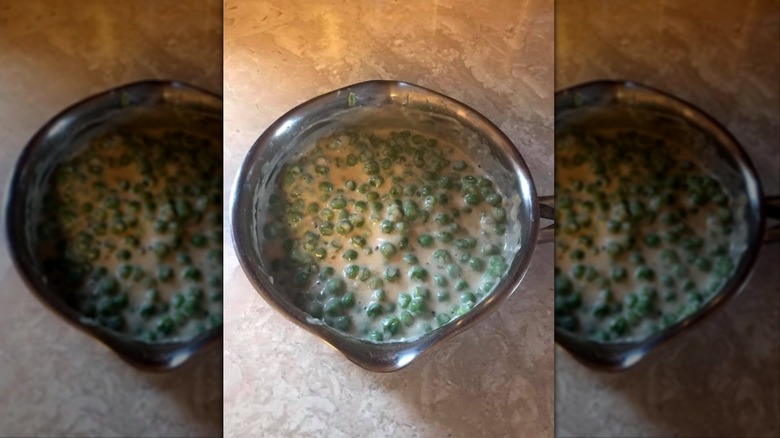
There's no doubt that peas are seeing a rise in popularity, largely thanks to their nutritional benefits. They provide a decent amount of both fiber and protein, two macronutrients that many are trying to incorporate more into their diets. But as much as we love a fresh pea salad, there may be times when you're craving peas in a more filling, substantial form. That's exactly why cream peas deserve to come back into the spotlight once more. Cream peas have their roots in European cuisine, but they gained prominence as an American classic during the Great Depression, when tight budgets meant home cooks had to make do with whatever they had on hand. It was especially common in the South.
The dish gets much of its flavor from sauteed onions, along with seasonings like garlic, black pepper, and even nutmeg. The creaminess comes from a classic roux, which the peas cook in until they get nice and soft without disintegrating. Pea lovers, assemble: This is a dish you'll definitely want to try when you want your peas to taste as good as possible.
Scalloped corn
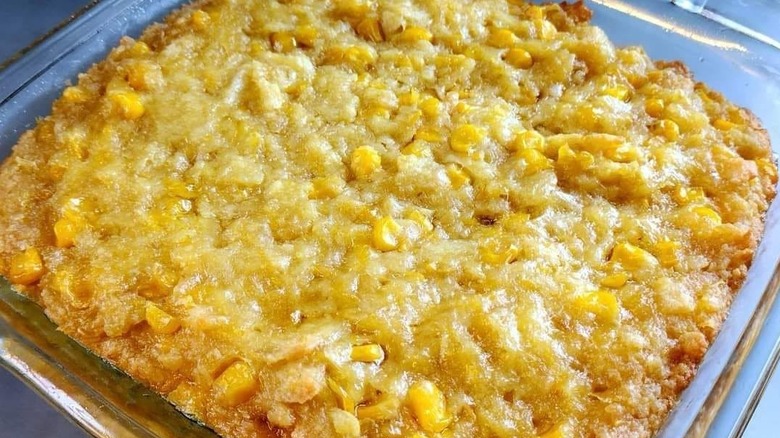
Corn is another often-overlooked vegetable, but it doesn't have to be relegated to corn on the cob or grill-only status. In fact, even canned corn can taste amazing when it's transformed into scalloped corn, a creamy vegetable side dish from back in the day. Unfortunately, it's not quite clear where scalloped corn comes from, especially because it seems to have been popular in large swaths of the country. While some think it originated in the Northeast or the Midwest, the South also claims it. Fortunately, though, you don't need to know exactly where it sprang up to enjoy just how tasty it is.
One version of the dish is made with canned creamed corn for a rich, hearty base, and crushed saltine crackers provide a crunchy topping for textural contrast. It's seasoned simply with black pepper and perhaps some paprika, but otherwise, it's the flavor of the corn itself that really shines. And even though this dish might be vintage, it seems like plenty of people out there still love it. One Facebook user asked whether a group had a recipe for the dish without cheese, saying they'd grown up eating it in the '60s. Even the New York Times has published a scalloped corn recipe. It sounds like this is a veggie dish that could still be appreciated today.
Green bean casserole
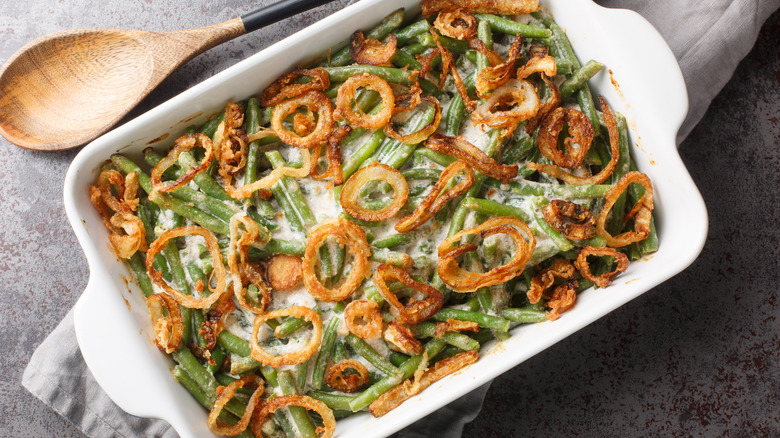
Green bean casserole isn't just a Thanksgiving classic for a lot of families — it's also an old-school vegetable dish that deserves to be in the limelight even more than it already is. Unlike many of the recipes on this list, which have rather murky origins, we know exactly where green bean casserole originated. This side dish got its start in the 1950s at Campbell's factory, where an employee named Dorcas Reilly, who worked in the company's Home Economics department, dreamed it up, ostensibly as a ploy to get customers to buy Campbell's products to make it. This is because the recipe contains condensed cream of mushroom soup, and for many, this exact brand name is key to concocting the perfect green bean casserole.
The dish is incredibly simple. After mixing the cut green beans with cream of mushroom soup, sprinkle fried onions over the top and bake until the green beans are tender and the dish is piping hot.
Mashed turnips
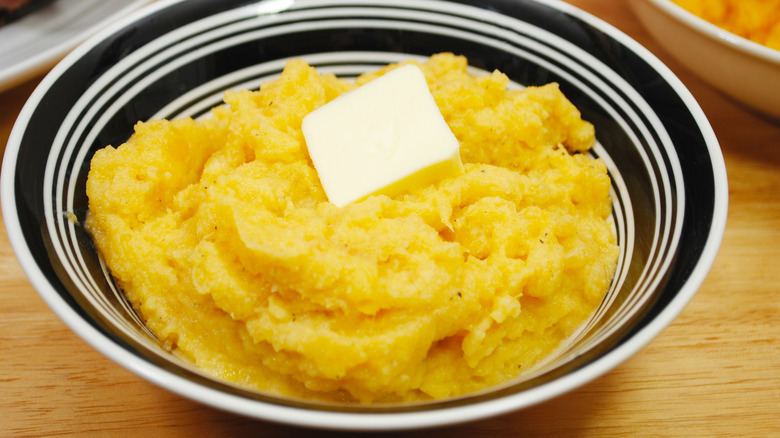
For some reason, turnips don't exactly seem like the most popular vegetable in the United States these days. But back in the 18th century, they were extremely popular because they were easy to store and prepare. People have probably been mashing turnips for as long as we've been cooking them, but a 1918 recipe from "The Boston Cooking School Book" shows how they were prepared in the U.S. in the early 20th century. After being boiled, the turnips were mashed and seasoned with salt, pepper, and butter — basically just like mashed potatoes, but utilizing a different root veg.
This is a dish that's so easy and so simple that we wonder why it's not more prominently featured on dinner tables today. After all, you can find plenty of recipes for roasted turnips out there, and turnips even make appearances in summer salad recipes. But if you're looking for a totally new way to prepare this root vegetable, mashing it might be worth a try for a different texture. You can even mash leftover roasted turnips to renew your leftovers and help reduce food waste.
Carrot raisin salad
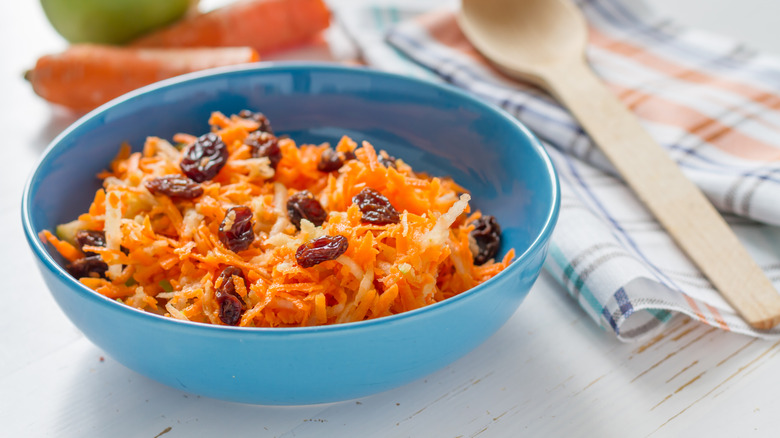
For carrot lovers, there's perhaps nothing better than a colorful carrot raisin salad, which seemed to reach the peak of its popularity during the 1960s. Some sources cite specific recipes, like one that includes carrots and raisins, of course, as well as lemon juice, mayonnaise, oil, sugar, and salt. Another recipe from 1958 we found calls for a smattering of other ingredients, like slivered almonds, cilantro, and lettuce leaves for a fresher and crunchier take on the dish. But some oral recipes were as simple as mixing carrots, raisins, and mayonnaise altogether and calling it a day.
This is a dish that doesn't seem to be super common these days, although Chick-fil-A's carrot and raisin salad comes pretty close to the vintage classic (it also calls for the addition of pineapple for added sweetness and tang). You can always head to your local Chick-fil-A to get a sense of what this classic salad tastes like, or you can just grab the ingredients at the grocery store and try making it at home. Like so many of these old-school vegetable dishes, this one doesn't look particularly tricky to make beyond the grating of the carrots. For anyone who loves a combo of crunchy, creamy, and chewy textures, this salad is a must-try dish.
Broccoli casserole
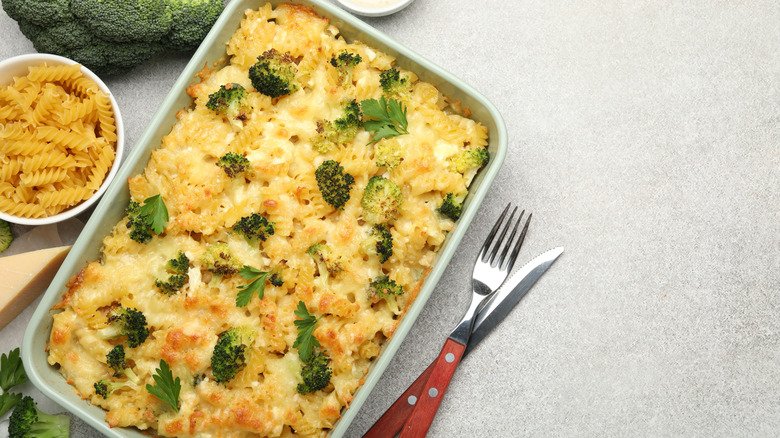
Who doesn't love the combination of broccoli and cheese? It only makes sense that they would pair beautifully together in a casserole. It was the 1930s or '40s when chicken divan, a dish with chicken, cheese, and broccoli, first came onto the culinary scene, courtesy of the Divan Parisien Restaurant, located at New York City's Chatham Hotel. By the 1970s, versions of the dish without chicken started popping up in people's homes, offering a quick and easy casserole that can be made with largely shelf-stable and frozen foods.
In this recipe, frozen chopped broccoli joins forces with eggs, cream of mushroom soup, mayonnaise, cheddar cheese, and onion. It's then topped with a cracker-crumb topping for added texture. Other takes on the dish nix the crackers completely and instead call for cooks to pour the broccoli mixture over bite-sized pieces of torn white bread, which provides a softer texture rather than crunchiness and really lets the broccoli be the star of the show. At a time when grocery prices are rising, it's worth looking back to these hearty, filling vegetable dishes for more budget-friendly bites.
Green bean almondine
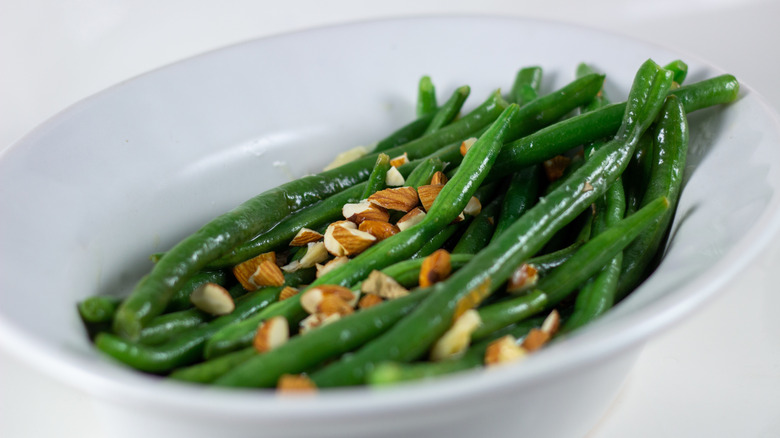
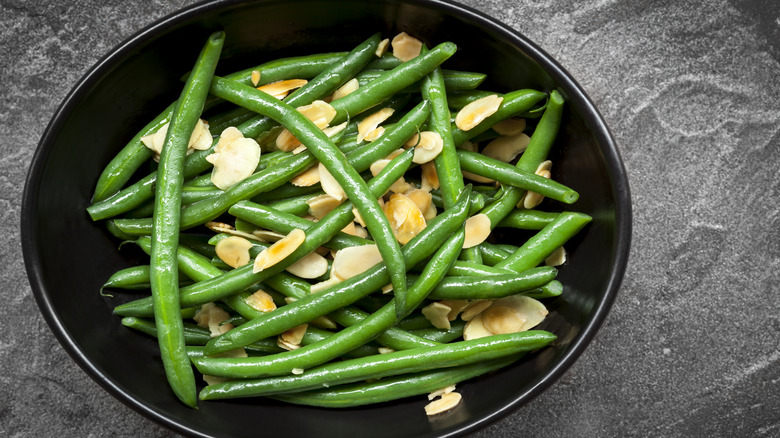
We've already covered green bean casserole, but what about those times when you want a green bean dish that delivers even more crunch and a touch of nuttiness? That's when it's time to make green bean almondine. In the 1950s and '60s, this dish started popping up in cookbooks and on American kitchen tables. It lacks the creaminess of green bean casserole, providing a lighter vegetable side dish. What really makes it taste so fresh is the inclusion of both lemon juice and lemon zest, which creates a zinginess only citrus can provide. The recipe also calls for olive oil, minced garlic, and salt and pepper, in addition to the green beans and almonds.
So, why should green bean almondine come back now? Well, we love its simplicity — it requires few ingredients and comes together in a flash, making it ideal when you want to put something green on the table but don't want to spend too much time on a side. It also feels a bit sophisticated without being fussy, which makes it a great option for entertaining (or just for making your date night at home feel a little fancier).
Scalloped potatoes
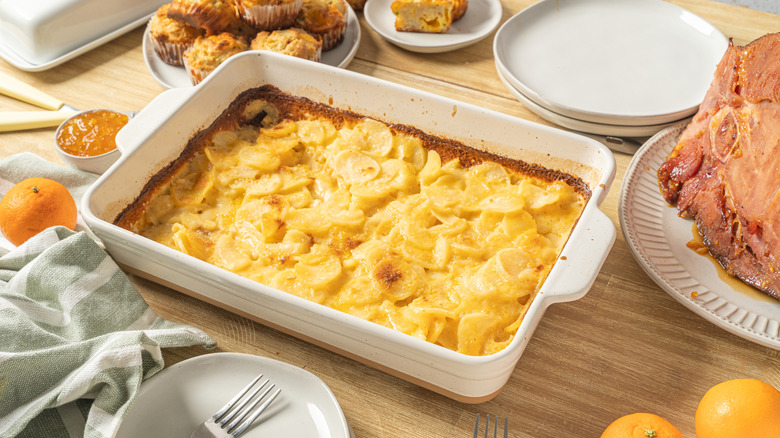
Potatoes are one of the most versatile ingredients you could have in your kitchen, so it probably shouldn't come as a big surprise that there are plenty of vintage potato dishes worth bringing to the table. One of our all-time favorites, though, is scalloped potatoes. Even though we love mashed, baked, and fried potatoes, the root vegetable is arguably at its most decadent in this recipe. Scalloped potatoes are similar to au gratin potatoes, which is itself quite an old dish — it dates back to late 18th-century France. By the 19th and 20th centuries, scalloped potatoes had become popular in the United States.
The dish involved thinly sliced potatoes layered on top of one another, often cooked with onions and garlic, baked in milk and heavy cream, and sometimes layered with plenty of cheese. Of course, part of the appeal of this dish is its richness and creaminess (especially when it's heavy on the cheese), but it also has a surprisingly interesting texture. While potatoes can often become mushy, scalloped potatoes tend to hold their shape more, with all of those thin layers creating a truly luxurious potato experience. Can you blame us for wanting this dish to make a comeback?
Duchess potatoes
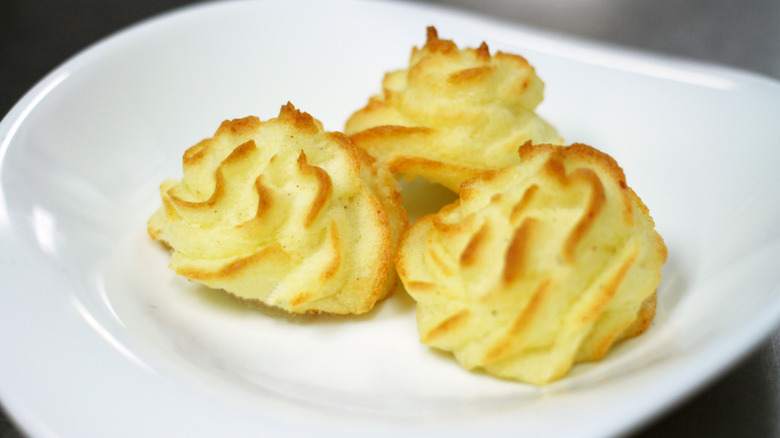
If you're looking for yet another way to wow dinner guests with humble potatoes, look no further than Duchess potatoes. It's not a complicated concept — basically, Duchess potatoes are just mashed potatoes mixed with egg yolks, heavy cream, and spices that are piped into a pretty shape and then baked, developing crispy edges in the process. While you can always serve them on their own, they can also be used as a topping for casseroles when a simple spread of mashed potatoes just isn't pretty enough. Since this is such a simple dish that yields such gorgeous results, it's a no-brainer why we think it should come back onto the modern-day culinary scene.
But where did Duchess potatoes even come from, anyway? Although it's not totally clear when they were first invented, they seem to have roots in French cuisine dating back at least to the early 19th century, although their precise origins remain uncertain. Early versions weren't necessarily the decorative baked swirls we recognize today; some were shaped into croquettes and fried. Regardless of their appearance, they happen to be a pretty accessible and cost-effective vegetable side dish option today.