

3 Items You Can Buy At The Butcher Shop That Aren't Meat
We may receive a commission on purchases made from links.
There is no denying that supermarkets are convenient. There's a lot to be said for being able to pick up everything you need in one place, and larger chains typically offer great deals. That said, there's really nothing like a visit to the local butcher. A good butcher shop can help transform your meals exponentially. These shops typically have not only the freshest meats, but they can also offer useful advice, help you find new cuts, and provide a range of other delicious non-meat items.
To help narrow down some of the best non-meat goodies to grab, we sought out the advice of Chris DeLisle of Chris Cooking Nashville, who wrote "Eat Your Meat, Love Your Life", a cookbook containing 130 "rock and roll" recipes. Safe to say, he's a fan of visiting a local butcher shop. In fact, there are a few specific things he always tries to grab there that aren't meat.
"Where a butcher shop carries a thoughtful pantry selection, I look for ingredients that make the meat taste more complete," he explains. "Three especially useful purchases are cultured butter, sharp pickles, and good mustard." If you're on the hunt but feel a little lost, we put together a list featuring the best butcher shop in every state to get you started.
Cultured butter
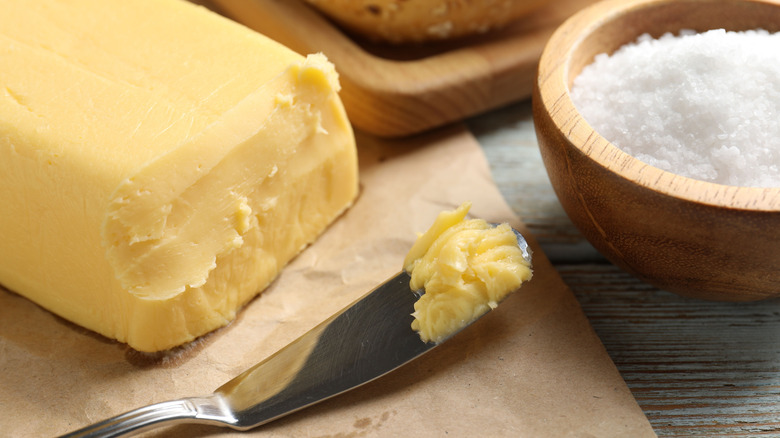
Cultured butter is an aromatic, creamier form of butter that contains live bacterial cultures. It has a nutty, slightly tangy flavor that can amp up a range of dishes. Because it has a high smoke point, it can be the secret to giving meat a delicious sear. "Good butter can do more for dinner than another bottle of steak sauce," DeLisle reveals. "At a butcher shop that sources from a good dairy, it can be one of the most useful small purchases in the case. Ask who makes it and whether it is salted."
The last tip is important to ensure you don't oversalt your meat. Salted butter also burns faster, which is why you want to use unsalted butter for basting steaks. DeLisle recommends choosing plain cultured butter for versatility or asking if there is a house-made compound butter available. "Taste before adding more salt," he advises. "Use it toward the end of cooking so its milk solids do not scorch during a hard sear."
His other recommendations include using a "small pat on a rested steak, melt it over a pork chop, or whisk it into a pan sauce off the heat." Of course, the possibilities for cultured butter abound even in leftover territory. He adds, "A simple butter with roasted garlic and black pepper also turns leftover roast beef into a very good next-day meal."
Sharp pickles or sauerkraut
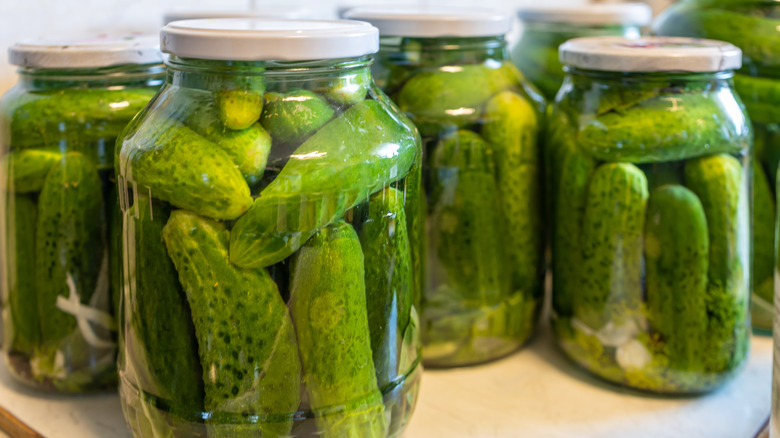
You may not find these at every butcher shop, but if you do, the sharp acidity can really help cut through heavy meat dishes. Think about the most popular burger toppings — pickles are typically included, are they not? Additionally, a Reuben sandwich is also always served with sauerkraut and barbecue plates often feature pickles as well.
"A rich plate benefits from acidity and crunch," DeLisle says. "Serve crisp pickles with pork collar, brisket, or burgers. Put sauerkraut alongside sausages or chop pickles into a relish for cold roast beef." Pickles can also be a secret ingredient to upgrade a pot roast as well as a variety of pork dinners. Finding a butcher shop that makes their own is a big win, but if you spot some in the pantry section, there's a good chance the staff will at least know where they come from.
DeLisle recommends consulting the butcher on what kind best complements the meat you're working with. "Ask whether the product is vinegar-pickled or fermented, how sweet it is, and how it should be stored," he instructs. "Taste before adding it to a dish; salt and acidity vary considerably. If you want crunch, add it at serving rather than cooking it until soft."
A distinctive mustard
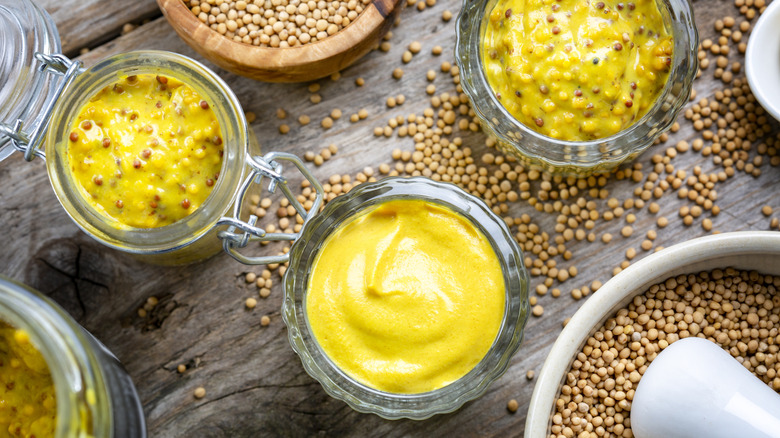
Mustard is one of the most common pantry staples, so it's pretty easy to find. Neighborhood bodegas, specialty food shops, delis — but DeLisle prefers to get his from the butcher. "Mustard gives you acidity, pungency, and, with whole-grain versions, texture," he explains. "A butcher's recommendation is particularly useful when you are pairing it with a specific sausage, ham, or pork cut."
Mustard really is meat's best friend. It can be used to make balanced marinades, flavorful crusts, or thoughtful toppings. It's a staple for prime rib preparation and it can make a pan sauce taste so much better. DeLisle likes to use it for many of these applications. "Serve a small spoonful beside pork collar or sausages, whisk it into a pan sauce, or spread a thin layer inside a leftover prime-rib sandwich," he suggests. "Dijon blended with softened butter also makes a quick finishing butter."
As for which type to buy, that depends on what you're cooking and your taste preferences. Again, DeLisle recommends talking to the butcher. "Ask to taste it if sampling is available. 'Mustard' can mean sweet, mellow, fiercely hot, or aggressively vinegary," he notes. "Look for a house-made version or a producer whose mustard has a clear personality." DeLisle recommends choosing a mustard as precisely as one does a sausage. After all, he says, "They are going to share every bite."