

Coat Your Prime Rib In One Staple Condiment For A Crispy Crust With Major Flavor
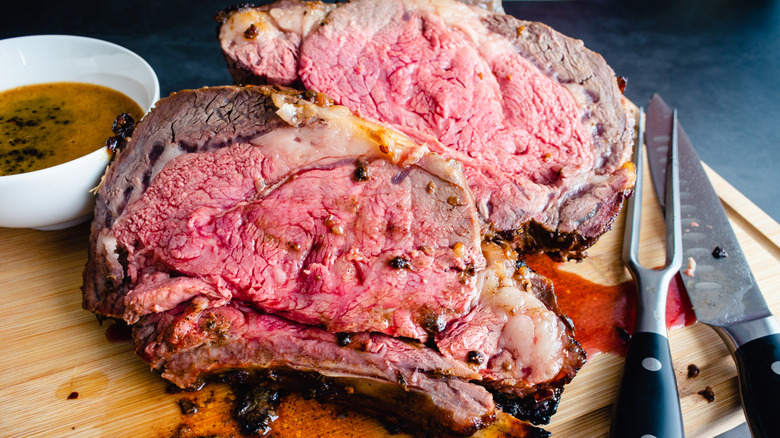
A good prime rib is about the interplay between contrasting textures, and some of that comes down to what you put on the surface and when. We suggest Dijon mustard, right before it's finished roasting. You're working toward building a deeply browned, well-seasoned exterior bark (or crust), surrounding a warm, evenly cooked but still pink interior. The challenge is getting both, without sacrificing one for the other. That outer bark forms as moisture evaporates on the surface of the meat when it's exposed to the hot, dry air of the oven. Under those conditions, proteins and sugars undergo a scientific process called the Maillard reaction, which creates savory, complex flavors that make the roast so satisfying.
We asked Alex Moriyama, the executive chef at The Mayfair Supper Club at the Bellagio in Las Vegas, about his favorite techniques seasoning prime rib. He described his two-step process, in which he seasons the meat "just before roasting to preserve its natural flavor and texture." When it's mostly but not all the way done, he pulls it out of the oven and coats it with a flavorful mélange of Montreal seasoning (a steak rub people swear by), garlic, and, crucially, Dijon mustard. That final coat sets the stage for the bark, and when he pops it back in the oven to finish at a higher heat, the surface develops a perfect crust.
Finishing a roast at high heat is a basic step in many prime rib recipes, but Moriyama's added layer improves how the surface texture develops, because the method really hinges on timing. Instead of brining the meat days in advance, his sequence protects the interior from overcooking, while giving the exterior a final push.
The science behind using mustard to season meat
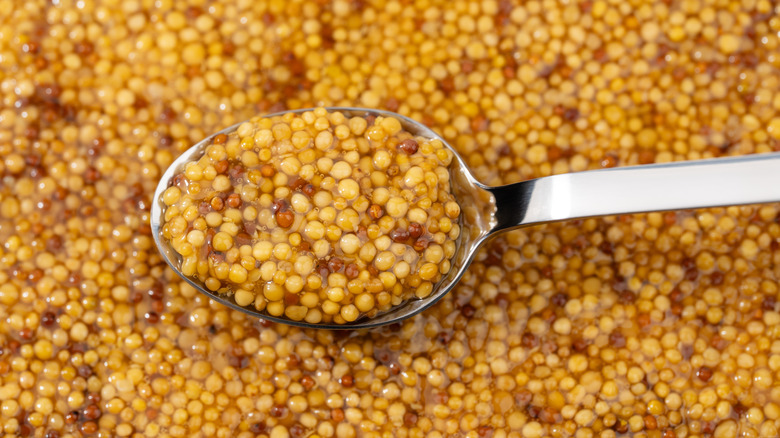
The vinegar, ground mustard seeds, and salt all interact with the meat's surface in useful ways. The acidity of the vinegar gently denatures surface proteins, which helps them tenderize and brown efficiently under high heat. The paste of the mustard seeds forms a thin, even layer that holds the seasoning in place, while the water evaporates off. The dehydrated, tacky film left behind browns more quickly, which is why this step only happens at the end; too long in too high of heat, and it would just scorch. Interestingly, the cooked mustard doesn't taste strongly "mustardy" because it integrates with the meat and amplifies the savory character already present.
The mustard coating also solves a physics problem; dry rubs can fall off or distribute unevenly, especially on large, curved cuts like prime rib. The thin, sticky texture of the layer of mustard paste acts as a binder, which keeps the salt and spices in contact with the meat so they can accomplish something. The salt draws moisture to the surface, dissolving into it, and seasoning more deeply.
This mustardy technique is also receptive to upgrades and variations. You can build more flavor into it by adding freshly ground black pepper, herbs, or even dial up the heat by adding a pinch or two of cayenne. If you try it out, don't be shy, because Alex Moriyama says, "Heavy seasoning is essential [to] ensure maximum flavor through the meat." Prime rib is a beautiful, delicious roast that deserves considered intention; a simple coat of mustard right before it's done gives you a good shot at a great roast.