

Tequila Brands Bartenders Say Are Worth The Upgrade
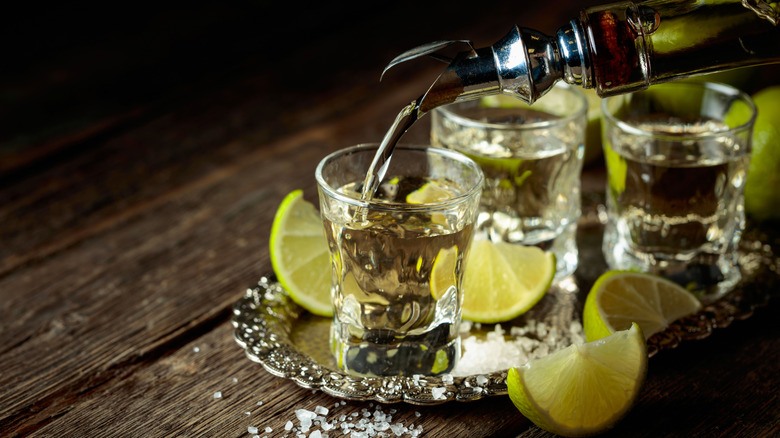
When we were younger, drinking tequila usually meant quickly tonguing some salt, shooting something cheap, and immediately sucking on a lime to lessen the awful taste in our mouths. Thankfully, those days are long gone because that's about as far as you can get from drinking tequila the right way. Sure, we still occasionally enjoy a little salt and lime juice with our agave spirits, but those additions are often used to enhance the experience rather than mask it.
These days there are so many different brands of tequila available, you're sure to find something way more enjoyable that can be sipped or mixed into a cocktail. While there are some that can be found in the bottom and mid-shelf categories, we were interested in those that sit proudly at the top of the bar. These bottles not only taste great, but look amazing as well, and make you stop short and say, "I want that!"
While we have our opinions, we wanted to hear from the professionals who sling tequila for a living and know how to build a superb ranch water or shake up the perfect margarita. There are both well-known brands and under-the-radar options, but each one comes highly recommended and should definitely be considered the next time you find yourself in a bar specializing in agave spirits.
Lalo
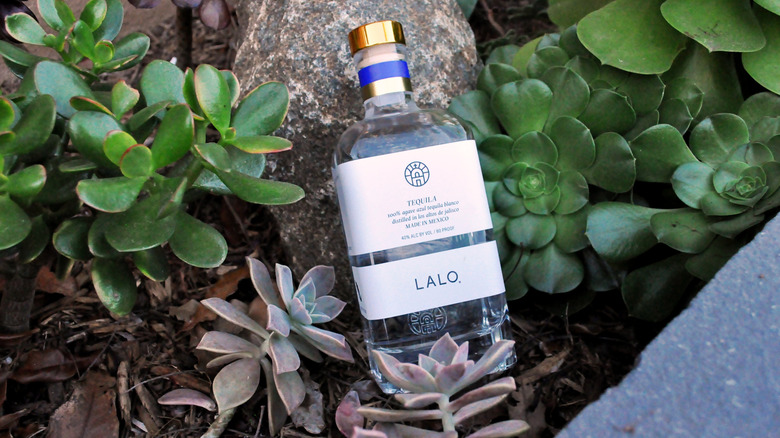
When discussing agave spirits, there's one name that keeps popping up: Lalo Tequila. In fact, this stunning square bottle with the blue-and-gold top has made several Tasting Table lists, including the best new tequilas of 2026 and the best additive-free tequilas. The reason for its frequent presence in the tequila world is because of how clean it is in appearance, texture, and flavor.
Unlike other tequilas that have numerous expressions and may be aged in special barrels, Lalo has only one expression – a blanco that's made of deep well water from Jalisco, Champagne yeast, and mature agave from the Highlands. That simplicity isn't just in its makeup; it's also why Mike Lopez, the director of food and beverage at Dallas' Luna Roja, includes it as one of his top picks.
"LALO is one I recommend often because it's clean, agave-forward, and doesn't try to hide what tequila is supposed to taste like," he explains. "You get that natural cooked agave character with some citrus, pepper, and minerality, but it stays very approachable. For the quality, I think it delivers a lot of value." Lopez says that while he prefers to sip it neat or slightly chilled, it also makes a great margarita or ranch water.
Komos Tequila
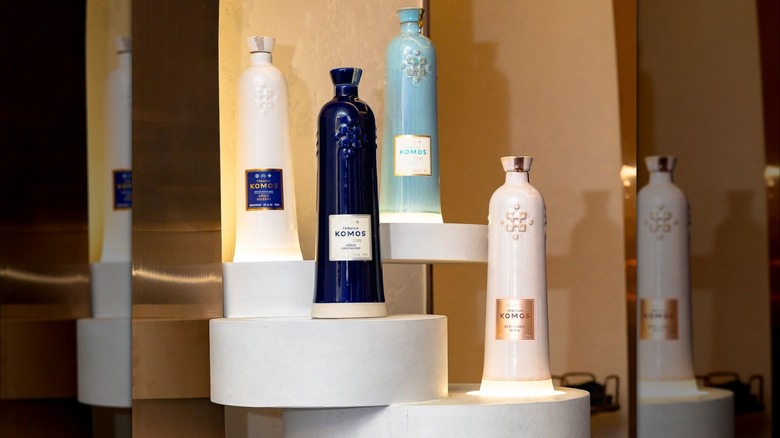
"When thinking about top shelf tequilas, my mind immediately jumps straight to Komos Tequila," insists Mia Mastroianni, a frequent consultant for "Bar Rescue." "Run, don't walk. Do not pass go, do not collect $200."
Each expression comes in a different ceramic bottle that Mastroianni says is an "exquisite, handcrafted piece of art." Those bottles, which come in pink, cobalt blue, white, turquoise, or silver, depending on which expression you choose, protect the tequila from sunlight and are meant to be used over and over even after the last drop has been savored. But the stunning decanters aren't the only reason the "Bar Rescue" consultant recommends this tequila. It's the way it's made. "The entire collection is aged in French Oak wine barrels, which may seem unorthodox," Mastroianni says, "but the process gives way to some really interesting, nuanced flavors."
While it can certainly be mixed into cocktails, Mastroianni prefers to sip Komos neat or over one large ice cube. "The experience in and of itself feels luxurious... so why mess with perfection," she asks. She has yet to try Komos' newest release, the XO, which comes in an etched crystal decanter. But since it's listed at $1,045, the bartender says, "It remains on my Bartender Bucket List."
Cazcanes
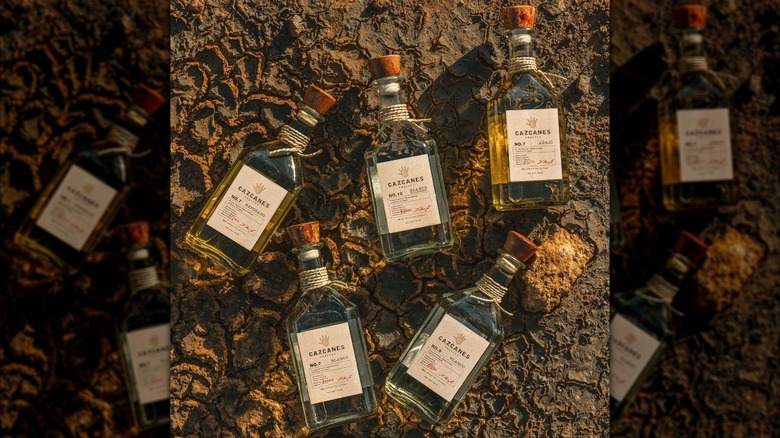
"Cazcanes is my No. 1 choice due to its dedication to authentic craftsmanship," says Dylan Harris, the bar manager at the Blackdoor Steakhouse in Seguin, Texas. That craftsmanship starts with juice from Blue Weber agaves, which are blended with natural volcanic spring water from the Navichi Springs in Hostotipaquillo. "That water has become part of the signature character of Cazcanes tequila," explains Gustavo Rojas, the lead bartender at the Pony Room at Rancho Valencia Resort & Spa in Rancho Santa Fe, California. Then the water and agaves are fermented using a proprietary yeast.
Rojas believes the selection, which includes a blanco, reposado, añejo, and a few higher-proof options, is "impressive." He says those expressions "deliver remarkable complexity, distinctive aromas, and bold flavors while maintaining the character of the agave."
Although both Harris and Rojas enjoy all Cazcanes' expressions, Harris recommends the Rosa Reposado #9 because it's aged in French Cabernet barrels, creating a tequila that he describes as the "perfect neat pour." Meanwhile, Rojas says the special-edition Nuestras Raíces "is bold, vibrant, and unapologetically traditional." But the fact that "Cazcanes represents tradition, experience, and a strong commitment to its origins" is why this brand is so high on his list.
Tequila Ocho
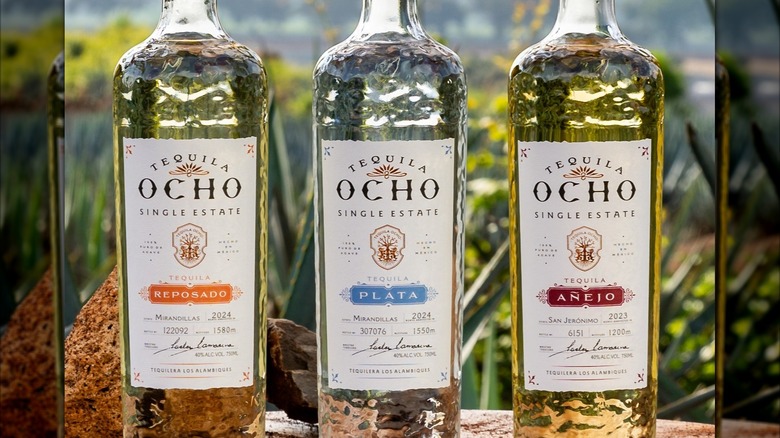
Tequila Ocho may seem like an odd choice for this list since it just so happens to be one of the best tequilas you can buy at Costco, but Dylan Harris stands behind the brand, stating that it "captures why top shelf doesn't always represent the price point." But price isn't really the reason Harris appreciates this tequila; it's actually because of its focus on terroir. "Each batch comes from a different agave field," he explains. "Which means one vintage may show citrus and minerality, while the other shows more herbs and spice."
It makes sense that terroir is such an important part of Tequila Ocho's creation. Carlos Camarena, one of Ocho's founders, comes from a long line of agave farmers and tequileros who specialize in agronomy. So, he has a deep understanding of the land where Ocho's Blue Weber agaves grow. That's an understanding that leads to rich terroirs you can taste in each and every bottle.
"Their single-estate approach allows each vintage and field to show a slightly different expression of the agave," Mike Lopez explains. "As a chef, I connect with that because it is very similar to how we think about seasonal ingredients; the origin of the product actually matters, and you can taste those differences." Harris concurs, declaring that those unique flavors cause Tequila Ocho to drink "almost like a fine wine rather than a $40 bottle of tequila."
Volcán de Mi Tierra
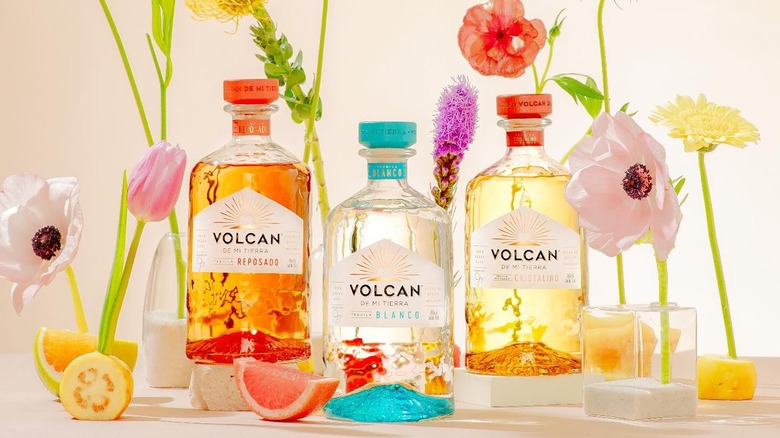
"There are many factors that make Volcán de Mi Tierra a tequila brand worth considering for the top shelf," declares Gustavo Rojas. From its deep-seated Mexican roots, a distillery that produces one brand and one brand only, and its partnership with both Moët Hennessy and Formula 1, it's easy to see why two different bartenders strongly believe it should be added to your liquor collection.
While Volcan offers a blanco, reposado, and cristalino, Saeed House, a frequent cocktail consultant, says "they've [also] done some crazy, fun stuff." Some of those crazy bottles include the XA, a unique blend of añejo, extra añejo, and reposado tequilas, and the Blanco Tahona, which uses a tahona to crush the agave.
Even though House thinks both bottles "look gorgeous," Volcan's newest release, the Hacienda La Gavilana First Edition, goes above and beyond. As it's handcrafted from Italian Carrara marble, Rojas says the bottle "immediately communicates luxury, elegance, and status before [it's] even opened." What's inside the bottle isn't too shabby either: Volcan's very first añejo. Made of 100% lowlands agave, the spirit is aged for 18 months in European oak and then finished off in a special sherry cask for 414 days. "But presentation and partnerships can only take a tequila so far," continues Rojas. "Ultimately, what's inside the bottle has to support the image around it, and Volcán has developed a diverse portfolio that ranges from approachable expressions to serious luxury releases."
Cascahuín
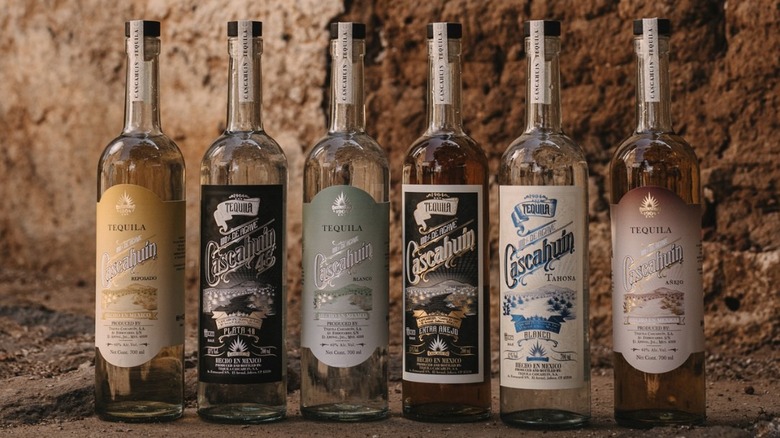
"Cascahuín is an amazing brand," declares Lucas Assis, a bartender and well-known agave educator. The reason he's such a huge fan? The number of different expressions they produce. Not only does Cascahuín have several "budget-friendly bottles," per Assis, the brand also has several highly sought-after high-end releases.
A multi-generational tequila, Cascahuín stretches all the way back to 1904. But it wasn't until 1955, when Salvador Rosales Briseño started building the current distillery, that it became the tequila it is today. His son, Salvador Rosales Torres, continued distilling the tequila with his father, but Assis believes it's Salvador "Chava" Rosales Trejo, Torres' son, who turned Cascahuín into the well-known, high-demand brand it is today.
Assis says that both Chava's father and grandfather were passionate about the tequila industry and then transferred that passion into each bottle they produced. Chava is no different. That passion still comes through today, which is why Assis believes Cascahuín is such a great, artisanal tequila and "one of the reasons why I love [it] so much."
El Tesoro
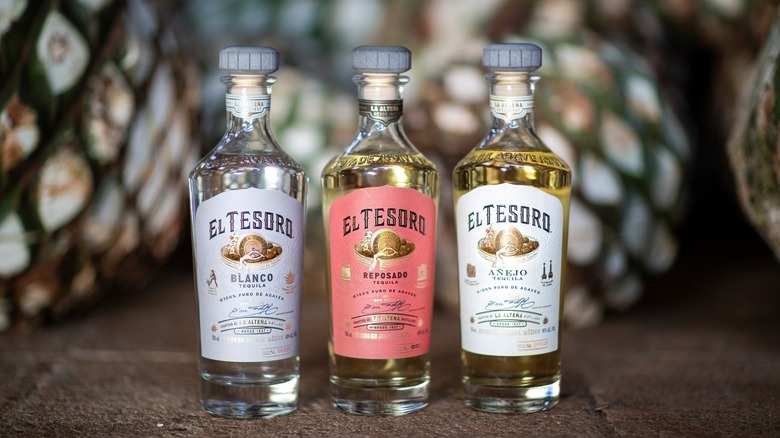
The distillers behind El Tesoro believe in creating tequila the old-fashioned way. They start with Blue Weber agaves from the highlands of Jalisco. Then the jimadores wait six to nine years before they harvest them to ensure the plants reach their peak maturity. That patience leads to a rich flavor that Mike Lopez says you can really taste in each of its expressions. "What I appreciate most about El Tesoro is how clearly you can taste the agave and the traditional production behind it," he says.
That traditional production includes brick ovens where the piñas are steamed for 48 hours and then crushed underneath a two-ton volcanic tahona. The distillers follow that up by placing the juice and pulp in wooden vats, allowing it to ferment before transferring the mixture to copper pot stills for distillation. So what you end up with is a quality tequila, which Lopez really appreciates. "For me," continues the food and beverage director, "[El Tesoro] has a depth and authenticity that makes it just as enjoyable neat as it is in a thoughtfully built cocktail."
Caballito Cerrero
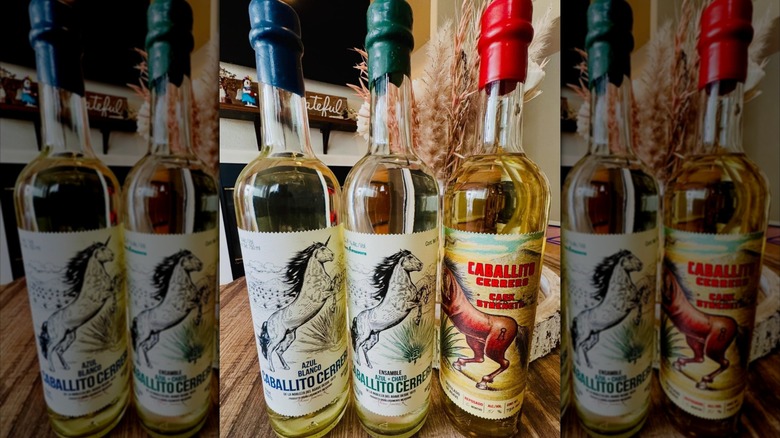
Caballito Cerrero is the "favorite agave spirit" of Oscar Gonzalez, general manager at Condesa in San Luis Obispo, California. He adds that he's "always excited to put [it] in front of someone who really enjoys tequila."
It all started when Don Alfonso Jiménez Rosales had a falling out with his cousins at Herradura and left to create his own tequila: Caballito Cerrero. The name means a wild horse that can't be tamed, which seems fitting since Rosales left the family business to create his own standout spirit. At around the same time, Rosales acquired the Santa Rita Factory, and so had the perfect building blocks to design an agave spirit that Gonzalez says "doesn't feel like it's trying to be something it's not."
What makes Caballito Cerrero especially unique, though, is that it doesn't use blue agave as its base, but rather Chato agave, which Gonzalez says "gives the spirits a lot of character –- earthy, herbal, and full of agave." Unfortunately, using Chato means it can't be called a tequila since there's no Blue Weber agave in it. Instead, Caballito Cerrero is a "Destilado de Agave," a spirit that was the original tequila before regulations were instituted. Gonzalez says that even though it's not officially a tequila, it's still worth sampling, and suggests that no matter how you sip it, neat or in a cocktail, the spirit is "best enjoyed slowly," so you can really taste the agave. It doesn't matter which bottle you choose; Gonzalez insists that "all three of their expressions are incredible."
Vuëlo del Aviador
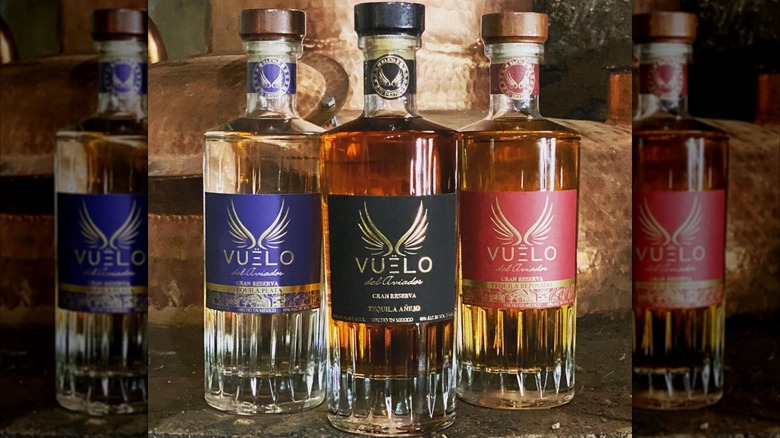
Unlike several of the other tequilas on this list, which have been around for decades, Vuëlo del Aviador was founded in 2017. But that doesn't mean it isn't already making waves in the tequila world. Gustavo Rojas says he's frequently seen it on the top shelves of several luxury resorts and can understand why.
While the bottles remind one of classic decanters one might find on their personal bar cart, the eye-catching labels include a set of gold wings to represent the tequila's name, which is Spanish for "flight of the pilot." But while the design is a standout, a bottle is just a bottle unless the spirit inside is worth talking about, and Rojas strongly believes it is.
Inside is a tequila created using traditional methods including clay ovens, tahonas, and copper stills. It's a spirit that the Pony Room's lead bartender says "offers complexity, inviting aromas, balance, and a character that remains connected to traditional tequila." And that's why he finds this brand so compelling: "The luxury presentation gets your attention, but the tequila inside gives you a reason to keep drinking it."
Fortaleza
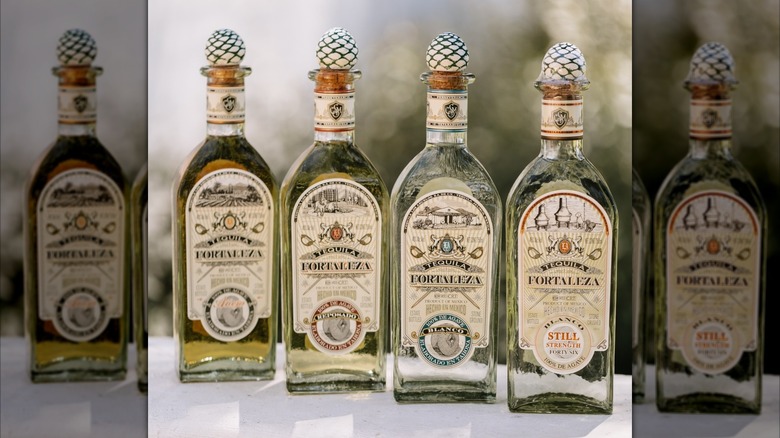
The Fortaleza brand may have only been on the market for 20 years, but the family behind the name has been producing tequila for over a century. It all started with Don Cenobio, who discovered that the best agave for tequila was Blue Weber and that the best way to cook them was by steam. His son, Eladio, took over the business and brought about more changes. But it was Cenobio's great-great-grandson, Guillermo, who officially created Fortaleza. His grandfather built the original distillery, but it was shut down in the 1960s because they didn't believe it was producing enough tequila.
Determined to bring the family business back to life, Guillermo got Destileria La Fortaleza up again without changing a thing. He wanted to make the same tequila his family had been producing for decades. So, he continued to use brick ovens to steam the piñas, a tahona to crush them, wooden vats for fermentation, and, for distillation, the two copper pots from the original site. The final product is a tequila that Dylan Harris says is the "benchmark" for the spirit in its traditional form. "Its focus is on authenticity rather than sweetness and consistency," he says, continuing that that "tequila nerds love this tequila because it's true and real tequila."
Don Fulano
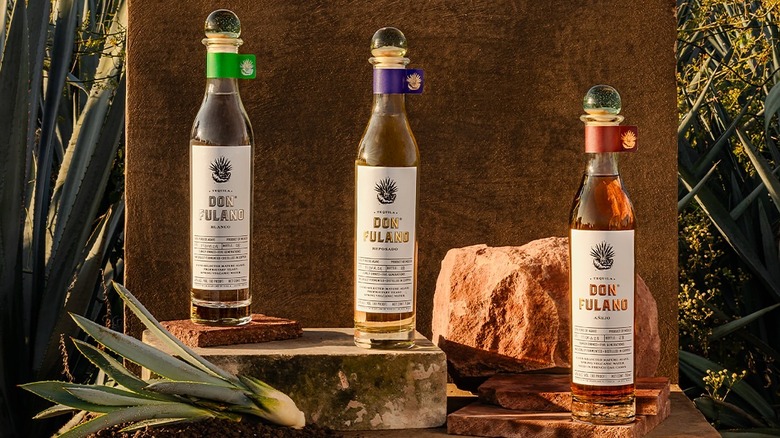
Most tequilas are aged in American oak barrels, but Don Fulano bucks that trend, using only European oak barrels to age its tequilas. Its use of barrels from France, among other locations, is one reason why Lucas Assis loves this brand. But what he especially appreciates is that the distillers try to be consistent with what goes into the bottle.
"Consistency is usually a red flag in tequila because it's kind of like wine, there's vintages," Assis explains. "So, [the tequila is] always going to be different because the agaves are going to taste different depending on what grows around it and how it grows." While Assis says that Don Fulano blends all of its tequilas, once the distillers find a blend they like, they bottle it and then try to recreate that same mixture the next time. Sometimes they achieve a similar blend, but Assis says sometimes they create something even better. "So, there's always a little [evolution] of the brand that I think is really cool," he says.
While Assis likes all of the expressions Don Fulano creates, the bartender declares, "They have one of the best extra añejos on the market." But no matter which bottle you choose, Assis strongly believes Don Fulano is "a great brand that needs a little bit more credit."
Clase Azul
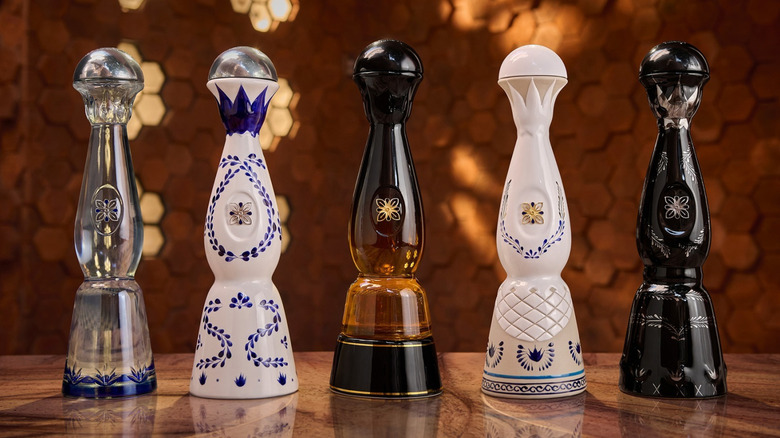
One of the most recognizable tequila bottles on the market today is the white and blue Clase Azul bottle, which Mia Mastroianni declares is both "gorgeous" and "iconic." That beauty stems from the fact that each ceramic bottle is shaped and painted by hand, meaning it's seven days from start to finish before the vessel is ready to be filled. "While some may argue that the hefty price tag might not be worth it," Mastroianni continues, "I believe it can be justified by having a timeless piece of art to display or upcycle long after the liquid is gone."
But Mastroianni isn't just enamored by the stunning pieces of art. She believes the spirit inside is just as worthy, insisting that "if you see one of these bottles nestled along a backbar display, and you happen to be celebrating something special, it may be the time to invest in a margarita." Made from Blue Weber agaves and then aged in American oak barrels, the spirit "carries traditional notes of oak, caramel, and vanilla that seamlessly blend into a cocktail, and can withstand citrus without being overpowered to achieve balance," according to Mastroianni.
The Lost Explorer
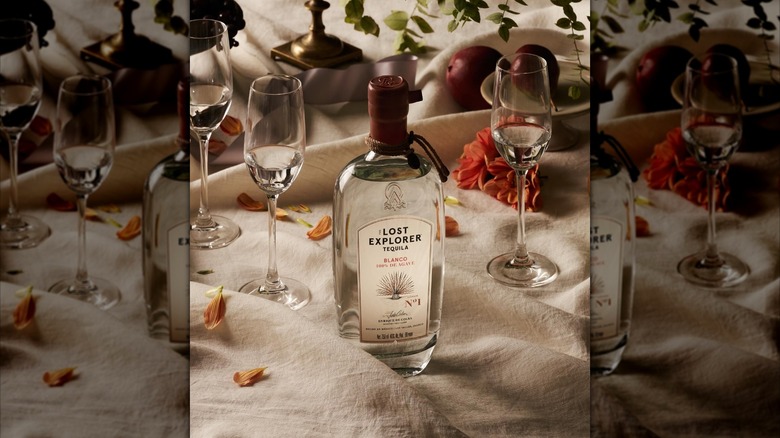
Unlike the other brands on this list, The Lost Explorer actually started as a mezcal maker based out of Oaxaca. It then expanded into the lowlands of Jalisco, where the Blue Weber agaves grow for six to seven years before they're harvested. The rest of the process is pretty similar to other tequilas, but in the end, you end up with a spirit that Gustavo Rojas says is "amazing."
The bottle may be simple and made from recycled crystal scraps, but Rojas says the spirit inside "is remarkably versatile, delivering a full mouthfeel with cooked agave and peppery aromas that allow it to work beautifully neat or in a cocktail."
The Lost Explorer only makes two tequilas, a blanco and a reposado, but the reposado is unusual in that Maestro tequilero Enrique de Colsa uses three different barrels over its four months of aging: a bourbon barrel, a Sauternes wine cask from Bordeaux, France, and a Pedro Ximénez Sherry cask from Jerez, Spain. Each barrel adds a layer of complexity that Rojas says "creates a distinctive yet balanced final product." The Pony Room's lead bartender appreciates The Lost Explorer's "complexity [and] its respect for tradition, and the well-rounded agave experience it delivers. "The brand may be relatively new to tequila," he continues, "but the experience behind it certainly isn't."