

What Makes Clase Azul Tequila Collector-Worthy? It's Not Just The Tequila
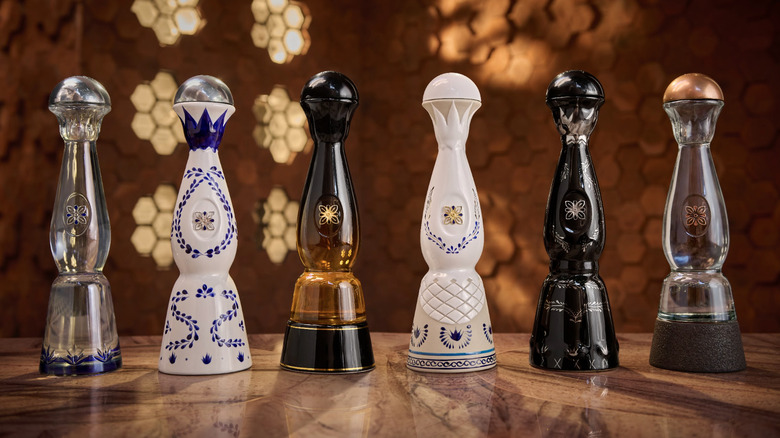
No matter where you are in the world, when you sit down at a bar, chances are you're going to spot something white and blue sitting on the top shelf. In just 30 years, Clase Azul has distinguished itself as one of — if not the — most recognizable tequilas in the world. While some mezcal fans say you can buy better for less, its iconic reposado bottles carry within them a multi-gold medal-winning spirit. A product of eight months of aging within American whiskey casks, the reposado has an aroma and flavor that combines cooked agave and bright orange with subtle hints of warm hazelnut, chocolate, cinnamon, and vanilla. But you don't have to drink this tequila — let alone open the decanter — to appreciate its craftsmanship. Just look at it.
A tequila is much more than its looks, but few match Clase Azul's dedication to artisanship when it comes to its bottles. Each of its signature reposado decanters is formed and painted by hand. In Santa María Canchesda, Mexico, a team of predominantly female artists feather-stroke the traditionally made, ceramic decanters with the brand's signature, cobalt blue design before they're oven-baked — making each and every one unique. From start to finish, the process takes at least two weeks. The painting alone can take a few hours, but "with years of expertise and repetition of the technique, an artisan can paint a reposado decanter in approximately three to five minutes," said Sofia Solamente, Clase Azul's creative director, in an exclusive interview with Tasting Table.
Knowing that every single decanter is made and painted by hand, one could argue that a bottle of Clase Azul is worth adding to your tequila collection for the decanter alone. That's as true for its iconic reposado bottles as it is for its limited edition releases.
Clase Azul decanters aren't just decanters, they're modern cultural artifacts
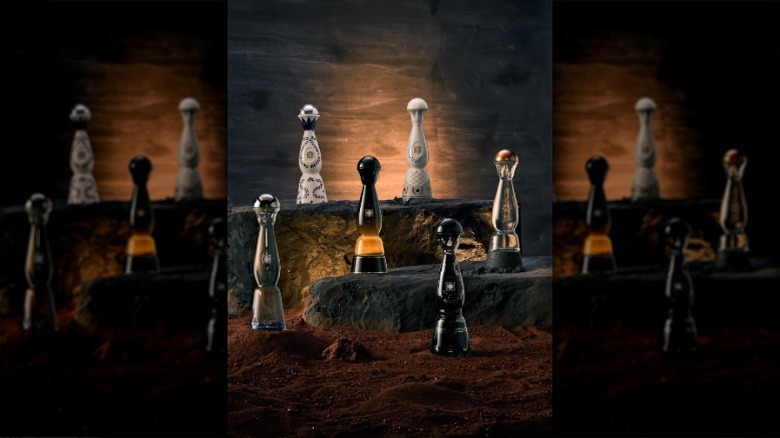
Making tequila is an art. It's also a tradition — from the way the agaves are grown and harvested to the distillation process, all the way to how you drink and enjoy it. For Clase Azul, however, that respect for tradition is carried through to its bottles. Before being painted, the ceramic decanters are hand-formed using ancient Mazuaha techniques. It's on this base where all of its designs are painted by hand. Where it breaks from tradition, however, is that it's predominantly women doing the creating.
Viridiana Tinoco, Clase Azul's master distiller, is one of the few female tequila makers in the business. The brand provides childcare, school tuition, food, and transportation to its artisans, more than 80% of whom are women. Long before production even begins, it's often a woman who is in the Creative Lab — Clase Azul's creative headquarters in Guadalajara, Mexico — collaborating with a multidisciplinary team to shape the look, story, and concept of each limited edition design, long before it's formed, painted, and ultimately placed on bar shelves around the world.
"The Creative Lab serves as a bridge between creativity and craftsmanship, where we continuously explore new materials, techniques, and possibilities while honoring traditional artisanal hand-made processes," said Sofia Solamante. From conceptualization to the final paint stroke, she says, "This is where innovation and tradition come together, allowing us to create decanters that not only embody exceptional design but also carry a meaningful human touch and cultural narrative." Still, while every Clase Azul decanter tells a story, certain limited editions stand out.
Any bottle of Clase Azul is worth adding to your collection
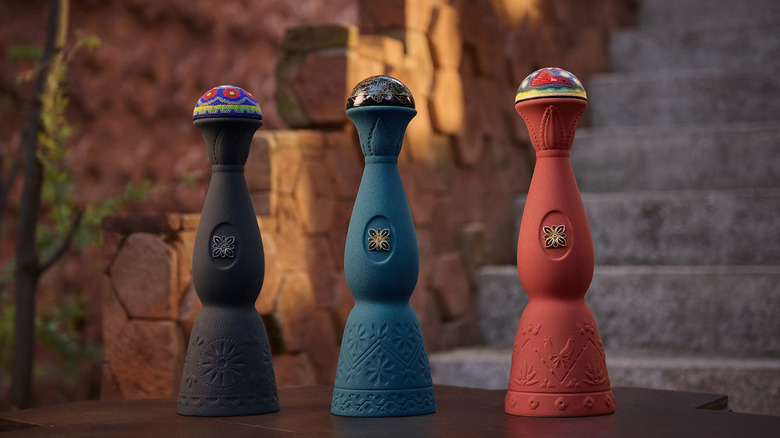
Clase Azul was founded on the premise that tequila is an extension of Mexican heritage and artistry. The brand's commitment to that was cemented with its first white and blue decanter. Handcrafted by local artisans since the beginning, the iconic cobalt blue color of Clase Azul's reposado bottles is rooted in Mexican tradition and is indicative of the Blue Weber Agave from which its tequilas are made. The bottles are painted with designs of traditional motifs, while the four-petaled flower in the center represents the sun. The story the reposado bottle tells is simple: everything points back to the beginning. For Clase Azul, its reposado was that.
If its reposado was Clase Azul's defining start, cementing its dedication to Mexican tradition and artistry, its limited edition releases are the brand's way of preserving it. Limited edition decanters are made in various locations across Mexico, depending on the decanter and the specialty of the artisans. Naturally, Sofia Solamente said the most sought-after are also the rarest: those made in volumes of 15, 100, or 300 pieces. Varying in intricacy and process, a limited edition can take a few hours to a few days to paint. "We don't have automated processes, and it's all the artisans leaving their imprint on the limited edition we are creating," she said.
As for the most memorable limited editions in the brand's history, Solamente pointed to Puebla and Jalisco 200, "both of which beautifully celebrate Mexican culture and craftsmanship." She also noted one of the most prized offerings: "The Master Artisans collections are also especially meaningful, attracting collectors from around the world because of their extraordinary level of intricacy." But a bottle of reposado — or any of Clase Azul's other types of tequila — is collector-worthy, even if for the decanter itself.