

Eggs Norwegian With Rösti And Dill Hollandaise Recipe
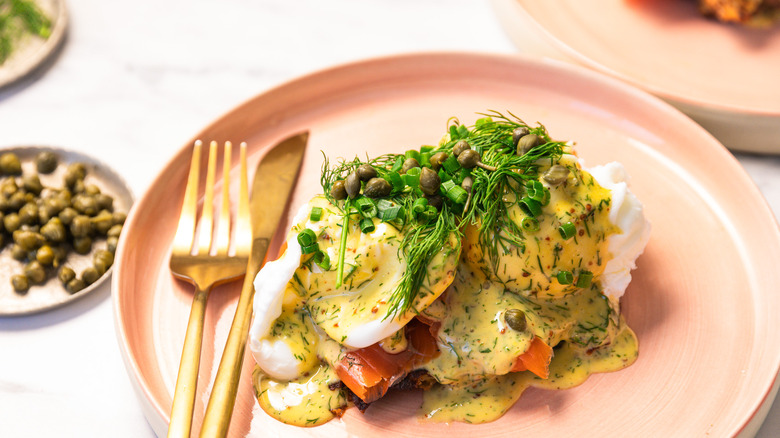
If you thought eggs Benedict were the height of brunch sophistication, then you likely have yet to meet eggs Norwegian, a dish in which smoked salmon takes the place of Canadian bacon. In our version, we go even further than just swapping the proteins. In these eggs Norwegian with rösti and dill hollandaise, we place our expertly poached eggs on crispy, fried, and flavorful homemade potato fritters called rösti, and add a depth of flavor to our hollandaise with the addition of brown butter and herbs.
As a recipe developer and blogger, I've made a lot of eggs Benedict variations, and the rösti base is the upgrade I love the most. It turns brunch into something worth planning around rather than a meal you just throw together. This Swiss potato patty is similar to a hash brown, and it also goes hand-in-hand with the Nordic style of our eggs. The brown butter hollandaise is another inspired touch that continues the same Scandi theme with its heavy use of fresh dill and sweet, nutty, and slightly smoky brown butter.
Overall, the resulting creation has texture, richness, and a savory base that truly stands out in a line of familiar egg variations. It takes a bit of work, like most good things, but when the plate is ready, everything on it has a role to play. The capers bring a touch of brine, the dill adds fragrance, the smoked salmon has a meaty, salty flavor that cuts through the fattiness of the runny yolk, which pours over everything like a golden wave once you cut into it. It's the kind of dish that turns your morning into an occasion, and you can forget about leftovers.
Gather the ingredients for eggs Norwegian with rösti and dill hollandaise
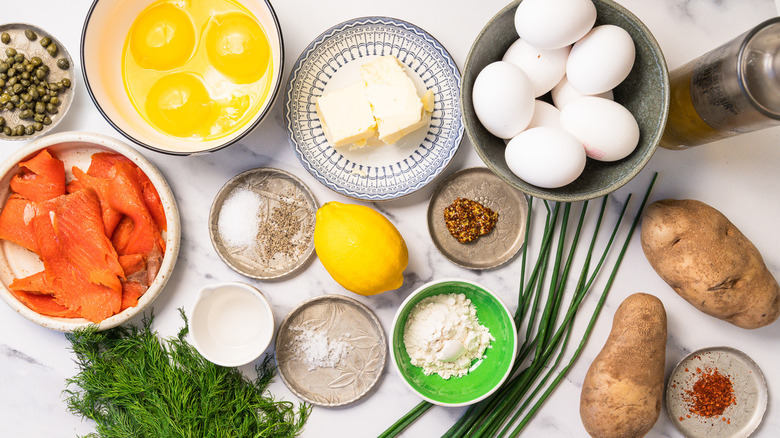
For the rösti base, you'll need russet potatoes, egg yolks, all-purpose flour, kosher salt, black pepper, unsalted butter, and olive oil for pan-frying. For the brown butter dill hollandaise, you'll need a stick of unsalted butter, more egg yolks, fresh lemon juice, Dijon mustard, fresh dill, cayenne pepper, and flaky sea salt.
For the poached eggs and toppings that make our eggs Norwegian, you'll need distilled white vinegar, eggs, cold-smoked salmon, capers, fresh dill, fresh chives, and flaky sea salt. Choose a good smoked salmon brand and don't confuse it with hot smoked salmon, which is a whole different kettle of fish.
Step 1: Grate the potatoes
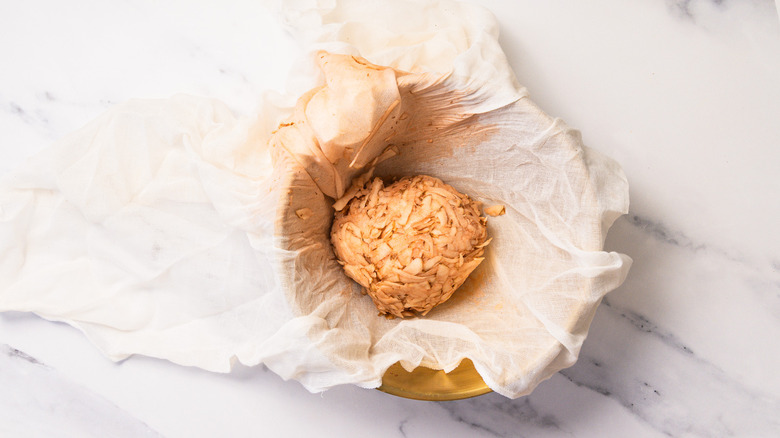
Grate the potatoes on the large holes of a box grater. Wrap them in a clean kitchen towel and squeeze out as much liquid as possible.
Step 2: Mix the base
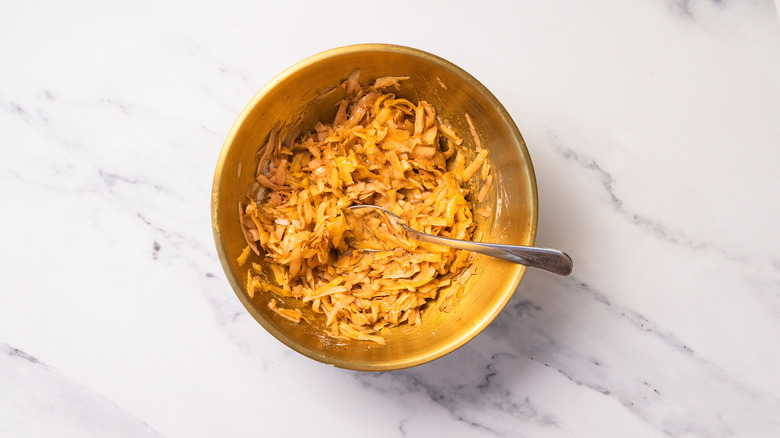
Transfer the potatoes to a bowl and mix in the egg yolk, flour, salt, and black pepper.
Step 3: Preheat a skillet
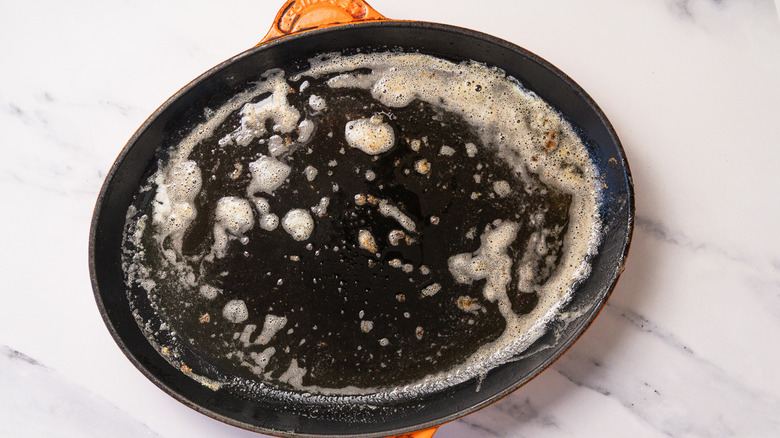
Heat the butter and olive oil in a large nonstick skillet over medium heat.
Step 4: Shape the rösti
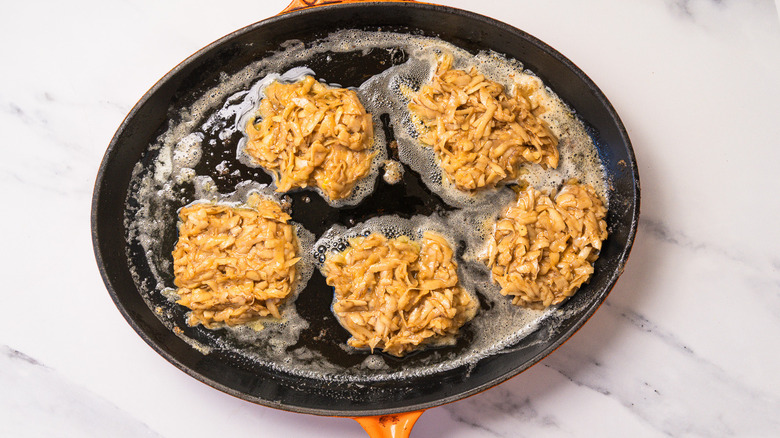
Divide the potato mixture into 5 mounds, press each into a 3-inch patty, and place them on the hot skillet.
Step 5: Cook the rösti
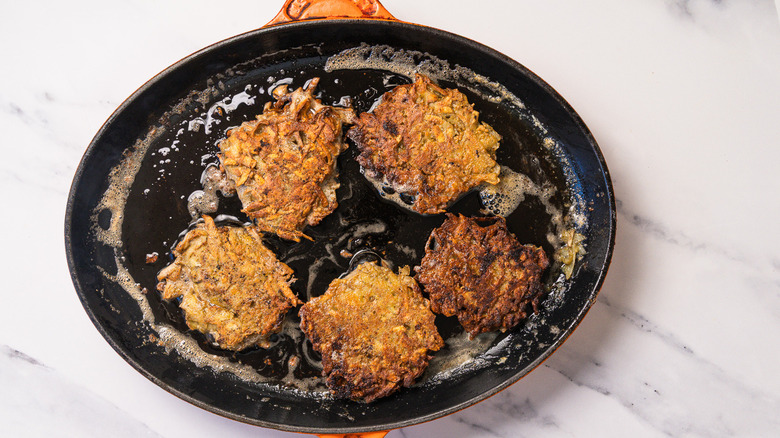
Cook for 5 to 6 minutes per side, until deep golden brown and crisp.
Step 6: Drain the rösti
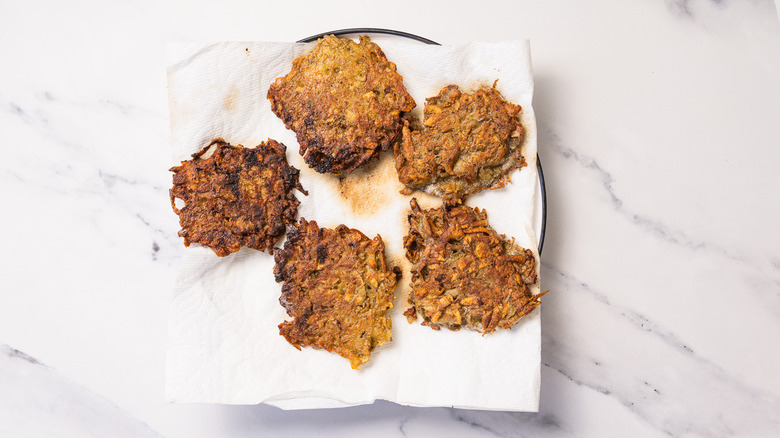
Transfer to a paper towel-lined plate and keep warm.
Step 7: Brown the butter for the hollandaise sauce
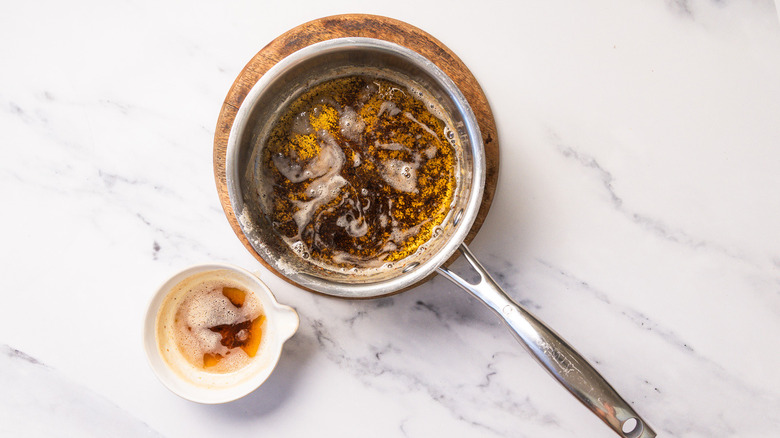
Melt the butter for the hollandaise in a small saucepan over medium heat and cook until it turns amber and smells nutty, about 4 minutes. Watch closely so it doesn't burn. Transfer to a ramekin and set aside to cool slightly.
Step 8: Start making the hollandaise
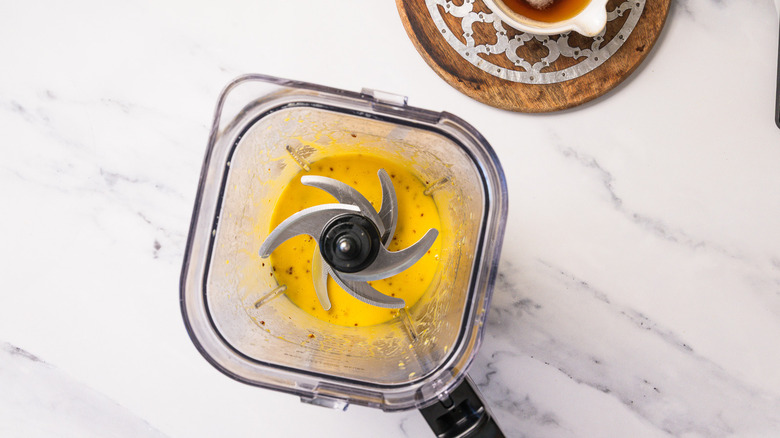
Place the egg yolks, lemon juice, and Dijon mustard in a blender. Blend on low speed for 10 seconds.
Step 9: Emulsify the hollandaise
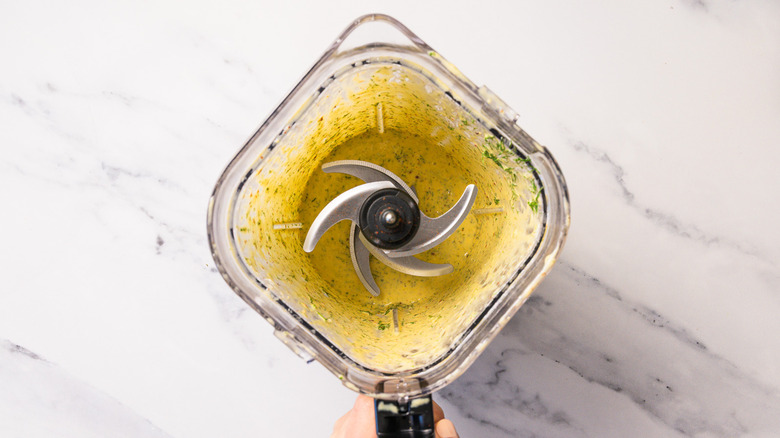
With the blender running, slowly stream in the warm brown butter until the sauce thickens and emulsifies, about 1 minute. Stir in the dill and cayenne, and season with salt. Keep warm over a pan of warm, not hot, water.
Step 10: Heat the water for poaching
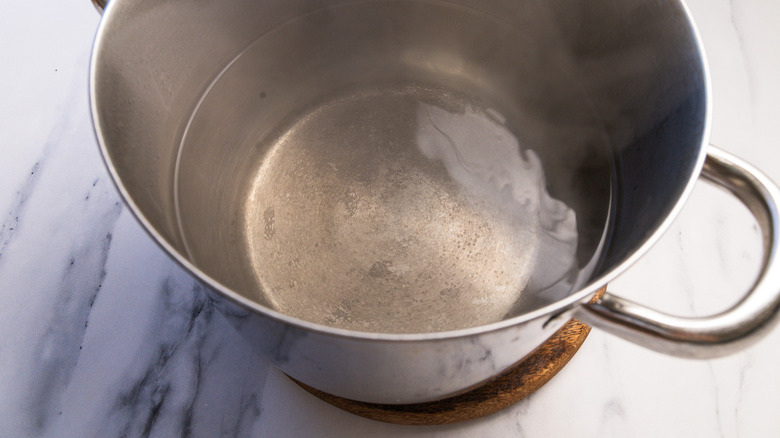
Bring a large pot of water to a gentle simmer and add the vinegar.
Step 11: Poach the eggs
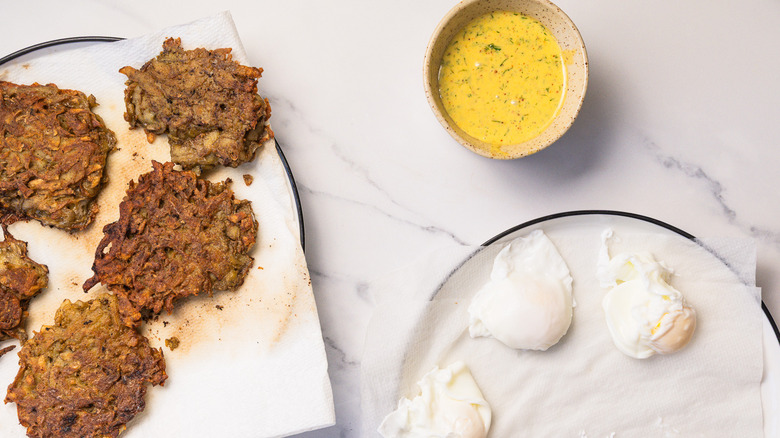
Crack each egg into a small cup, then slide it gently into the water. Poach for 3 minutes for a runny yolk. Remove with a slotted spoon and drain on paper towels.
Step 12: Plate the eggs Norwegian
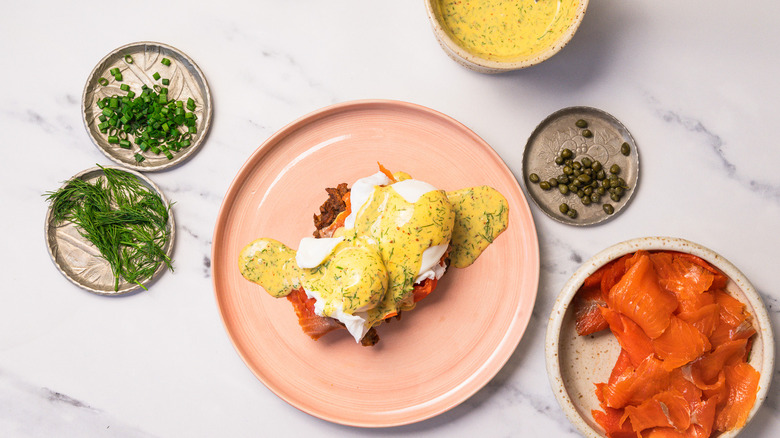
To plate, top each rösti with a little hollandaise, a few folds of smoked salmon, then 2 poached eggs. Spoon the brown butter hollandaise generously over the top.
Step 13: Finish and serve the eggs Norwegian

Finish with a spoonful of capers, a few dill fronds, a scatter of chives, and a pinch of flaky sea salt, and serve.
What pairs well with eggs Norwegian?
Eggs Norwegian With Rösti and Dill Hollandaise Recipe
Eggs Norwegian is eggs Benedict's elegant salmon-infused cousin, and ours leans into the Scandi flavors with dill Hollandaise and a potato rösti as the base.

Ingredients
- For the rösti
- 1 pound russet potatoes, peeled
- 3 large egg yolks
- 2 tablespoons all-purpose flour
- ½ teaspoon kosher salt
- ¼ teaspoon black pepper
- 3 tablespoons unsalted butter
- 1 tablespoon olive oil
- For the brown butter-dill hollandaise
- ½ cup unsalted butter (1 stick)
- 3 large egg yolks
- 1 tablespoon fresh lemon juice
- 1 teaspoon Dijon mustard
- 1 tablespoon fresh dill, finely chopped
- Pinch of cayenne pepper
- 1 teaspoon flaky sea salt
- For the poached eggs and toppings
- 1 tablespoon distilled white vinegar
- 8 large eggs
- 8 ounces cold-smoked salmon, thinly sliced
- 2 tablespoons capers
- 1 tablespoon fresh dill, broken into fronds
- 2 tablespoons fresh chives, finely chopped
- 1 teaspoon flaky sea salt
Directions
- Grate the potatoes on the large holes of a box grater. Wrap them in a clean kitchen towel and squeeze out as much liquid as possible.
- Transfer the potatoes to a bowl and mix in the egg yolk, flour, salt, and black pepper.
- Heat the butter and olive oil in a large nonstick skillet over medium heat.
- Divide the potato mixture into 5 mounds, press each into a 3-inch patty, and place them on the hot skillet.
- Cook for 5 to 6 minutes per side, until deep golden brown and crisp.
- Transfer to a paper towel-lined plate and keep warm.
- Melt the butter for the hollandaise in a small saucepan over medium heat and cook until it turns amber and smells nutty, about 4 minutes. Watch closely so it doesn't burn. Transfer to a ramekin and set aside to cool slightly.
- Place the egg yolks, lemon juice, and Dijon mustard in a blender. Blend on low speed for 10 seconds.
- With the blender running, slowly stream in the warm brown butter until the sauce thickens and emulsifies, about 1 minute. Stir in the dill and cayenne, and season with salt. Keep warm over a pan of warm, not hot, water.
- Bring a large pot of water to a gentle simmer and add the vinegar.
- Crack each egg into a small cup, then slide it gently into the water. Poach for 3 minutes for a runny yolk. Remove with a slotted spoon and drain on paper towels.
- To plate, top each rösti with a little hollandaise, a few folds of smoked salmon, then 2 poached eggs. Spoon the brown butter hollandaise generously over the top.
- Finish with a spoonful of capers, a few dill fronds, a scatter of chives, and a pinch of flaky sea salt, and serve.
Nutrition
| Calories per Serving | 760 |
| Total Fat | 59.0 g |
| Saturated Fat | 27.5 g |
| Trans Fat | 0.0 g |
| Cholesterol | 762.2 mg |
| Total Carbohydrates | 25.9 g |
| Dietary Fiber | 1.9 g |
| Total Sugars | 1.4 g |
| Sodium | 829.9 mg |
| Protein | 31.6 g |

How do you keep hollandaise from breaking?

Making hollandaise sauce seems like the brunch equivalent of making a souffle: something difficult and elusive that scares off many home cooks. Many things can go wrong with your hollandaise to cause it to "break," but luckily, we're here with some advice to prevent it.
When the emulsion between the butter and egg yolks in a hollandaise fails, that's called "breaking." It results in a greasy, lumpy sauce rather than the velvet-smooth emulsion of a good hollandaise. The main culprits for this are usually that the butter was added too fast, it was too hot, or the sauce sat without use for too long. In our recipe, instead of the traditional double-boiler method, we use a blender and hot butter, which is significantly more forgiving as the blender does the hard part of emulsification — whipping at a high speed.
The critical variable that remains is the temperature of the butter. If it's too hot, it can scramble the yolk. If too cold, it won't emulsify. To get it just right, let the butter sit for two to three minutes before starting the blender. Then, stream it in slowly, starting with just a few drops before increasing to a thin, steady pour. Your eggs must also be room temperature to prevent any issues. If your sauce does, in fact, break, don't panic. Transfer the broken sauce to another bowl, then start a fresh yolk in the blender, and slowly add the broken sauce back. It should emulsify easily again. And if your sauce has cooled before you've had a chance to serve it, reheat it gently over a pan of warm water till it becomes spoonable again.
How do you poach eggs perfectly?
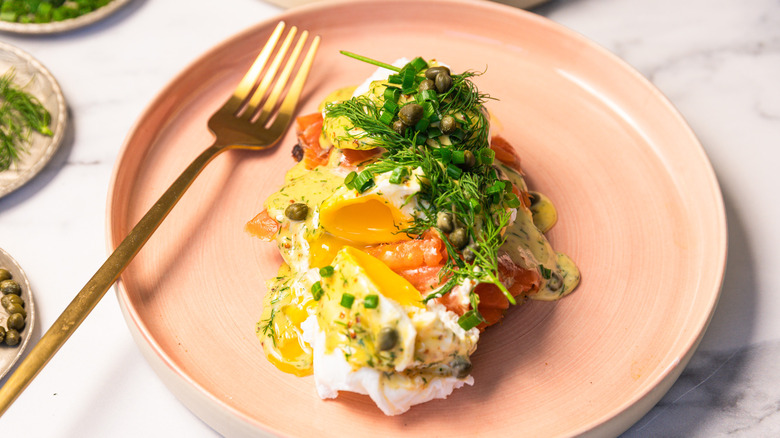
Poaching eggs is another thing that looks harder than it actually is, but I won't lie — there are plenty of potential pitfalls to worry about. To start, the water for poaching eggs shouldn't be at a rolling boil with splashes everywhere, but instead should be at a gentle simmer with small bubbles rising steadily from the bottom of the pot. Instead of ripping the whites apart before they've ever set, a simmer gives them time to cohere around the yolk into a beautiful sphere.
The other tip for poaching eggs is to use fresh eggs. Fresh eggs hold together much better than older ones, because the whites are tighter. If your eggs are over a week old, the whites will be looser and more likely to whip like a ghost with wisps at its end. Another thing we do in this recipe is to crack each egg into a small cup before sliding it into the water, which helps to keep it whole for a few seconds. I also recommend adding a touch of vinegar to your water and skipping the salt.
If your eggs are taking a while to cook, you can keep the first ones in a bowl of warm water while you're working on the rest. Then, when you're ready to serve, drain them on paper towels before plating.