

Ditch The Aperol Spritz: The Sweet Swap You'll Wish You'd Made Sooner
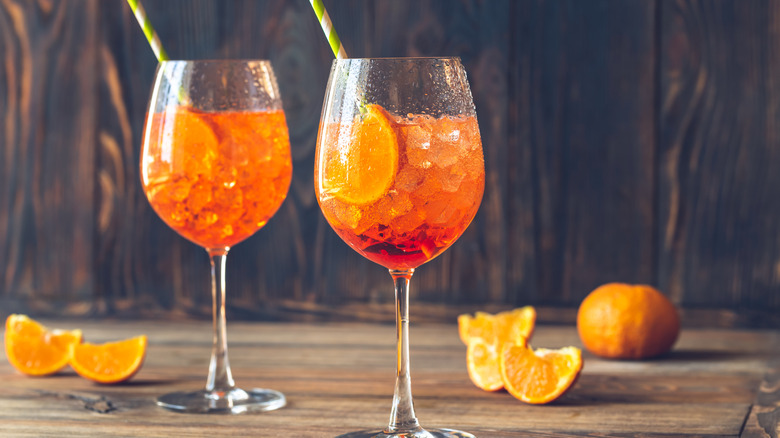
Once a localized specialty favored in Italy's Veneto region, Aperol Spritz has become a global phenomenon in recent years. Made by mixing Aperol liqueur with prosecco and sparkling water, the bittersweet drink is an aperitivo classic with over 100 years of history. Thanks to social media, television, and a very clever marketing team, its popularity is surging, but with one easy swap you can make an even sweeter, more refreshing cocktail: The Hugo spritz.
One of the trendy summer cocktails we love, a Hugo spritz is created with elderflower liqueur, rather than a bittersweet red liqueur. Like an Aperol spritz, it contains prosecco and sparkling water or soda water, but some mint and lime is also usually added. The flavor is much more floral, which enhances the natural citrus in the prosecco, and the elderflower liqueur contains some honeyed notes, creating a cooler, sweeter drink with a milder, more herbaceous finish.
It was invented in 2005 by a bartender in South Tyrol, Italy named Roland Gruber who utilized a lemon balm syrup made with local botanicals. Elderflower, which is more widely available, became the go-to base for the syrup soon after. The drink made its way across the Alps and later further afield. Nowadays, St-Germain, one of the best elderflower liqueurs, tends to act as the base. No matter which form of elderflower is used, a Hugo quenches a summer thirst much better than an Aperol. It has a more complex flavor profile, isn't as cloying, and tends to be a better crowd pleaser due to the balanced flavor.
How to make a Hugo spritz
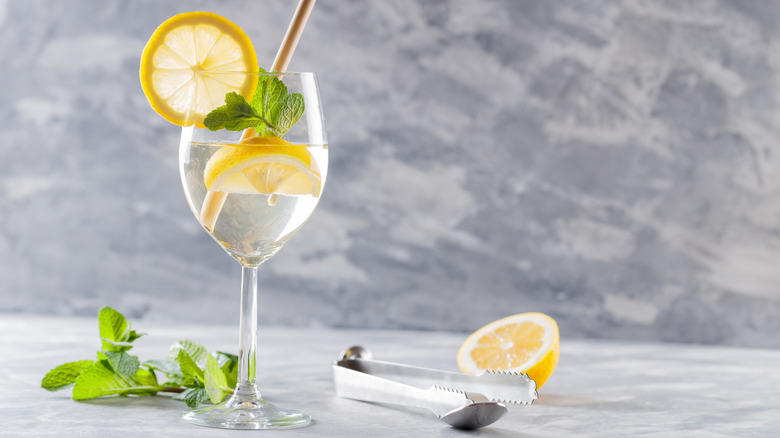
The Aperol spritz ratio tends to change slightly depending on what area you're in, but it typically follows a 3:2:1 format — three parts prosecco, two parts Aperol, and one part soda water or sparkling water. To make a Hugo, just follow the same recipe but use St-Germain instead of Aperol. Here is Tasting Table's springtime Hugo spritz recipe if you want a guide.
Some still use elderflower syrup or cordial instead of liqueur, and because it is much more potent, bartenders typically only add a splash. The guideline tends to look more like three to four parts prosecco, one to two parts sparkling water, and one part syrup. You can muddle the mint to enhance the flavor, squeeze a wedge of lime or lemon in to cut through the sweetness, or just add the garnishes on top. Make sure to use a lot of ice and give everything a gentle stir before drinking.
If you have leftover liqueur, you can make some other delicious cocktails. Try an elderflower margarita, an elderflower pear martini, or a bright and floral French blonde. If opting for elderflower syrup, it is delicious in a gin and tonic too and can be used in so many mocktails. You could even make a non-alcoholic Hugo by nixing the prosecco or using a zero-proof version. Aperol will always have a place in everyone's hearts but when you're craving something light and sweet on a hot day, a Hugo just hits differently.