

5 Disadvantages Of Using A Vegetable Chopper
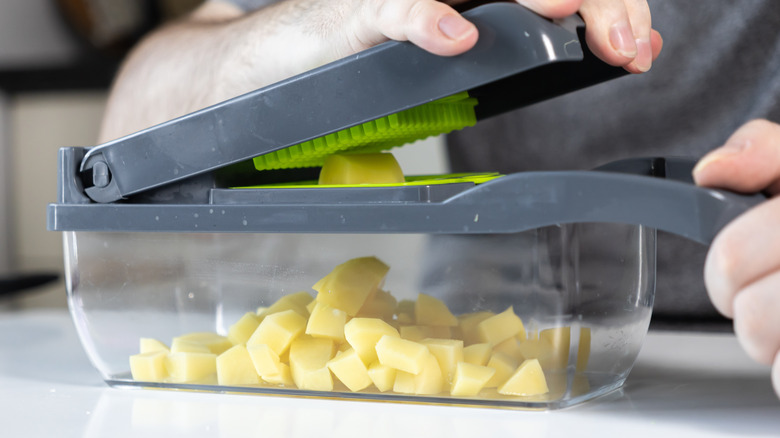
It's highly likely that at some point you've been entranced by an infomercial for a vegetable chopper, empathizing with the person on screen severely struggling to chop an onion (always in black and white footage, for some reason) and thought that a plastic chopper could vastly improve your kitchen experience. Whether you hate cutting vegetables or you're looking for a way to make meal prep quicker and easier, a vegetable chopper might be on your radar, but there may be more drawbacks than benefits when it comes to these gadgets.
Of course, there are good reasons to employ the use of a vegetable chopper. For example, it can be helpful for senior citizens and those with physical disabilities or visual impairments who cannot safely wield a knife. If that's the case, there are plenty of vegetable choppers with great online reviews that you might want to consider purchasing. However, if you don't have a real need to avoid getting down and dirty with a knife and cutting board, we highly encourage you to eschew the plastic cutting devices and use a knife for chopping vegetables. If you're wary of knives or think you may lack the confidence to successfully use them, the only way to improve your knife skills and cutting techniques is to continually practice them. As with most things in life, the competency of properly utilizing a sharp knife comes from repeated practice and experience — and what nicer way to better your knife skills than in the comfort of your own kitchen?
Vegetable choppers still require you to cut ingredients down to size
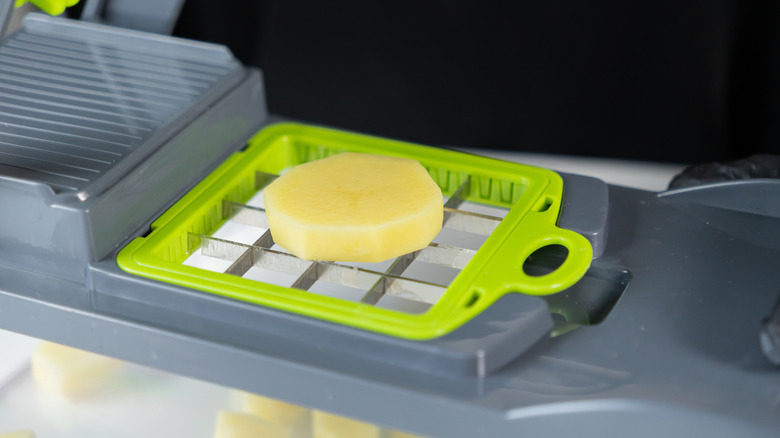
You may think that a vegetable chopper will make preparing salads a breeze, but you might just be romanticizing the small gadget. If the appeal of a vegetable chopper is that you won't need to break out a knife and cutting board, think again. Unfortunately, lots of larger produce still needs to be cut down into a manageable size before being placed onto the chopping apparatus. Most vegetable choppers are only about five to six inches wide at the most, meaning that the blade section will be even smaller than the overall width of the machine.
Onions, which are commonly dreaded and well known for making the eyes of anyone in their vicinity water, still need to be stripped of their papery skins and trimmed to size, eliminating the supposedly quick and knife-less benefits of a vegetable chopper. Some bulbs that are larger in width than the chopper may even need to be cut into halves or quarters beforehand. Potatoes are another item commonly diced with a vegetable chopper, as they can be difficult to cut uniformly; but they may also need to be cut prior to using the machine. Additionally, a vegetable chopper cannot peel spuds or any other vegetables for you, which is another laborious step that the chopping device must outsource to the cook.
Vegetable choppers are difficult to clean
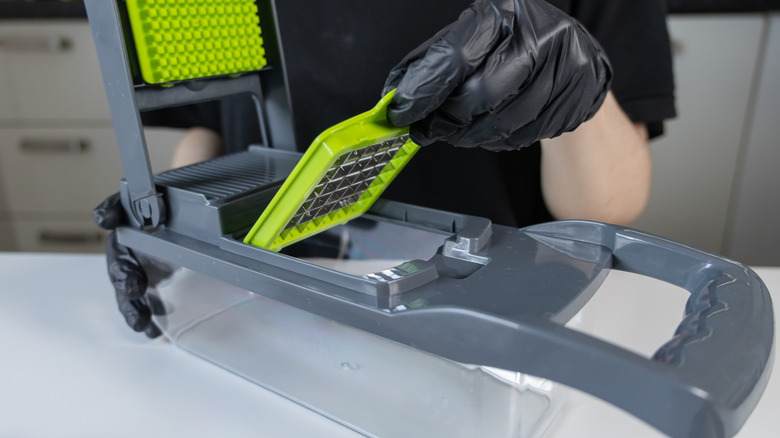
One of the best parts about using a knife and cutting board for all your chopping needs is the ease of cleaning afterwards. Two flat surfaces that require little more than a sponge or brush, soap, and hot water are so easy to clean and set aside to dry — not to mention incredibly quick to clean, as well. A vegetable chopper, on the other hand, is a massive chore to wash, and it's a huge pain to disassemble and reassemble the many parts of the device. Additionally, all of those sharp, criss-crossing edges and various sized blades make it more likely you'll accidentally cut yourself while cleaning them.
The precious time you may have saved by using the vegetable chopper rather than a knife will surely be spent tediously washing the multi-part plastic gadget. In addition to cleaning, each part needs to dry fully before being painstakingly reassembled to stave off rust and musty aromas. Even if your vegetable chopper is dishwasher safe (and placed on the top rack), the plastic parts have the ability to warp under the high heat of some appliances. Certain vegetable choppers include a special cleaning brush, which is, frankly, just another item that'll likely to get lost somewhere in a kitchen drawer. While there are some resourceful ways to clean your vegetable chopper, it's so much easier to use a knife and cutting board.
A vegetable chopper takes up valuable storage space
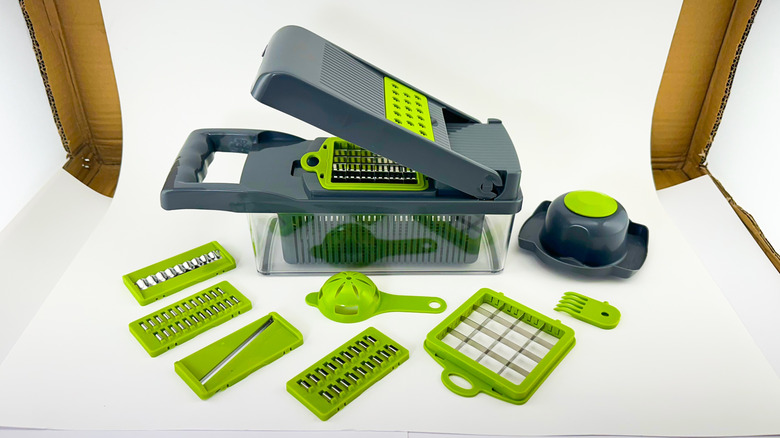
While the size and thickness of cutting boards can vary, in general, they are easy enough to store either vertically or horizontally and take up only a small amount of space in the kitchen. Likewise, a good chef's knife also requires minimal storage space. A vegetable chopper, however, is usually a bulky item that takes up a decent portion of valuable kitchen real estate when not in use. Not only is the chopper itself large, but it usually has a bunch of accessories that accompany it, which also require storage. While all of the changeable chopper blades and size options may seem handy as you're deciding how you'd like the device to cut your vegetables, all of those extras need to be kept somewhere when they are not in use.
A smaller veggie chopper with minimal accessories would be easier to store, but the downside is that it inevitably reduces the holding capacity below the blades. This means you'd have to pause your work and empty the holding space more frequently, which would eat into the time that you're supposedly saving by using the machine in the first place. Unless you have a large pantry or a lot of excess storage space in your kitchen, you'll likely find it a struggle to store these bulky gadgets.
Vegetable chopper blades are difficult to sharpen
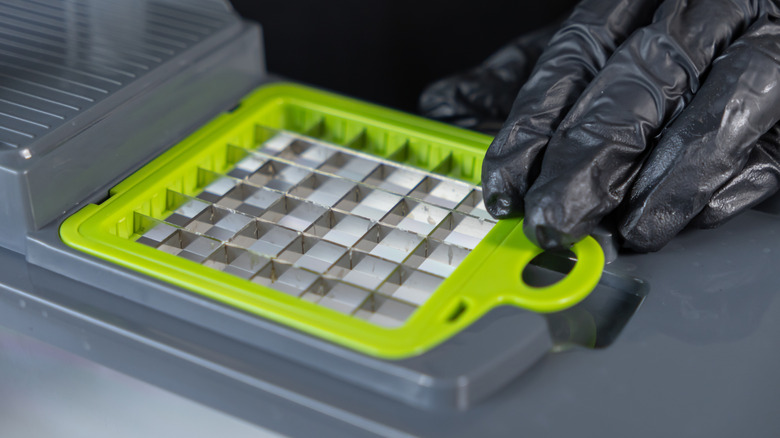
Whether you send your knives to a professional or sharpen them at home on a whetstone, the beauty of a chef's knife (and most other knives for that matter) is that they can always be sharpened to maintain a proper edge that allows you to safely use the knives. The same can't be said of the sharp metal grids that most vegetable choppers have. As they are bonded together, you can't access the blades individually, making it virtually impossible to sharpen them. Even Consumer Reports' highest-rated budget knife sharpener can't help you restore the blades of a veggie chopper, as the sharpening element is attached to plastic and can't be removed to reach the edges of the blades.
Once the chopper's grid begins to dull, using the gadget for getting through more hardy vegetables like potatoes or carrots will become more and more difficult over time, as you'll have to use more force, which can be risky. Remember that a dull knife is a dangerous knife, and the same principle applies to any sort of blade you're working with in the kitchen. Additionally, though some of the appeal behind vegetable choppers is that they can be cleaned in the dishwasher, putting anything sharp in the appliance will dull the blades with every wash.
A vegetable chopper can't tackle all kinds of produce
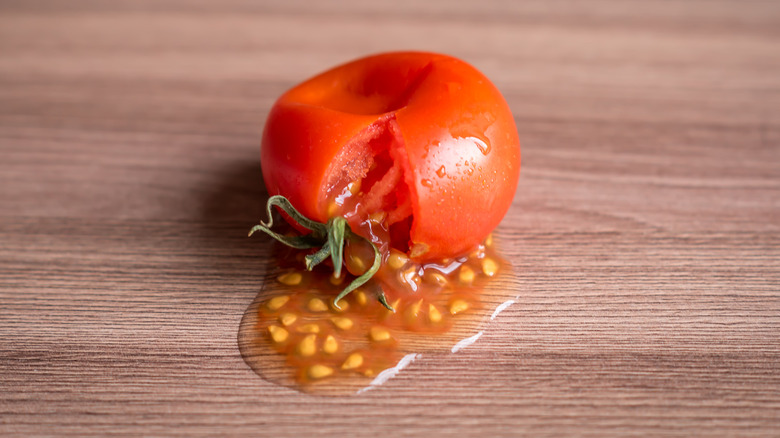
It may seem like a versatile workhorse, but most vegetable choppers don't have the same finesse that knives do when it comes to more handling delicate produce. Unlike a food processor, which makes slicing vegetables for salads a breeze, the constrained blades and small cutting area aren't meant for all types of produce. The rigid grid that slices through sturdy onions and crisp cucumbers has a difficult time approaching softer foods like tomatoes, which usually wind up getting squished rather than cubed, more so when they are particularly ripe and juicy. However, if you do make a lot of egg salads, a vegetable chopper dices up peeled hard-boiled eggs with almost no effort.
For produce that's difficult for even knives to get through, like root vegetables or sweet potatoes, veggie choppers can also struggle with the task. The high levels of starch and low levels of moisture in those vegetables make cleaving them tough, especially with the slowly dulling blades of a vegetable chopper. One Redditor in r/Cooking noted that using a vegetable chopper can also be "super loud," especially when trying to violently slam down the lid and force tough potatoes through the blades.