

The Safest Ways To Use Aluminum Foil In Small Appliances
Although aluminum foil is designed and sold for use in the kitchen, it has something of a complicated relationship with appliances. A quick online search should be enough to let you know if you can use foil with what you plan to cook in, but you're more than likely going to be met with some conflicting information. The better question to ask is how you can safely use aluminum foil in a small appliance.
Aluminum foil is used for its ability to reflect and conduct heat, but it's also a good conductor of electricity. When you add foil to a small appliance, you might experience poor performance and, more problematically, the risk of a short circuit or damaging the appliance itself. With that in mind, always refer to the user manual for the best way to use any small appliance.
If you've lost the manual or it doesn't mention foil either way, understanding the dangers can help you decide if you should go ahead with your foil plan. Common sense also plays a pretty big part in this. If all advice tells you that it's fine, but you get smoke or sparks from cooking with foil, or the foil begins to melt, you'll need to reassess whether foil is the best choice.
Microwave
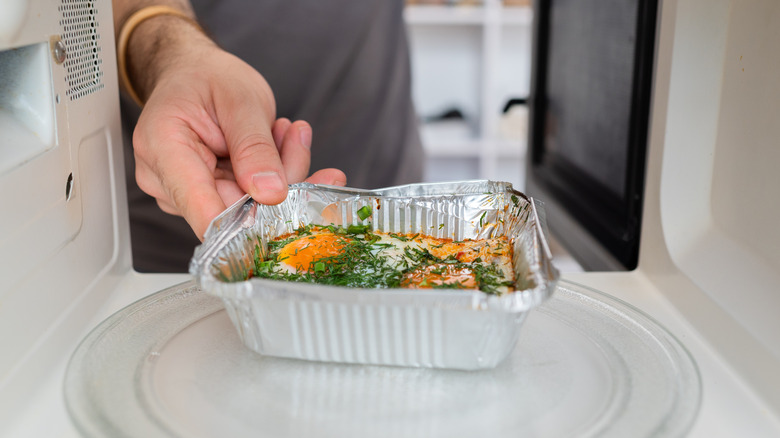
Let's get this cleared up first, because for many of us, the combination of metal and microwaves has always been an absolute no-go. It's essentially microwaves 101. So, you might be surprised to know that there are a couple of safe ways to use aluminum foil with a microwave.
It's safe to use small amounts of aluminum foil to protect parts of a dish you don't want to overcook, but with some caveats. In this case, you never want more than a ¼ of the food covered, and you'll need to ensure it doesn't touch the walls. This is not the time to be reusing aluminum foil, as it's the crinkles that will lead to potentially dangerous arcing -– instead, use a new piece and ensure it stays as smooth as possible.
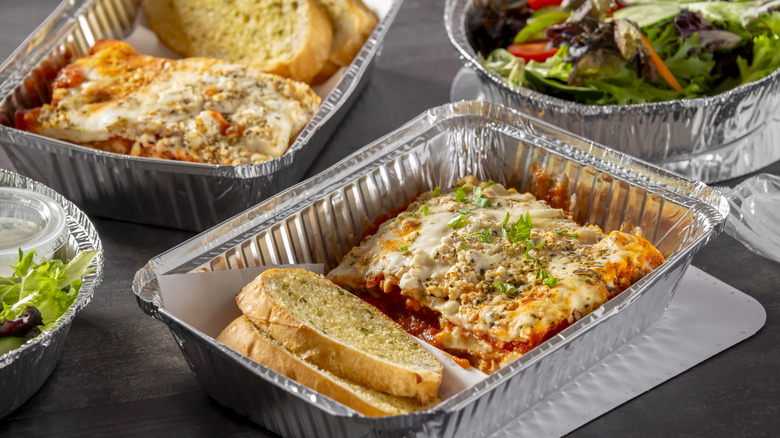
Foil trays can also be safe to use for reheating food in the microwave, keeping in mind the same precautions. The food should cover most of the surface of the tray, and ideally to a depth of at least an inch. The tray needs to be smaller than the turntable so that it can rotate without coming into contact with the walls of the microwave. Clearance of one inch is advisable.
Air fryer
The air fryer was first marketed as a healthier alternative to deep frying, but has become an appliance for everyday cooking, with recipes for everything from mac and cheese to air fryer poached eggs. While you might be excited to see just how far you can push the limits of an air fryer where food is concerned, being mindful of the safety aspect will help keep the appliance running better for longer.
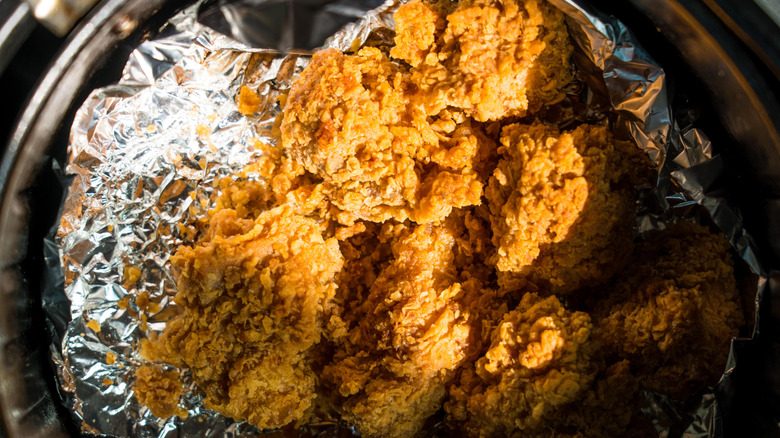
Depending on the brand, you'll find very different advice on if and how to safely use aluminum foil in an air fryer. Some brands such as Philips specifically advise against using aluminum foil, whereas other brands say it's fine to use it as a basket liner or to wrap food, and in other cases the advice will vary by model. The internal structure of these appliances can vary, so it is always best to defer to the manual.
In all instances, however, the dangers are the same. Air circulation is crucial to how an air fryer functions (unlike a traditional oven or a microwave). Blocking off the vents that emit the hot air, or preventing the air from making its way around the basket, will result, at best, in uneven cooking and, at worst, a fire hazard or damage to the appliance.
Slow cooker
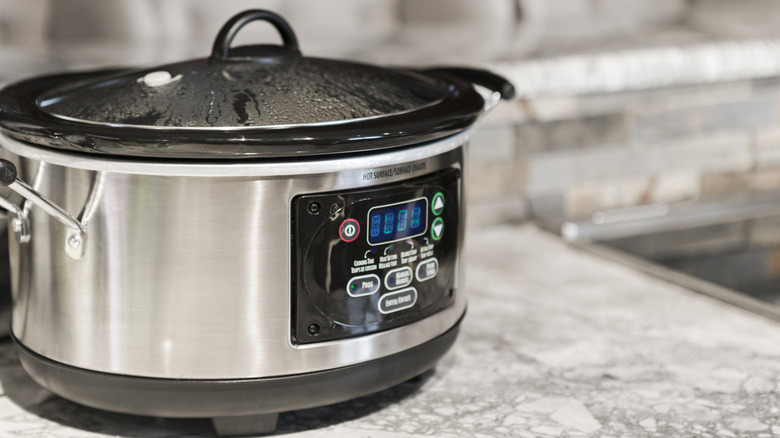
The whole point of a slow cooker is that it is designed to operate safely on the countertop while you're away. It's unique that you can put something on to cook for six or eight hours and not have any concern that it's burning. You'll be pleased to know that this general safety of the appliance does carry across to its use with aluminum foil.
In fact, the use of aluminum foil can help to overcome some of the limitations of the appliance. The slow cooker is most often used for dishes with a lot of liquid, such as stews, but it can serve more like a mini oven for jacket potatoes or roasted garlic — you just need to wrap the food in foil to prevent it from sticking or drying out.
Like many appliances, slow cookers often have a hot spot, an area that heats more quickly and can lead to uneven cooking. While regular stirring might avoid this, it defeats the purpose of hands-off cooking. Instead, you can fashion a collar from aluminum foil to place over the hot spot to protect your food.
A layer of aluminum foil placed under the lid can help create a tighter seal and ensure the slow cooker heats efficiently. For those using a slow cooker at high altitudes, this is a helpful trick to ensure your food reaches safe temperatures.
Toaster oven
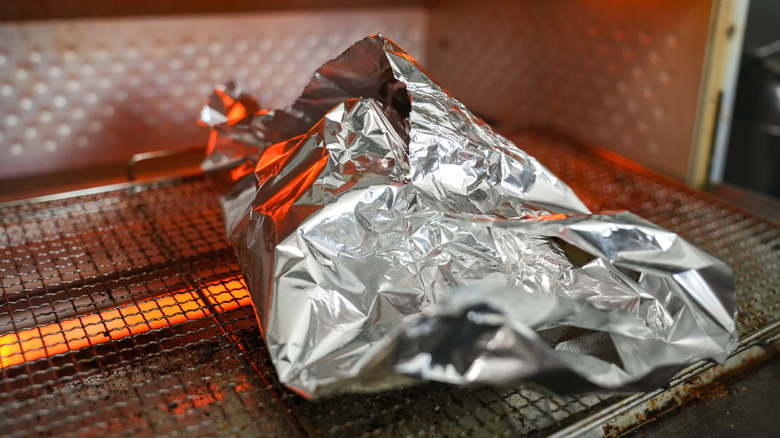
A toaster oven that sits on your countertop is essentially a miniature version of a full-size oven, but that doesn't mean that all of the same guidelines for safety apply. So when it comes to using aluminum foil in a toaster oven, err on the side of caution.
In general, you can use foil as long as it's kept well away from the heating element and the interior walls. Contact can lead to a short circuit in the electrics or directly to a fire. The same advice is true when lining your regular oven, but in a larger space the foil is usually well away from the walls.
Some brands such as Sunbeam advise against the use of aluminum foil completely. The reflective and conductive nature of foil in a small space can push the temperature in the appliance above the safe limit of 500 degrees Fahrenheit.
The safest options for foil in the toaster oven are to use it to directly cover the food or the dish that you're cooking in, such as when reheating mac and cheese. This keeps it as far away from the element as possible, and if it's wrapped well, it reduces the risk of the foil blowing around with the convection fan.
For an easier cleanup after cooking, you can line the included baking trays or sheet pans with foil, provided that no overhang touches the walls. The crumb tray is a different story, however, and should not be covered at all. You run the risk of blocking airflow and allowing grease to collect where it can be a fire hazard.
Rice cooker
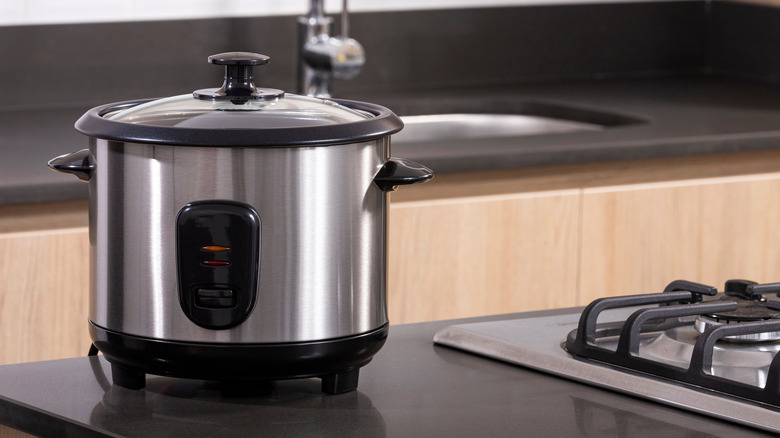
If you've only ever used a rice cooker for its intended purpose (to make rice), you're probably wondering how or why you'd ever need to add aluminum foil. But humans are endlessly creative, and online you'll find no end of recipes for full meals that resourceful home chefs have created in the rice cooker. But if a viral recipe is telling you to wrap something in foil before adding it to your rice cooker, check your manual first.
According to Zojirushi, a popular brand of rice cookers, foreign objects including foil can interfere with both the heat and the steam sensors in the appliance. The heat sensor is what tells the rice cooker when to switch off, and interference might lead to pressure buildup or damage to the appliance.
Where you may be able to use aluminum foil safely is in the steamer basket, if your rice cooker has a steam function. Even in this case, you need to ensure that the foil doesn't overhang from the basket and that you're not inadvertently creating a seal between the basket and the rice cooker below. If you have any issues, you might need to poke some holes in the foil to allow steam to pass through.