

How To Wash 8 Types Of Fresh Produce, According To A Food-Safety Expert
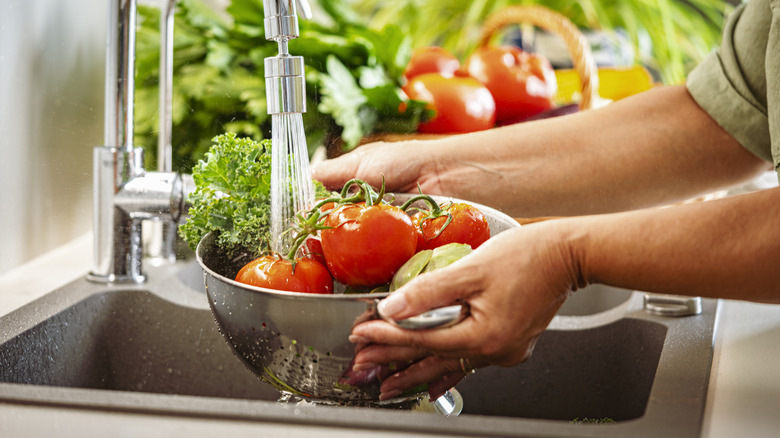
With so many reports of foodborne illnesses these days, we sought the expertise of food-safety expert Kantha Shelke, Ph.D., founder of food science and research firm Corvus Blue LLC, and a senior lecturer on food safety regulations at Johns Hopkins University. We asked Shelke for her take on the best ways to wash fresh produce to ensure it is free of the pathogens that cause foodborne illnesses.
"Cook anything that can be cooked. [Heating] to 158 degrees Fahrenheit (70 degrees Celsius) or above is the only reliable kill step for organisms that resist washing and sanitizers," Shelke states. That's a sobering reality, especially if you enjoy uncooked leafy greens in fresh salads. Unfortunately, no amount of washing can remove cyclospora, the parasite linked to a recent cyclosporiasis outbreak tied to the lettuce brand Taylor Farms. Cyclospora causes explosive diarrhea and has resulted in fatalities.
Alas, salads are one of life's greatest culinary pleasures in the West. For those of us who aren't ready to give up raw veggies, Shelke provides the best ways to wash eight types of fresh produce, starting with greens like cabbage, lettuce, and kale.
Time and patience are needed to properly wash leafy greens
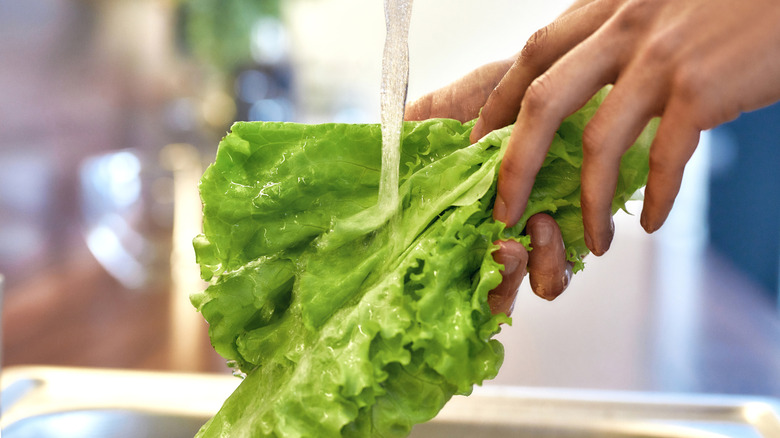
Simply running leafy greens under water isn't enough. Shelke suggests you "discard the outer two or three leaves." Then, separate each remaining leaf. This may test your patience, as the next step, per Shelke, is to "... rinse [each leaf] individually under running water. Rinsing a head [of lettuce] only on the outside is inadequate. Spin or pat dry." Note that this process primarily removes dirt, debris, and some bacteria, but, as aforementioned, not pathogens like cyclospora.
A food-safety expert does not want you to wash bagged pre-washed veggies at home
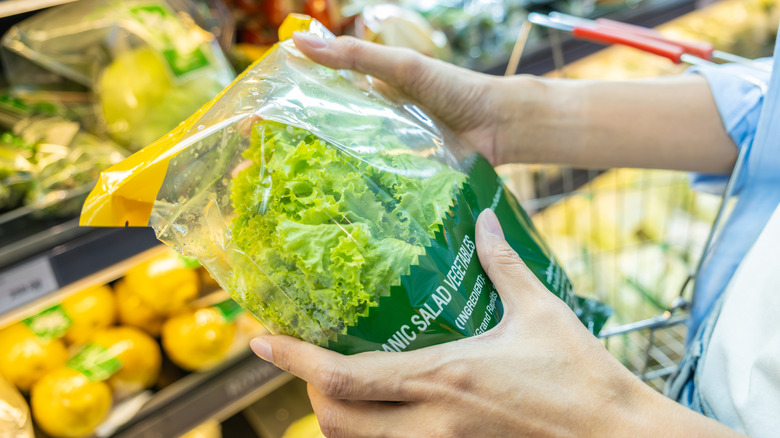
But what about bagged greens with labels that say they are pre-washed? Follow the instructions on the packaging, advises Shelke, adding: "Rewashing in a home sink is more likely to spread the contamination than remove it. As much as possible, choose whole heads over cut to avoid less upstream handling and contamination."
If you must use uncooked leafy greens in a dish, such as our everyday salad with herby lemon vinaigrette recipe, buy — and thoroughly wash — a fresh head of greens rather than the pre-bagged kind.
Always wash produce that have rind
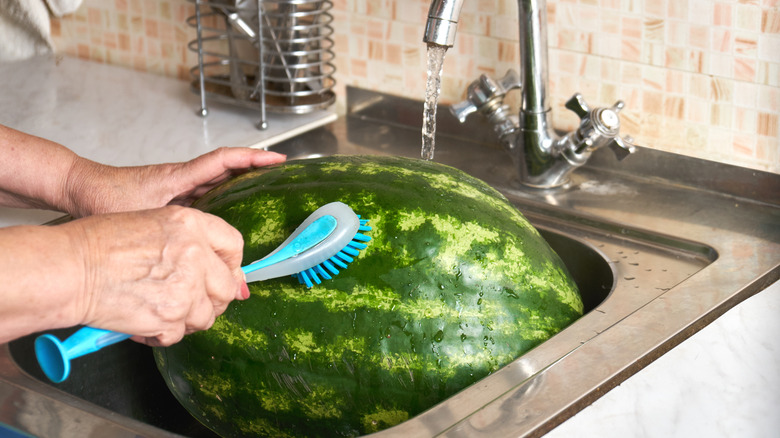
When produce comes with a rind — such as watermelon, melon, cucumber, avocado, squash, and pineapple — you might think you can skip washing. After all, that protective rind covers the inner flesh. The fact is, you should always wash them before slicing.
Shelke states, "Scrub the rind with a clean produce brush and pat surface dry before cutting. Melons are a repeat outbreak vehicle precisely because the knife carries rind contamination into the flesh."
For that reason, avoid buying precut versions. In 2018, a multi-state salmonella outbreak was traced back to precut melons.
A food-safety expert wants you to rinse, not soak, your berries
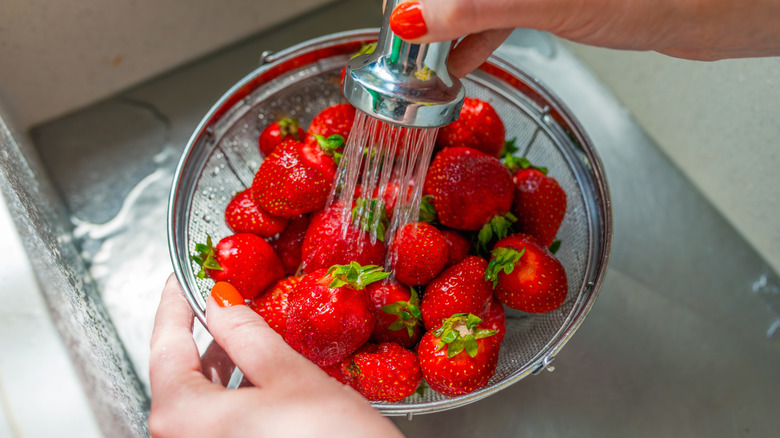
When it comes to berries and other delicate fruits, how and when you wash them matters. "Rinse gently under running water just before eating, not before storing, because surface moisture drives mold." These types of fruits should be completely dry before going in the fridge.
Shelke adds, "Don't soak because one sporulating berry can contaminate the whole batch. The surface texture on raspberries and blackberries often holds organisms that rinsing cannot fully dislodge."
Fresh herbs need to be double washed
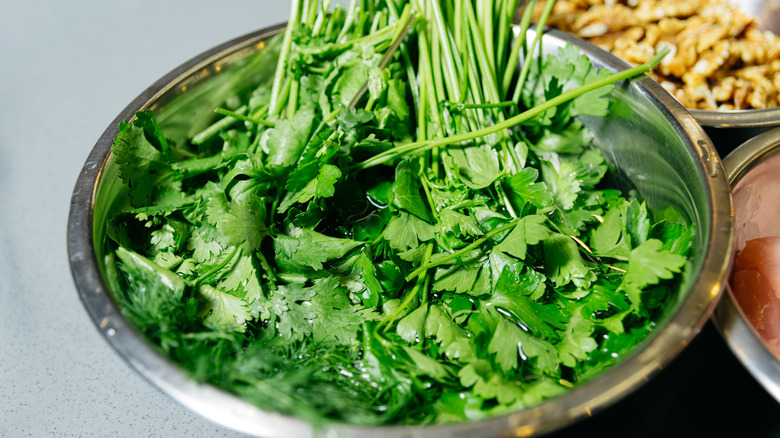
For those of us who enjoy fresh herbs, such as cilantro, basil, and parsley, Shelke suggests washing them twice. This is the only way to remove all traces of debris and soil.
"Swish in a bowl of clean water, lift out, discard the water, and repeat. Then rinse under running water. Field soil hides in the stems. Pat as dry as possible before storing."
Always wash tubers and root vegetables before peeling them
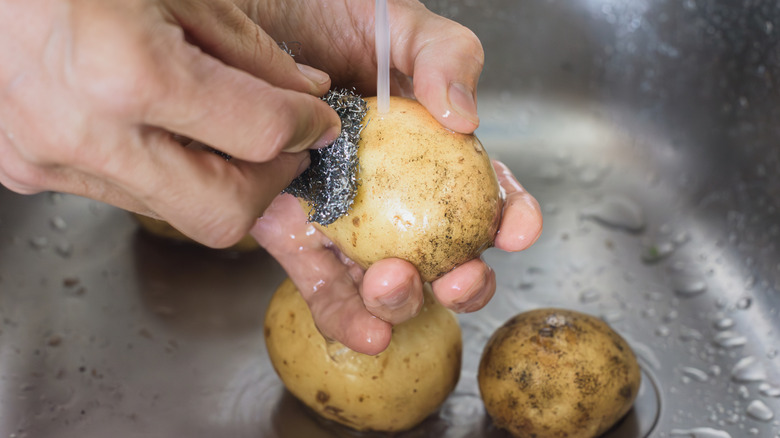
Like produce with a rind, root vegetables need a good washing. But unlike more delicate veggies, you don't have to wash root vegetables, tubers, potatoes, or sweet potatoes too gently, says Shelke. "Scrub [them] firmly under running water. Peeling helps, but only after washing." And don't worry, you can clean potatoes without a dedicated scrubber.
Mushrooms need a brief rinse or a wipe down with a damp cloth
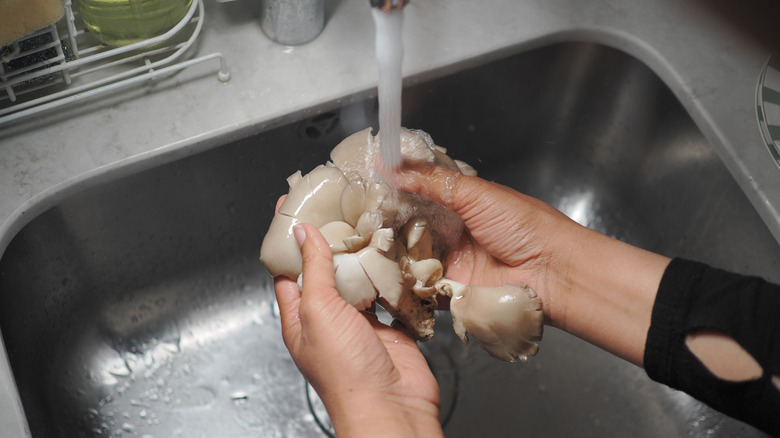
Now what about mushrooms? Shelke advises a "brief rinse or wipe with damp cloth just before use." Like with berries, you do not want to store wet mushrooms, as that can introduce mold growth in the refrigerator. It's also best to purchase whole mushrooms, rather than precut ones, at the supermarket.
A food-safety expert feels there's a produce that one must always cook
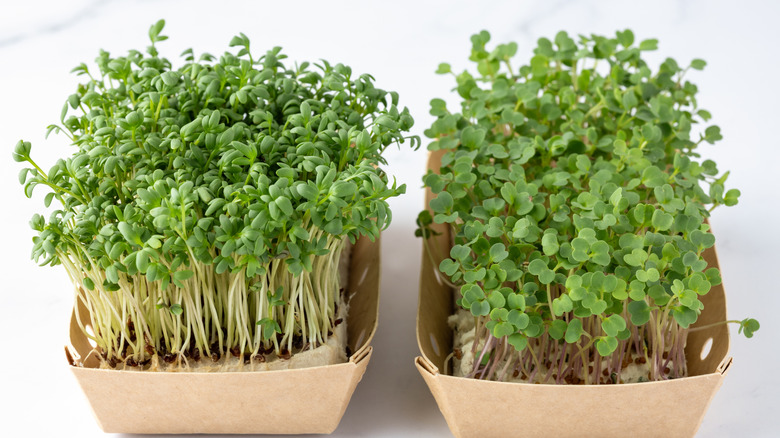
Finally, Shelke shares that one type of produce really should be cooked: raw sprouts and microgreens. "This is an important category to single out. The warm, humid germination conditions are ideal for pathogen growth, and washing does not fix it. Cook whenever possible. Higher-risk consumers should skip raw sprouts entirely," she says.
It is difficult to deter people from eating raw vegetables. With Shelke's advice, properly washing fresh produce may help reduce the risk of food poisoning. When in doubt, however, remember her first tip: cook the veggie. Consider making one of our 24 comforting, roasted vegetable recipes.