

The Lettuce Brand Tied To The Cyclosporiasis Outbreak Is No Stranger To Controversy And Recalls
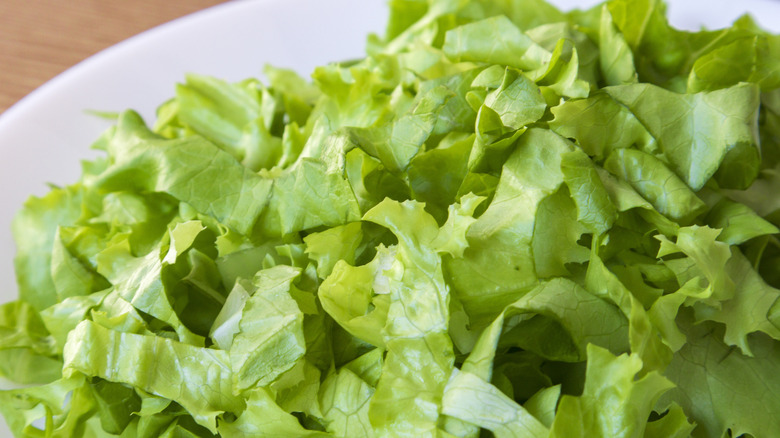
The summer of 2026 in America may forever be known as the season of an explosive diarrhea outbreak. On July 16, 2026, the U.S. Food & Drug Administration (FDA) launched an investigation on the outbreak of cyclosporiasis across five states, warning the public to avoid eating "shredded iceberg lettuce from Mexico served at Taco Bell locations... [including Indiana, Kentucky, Michigan, Ohio, and West Virginia]." Lettuce and other leafy greens commonly cause foodborne illnesses. Parasites found on contaminated lettuce can cause cyclosporiasis, and one defining symptom of the infection is watery, explosive diarrhea. Without antibiotic treatment, this non-life-threatening illness can persist for weeks.
Presently, no deaths have been reported. Federal health officials are still investigating the outbreak, "working directly with the identified supplier to determine if potentially contaminated shredded iceberg lettuce remains on the market." Taco Bell began pulling the lettuce from its products prior to July 16 as a precaution, and removed all potentially affected lettuce from its restaurants. While the FDA did not name the supplier in its statement, both The Washington Post and CNN have identified it to be Taylor Farms. Based in California, Taylor Farms is a leading produce giant supplying major grocery retailers and restaurant chains, such as Taco Bell, across the nation. But controversy and recalls have followed this industry leader before.
In 2024, Taylor Farms was linked to a McDonald's Quarter Pounder E. coli Outbreak
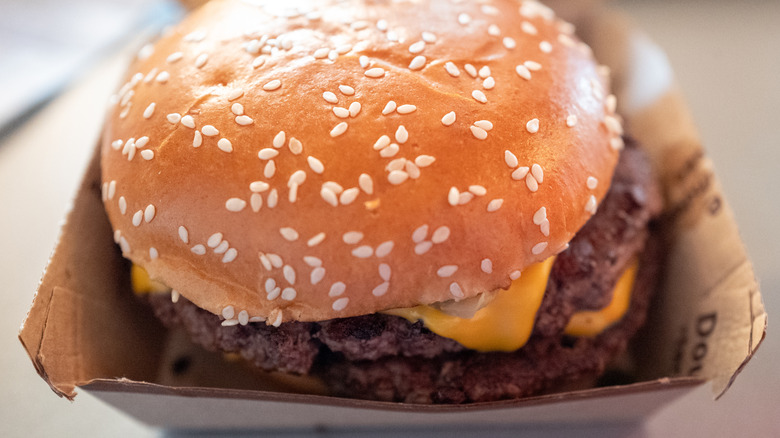
Back in 2024, federal health officials identified slivered onions found in McDonald's Quarter Pounders as the source of an E. coli outbreak (strain O157:H7) that sickened 104 people and caused the death of an older adult, according to The U.S. Centers for Disease Control and Prevention (CDC). McDonald's named Taylor Farms as its supplier of the contaminated onions, as reported by NBC. Subsequently, Taylor Farms recalled four of its onion products. Multiple fast food chains supplied by Taylor Farms, including KFC, Pizza Hut, and Taco Bell, also pulled onions from their products as a precaution.
The FDA performed an inspection of a Taylor Farms' facility in Colorado Springs, Colorado. Dirty and wet equipment and inadequate handwashing practices were reported among other troubling food safety regulation violations, such as Listeria on work surfaces. Interestingly, the FDA had redacted portions of its inspection findings before releasing them to the public. Plus, the inspection resulted in no administrative or regulatory action, as well as no fines. This begs an uncomfortable question: Was the FDA protecting the public, or shielding one of the produce industry's biggest suppliers?
In 2022, Taylor Farms issued a voluntary recall of a Trader Joe's salad kit
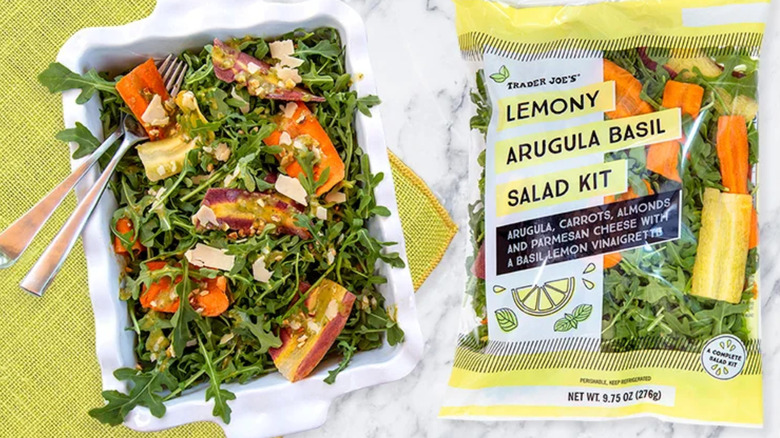
In 2022, Taylor Farms issued a voluntary recall of one of Trader Joe's products, its Lemony Arugula Basil Salad Kit. Trader Joe's is no stranger to big food recalls in its history, but this time, the reason was not because of pathogens found in contaminated food. This particular kit was recalled because it potentially included undeclared wheat and eggs.
Both wheat and eggs are part of the nine major food allergens that U.S. labeling law regulates. When brands fail to label any of the major food allergens on their products, such as salad kits, the consumers with food allergies and sensitivities end up suffering. Unknowingly consuming wheat poses a real risk to consumers who have gluten sensitivities or celiac disease. For consumers who are allergic to eggs, accidentally consuming eggs can lead to fatal food anaphylaxis or a serious allergic reaction.
This was not the last time Taylor Farms had had to issue a recall of one of its products due to mislabeling or label omissions. In 2025, it recalled its Honey Balsamic Salad Kit. The kit may have included sesame and soy products; both are considered to be major allergens, and they were undeclared on the labeling.
Taylor Farms recalled chicken and pork salad products in 2017 due to Listeria contamination
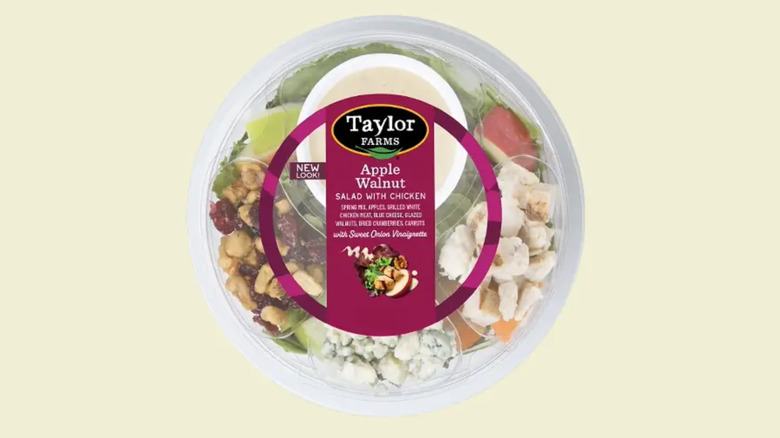
Going back to 2017, the U.S. Department of Agriculture's Food Safety and Inspection Service (USDA) announced that two Taylor Farms establishments were voluntarily recalling thousands of pounds of chicken and pork salad products. Here, the recall came about due to possible contamination with Listeria monocytogene, a pathogen that causes an infection called listeriosis. Symptoms of listeriosis include headache, confusion, diarrhea, and fever.
For older adults and people with weakened immune systems, Listeria can be life-threatening. It can also cause miscarriages and stillbirths for pregnant people. Historically, there are a plethora of food product recalls to prevent Listeria outbreaks. In fact, many of the biggest ice cream recalls in U.S. history were due to Listeria contamination. Of note, the Taylor Farms chicken and pork salad product recall in 2017 added to a pattern of food safety concerns connected to the brand. Listeria, as you may recall, was found on surfaces at a Taylor Farms facility during the FDA inspections tied to the 2024 McDonald's E. coli outbreak.
In 2015, Taylor Farms recalled its celery and onion diced blend used in Costco chicken salad
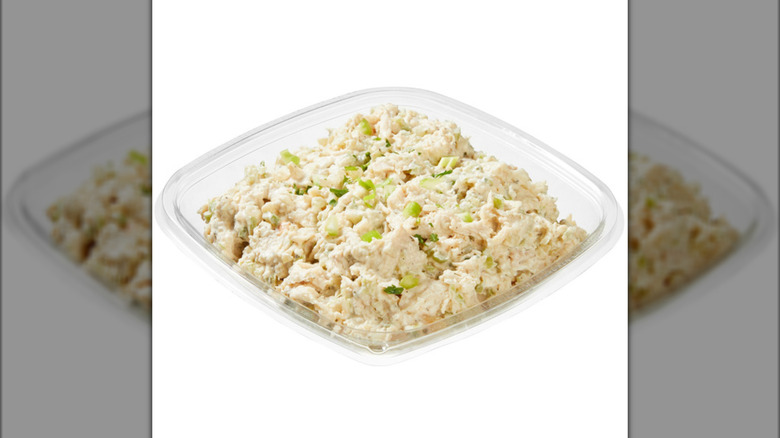
In 2015, Costco recalled its Rotisserie Chicken Salad due to a related E.coli outbreak that sickened 19 people in the U.S. across seven states. Included in this chicken salad product was a celery and onion diced blend sourced from Taylor Farms. As per the CDC, "the Montana Public Health Laboratory tested a sample of celery and onion diced blend produced by Taylor Farms Pacific, Inc. and collected from a Costco store in Montana. Preliminary results indicated the presence of E. coli O157:H7."
Despite the report, further testing by the FDA was inconclusive. Still, due to precaution, Taylor Farms voluntarily recalled its celery and onion diced blend. E. coli infections typically cause bloody urine, bloody or watery diarrhea, vomiting, fever, and severe stomach cramps. The illness can also trigger hemolytic uremic syndrome (HUS), a type of kidney failure. During the 2024 E. coli outbreak with contaminated onions from Taylor Farms, about four people developed HUS.
Taylor Farms was at the center of another cyclosporiasis outbreak back in 2013
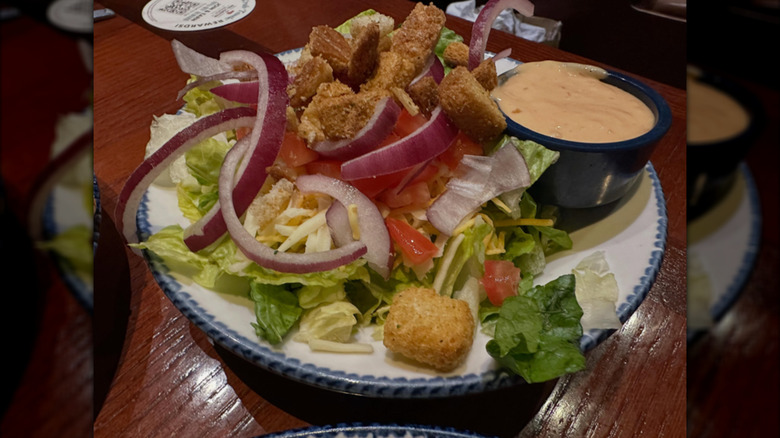
Over a decade ago, in 2013, Taylor Farms (specifically Taylor Farms de Mexico) was at the center of another cyclosporiasis outbreak. This outbreak affected 400 people with 22 requiring hospitalization. Federal health officials linked the outbreak to contaminated bagged salad mix that Taylor Farms supplied to large restaurant chains such as Red Lobster and Olive Garden. After this 2013 outbreak, the FDA issued no administrative or regulatory action, similar to what happened after the 2024 E. coli outbreak.
It is now 2026 — 13 years after Taylor Farms was first connected to a cyclosporiasis outbreak — and consumers are once again dealing with an outbreak that comes with explosive diarrhea. The public often quickly blames restaurant chains when outbreaks and foodborne illnesses occur. Taco Bell, a customer of Taylor Farms, ends up dragged in the headlines and on social media, for example. But perhaps it's time that the leading produce suppliers absorb the scrutiny and be held accountable instead.