

What Causes Weber Gas Grills' Temperature Regulation Problems
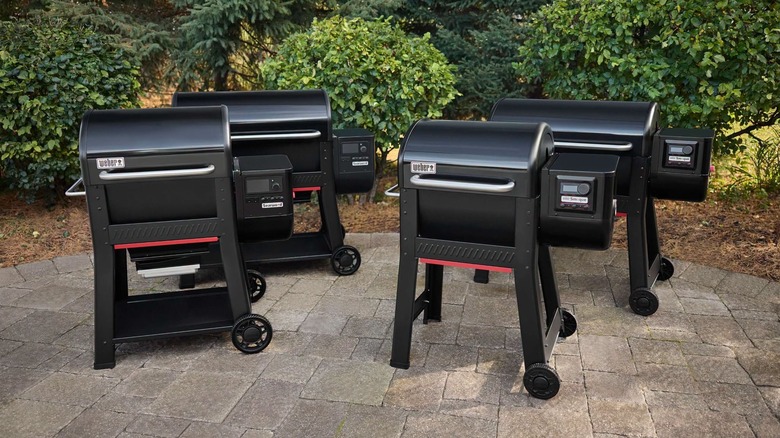
Weber gas grills are generally reliable, but like any other major cooking appliance, they can experience problems. One common complaint among owners is that they don't get hot enough or that users have trouble regulating the temperature. If you're dealing with hot and cold spots on your grill, a burner that won't ignite, or low temperature problems, there are a few potential culprits.
The most likely reason that your grill won't heat up to the optimal temperature, won't stay lit, or doesn't heat evenly is a damaged or malfunctioning gas regulator. Another common issue with Weber grills is that they can enter bypass mode, a safety feature designed to restrict propane flow when the tank valve is opened and burner control knobs are on. Other potential causes are improper operation of the burner control knob, clogged or dirty burners or Flavorizer bars, or low gas pressure.
Because the average lifespan of Weber gas grills can be up to 15 years with proper care and maintenance, it's worth it to repair problems rather than just buy a new appliance. If you're facing frequent issues, the first things to check are the burners and the regulator. You'll want to clean your grill to remove grease, food particles, or other debris that could affect its performance. You can then run through some simple troubleshooting steps to pinpoint the reason why your Weber gas grill isn't getting hot enough or staying hot. Here's a closer look at the five most common reasons.
The gas regulator is damaged or malfunctioning
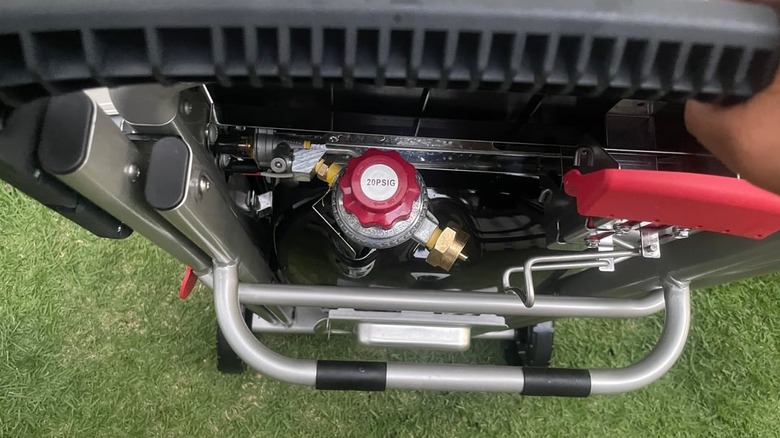
One common mistake folks make with propane grills is failing to regularly inspect and maintain their parts, particularly the gas hose and regulator. The gas regulator is attached to the hose and is a crucial safety and fuel flow control device. It reduces pressure from the fuel line to the grill and ensures fuel flow and pressure are steady and low enough to operate the burners safely and evenly. If the regulator is damaged or malfunctioning, it may reduce flow too much, making it hard to light burners or keep them lit. This can happen when the regulator is old and has suffered from normal wear and tear, or if exposed to extreme temperatures or direct, prolonged sunlight.
Inspect the regulator and hose and make sure all is securely attached to the natural gas line or propane tank. The interior shutoff valve should be fully in the open position. If it is, consult your owner's manual and reset the regulator. Turn the grill off, close the valve, and disconnect the regulator from the hose. Open the grill lid and turn on all the burners to clear out any remaining gas from the lines. Wait a few minutes and then reconnect everything. Slowly turn the valve until it is fully open and then wait another minute or so before lighting. If that doesn't work — or if you notice the regulator making a humming noise or hissing or spitting — it will need to be replaced.
Your propane grill is in bypass mode
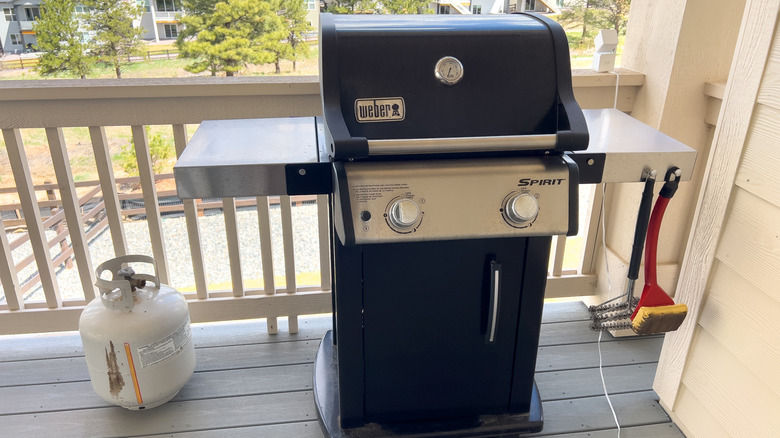
If your propane tank is full but your grill won't light or has cold spots, it may be in bypass mode. This is a safety feature that restricts propane flow to the grill by 10%, per Weber. It's triggered when the valve is opened too quickly or when the burners are on. This makes it hard to light the burners and prevents the grill from getting hot enough.
The first thing you should do is to check the manual to confirm how to perform a leak test on your gas grill. Turn off the grill burners and the shutoff valve and disconnect the hose and regulator. Inspect all parts for signs of damage; if you don't see any obvious problems, reconnect everything. Make a 50-50 mixture of water and mild dish soap and put it in a spray bottle. Spray liberally on the hose, regulator, and connectors before turning the fuel supply back on. Check every component of the assembly for bubbles. If you see any, retighten all connections and perform the test again.
If there is no leak, open the lid and turn on the gas supply. Wait a few seconds to allow the gas pressure to build up and then turn on the burners to the highest position and ignite them. Then, close the lid and wait for about 15 minutes for the grill to heat, then check its temperature. Be sure to consult your owner's manual beforehand. This should knock the grill out of bypass mode.
The Flavorizer bars or burner tubes are clogged
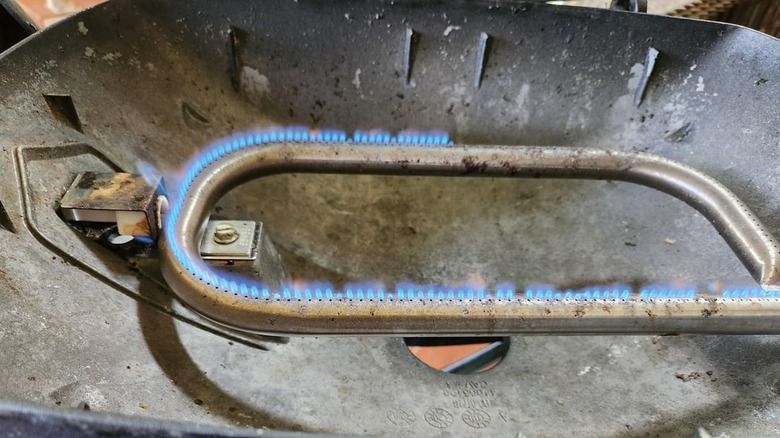
The Flavorizer bars and burner tubes are hidden parts of your grill you may be forgetting to clean regularly. The burner tubes are hollow metal pipes located under the grill grates that ensure proper fuel flow and maintain a consistent cooking temperature. If you use your grill regularly, the burner tubes will quickly develop a buildup of grease and residue, which will affect its performance. The gas or propane flow will be restricted, causing low temperatures, hot spots, and flames that appear yellow, orange, weak, or uneven.
The Flavorizer bars are V-shaped metal shields that sit above the burner tubes and below the grill grates to catch grease, food debris, and drips. This prevents damage to the burner tubes, reduces the risk of dangerous flare-ups, and distributes heat more evenly across the grates. These bars also vaporize grease and juices, which contribute to the smoky, grilled quality of your food. When they get dirty, there is a greater risk of poor grill performance resulting in uneven heat and flare-ups that cause burnt or poor-tasting food.
To clean the burner tubes, turn off the grill, remove the Flavorizer bars, and run a wire brush up and down across each tube. You can use a pipe cleaner or straw cleaner to clear debris out of the ports and remove and wash them with mild dish soap and warm water if they need a deeper clean. The Flavorizers can be removed and gently cleaned with a plastic pan scraper or wire brush.
You're turning the burner control in the wrong direction
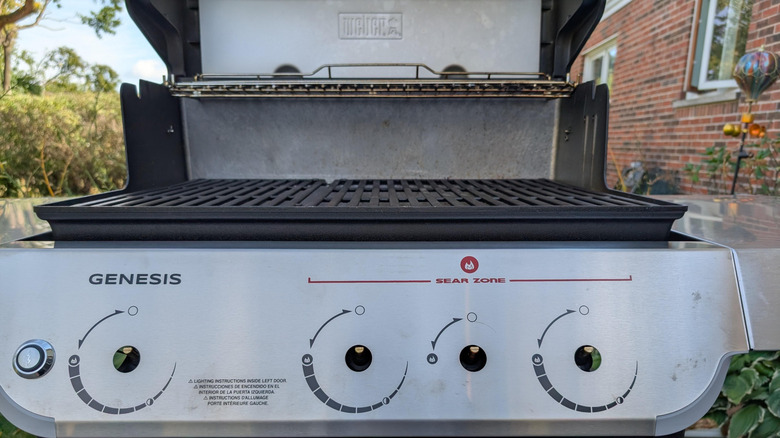
One of the reasons Weber Grills are so expensive is that they are designed with precision and made from high-quality materials. Yet, that doesn't always translate to an intuitive user experience. It may seem silly, but one common reason that Weber grills don't get hot enough and users find it hard to regulate the temperature is the way the burner control knobs function.
Most are used to turning a knob to the right (or clockwise) to increase output. However, Weber knobs operate like those on a gas range. Most models feature a control knob with four settings: off, low, medium, and high. The high setting is actually located in the position you would typically think was associated with on or start.
This means that as you turn the knob to the left, you're actually turning the fuel and flame down lower and lower. If you aren't familiar with this unique configuration, it's easy to mistakenly set your grill to a very low temperature. Fortunately, this issue is the simplest one to fix. Read the settings on the knob or check your grill manual to make sure you're turning the knob to the appropriate heat level.
The natural gas pressure is too low
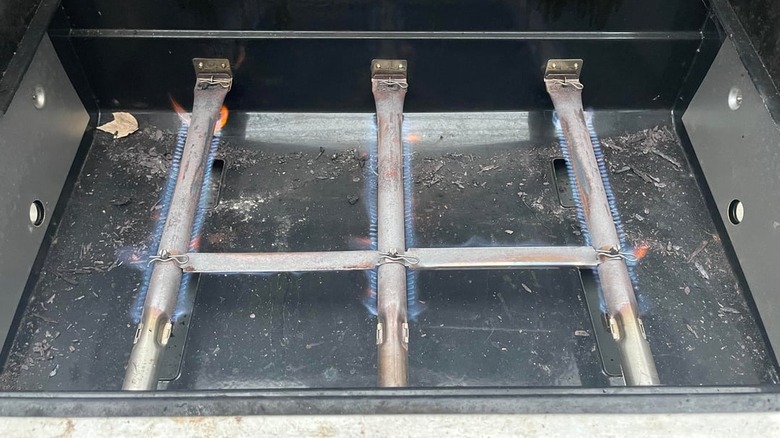
One gas grilling mistake to avoid is neglecting to inspect your gas supply hose and connections regularly for signs of leaks, damage, or low pressure. Most Weber natural gas grills require 7 inches of water column pressure for proper function. When that pressure drops too low, the grill won't get hot enough and your burner won't reach its highest temperatures. You may notice small, flickering blue-yellow flames, or that turning the burner control knob doesn't affect the size of the flame.
The most common reasons for low gas pressure are under- or oversized gas supply lines, a dented or broken bridge, or too many gas appliances connected to the same line. To troubleshoot this issue, make sure that the supply line valve is in the on position and the burner control knobs are turned to high. Next, inspect the gas hose and bridge, which is located at the end of the hose. A broken or damaged bridge will reduce gas pressure. Determine if the gas supply line and hose are connected by a flare fitting, as that can damage the bridge.
If these areas aren't causing the issue, you may need to call a plumber or your gas company to have your supply lines inspected. There may be a leak, damage to the main gas line, or too many appliances connected to the same line. A professional can also test the water column pressure to ensure it is not too high or low and repair any issues they find.