

The 10 Biggest Changes Texas Roadhouse Has Made Since Opening In 1993
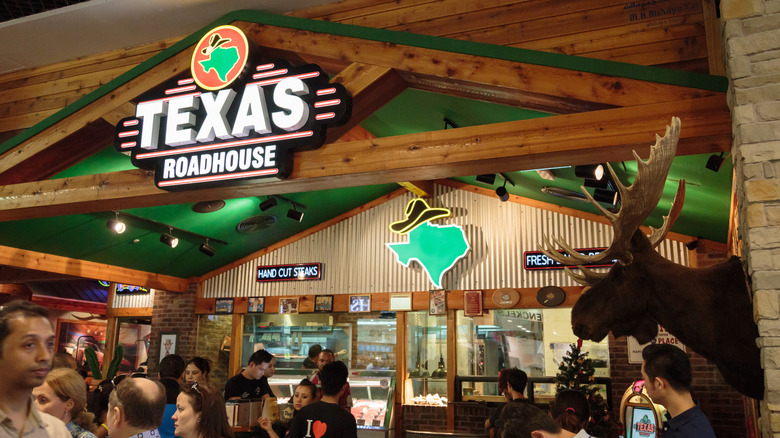
Texas Roadhouse has been around for all sorts of cultural and historic events. The first restaurant even opened before surfing the internet became public on the world wide web. While a new millennium went on to birth smartphones and social media, the chain steadily increased its nationwide footprint, while striving to offer the same quality of service that started in Indiana. As sure as many things have stayed the same, like key words servers have to say, operating a business across four decades has also brought big changes for the now-international steakhouse brand.
Whether accounting for its customers or employees, a common theme in the story of Texas Roadhouse is putting people first. Though sometimes playing out in ways unseen to the general public, fostering a caring workplace has meant tens of millions of dollars in spending. Expanded reach with new chains and retail offerings has supported such philanthropy and, on more than one occasion, has helped Texas Roadhouse overcome challenges.
Friendship led Willie Nelson all-in (2002)
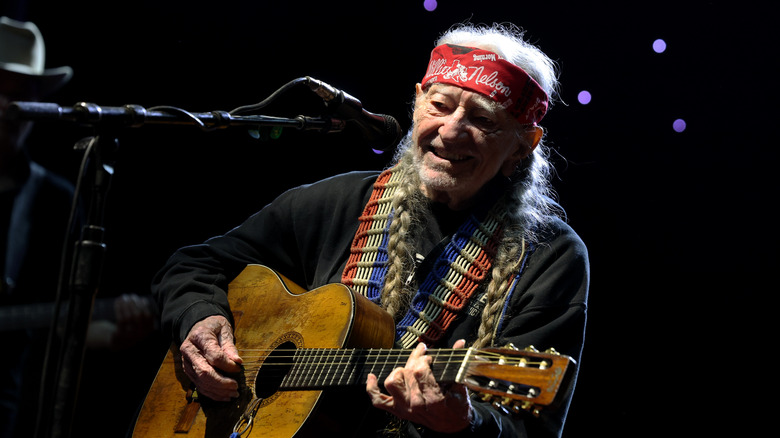
In 1978, a duet with Waylon Jennings famously found Outlaw Country superstar Willie Nelson advising mammas against letting their babies grow up to be cowboys. More than two decades after the cover song, a new friendship featured the musician covering Texas Roadhouse's message, undoubtedly inspiring some to become roadies instead. After first meeting the steakhouse chain's founder Kent Taylor at a Farm Aid benefit concert, the philanthropic entertainer and the entrepreneur sparked up a friendship.
Time spent playing poker together led Nelson to become a spokesman for Texas Roadhouse in 2002. On top of appearing in commercials for the chain, Nelson became part owner of his own franchise location in Austin, Texas in 2004. While that location may be uniquely Nelson's, each steakhouse includes a special booth honoring the legendary country star, aptly dubbed Willie's Corner.
Of course, while Nelson's friendship with the late founder left an indelible mark on the seating, it isn't the only nod to the musician. Regular diners likely have noticed some servers adorned with a bandana and braids. The trademark style of Nelson is a wearable accessory for employees that has even been featured in memorabilia like the 2025 limited edition ornament. Further, Nelson has a connection to the Texas Roadhouse Armadillo mascot after the disappearance of his own mounted Ol' Dillo prompted Taylor to offer a $1,000 gift card reward for its return.
Roadies received a helping hand (2003)
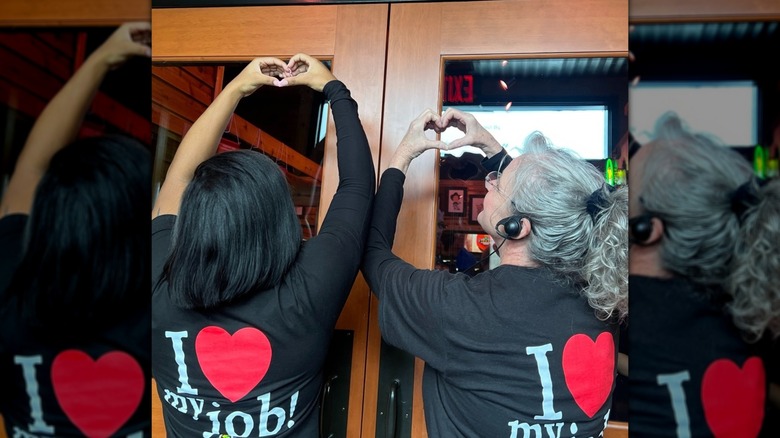
For many companies, benefits look like sick leave, paid time off, and 401(k) matching. As great as those are, few people experiencing life-altering events are able to recover with something like eight hours of wages tacked onto their paycheck. It was just such a situation that inspired the creation of Andy's Outreach, when then-CEO G.J. Hart met an employee during training in 2000 who died shortly thereafter.
An internal fundraising effort to cover the expenses of James Bryan's funeral and to assist his family, including five surviving children, became the catalyst for the 2003 creation of Andy's Outreach. Establishing an employee contribution fund, Director of Care & Concern Dee Shaughnessy's early individual efforts were turned into a formal non-profit in 2005. The following year, a Texas Roadhouse location was opened in Logan, Utah, from which 95% of profits help fill the fund for Roadies dealing with things like natural disasters, family emergencies, illness, injury, or other financial hardships.
Over the years, more than 25,000 Texas Roadhouse employees have been helped by the distribution of over $33 million. Growth of the fund has allowed for Roadies to make contributions directly from their paychecks. What's more, before his passing in 2021, founder Kent Taylor made a tremendous contribution of $5 million to the fund, in addition to donating his personal salary and bonus (over $800,000) during the COVID-19 pandemic to ensure loss of business would not result in employee layoffs.
Line dancing became more than simply fun (2007)
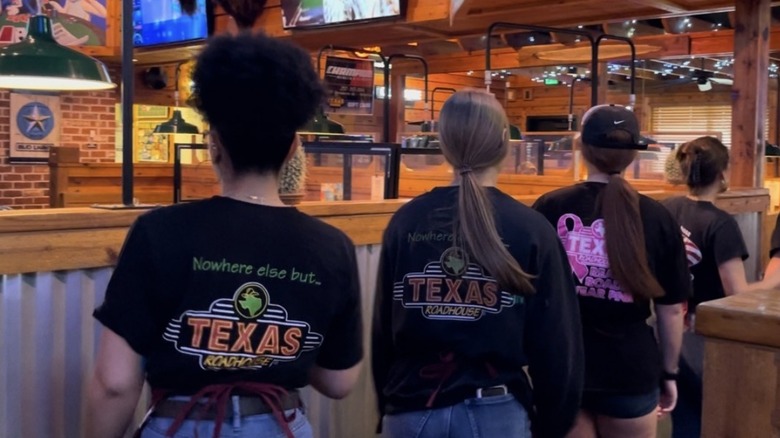
Anyone who's dined at a Texas Roadhouse is familiar with the boisterous atmosphere. The restaurant has music pumping, televisions playing, crowds of people, and line dancing like clockwork. Regulars might be aware that the lively entertainment is a built-in food service strategy to stave off customers from hogging tables who camp after their meal. They may also know participation is not optional for employees. What may have been kept hidden is that the chain keeps things competitive with an annual dance-off.
Dating back to 2007, employee line dancing teams from around the country have shuffled, box stepped, and chasséd their way through a tournament. In 2026, the best of the best made their way to the RISE (Roadies Impacting Stores Every Day) event in Boston to compete along with a Battle of the Bartenders and a Meat Cutter of the Year event. Like anything, there are some sourpusses who aren't keen on the dancing, but many employees love the opportunity to blow off steam during a shift and strive to win the annual competition.
The Roadhouse took Texas overseas (2010)
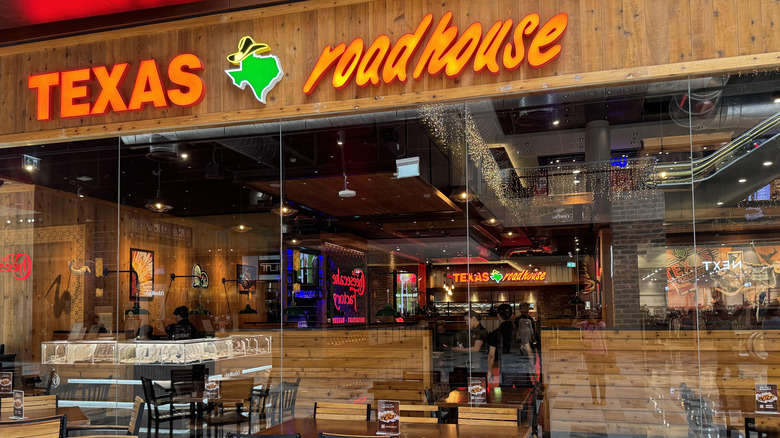
Success in the restaurant industry isn't even remotely guaranteed, and neither is growth. While many brands remain regional and a number of steakhouse chains have permanently closed their doors, Texas Roadhouse has beaten the odds. As of 2026, the pairing of a personally-selected steak and fresh-baked rolls can be enjoyed throughout the United States. But what of steak lovers outside the country?
For nearly two decades, Texas Roadhouse kept things domestic. That is until 2010, when a franchise agreement was struck with what was then known as the M.H. Alshaya Co. The Kuwait-based enterprise, since called Alshaya Group, holds a broad portfolio of brands like American Eagle, Ulta Beauty, and the Disney Store with stores in Africa, Europe, and the Middle East. The latter region is where the franchisees agreed to open 35 Texas Roadhouse restaurants within a decade, spread out across eight different countries. Since the agreement was made — and the first international location opened in 2011 — the chain has reached 10 foreign nations with dozens of restaurants.
Smartphones prompted a mobile app (2011)
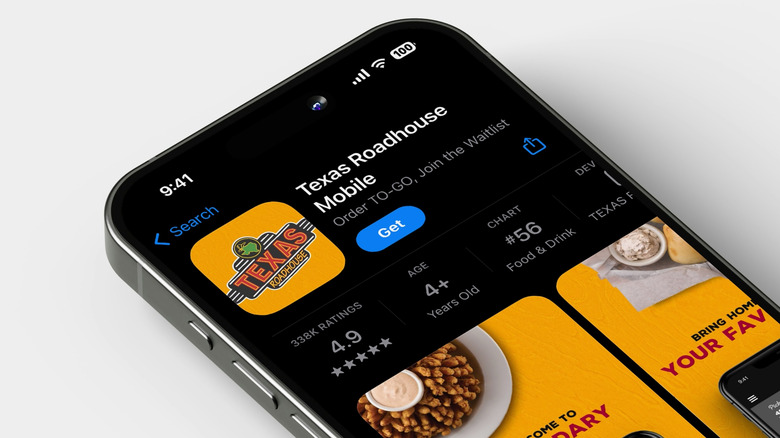
In 2007, the Steve Jobs-led Apple set the stage for dramatic changes in how everyone communicates and interacts with the world. The first generation iPhone was introduced and, soon thereafter, companies from all industries were stepping forward to announce, as the tech giant suggested, "There's an app for that." This included Texas Roadhouse. By 2011, the steakhouse chain began encouraging "true Texas Roadhouse Roadies" with either Apple or Android devices to download its mobile app.
Efforts at advancing convenience and functionality have resulted in an array of features that can cut down on waits and leave more time for food and fun. On top of pinpointing the nearest Texas Roadhouse, you can browse the menu and, if you don't plan on dining in, make your selection for an order to-go. Those intent on having the full restaurant experience can do so free from worry about a crowd around the host stand. Instead, you can use the app to get your name on the waitlist ahead of time. The app is also an easy path to sign up for Texas Roadhouse's VIP Club for access to rewards and offers.
Growth inspired ventures into the fast casual market (2013)
As the second decade of the new millennium got underway, Texas Roadhouse already reached more than 40 states and inked a deal for expansion to international markets. But its plans for growth were truly only just getting started. Before tapping the potential of fast casual, American favorites in a "lively atmosphere without sacrificing quality food" became available when Bubba's 33 first opened in 2013. The sports bar came about after founder Kent Taylor opted to sell a second steakhouse brand, Aspen Creek, a few years earlier. Offerings like burgers, pastas, pizzas, and wings placed the chain directly in competition with established brands like Applebee's and Buffalo Wild Wings.
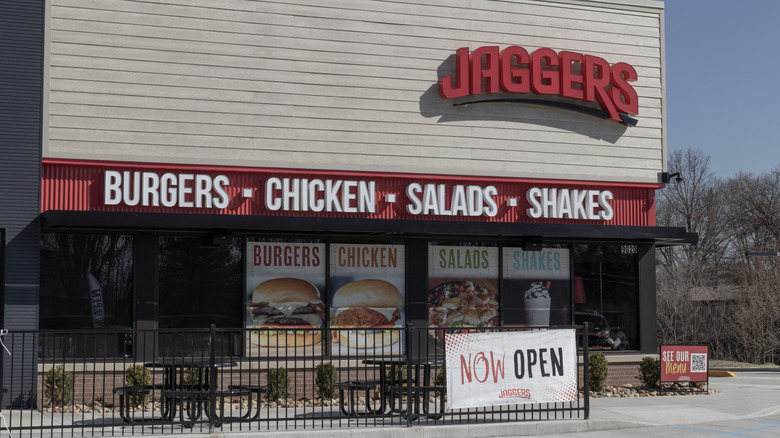
Taylor wasn't through growing, even with Bubba's 33 still in its infancy. In 2014, burgers and milkshakes took centerstage with the launch of Jaggers. With the name inspired by his serial entrepreneur uncle, the Texas Roadhouse founder endeavored to bring consumers a chain likened to an offspring between Chick-fil-A and Five Guys. He also made clear from the onset, whether ordering a burger, salad, or chicken, diners were to expect any meal brought to their table to be a star in its own right.
Corporate sustainability focused on putting people first (2017)
In addition to serving in-house butchered cuts of red meat, Texas Roadhouse set to work with a different kind of stake in 2017. It was that year that the restaurant chain produced its first Corporate Sustainability Report focusing on the future through its four pillars: food, community, employees, and conservation. Half the mission puts direct attention on people, and for years has played out in policies and charitable giving.
On top of expectations from vendors where it concerns human rights, Texas Roadhouse holds itself to a high standard, routinely seeking anonymous feedback on the company's culture. It also aims beyond the standard benefits to provide leadership and development opportunities for Roadies, including an English as a second language program. While you've already heard of late-founder Kent Taylor's generosity during the COVID-19 pandemic, the same drive to give back permeates the chain's model. Almost $42 million in donations were handed out through financing and food to local organizations in 2025 alone. As for charities Texas Roadhouse supports, it has continued to expand its portfolio of giving over the years, aiding the Special Olympics, Home For Our Troops, Refuge for Women, and more.
A nursing mother brought about corporate-wide training (2018)
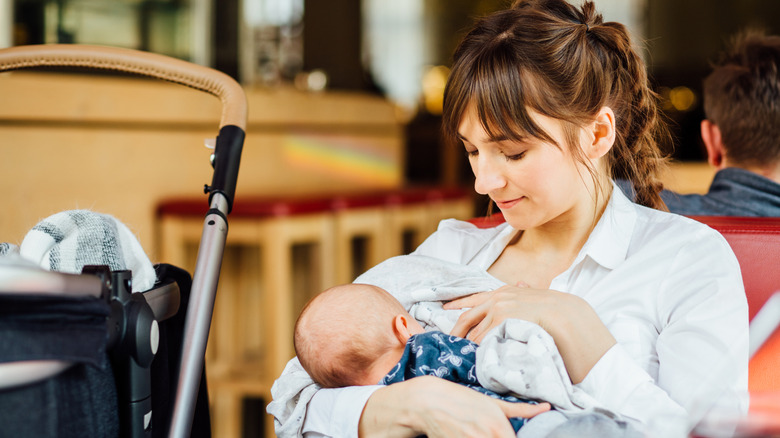
Over time, strides have been taken to decrease challenges for nursing mothers, including simple steps toward accessibility. This can mean privacy pods in public spaces — like the first installation of a lactation station at an airport in Vermont in 2013 — or legislative efforts. Even though the majority of states now exempt breastfeeding from public indecency laws, lack of familiarity with laws and provisions led to a 2018 lawsuit in Kentucky. Additionally necessary training for Texas Roadhouse employees followed, and during one of the occasions, the chain made headlines it probably didn't want.
That year, Sadie Durbin filed a lawsuit against Texas Roadhouse after customer complaints reportedly led a manager to ask the nursing mother to cover up. The Bluegrass State has allowed for the right to breastfeed anywhere in public or private since 2006. In addition to a petition supporting Durbin's complaint, reported by LEX News, the mother was backed by the non-profit advocacy group La Leche League of Louisville. Its social media shared an update on how the solidarity with the mother resulted in apologies, a fundraising effort, and training throughout the entirety of the steakhouse chain to ensure the rights of mothers are honored and protected.
Peanut shells were swept into the dustbin of history (2019)
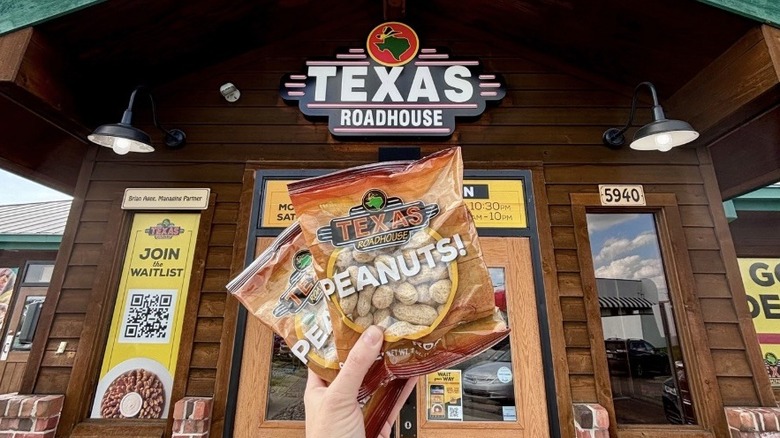
It used to be that the trip from the entrance to your table at a Texas Roadhouse would be accompanied by the singsong of crunching with every step. Newcomers to the chain may not believe that — in an era of health and safety concerns — it was long commonplace to discard the shells of complimentary peanuts right where you sit. While COVID-19 reshaped many business operations, shifting toward single-serve models over communal goods, Texas Roadhouse was ahead of the curve when it made the move to rethink its entry barrels and tabletop buckets of peanuts.
Given the prevalence of peanut allergies, amounting to more than four million American adults according to a study published in the Journal of Allergy and Clinical Immunology, it only makes sense to take precautions. In 2019, buckets were abandoned for bags only available upon request. As for those holding fast to the old traditions, discarding shells onto the floor has become an outlier in many places and is more likely to be forgotten to history than to make a resurgence.
Franchise favorites found their way to store shelves (2024)
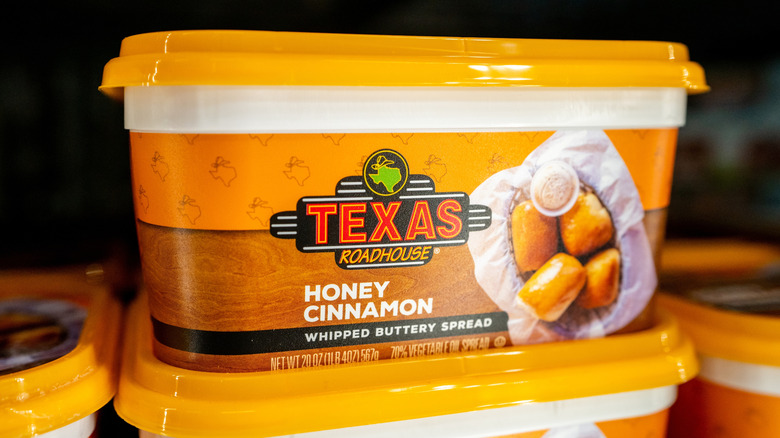
For most restaurants, options are limited to dining in or taking your meal to go. In 2024, Texas Roadhouse decided to add a third path for fans when it first introduced at-home products. To start, options were limited to the beloved rolls and a spread similar to the chain's honey cinnamon butter. Initially exclusive to Walmart, the mini rolls stocked the freezer aisle and came with their own honey cinnamon glaze. Likewise, though not actually butter, refrigerators were loaded with the honey cinnamon whipped buttery spread as a comparable pairing. As of 2026, the buttery spread started cropping up in Costcos.
Texas Roadhouse could have stopped there, but new partnerships presented ways to expand the market for at-home goods. In 2025, an arrangement with West Madison Foods meant the launch of three dips. Designed to replicate the taste of appetizers at the steakhouse, the flavors include the Cactus Blossom Dip, the Fried Pickle Dip, and the Rattlesnake Bites Dip. What's more, two kinds of steak sauce were released to match the flavors at the table and happy hour was brought home with the Legendary Margarita Mix.