

12 Old-Fashioned Southern Snacks That Everyone Still Enjoys Today
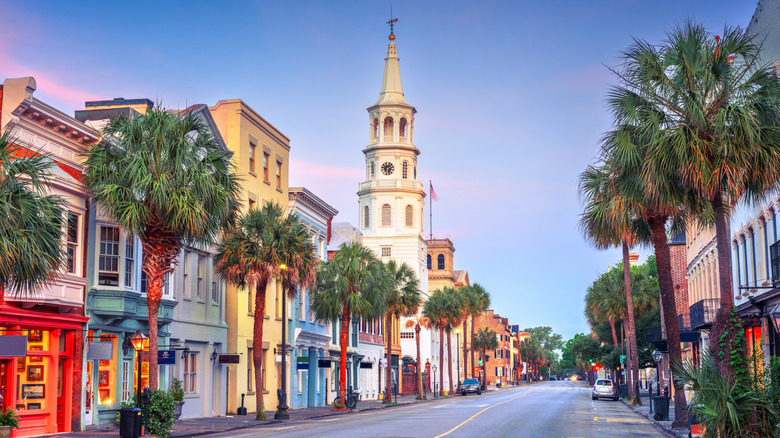
If you take a drive across the American South, you'll come across ancient mountains and orchards, flatland fields and rolling farmland, and thousands of miles of shoreline along the Atlantic Ocean and Gulf Coast. This diversity in land, as well as in its population, is a big reason the region's food culture is so distinct — from Appalachia's old-time pickling foodways to the traditions of the coastal Gullah Geechee — the history of the South's cuisine is a storied one.
The South's culinary past is rich and complicated, shaped by immigration, migration, and family traditions held together with deep roots. Irish and German immigrants arriving at and before the turn of the 20th century often chose Southern states as their first American home, folding their European customs into a space simmering with rich and ancient African and Indigenous influences.
Recipes are handed down across the South, creating a form of edible storytelling told through foods like paprika-topped deviled eggs and grape jelly meatballs (more on those later). The South's snacks, in particular, reflect a history of resilience, diverse cultures, and place-based eating habits that, no matter where you're from, you can appreciate. Here are some old-fashioned snacks that Southerners still eat, and enjoy, frequently.
Peanuts in Coke
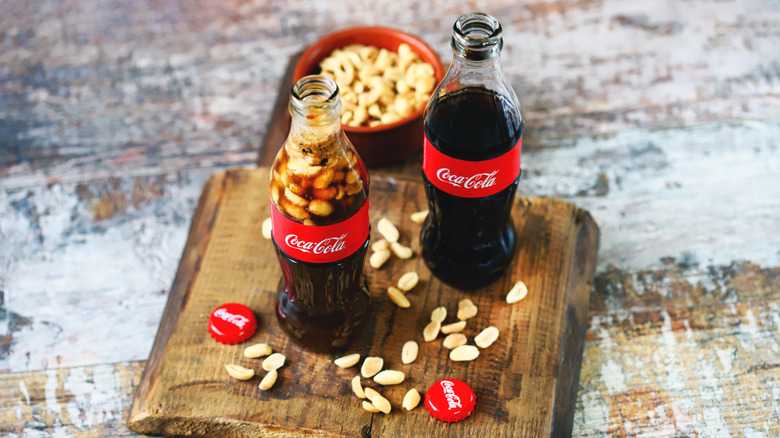
Peanuts and Coke is a snack that many Southern families love, especially when summer starts to creep around, appearing in hands around the same time when the sprinklers turn on, and the school year ends. However, the duo actually started out as a working man's meal.
Some call this Southern pair a farmer's Coke, reflecting its ability to satiate working people who might need to eat and drink quickly during breaks. The peanuts offered protein, while the Coke brought refreshment, and admittedly, a boost of sugar (or even another ingredient that was in Coke in the middle to late 1800s). This legendary combination is said to have initially appeared when vendor wagons would sell food and drinks to workers outside of textile mills, before vending machines existed. The practice of putting the two together eventually became widespread across the region, with folks, working or not, enjoying peanuts and Coke.
For this Southern snack, it's very important to use salted and roasted peanuts, as well as full-sugar Coca-Cola. The mix of the ultra-salty crunchy nuts meeting the ultra-sweet fizzy soda is a combination that's impossible to properly achieve otherwise. Expect to partly drink and partly chew this nostalgic food you probably ate growing up in the American South, even though the nuts do soften a bit after sitting in the cola.
Pimento cheese
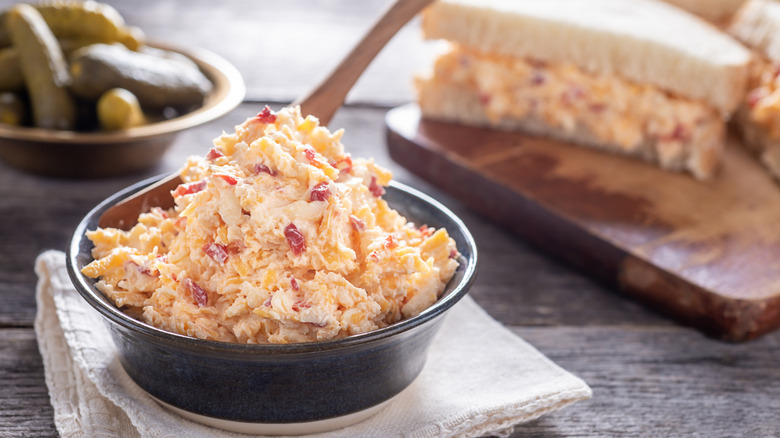
Pimento cheese is a Southern staple with a history that begins in New York of all places, when Upstate farmers there created American Neufchâtel, the predecessor to cream cheese. During that same era, canned imported Spanish peppers were gaining popularity in American dishes, with their bright color and convenience factor. In 1910, the first pimento and cream cheese combination was documented in a publication called "Fancy Cheese in America," in a recipe for Pepper Cream Cheese.
By the 1920s, farmers in Georgia became the top American pimento producer after noticing the pepper's popularity, and experimenting with the crop. During this same period, pimento cheese was growing as a convenience food nationwide. With pimentos from the South supplying most of the namesake pepper for American-made pimento cheese, it was only natural that the South became synonymous with the snack.
If you live in or visit the South, you will spot this spread everywhere — on the dinner table at the homes of family and friends, at local eateries, stocked in the fridges of neighborhood markets, and even at college dining halls. The endless variations of the spread are generally served with crackers, or between slices of bread. And if you want to elevate pimento cheese like a Southerner, a simple tangy addition like pickles or Dijon mustard will do.
Grape jelly meatballs
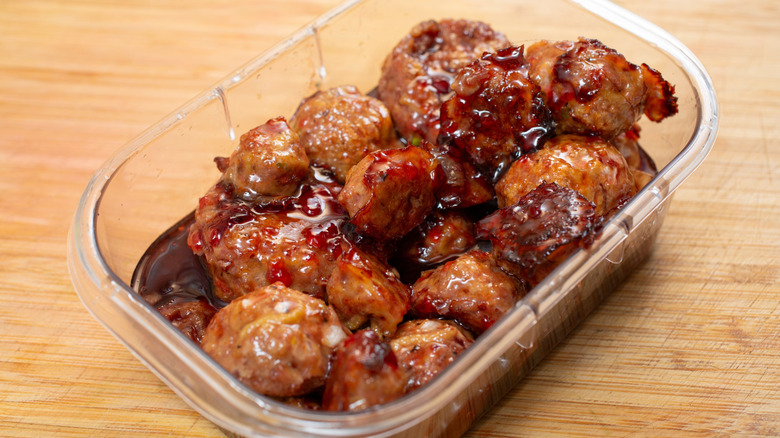
Southern-style grape jelly meatballs are not something you'll typically find at restaurants, but they do seem to be on regular rotation in home kitchens around the South. You'll spot these among holiday dining spreads, on plastic tablecloth-covered snack tables at potlucks, and sometimes, even at weeknight dinners. The kitschy, classic Southern summer snack fits in at any cookout or football tailgate just as easily as it does at a fancy soirée, and with its vintage vibes, it's easy to see how grape jelly and meatballs became a cocktail party classic.
Appearing as an appetizer in the 1960s, recipes for grape jelly meatballs can be found throughout numerous cookbooks from the 20th century — from traditionally-published favorites to community collections. Providing umami flavors, grape jelly meatballs have that classic sweet, salty, and tangy combination that seems to be so beloved in the American South. The little orbs are braised in the jelly, often in a slow cooker, with some recipes also adding in barbecue or chili sauce for an additional kick.
MoonPies
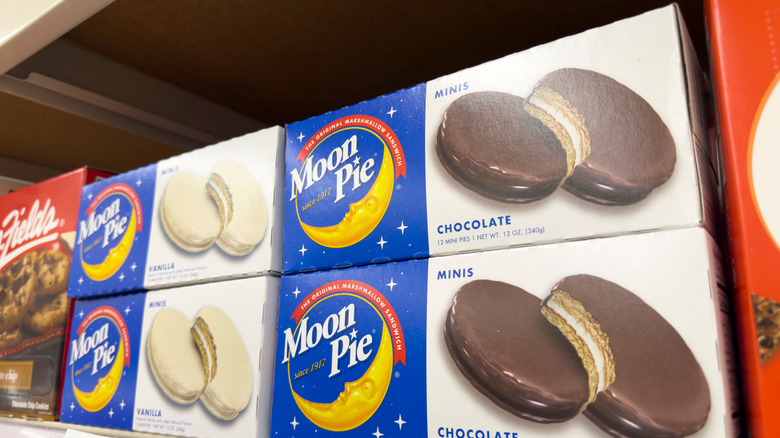
MoonPies, the cellophane-wrapped, marshmallow-filled, graham cracker sandwiches that hail from Tennessee, were a favorite for many who grew up in the South. During economically-challenging periods, such as the Great Depression and both world wars, the MoonPie was one of the best snack values, and was widely available. As Georgia-born RC Cola could also be found easily and for around the same price, the two became a natural combination in the region, sometimes being referred to as the working man's lunch. A century later, the pair has become nothing short of iconic — there's even an annual celebration, the RC Cola-MoonPie Festival, in Bell Buckle, Tennessee.
The story goes that the MoonPie originated after a coal miner expressed to a traveling salesman that he longed for a snack that was as "big as the moon." Chattanooga Bakery answered with its invention of a sweet sandwich that could fit into lunch boxes, and was satiating as well. Calling it the MoonPie, the bakery had found a hit with the miners. Years later, boxes of MoonPies could be found on shelves throughout the South.
When many Southerners think of vintage or old-fashioned snacks that their family still enjoys, their minds often go straight to the beloved MoonPie and RC Cola combo. MoonPies can be found in stores all around the country, and come in original chocolate, classic flavors banana and vanilla, and modern additions like salted caramel and birthday party. You can also try your hand at making your own, with this homemade chocolate moonpie recipe.
Pickled eggs
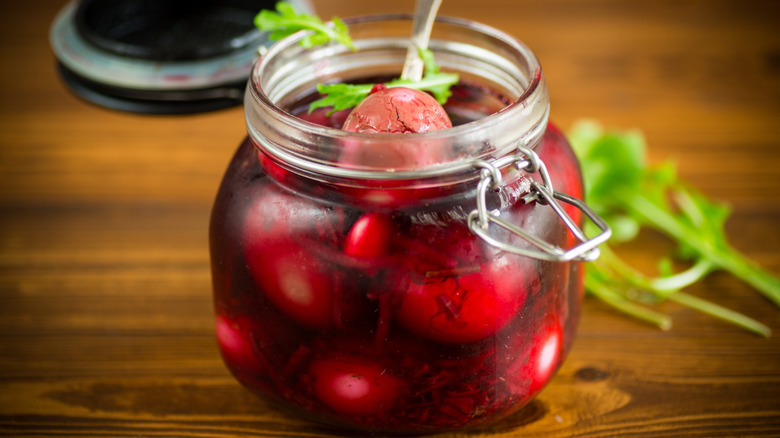
Many Southerners grow up snacking on pickled eggs, often having relatives who follow the tradition of home-canning goods with stacked shelves of them and other pickles in their pantry. If you grew up on them, that first bite can take you back to after-school snack time — and for the lucky ones, visiting grandparents can result in returning home with comically-oversized jars of the hard-boiled treats.
Pickled eggs were originally considered a survival food, as eggs preserved in vinegar provided a long-lasting, resilient protein source that could withstand hot Southern summers, even without refrigeration. By the late 1800s, drinking establishments and country stores started putting jars of these technicolor treats on their counters. Some purveyors didn't even charge for the eggs, assuming the intense sourness and saltiness would make people thirsty, and in turn, generate beverage sales. The eggs can still be found on bars and in neighborhood markets, and even manufactured jars are for sale at national chains.
Most Southerners just eat these plain, and straight out of the jar, with their versions of the pickled treat being made with regional spices and beets— the latter of which adds a bright magenta hue, as well as some sweetness. But, if you're new to them, try them sliced thin, and layered on rye bread with remoulade, crispy onions, green onions, and greens. Eating them on a sandwich can feel more familiar if you're not used to tangy eggs (think an extra pickle-y egg salad sandwich).
Cheese straws
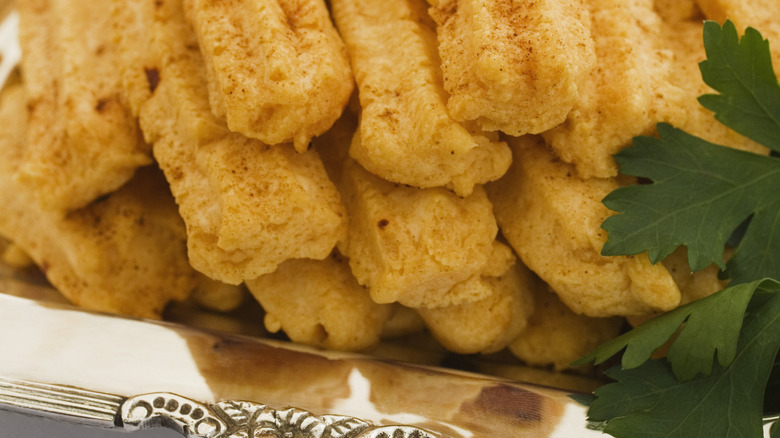
Although considered synonymous with Southern snacking, one of the earliest recipes for cheese straws is actually found in the 1887 edition of The White House Cookbook, which is filled with recipes from First Ladies and menus from historic events held at the President's residence. The recipe — which has unclear roots — yields a slightly spiced, pleasantly cheesy cross between a cracker and a biscuit. This is the basic format for a cheese straw, with variations changing up cheeses, spices, and sometimes shapes, with other recipes effortlessly elevating cheese straws with a hefty pinch of one seasoning or with the addition of herbs, nuts, and even cereal.
So why is the snack considered Southern? That question may not have the most direct answer, but if you grew up in the South, odds are, you used to eat this crunchy, cheesy snack. Some say baking the cheese into a straw helped to preserve the cheese, as the humid region was largely without air conditioning until around the 1960s. With a slight kick and little bit of salt, it's also considered a popular drinking snack, and is often paired with alcoholic beverages such as red wine, or with refreshing, non-alcoholic drinks like sweet tea. Some folks think homemade cheese straws are the only way to go, but you can buy them from specialty stores in-person or online, and they are available at mainstream national chains as well.
Cream cheese and pepper jelly
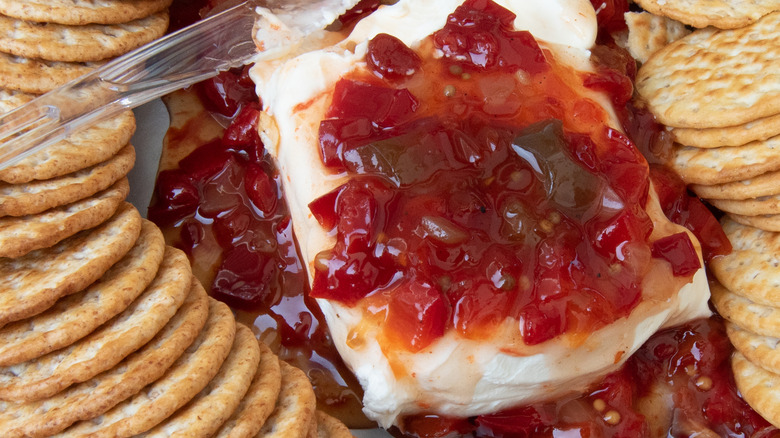
Typically served with a sleeve of crackers, cream cheese and pepper jelly is a cool and spicy combination that's a classic hit in the American South. Often found at gatherings, it's both festive and easy to make — just put a block of cream cheese on a plate and pour pepper jelly over it. Ta-da, you've got your dish for the picnic or baby shower potluck.
As for the jelly, it can be made with any kind of pepper, allowing whoever is making this low-fuss snack to decide not only its level of spiciness, but even its color. Or, you also can just buy a jar, as many versions of pepper jelly are available for purchase nationwide, and local versions can be bought online or in-person at farmers markets throughout the South.
Modern Southerners are taking to social media and online forums to find and discuss ways to upgrade this vintage nosh — folding it into phyllo dough, scooping it onto cucumber slices and oysters, or replacing the cream cheese with goat cheese are but of the new ways fans are enjoying it. You can also turn this popular pepper jelly appetizer into a full-blown meal with one addition.
Tomato sandwiches
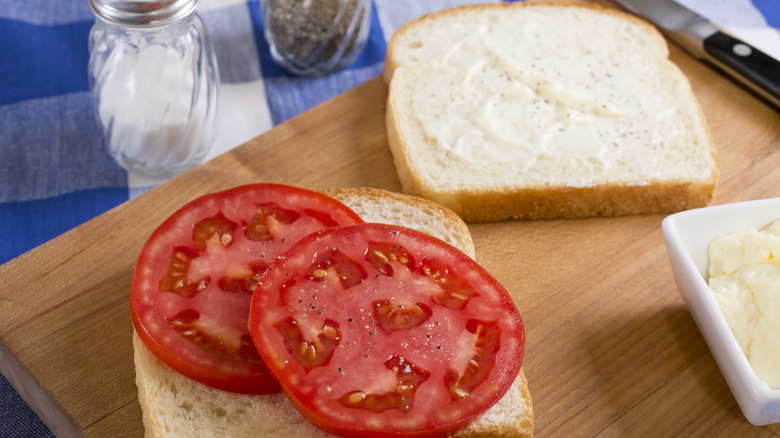
Summertime means tomato sandwiches in the South, a region that grows the bulbous and fragile fruit so well. There's an art to making the perfect tomato sandwich, and the rules are taken seriously. While opting for an alternate preparation method might not cause Southerners to bless your heart — a term used when those hailing from there feel sorry for someone who doesn't understand Southern ways — the classic Southern tomato sandwich is a simple one: with untoasted white bread, mayonnaise (preferably a Southern brand, like Duke's or Blue Plate), thick slices of tomatoes, salt, and pepper. That's it.
Both the salt and pepper bring out the juiciness of the tomato, while a savory undertone is created thanks to the creamy, unctuous condiment beneath. And the bread of choice is usually the inexpensive, old-fashioned, pre-sliced white bread you find at any grocery store. As for the tomatoes, they tend to be best when overripe, and rich, flavorful tomatoes such as the seasonal heirloom Cherokee Purple or the hearty Beefsteak seem to work best.
This seasonal snack — and oftentimes, meal — has been a longtime staple. From luncheon tables to restaurant menus to the tradition of eating one over the sink, you'll find people still enjoying the simple sandwich in the summertime South, and beyond.
Boiled peanuts
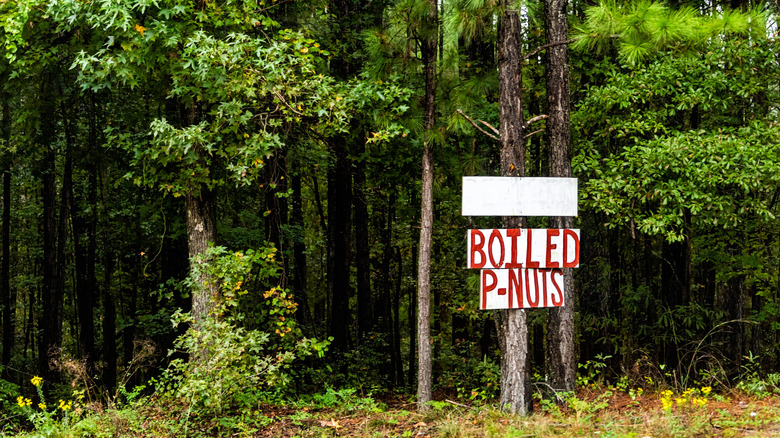
Boiled peanuts are considered one of the most iconic snacks in the states, especially around the South. If you ask someone from the region to name a Southern snack, they'll likely immediately and enthusiastically blurt out, "Boiled peanuts!" And it's not just because they're a simple, tasty treat that's easily found along roadsides, with folks even selling bags out of the backs of trucks. Peanuts are also very much woven into the cultural and historical fabric of the American South, with the origin story of boiling and spicing them going back centuries.
It is widely told, incorrectly, that the practice of boiling peanuts was first traced back to Confederate soldiers during the Civil War, claiming that they were eaten because food was scarce. Although most traditions of the enslaved communities weren't recorded, the truth is, Black people in the South had been boiling peanuts for decades. Those from Africa brought peanuts with them to America, and it was mostly the enslaved people who were growing small plots of them for personal use. It wasn't until the early 1900s that boiled peanuts started showing up as being served at social functions and fairs around the South.
Popularity continued to grow, with versions popping up using regional spices, such as Cajun-flavored boiled peanuts you might find around Louisiana bayous or Old Bay-flavored boiled peanuts you might find on Maryland's Eastern Shore. No matter where you are in the South, if it's summertime, you'll likely smell a fresh batch being boiled nearby.
Watermelon with salt
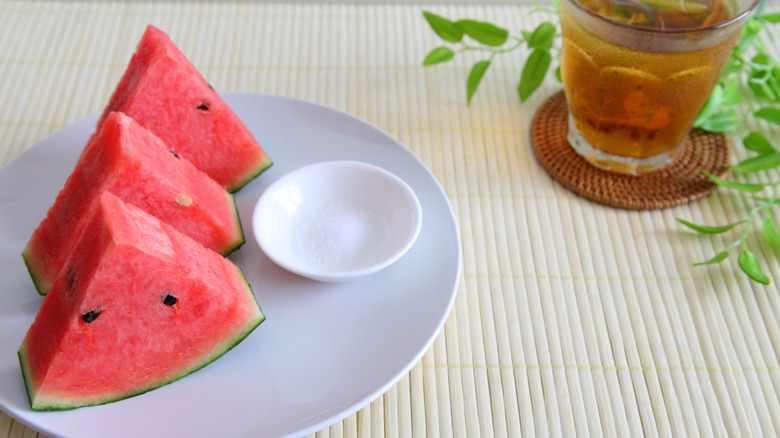
Watermelon grows plentifully across the South, seen bulging off its vines for stretches while driving by roadside farms during the dead of the summer. Given the nickname "Depression ham" because of its low price, watermelon has helped communities survive during difficult and oppressive times, and continues to be a refreshing snack that can be prepared in many ways. However, sprinkling watermelon with salt is a Southern move that may have been introduced in a 1934 South Carolina newspaper article, in which the author referenced encountering salted watermelon on a trip to Japan.
Because the fruit is mostly filled with water, the flavor can be less intense than other produce. The salt changes that, because the mineral brings out the sweetness of the melon, while canceling out any bitterness. This pairing also activates the saliva glands, causing the fruit to taste extra juicy and refreshing, which is perfect for those infamously hot and humid days that those in the South know very well.
Any salt can be used, from plain, old table salt to Himalayan pink salt, or, you can even take the melon to another level, by sprinkling a salt flavored with lime, or chili pepper.
Alabama Fire Crackers
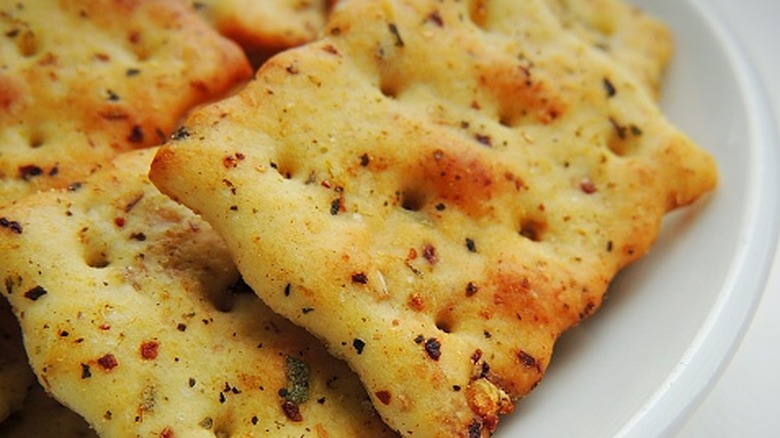
Soda crackers, such as Saltines, are a mainstay in pantries throughout the South, and Alabama Fire Crackers put them front and center. Typically served at parties and gatherings, this crowd-pleasing Southern snack couldn't be easier to make, so it's no surprise that it also makes appearances as an easy weeknight soup side, or dependable dip vehicle.
Alabama Fire Crackers , sometimes called Southern Fire Crackers or just Fire Crackers, feature spices, and oil or butter for binding. After tossing the crackers in loads of red pepper flakes, garlic powder, onion powder, black pepper, powdered ranch dressing mix, and the binding of choice, the crackers sit overnight before baking in the oven. The final result is crispy, spicy, salty, and gleaming with goodness. While soda crackers are the default choice, any cracker can be substituted in its place.
The history of Fire Crackers isn't really well-documented, although some say the snack's origins can be traced to the 1980's classic, oyster crackers. But it does seem undisputed that the addition of fiery regional spices makes it a snack many Southerners like to claim as their own.
Hushpuppies
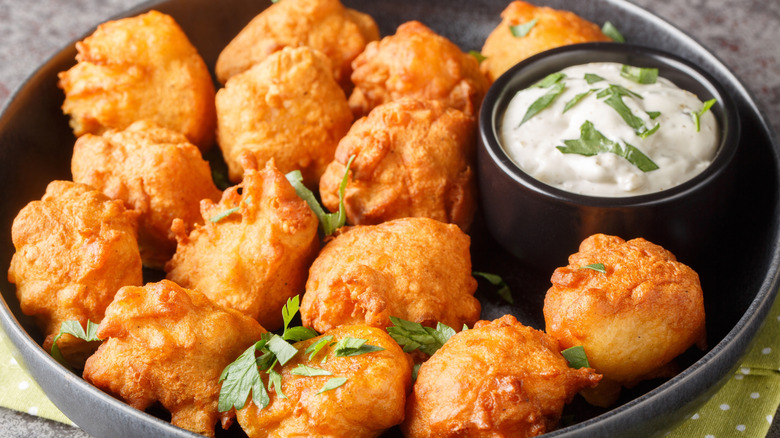
Though the origin of the hushpuppy is debated, it's fairly known that they have roots in the American South. Whether they were made on fishing docks with extra batter by fisherman frying their daily catch, or by a formerly enslaved man named Romeo Govan, whose famous red horse cornbread, made with cornmeal and local redfish, was served at events in South Carolina — hushpuppies have been around for a long time.
This snack's base is cornmeal, a staple in the region, but buttermilk and other ingredients such as minced onion are also traditional. Hushpuppies exude texture, saltiness, and heartiness, as well as a crunch achieved with its deep-fried method. And, they can be served with all kinds of tasty sauces. You'll find that some folks seem to go for a sweet addition, often serving theirs with honey, or honey butter. Other Southerners prefer creamier condiments like remoulade or tartar sauce. You can find them in restaurants across the region, from casual barbecue joints and burger drive-thrus and dives, to full-service seafood sit-down eateries. You can always make your own homemade hushpuppies, too.