

7 Classic '60s Foods Enjoying A Nostalgic Modern Revival
Nostalgia is having a big moment right now. At the beginning of 2026, for example, content creators across social media platforms were pulling photos from the 2016 archives and posting them for all to see — chokers and all. People are also looking to the 1990s and the early 2000s for entertainment, with TV shows and movies of the era consistently getting reboots and sequels. But, when it comes to what's on our plates, some people are reaching even further into the past for inspiration. In fact, it seems that many classic 1960s favorites are back on the table.
From iconic, structurally challenging fudge cakes to cottage cheese encased in lime Jell-O, many midcentury dishes seem to be making the rounds on cooking blogs and dominating social media algorithms. In some cases, people are sticking to the original recipes, but in many instances, people are giving these vintage classics a brand new twist. Baked Alaska brownies? Tuna noodle casserole with jackfruit and sun-dried tomatoes? Sign us up.
Jell-O salad
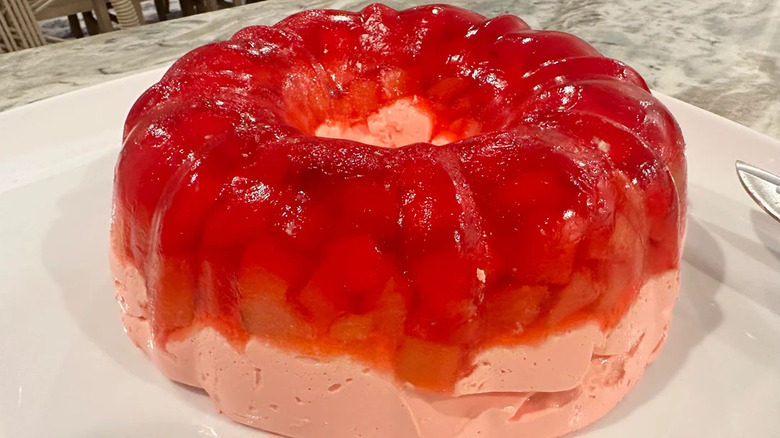
If you're unfamiliar with this midcentury classic, the words Jell-O and salad sound like an odd mix. Salads should be made with leafy greens, or, at the very least, some form of vegetable (hello, potato salad). It's true, there isn't much about Jell-O salad that's very salad-like, but regardless, people enjoyed the mix of gelatin and various fruits, nuts, and cheeses. And, today, they seem to be making a comeback.
Jell-O salads started to become popular around the 1920s and 1930s, which makes sense. Pairing ingredients with gelatin fed more people during a time when there was very little to go around. By the 1960s, though, people still made Jell-O salads. Many who grew up in the decade remember their parents feeding them lime Jell-O with ingredients like pineapple, cottage cheese, and nuts. Cabbage and carrots was another favorite, while some remember elaborate domes of lemon Jell-O with bananas and pineapple.
By the 1980s, Jell-O salads were falling out of popularity across the U.S., and up until recently, they had stayed that way. But, lately, people seem to be enjoying experimenting with this unique, wobbly dish again. TikTok recipe videos show people whipping up Jell-O salads with classic lime jelly, pineapple, nuts, and cream cheese, or orange Jell-O and cottage cheese. The revival of the Jell-O salad might be linked to a wider trend for nostalgia, or maybe some genuinely just love it. There's only one way to find out if you're a secret Jell-O salad lover.
Beef Wellington
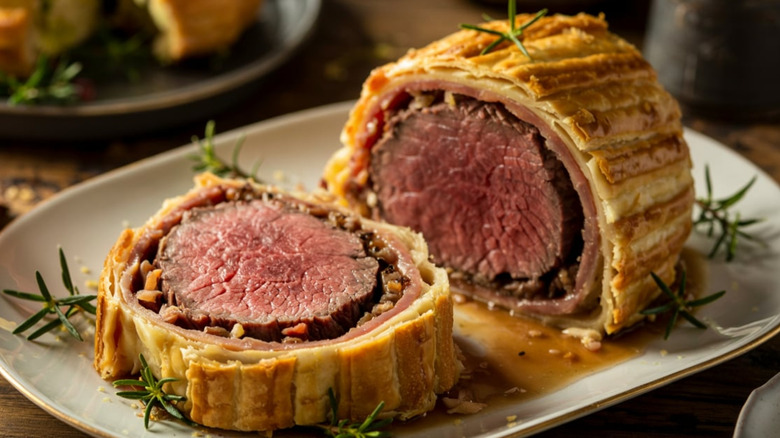
Back in 1965, Julia Child introduced America to beef Wellington via her hit television program, "The French Chef," and people immediately fell in love with the British classic. The dish, likely influenced by French cooking techniques, involves wrapping large fillets of beef tenderloin, mushrooms, and shallots in puff pastry. There is no firm evidence of who invented it or when it was first eaten, but it likely evolved over time from similar medieval dishes. The name might date back to the 19th century, when Duke of Wellington, Arthur Wellesley, reportedly loved the dish. We say might because there isn't much proof, it's just a theory.
Anyway, while some have remained staunch supporters of beef Wellington (ahem, celebrity chef Gordon Ramsey) throughout their lives, it hasn't been considered fashionable for a while. By the 1980s, people were far more interested in impressing their friends with Italian-inspired dishes, like pasta a la vodka and creamy, decadent tiramisu.
But, beef Wellington is having a revival. It's back on New York restaurant menus, as chefs seek to give diners a feeling of nostalgic comfort and coziness. And, of course, the true test of relevance: Beef Wellington recipes have also been flooding TikTok. Some stick to the traditional method, while others opt for modern, vegan versions made with plant-based meat or mushrooms.
Tunnel of Fudge Cake
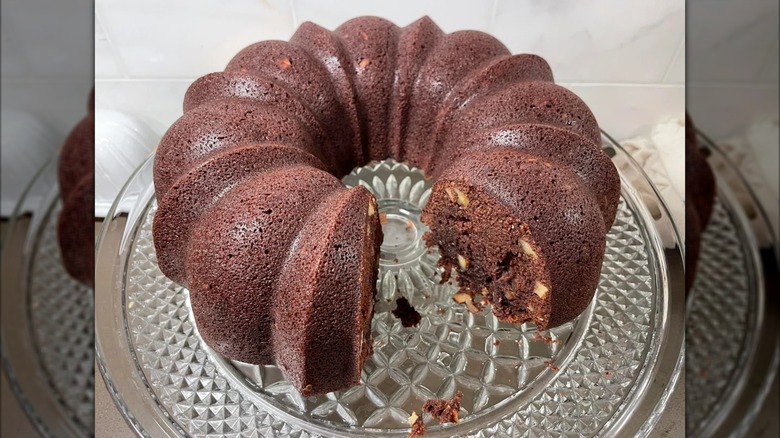
Lately, people have been experimenting with Tunnel of Fudge Cake recipes on social media, online magazines, and blogs. But, not the trend has eluded some bakers. To understand why, let's rewind to the 1960s.
Tunnel of Fudge was created by baker Ella Helfrich for the Pillsbury Bake Off contest in 1966. And, while it looks like a simple round chocolate cake with a hole in the middle, it's actually a feat of engineering. Helfrich used a Bundt pan to create the cake (which helped to popularize the baking tool in the U.S. at the time), but here's the really unique part: There was a tunnel of fudge (get it?) running through the center. Achieving this is trickier than it sounds; the fudge must be gooey, while the cake must be baked to perfection. It can't be underbaked, or the whole thing will collapse.
Still, bakers in the 1960s were enamored by the Tunnel of Fudge Cake, which relied on the mix of nuts and Pillsbury's powdered Two Layer Size Double Dutch Fudge Buttercream Frosting Mix to create the tunnel of fudge. And, here lies the problem for today's modern bakers: That essential frosting mix has been discontinued. Some have accepted that today's recipes will never achieve the greatness of Helfrich's original recipe, while others are still trying, experimenting with alternatives, like Krusteaz Chocolate Fudge Icing. Helfrich would be proud.
Tuna noodle casserole
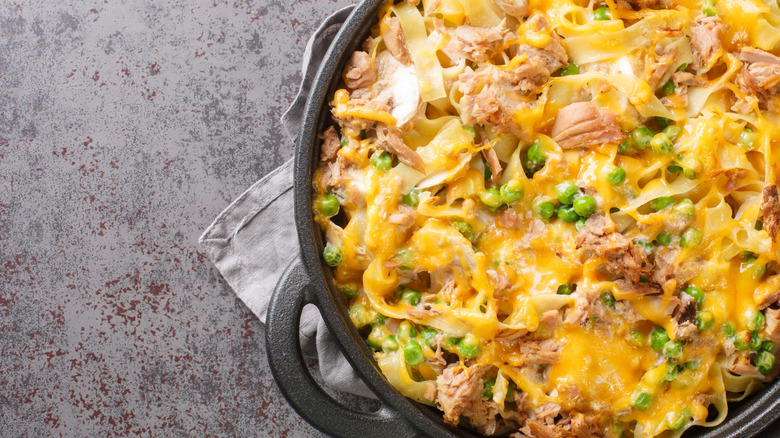
We have a Washington woman named Mrs. W.F.S to thank for tuna noodle casserole. Back in 1930, the mysteriously named cook from Kennewick provided a recipe, which she called "Noodles and Tuna Fish en Casserole," to Sunset Magazine. The recipe seemed to kickstart a trend, and in the years that followed, new takes on the dish appeared in more magazines and cookbooks.
Tuna noodle casserole really took off in the 1950s, and by the time the 1960s rolled around, the hearty, fishy dinner was a family favorite. It was so beloved, brands often used the dish to advertise their products during this decade. Westgate Sea Company created Tuna 'n Macaroni to promote its Breast O' Chicken Tuna (yes, that was its real name), while Campbell soup promoted its Cream of Mushroom Soup through a recipe for Tuna Crunch casserole.
Tuna noodle casserole arguably never went anywhere, and people remember eating it throughout the 1970s and beyond. But, today, many chefs are enjoying giving it a modern twist. Andrew Zimmern makes his version with Wild Planet's Skipjack Tuna, while Jamie Oliver makes it for his children with spaghetti and fresh red chili. Others like to give it a fusion element with Thai red curry paste or deepen the flavors with miso, while some take the tuna out completely and make it with jackfruit. There's always room to upgrade this comforting classic. One of our favorite ways to elevate this dish? Sun-dried tomatoes, herbs, and artichokes — thank us later.
Deviled eggs
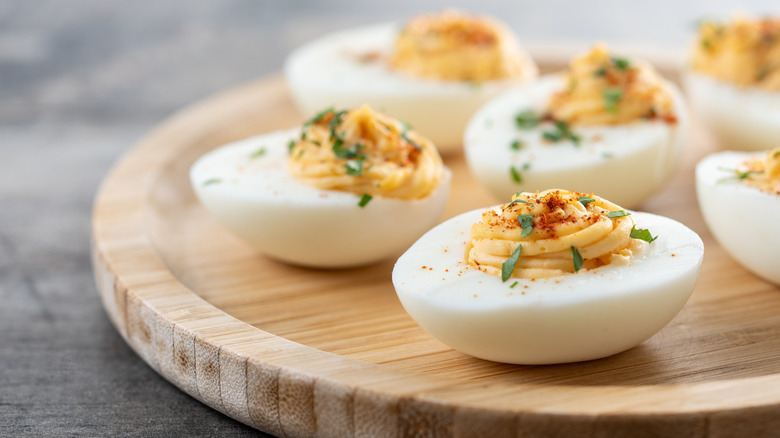
In October 2025, two Texan entrepreneurs appeared on "Shark Tank" asking for a $150,000 investment for 5% equity in their deviled egg business. And, they ended up walking away with $250,000 for 20% equity from Barbara Corcoran and Mark Cuban. It might seem like an odd concept, but, with Deviled Eggs Co. (which serves up deviled eggs loaded up with everything from Buffalo blue cheese to sushi) Raechel Van Buskirk and Alexi Wellman are tapping into a new demand for modern twists on nostalgic foods.
Wellman and Van Buskirk are not alone in riding the wave of the deviled egg renaissance. A quick search for the vintage dish on Google brings up many creative takes, like deviled eggs with chorizo and Mexican crema or Japanese hot sauce yuzu kosho, and even vegan deviled potatoes.
Deviled eggs weren't invented in the 1960s (they can actually be traced all the way back to ancient Rome), but they were particularly popular during this decade, and frequently appeared in recipe books. In 1961, for example, a recipe featured in "Betty Crocker's New Picture Cook Book," called Deviled Eggs De Luxe, instructed cooks to fill their deviled eggs with shrimp, cooked bacon, sharp Cheddar cheese, salmon, and deviled ham. The 1962 "Knox-On Camera Recipes" was a little different, and asked cooks to pack unflavored gelatin molds with deviled egg filling. Interesting, but we'll probably stick with the modern twists.
Baked Alaska
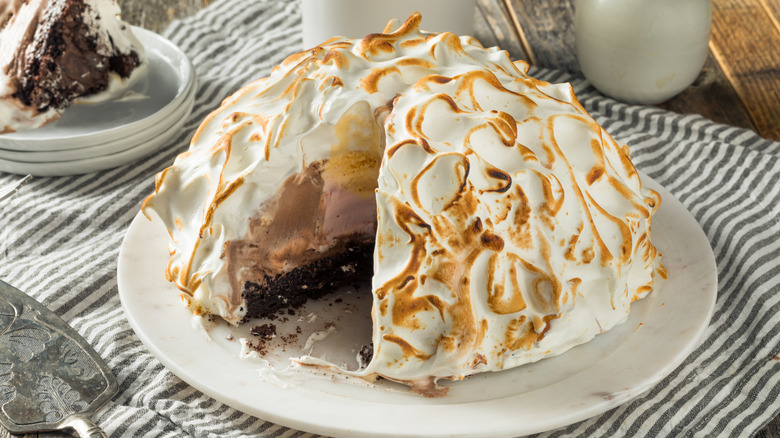
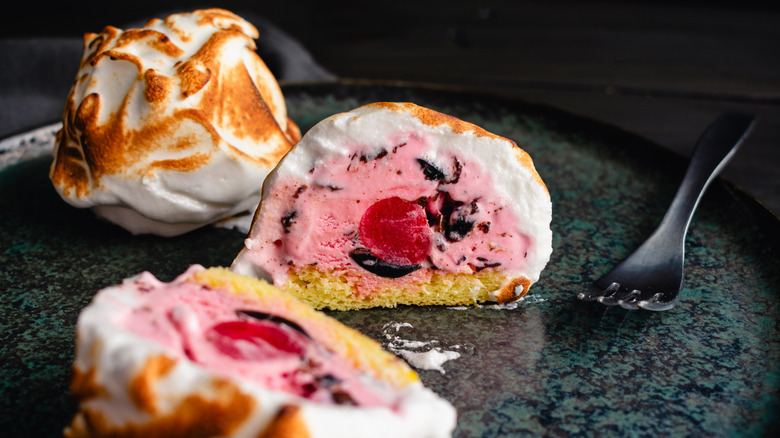
In 2025, London dessert spot Humble Crumble created a May special: A shortbread crumble topped with frozen custard, berries, and covered in scorched baked Alaska. It was a fun, modern, creative twist on a vintage dessert, and people loved it, mostly for the taste, but also because of the nostalgia.
Baked Alaska doesn't come from Alaska. In fact, it was actually invented at the iconic Delmonico's restaurant in New York in the 19th century (although it was probably inspired by the almost identical French dessert Omelette Norwegge). Back then, it was called Alaska, Florida (Alaska for the cold ice cream, and Florida for the heat required to produce the burnt meringue), and it was a hit. Over the years, more and more chefs replicated the dessert, and in the 1960s, it became a favorite on cruise ships and on elaborate dinner party tables.
Baked Alaska stopped being so fashionable in the 1970s (The New York Times actually confirmed it was no longer stylish in 1977), but the days of it being dated seem to be behind us now. Humble Crumble is not alone; many restaurants across the U.S. have also been revisiting this fun vintage dessert recently. And, scrolling through TikTok, we found all sorts of innovative takes on the decades-old recipe. There were baked Alaska ice cream brownies cakes, mint chocolate chip versions, and even vegan twists with aquafaba meringue.
Pineapple upside down cake
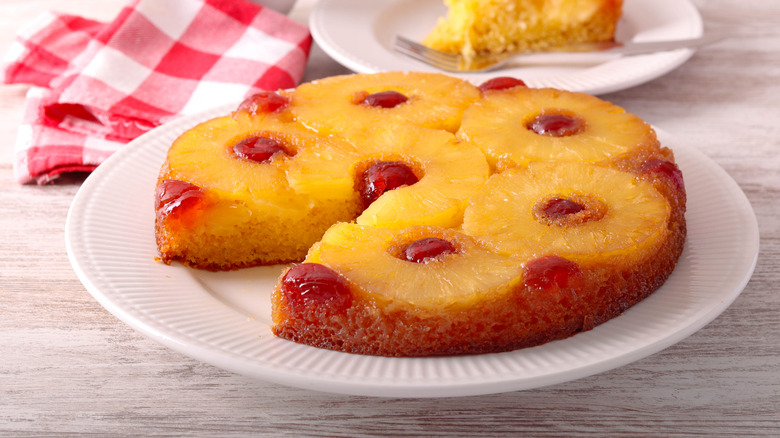
Lately, many recipe bloggers and content creators have declared that they're bringing back the pineapple upside down cake. Some have given the recipe a new twist, serving it with chili and lime, or adding a splash of fruity flavor with cherry juice or a layer of biscuit crumb on the bottom. On TikTok, creators are giving the recipe a modern spin by turning it into a mug cake or a dump cake. But, most of these versions keep the heart of the pineapple upside down cake the same: They're made with a simple cake batter and pineapple rings — just like they were in the 1960s.
Pineapple upside down cake wasn't invented in the 1960s. It actually has roots in the 1920s, when recipes started to appear in cookbooks and magazines for the first time. Fun fact, though, upside down cakes (the batter is layered on top of the fruit and flipped) had actually been around for a while before this, dating back to the Middle Ages. However, back then they would have been made with other seasonal fruits.
By the 1960s, pineapple upside down cake had become a quintessential treat. Many families had their own recipes for the dish, which would sometimes be written by hand and passed down through the generations. Other times, people would pull them straight from cookbooks. Of course, "Betty Crocker's New Picture Cook Book," published in 1961, had several recipes.