

10 Italian Dishes That Defined The '80s
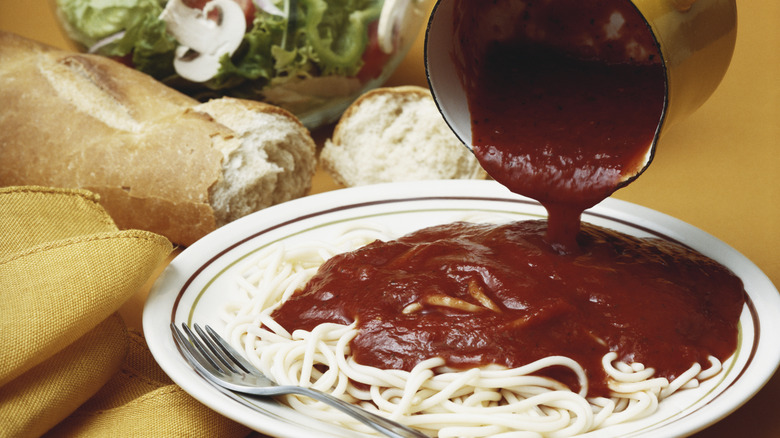
The 1980s marked a golden era for Italian-American cuisine. It was the era of excess, when dining out was always an occasion and portions were generous enough to actually satisfy your hunger. "Food in the '80s was all about upscale decadence," recalls Theresa Scotto, Brooklyn-born restaurateur and owner of Pelato restaurants. Many of the era's most popular dishes borrowed Italian roots, whether that be technique or one defining flavor, then took flight in American kitchens.
When asked about the first flavor that comes to mind from the era, Joe Isidori — part of a long lineage of Italian-American chefs in NYC and current chef-owner of Arthur & Sons – answers immediately, "Tomato and basil, no question. That combo was everywhere; you couldn't walk into a restaurant in New York without smelling that classic pairing." James Delmage, founder and cookbook author of "Sip & Feast," echoes the same sentiment even more emphatically. "Red sauce, red sauce, and more red sauce," responds Delmage. The dishes that defined this era were bashfully American creations or dramatic reinterpretations, laden with butter, cream, and cheese, a "very American take," as Scotto points out.
By this era, Italian food in America was far removed from the cucina povera of the old country, evolving into a new, more extravagant cuisine. Each of these dishes helped shape 1980s Italian-American cuisine, exemplifying the style and flair of the decade's culinary craft.
Penne alla vodka
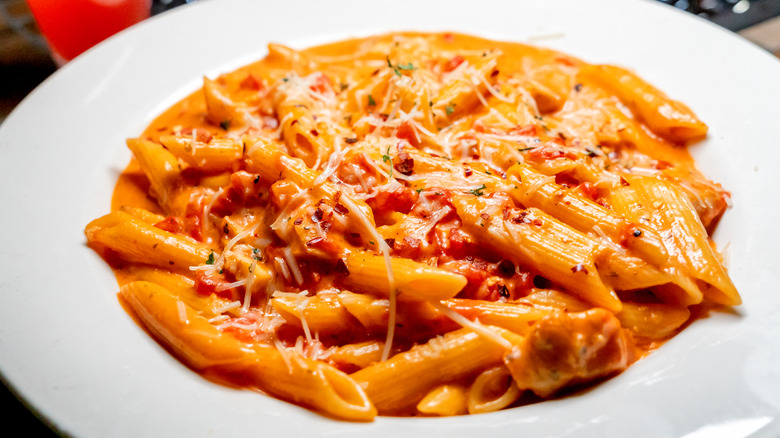
If we were to pick just one Italian dish to define this era, it would probably have to be penne doused in a rich vodka sauce. "Penne alla vodka was the dish of the '80s," declares Joe Isidori without hesitation. "Everyone was making it. Creamy, pink sauce, a little kick of heat, and that touch of vodka that made it sound fancy. It was very indulgent."
There's a reason people fight over who coined the signature pasta dish — it's delicious, and practically shaped this era of cuisine. Is it Italian? Is it American? As it turns out, penne alla vodka is very much both. Some credit Roman chefs experimenting with vodka to emulsify tomato and cream, while others point to experimental Italian-American kitchens in New York. That silky tomato cream sauce, with just a hint of garlic, occasionally folded in prosciutto or pancetta to appease the average meat-craving American.
James Delmage confirms its ubiquity and fandom, "It was something that you'd find (and still do to this day) at nearly every Italian-American restaurant, and especially at catering events and weddings. So if I had to name a pasta shape and sauce that defined that era, it would be penne pasta with vodka sauce."
Stuffed mushrooms (and peppers, artichokes)
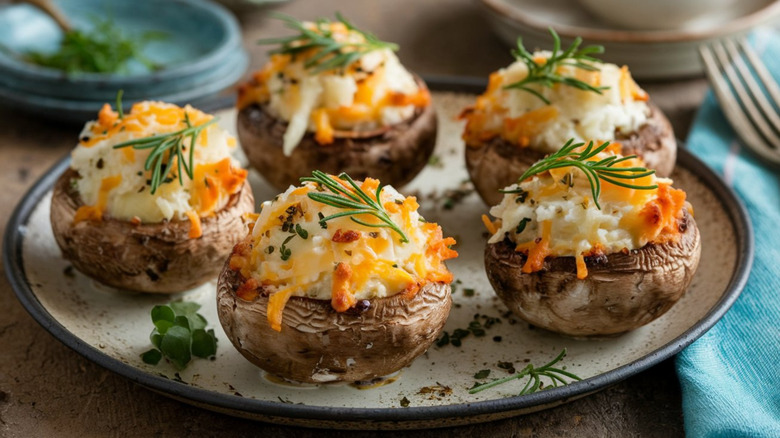
At a time when hosting was a rite of passage in the suburbs, quaint hors d'oeuvres were necessary, and stuffed mushrooms were the perfect mouthful. The bite-sized savory snacks were typically filled with garlic, parsley, a blend of sharp cheeses, and topped with buttery breadcrumbs. Delmage elevates his classic Italian stuffed mushroom recipe with white wine and lemon juice, but the integrity of the dish remains. As he notes, "Italian-American food in the '80s was influenced by immigrants from Southern Italy. Dishes like stuffed artichokes, stuffed mushrooms, and stuffed peppers were all popular. The food was hearty, unassuming, and relatively easy to make."
Historically, stuffing vegetables has deep roots in Southern Italy, where seasonal vegetables were filled with economical ingredients to keep families full. But in the US, Italian-American households and restaurants took the budget-associated technique and elevated its form. Stuffed mushrooms in particular became a symbol of sophistication; dainty, rich, and perfect for cocktail parties. Stuffed peppers and artichokes followed similar principles, often utilizing spicy Italian sausage, ground meat, or seafood-focused breadcrumb mixtures. There are endless ways to upgrade stuffed peppers, but stuffed artichokes were a labor of love, steamed and stuffed with garlicky breadcrumbs and Parmesan.
Spicy rigatoni
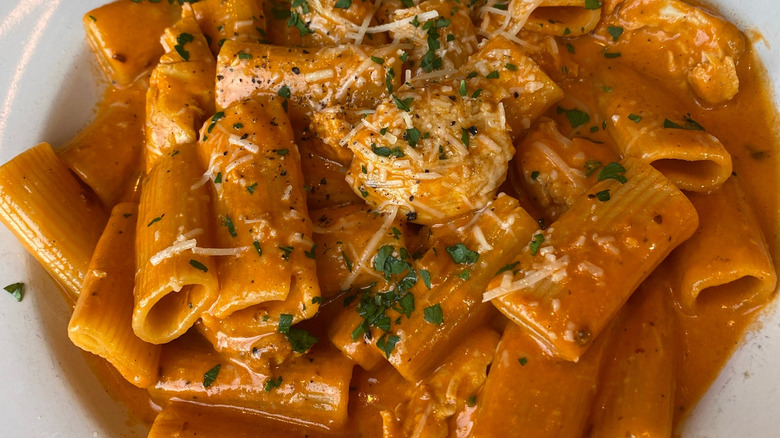
Spicy rigatoni, doused in a thick, fiery tomato-based sauce, was a direct descendant of the pink sauce craze that swept through New York's Italian restaurants in the '80s. Every Italian had their own variation of the recipe, but it was consistently a decadent alternative to the ultra rich and creamy vodka sauce. Chefs typically left the heavy cream out of the sauce, but made up for it by turning up the heat with crushed red pepper and chili-infused oils.
Spicier is a plus, but the real standout is the pasta itself. Rigatoni has distinct ridges that hold thick sauce, as opposed to penne's less gripping exterior. Isidori, who still craves spicy rigatoni on the regular, proudly serves his very own version at Arthur & Sons. "They're nostalgic," he says of spicy rigatoni, "but when you do them right, they're timeless." It's a perfect encapsulation of how Italian-American cuisine evolves, rooted in tradition but reinvisioned for today's palates.
Veal Parmigiana
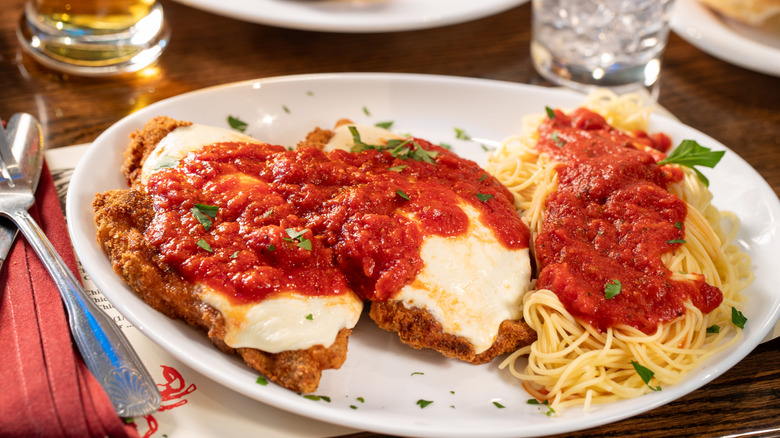
Few dishes capture the heart of Italian-American cuisine quite like veal Parmigiana. The dish traces back to the Southern Italian melanzane alla Parmigiana, or eggplant Parmesan, which Italian immigrants reshaped in America using more widely available meats. By the 1980s, it was an expensive, celebratory meal synonymous with dining out. "I remember veal being more prevalent on many menus," Delmage says. "The availability seems to have dramatically declined in recent years."
Restaurants in New York and Long Island made it a signature, often serving it alongside spaghetti or tucked into a hero sandwich. Theresa Scotto recalls that for families like hers growing up in Brooklyn, "ingredients such as seafood and veal were reserved for special occasions and generally had out at restaurants." The decade's prosperity made veal accessible to middle-class diners, and the dish's elaborate preparation and generous portions epitomized '80s dining values. It became a measuring stick for Italian restaurants. If you could nail the veal parm, you could win over the crowd.
Chicken Francese
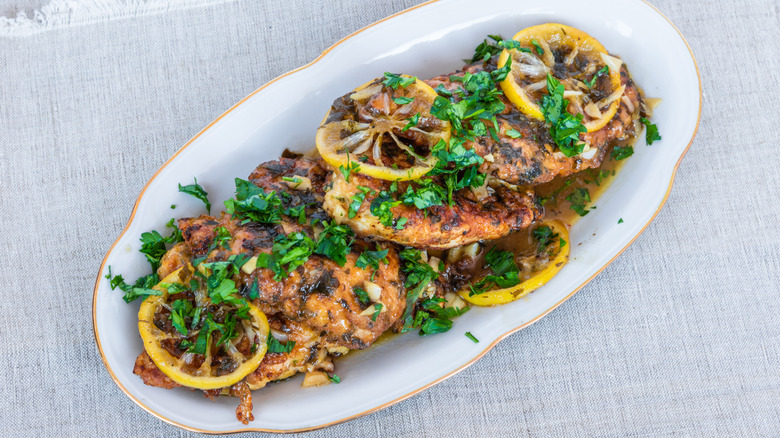
Light, lemony, and luxurious, chicken Francese, also called chicken Française or Chicken French, was a defining Italian-American dish of the 1980s. As a lighter counterpoint to the abundance of red sauce offerings, thin chicken cutlets were dredged in flour, dipped in egg, and quickly fried in butter and white wine. The rustic dish was always finished with fresh parsley, a good squeeze of lemon juice, and often whole lemon slices, rind and all.
The many variations of the name tell you just how Americanized the Italian-influenced dish is. It likely originated in Italian-American kitchens in upstate New York or the Bronx, inspired by veal piccata but adjusted for a more affordable protein, i.e., chicken. Its popularity surged in the 1980s when diners sought something elegant but approachable. "It was hearty but unassuming," says Delmage. "Relatively easy to make compared to other cuisines."
Lobster fra diavolo
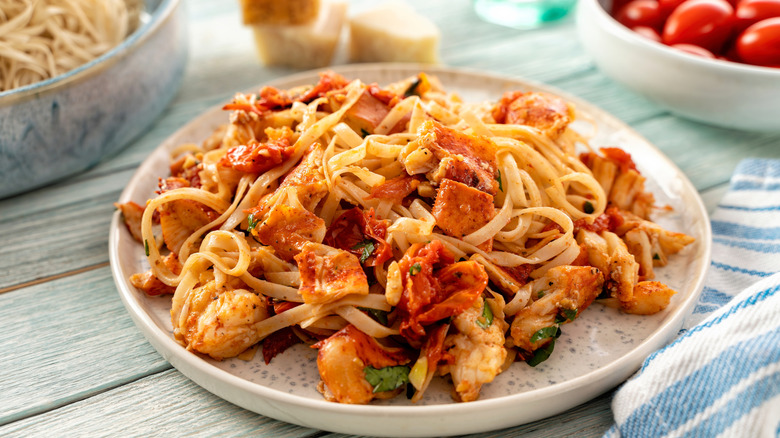
For anyone who adores all things lobster, lobster fra diavolo is your dream dinner. Saucy and unabashedly extravagant, this seafood recipe entails simmering an entire lobster in a spicy tomato sauce spiked with garlic, white wine, crushed red pepper, and herbs. Its richness doubles when served over linguine, which was the typical presentation in the '80s.
Fra Diavolo, meaning "among the devil," is an Italian-American invention, likely born in New York in the early 20th century. It borrowed elements from seafood cooking methods hailing from Southern Italy but turned up the spice level. The decadent dish was extra special at the time, with seafood being seen as an elitist luxury. "Ingredients like seafood and veal were reserved for special occasions," says Scotto. "Generally, you had them out at restaurants." Delmage is with Scotto, recalling "Seafood dishes like shrimp fra diavolo or zuppa di pesce were restaurant treats. You knew you wouldn't have them at home."
Pasta e fagioli
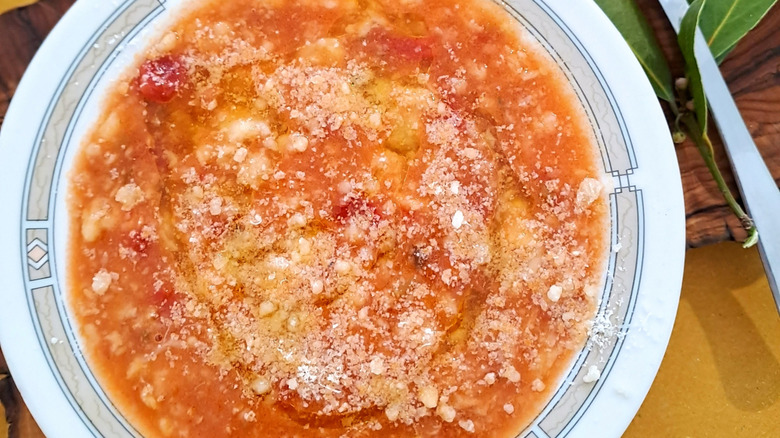
Pasta e fagioli or "pasta fazool" if you ask an American, is comfort food at its finest. The humble yet mouth-watering dish translates to "pasta and beans," which sums up the crux of it. The soup, or stew, is one of Italy's most humble and enduring recipes. It was once considered a peasant soup made from the pantry placeholders like cannellini beans, tomatoes, and pasta (ideally ditalini, which is arguably the best option for pasta e fagioli). Being both affordable and filling, it was one of those dishes that every Italian household had a version of. Delmage tacks this classic, warming Italian dish onto his list of the 1980s' most popular dishes inspired by Southern Italy.
In the 1980s, pasta fagioli served as the soothing counterbalance to fancier menu items, the dish that regulars ordered while tourists went for the coveted veal. It appeared on virtually every Italian restaurant menu as the soup option, including the soup spread at Olive Garden.
Chicken scarpariello
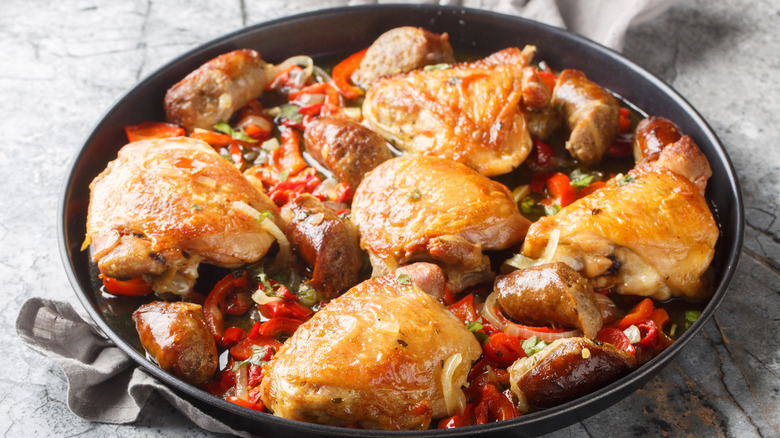
Chicken Scarpariello, or "shoemakers' chicken," was a menu staple at both fine dining and neighborhood joints, reflecting the "loud and boisterous" restaurant culture that Isidori so fondly remembers. The one pan dinner is a tangy, moderately spicy mix of flavors, all tossed in a pan sauce of wine and lemon. It was likely born within New York's Italian communities, a byproduct of Southern Italian cooks improvising with available ingredients, but it's still adored by Italians today. The unapologetically messy presentation is part of the rustic, home-cooked feel, and is best eaten with crusty bread for sopping up all the peppery pan juices.
Scotto was quick to respond with "chicken scarp" when asked if any 1980s Italian dishes felt distinctly NYC. Scarpariello was seemingly everywhere during the 1980s as diners sought dishes that felt authentically "old-school" Italian-American. It became a signature at iconic establishments like Rao's in Harlem, where the recipe took on near-mythical status.
Shrimp oreganata
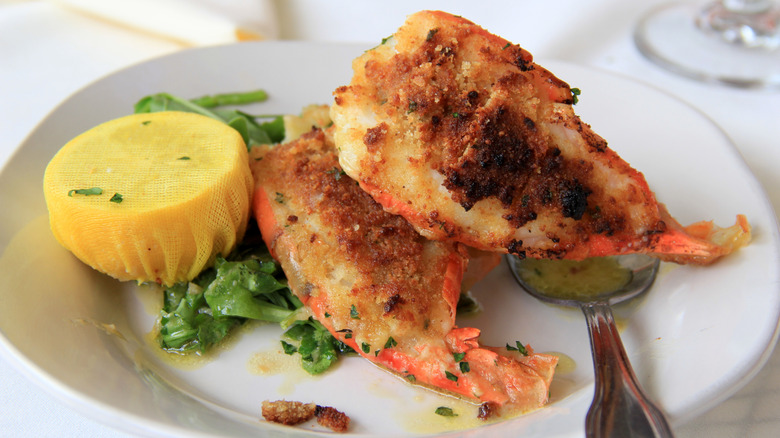
Shrimp oreganata, or baked shrimp with breadcrumbs, oregano, garlic, and lemon, is deceptively simple to prepare but still manages to visually wow spectators. The buttery breadcrumbs, broiled until a golden crust develops, are the star of the dish. The dish shouldn't be prepared with just any old box of breadcrumbs, but pangrattato, often referred to as "the poor man's Parmesan." In Southern Italy, the grated breadcrumb mixture tops pasta, vegetables, and, of course, seafood, but the oregano angle appears to be entirely American. James Delmage identifies shrimp (or clam) oreganata among the popular dishes influenced by Southern Italian immigrants, but more grandeur, set aside for celebrations. "While my mom and grandma would occasionally make seafood at home, it was something I would usually order in a restaurant," Delmage recounted.
The dish, while elegantly modest, is elevated by its unique texture. The "oregano" breadcrumb topping gives it that Italian-American sparkle. Served sizzling in small gratin dishes at the beginning of the meal or alongside linguine as the main event, shrimp oreganata embraced the pure Italian-American ethos by delivering big flavor from minimal, fresh ingredients.
Chicken marsala
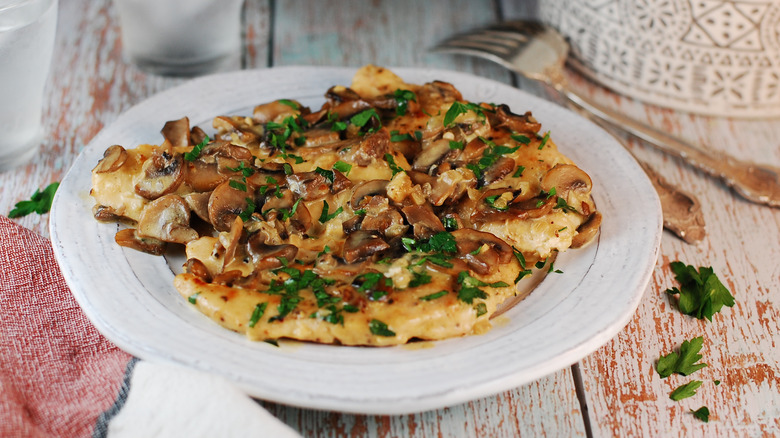
No 1980s Italian menu was complete without chicken marsala, a lavish dish that perfectly marries savory and sweet flavors. It was restaurant-tier luxury, yet grounded in home cooking, which essentially outlined the entire wave of Italian-American cuisine in the '80s. The creation draws inspiration from Italian scaloppine elements, particularly the Sicilian tradition of enhancing dishes with marsala wine, but in the U.S., chicken is used more often than the customary veal.
In its American form, chicken cutlets are dredged in flour, sautéed, and served in a creamy sauce made with marsala, mushrooms, butter, garlic, and, as most American variations often include, cream. The wine made this dinner sophisticated, while the accessible ingredients made it possible for any household to tackle the Italian recipe. Home chefs admittedly make a lot of mistakes when whipping up chicken marsala, but as long as the chicken breasts are pounded thin and dredged in flour, the result should be al bacio, or chef's kiss for the non-Italians.