

10 BBQ Mistakes That Can Lead To Food Poisoning

We may receive a commission on purchases made from links.
Nothing says summer like a backyard barbecue. Take one grill, add a bunch of friends or family and their favorite foods, and you've got a recipe for a long afternoon well spent.
But when you shift cooking and serving from your kitchen and dining room to an outdoor setting, you instantly make practicing proper food safety more complicated. It may not be far from your grill to the kitchen — unless, of course, you're holding your cookout at the beach or campground — but even so, cooking outdoors instead of indoors increases your risk of foodborne illness.
As such, it's important to recognize the food safety risks of barbecues and take appropriate precautions. It's something I'm well-schooled in. I'm a trained chef and former restaurateur, with lots of outdoor catering events on my resume, and I was also a certified food safety instructor under Canada's National Food Safety Training Program. So I'm drawing on both my training and personal experience when I tell you that these barbecue mistakes could potentially make you sick.
1. Not keeping your grates clean
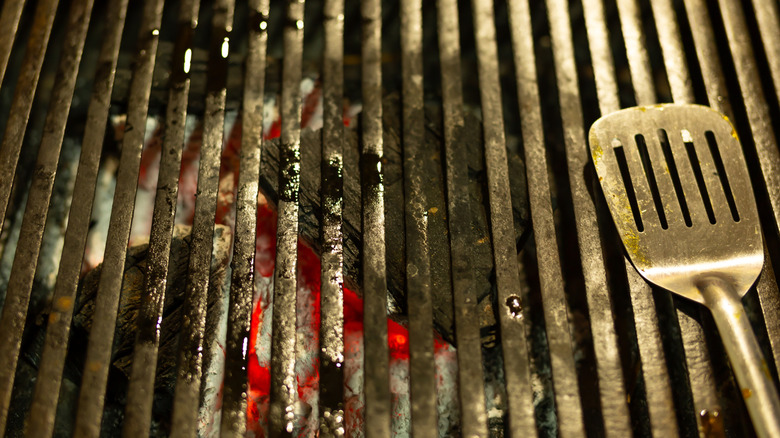
I've had friends over the years who have insisted that a buildup of gunk on their grill's grates "added flavor." It's a real head-scratcher for me. The stuff that's stuck to your grate is burnt on, and it's way past the light char that tastes great on a steak. We're talking bitter and rancid with a side dish of the wrong kind of crunchy. None for me, thanks!
The gunk on your grill isn't just ugly and bad-tasting. For one thing, there's evidence that the burned bits are potentially carcinogenic. Also, the stuff that stays on your grill (including bits of meat, fat, sugary sauces, and marinades) can play host to any bacteria, mold spores, or other pathogens that may have been on your food originally. If you've just taken your grill out of its winter storage, there's also a possibility of insects, rodent droppings, and other things you'd probably rather not have on your plate contaminating your food.
Also, on a practical note, that buildup insulates your grate's bars from reaching the kind of heat you'd like for proper searing (celebrity chef Andrew Zimmern, for one, is a big advocate of a clean and well-oiled grill), which in turn means your steaks, chops, and burgers are more likely to stick. On a related note, don't forget to clean the hidden parts of your grill, either. That'll help keep your grill running nicely, and reduce the risk of fatty flare-ups coating your food with soot.
2. Bringing food out too early

One of the biggest things we emphasize in food safety training is the importance of time and temperature. The temperatures in question define the food safety "danger zone," which is between 40 and 140 degrees Fahrenheit. Bacteria can reproduce rapidly within that temperature range, so it's important to keep your food either below 40 degrees or above 140 degrees.
Time is the other factor, and it's why organizations like the United States Department of Agriculture (USDA) recommend cooking or refrigerating your food within two hours, or just one hour if the temperature is above 90 degrees Fahrenheit. Otherwise, you're giving bacteria too much time to grow. So don't bring out anything perishable until you're ready to go. If you must set food out early, use coolers, ice, or freezer gel packs to keep it all cold.
On a related note, a common online tip says to bring your meat "up to room temperature" by leaving it out for 30 minutes before cooking. In reality, it can take an hour or two for a thick steak or chop to warm through. So all you're really doing is leaving your food in the danger zone unnecessarily. If you really want an evenly cooked steak, try chef José Andrés' warming rack method instead or try the reverse sear technique.
3. Using the same plate or utensils for raw and cooked food
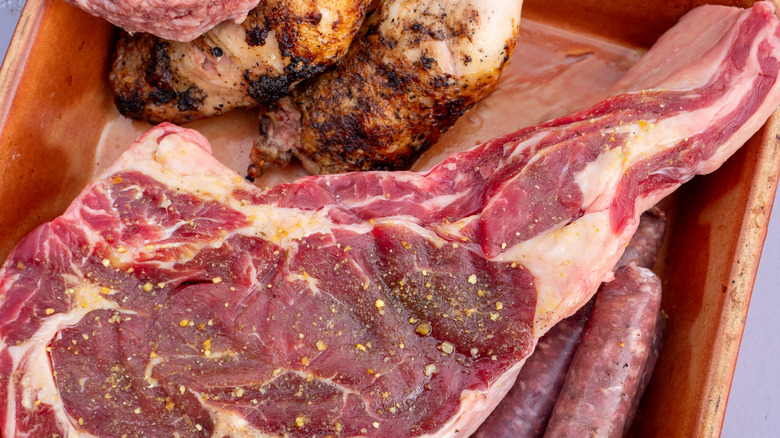
This shouldn't need to be spelled out, because it's not rocket science, but I'm going to say it anyway: Don't ever put your cooked meats, fish, or poultry on the same plate, tray, or platter that has held — or even touched — raw food.
You may already know this and use separate trays. But preventing cross-contamination (the term for spreading germs, toxins, or allergens from one thing to another) takes more than this. Take your tongs, for example. Are you using the same tongs or barbecue fork to hoist raw meat onto the grill and to take cooked meat off of the grill? If so, any bacteria from the raw meat just went back onto the cooked meat, which is nice and warm and ready to incubate lots of new bacteria.
The same goes for your hands, which touch both raw and cooked ingredients. If you've touched raw meat, or a plate with meat juices on it and then serve yourself a salad or glass of punch, there are now meat juices on the salad utensils and the punch ladle. In just a few minutes, those juices (and their bacteria) can circulate through your entire group.
4. Not giving yourself a convenient cleaning station
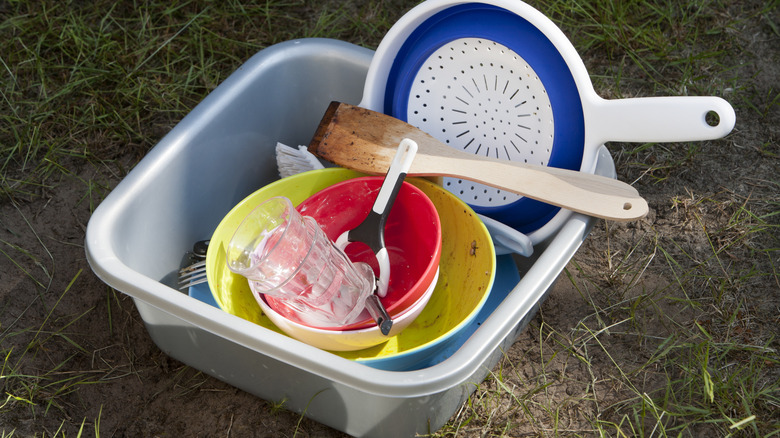
When you're cooking in the kitchen, you have hot running water right at your fingertips whenever you need to wash your hands or a utensil. When you move your cooking outside, you're also stepping away from the sink and soap dispenser.
That doesn't seem like a big deal if you're only a few steps away from the kitchen, but sometimes you'll need to give all of your attention to the food on the grill. Between that and the distractions of entertaining, it's easy to forget about the necessity of washing hands, dishes, and utensils. It's doubly important if you're having your cookout somewhere away from home, like at a beach or a campground. So whenever and wherever you're grilling, be sure to set up a cleaning station or two.
This doesn't need to be elaborate. All you'll need is a couple of dollar-store tubs to hold water, and soap for your hands and dishes. If you're grilling away from home, bring along your own wash water. Set up one tub with dish soap in the water, and a second with clean water for rinsing. Ideally, you'll have a third tub for hand-washing, especially if you have kids who'll be getting dirty. But if necessary, you can wash your hands in the same tub as the dishes or just use sanitizer. Having a wash station near the grill is a convenience at home, but if you're at the beach, it's just as essential as a safe place to store your food.
5. Using an unsafe method to thaw frozen meats
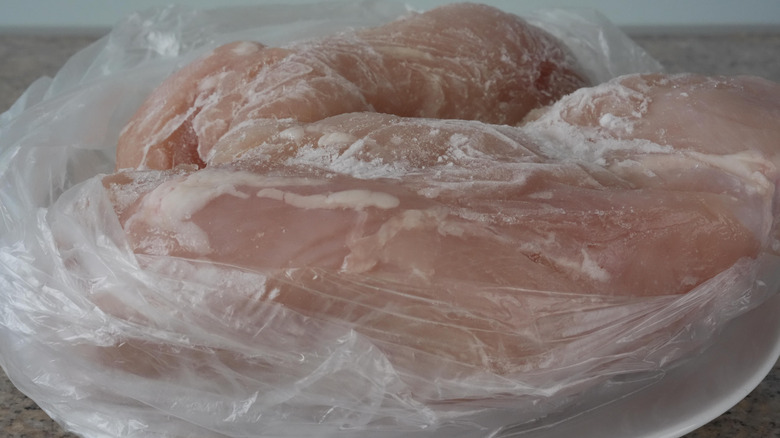
Ideally, when you're planning a cookout, you'll have perfectly fresh meat, poultry, or fish, straight from the butcher or supermarket. Sometimes you'll just roll with whatever's already on hand, though, and that often means pulling something from the freezer.
Speaking as a food safety guy, it always surprises me how cavalier people can be about thawing frozen food. Let me be really clear about this: Leaving a pack of steaks or chops on the counter overnight is emphatically not the way to do it. The time limit for leaving foods out is two hours, remember, so eight to 12 hours is well past any kind of safety margin. The outer edges of your meat will thaw first, and that's where bacteria will be, so they'll have plenty of time to build up a thriving population in your food.
The USDA endorses three safe ways to thaw food. The best and safest is to let it defrost overnight (or longer, if necessary) in your fridge because the food will always stay at a safe temperature — outside of the danger zone. Cold water thawing and microwave thawing are also acceptable, but you'll need to cook the thawed meat immediately because it's been in the danger zone.
6. Not keeping your cold side dishes cold
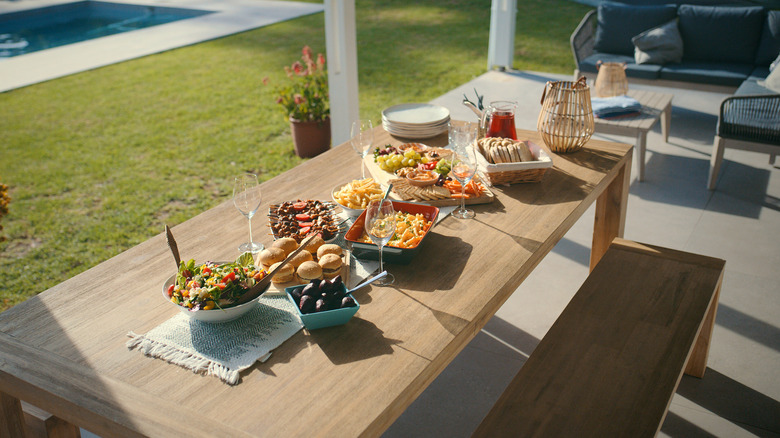
One mantra of food safety in professional kitchens is to "keep hot foods hot, and cold foods cold" (yeah, it's another danger zone thing). If you're having a barbecue, the hot foods part is easy because you'll probably have people waiting beside the grill with their plates in hand. But the cold dishes may fly under your radar.
A good cookout features a lot of cold side dishes, though the exact combination is up to you. The thing is, potato salads, pasta salads, dips, soft cheeses, and anything containing eggs can all be susceptible to growing pathogens — microorganisms that can make you sick — if they aren't kept cold. So whether you're planning a lavish spread of side dishes, or just one or two favorites, you'll also need to plan how to keep them cold.
Putting flat bags of ice under your snack trays will do the trick, and it's a cheap option that doesn't require much advance planning. I personally have several dozen flat gel-style freezer packs (like these from Perfect Remedy), which are a bit larger than a sheet of letter-sized paper, that I bought at a dollar store. Those are great for keeping under trays, if you can find them, but even ordinary freezer packs will do the job. If you're going somewhere for your cookout, you can also use freezer packs or bags of ice as a way to layer and organize your food during transport, as well as keep it cold once you arrive.
7. Reusing your marinade
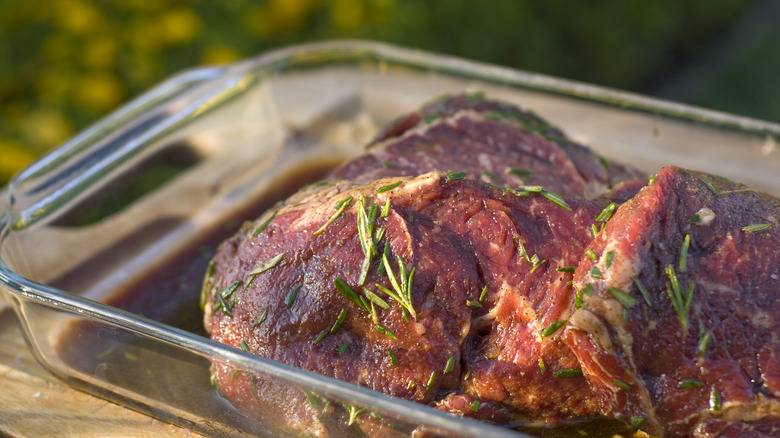
Marinating your meat before you grill it is an excellent way to add flavor, which is why there are so many store-bought marinades to choose from. Some sources will tell you it's also a way to tenderize your meat, though that's been pretty thoroughly debunked. But hey, flavor alone is all the reason you need to do it anyway.
Most marinades follow a straightforward formula, combining oil, an acidic ingredient, and flavorings (usually including salt). Both acidity and salt provide a degree of protection against bacterial growth, but not in the ratios you'd use in a marinade. So, when you marinate your steaks, chops, or chicken, any bacteria present in the meat will also end up in the marinade. That's why you should be wary of reusing your marinade, even though it might seem like a smart way to get the full value from your grocery dollar.
If you're grilling again tomorrow, for example, and have a perfectly good container of leftover marinade, you might be tempted to use it again for the next batch of meats. Or you might opt to brush it onto your meat as it cooks, to double down on flavor, or use it to whip up a quick sauce. It's a bad idea. Any bacteria that were transferred to the marinade will now end up on your plate, unless you take the time to actually boil your marinade and kill the pathogens before reusing it.
8. Leaving your cooked food out too long
I've talked a lot about the food safety danger zone, because — as I said previously — managing time and temperature is central to food safety. Yet a lot of us seem to have a surprising blind spot.
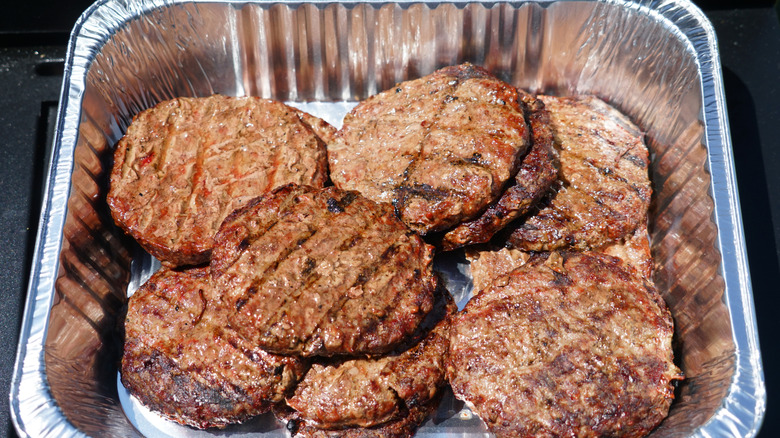
I've known many people who are rightly creeped out at the sight of raw food sitting at room temperature, but (oddly) don't have that same reaction to cooked food. How often have you seen a holiday turkey sitting out for hours after a meal so that people can pick at it? The mid-summer equivalent is a stack of burgers, steaks, and hot dogs on the warming rack after they're done cooking, so guests can come and help themselves all afternoon.
Either way, you're violating the rule about leaving food in the danger zone for more than two hours (or one on a hot day). It's actually more of a concern for backyard grilling, because those long, lazy summer afternoons are when you're most likely to encounter temperatures of over 90 degrees Fahrenheit. That cuts your food-safe time before refrigeration down to a single hour, and it's entirely too easy for an hour to sneak by without noticing. So once everybody's moved on to desserts, move any leftover meats (and any other leftovers in general) to the fridge. Anybody who wants more can reheat it easily enough.
9. Marinating food at room temperature
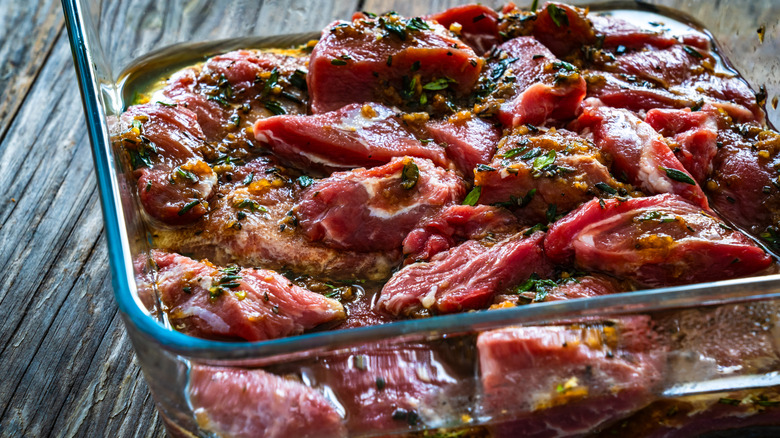
Let's circle back to marinating again, for yet another potential failure of the time-and-temperature rule. This one is about where and how you marinate.
The correct place for marinating or brining food is always your refrigerator, though an ice-filled picnic cooler will do in a pinch. Why? Because, as I mentioned, marinades don't offer any meaningful protection against bacteria. So if you're marinating your steak at room temperature on the kitchen counter, or — worse yet — on your grill's side table out in the sun, you're creating a really favorable opportunity for bacteria to grow and thrive.
Recipes for marinated fish or boneless chicken breasts usually call for a relatively short time in the marinade: as little as 20 or 30 minutes for fish. Beef, pork, and big pieces of bone-in chicken, on the other hand, can call for two to 24 hours' marinating time. That means if you're marinating at room temperature, you'll use up your entire two food-safe hours at room temperature (at a minimum) before the meat is fully marinated. So please, play it safe and marinate those meats in the fridge.
10. Par-cooking ahead of time
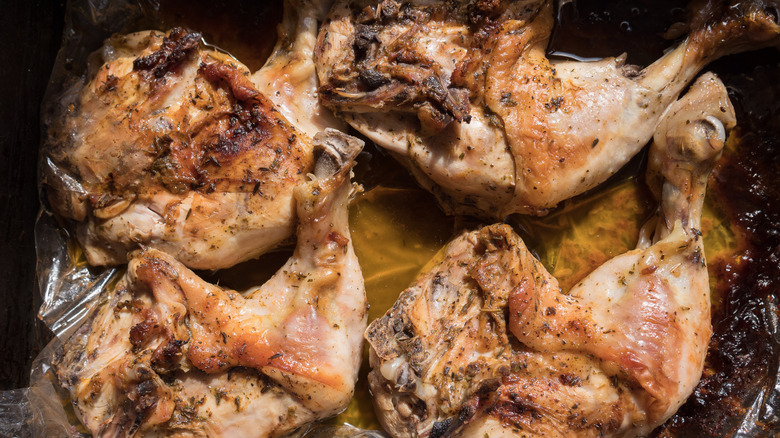
Here's one final tip. With extra-thick cuts, or bone-in chicken pieces, it's sometimes difficult to get them cooked to just the right internal temperature without the outside becoming overcooked or downright charred. Now, a little bit of char is a good thing. You want your burgers, steaks, and chops to have a nice sear on them, and the sauce on your ribs should be nicely caramelized. But nobody wants their meat both blackened outside and still raw in the middle. An obvious workaround for thick cuts is par-cooking them in the kitchen and finishing them on the grill. This is fine, but you'll need to grill the meat immediately afterward. Otherwise, you've just warmed up the food and given any bacteria the chance to reproduce before you put your food on the grill.
There are a couple of safer ways to do this. One is by using a two-zone setup on your grill so your meat can cook gently on the cool side before you finish and brown it on the hot side. Another — if you're looking for perfectly cooked meat — is sous vide. All you need to know about sous vide is that with your circulator, you can pre-cook meats to a perfect temperature under controlled conditions and then refrigerate them until the grill is hot. They'll be done exactly the way you like them, every time, with no sad band of gray meat around the edges of each bite.