

Weller Special Reserve Bourbon: The Ultimate Bottle Guide
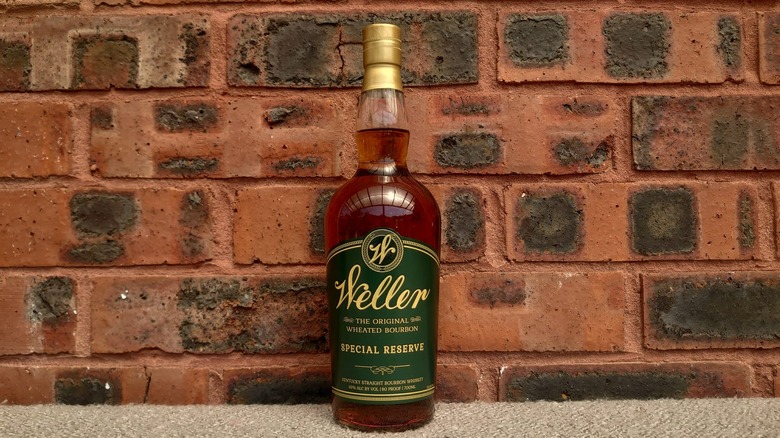
Weller Special Reserve is one of the American whiskeys most closely associated with the rise of wheated bourbon. The use of wheat in its mash bill gives it an elegantly mellow profile that still beautifully showcases classic bourbon notes, such as vanilla, caramel, and oak. In this ultimate bottle guide, we'll not only explore what the spirit tastes like but also dive into the whiskey's history, how it's made, and how it compares to similar bourbons.
As an experienced whiskey writer, I'm already familiar with this particular bottle, but I made sure to get my hands on another to ensure it still lives up to the historic standards Weller has set. While this guide was written independently, I did get the opportunity to speak with Weller's Brand Manager, Charley Costa Jr. He was able to shed some light on the more intriguing parts of Weller's history and answered some of my burning questions about its rarity and production. With plenty of great information to come, you'll soon know whether Weller Special Reserve is a bottle you should hunt down or if your money would be better spent elsewhere.
History of Weller Special Reserve
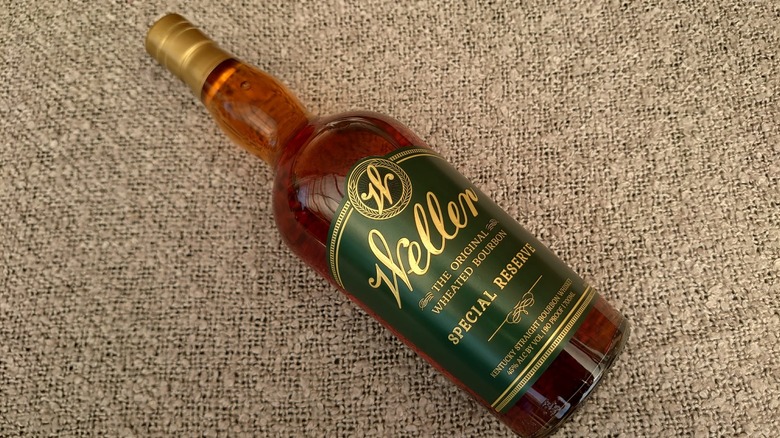
The origins of Weller whiskey can be traced back to 1849. It was created by William Larue Weller, who was an early proponent of using wheat in his whiskey's mash bill instead of rye. Following Weller's death in 1899, the brand remained in his family until 1908. By that time, Julian "Pappy" Van Winkle was working for the company and was able to buy the brand, eventually creating the legendary Stitzel-Weller Distillery in 1935.
The distillery continued to produce Weller bourbon until at least 1972. After that, the history gets a little murky, as all of the company's brands were sold to a conglomerate called Norton Simon. Compounded by the bourbon slump of the late 1960s and '70s, the Weller brand was one of many to lose its appeal. In 1984, Weller was acquired by Distillers Company Limited (DCL) as a part of Norton Simon's spirits business. Guinness bought DCL, then merged with Grand Metropolitan in 1997 to become Diageo. Two years later, the brands was sold to Sazerac, and production of the bourbon was moved to Buffalo Trace Distillery, where it's still produced today.
What does Weller Special Reserve taste like?
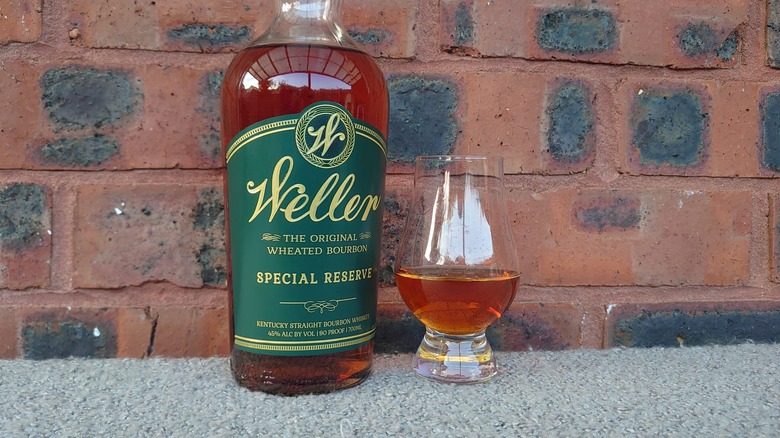
Weller Special Reserve has a highly approachable, easy-drinking character. The wheat in the mash bill plays a big role in this, creating a smoother whiskey with less spice than rye-forward bourbons. You first get a sense of that on the nose. Its sweeter aromas have an elegance to them, initially presenting as deep, dark caramel before giving way to other similar notes such as vanilla and honey. There's also a light oak character and a little freshness, allowing you to find some orchard fruits such as apple and pear. A touch of lightly toasted bread finishes off a beautiful nose.
The palate continues this elegant showcase of sweet flavors with rich vanilla and toffee. The dark caramel from the nose develops into something creamier, and you'll also enjoy some brown sugar. A subtle fruitiness emerges, with a hint of cherry. The lack of rye means there isn't as much spice, but you still get a calming cinnamon warmth that gives it additional depth.
With most bourbons, the spice often reaches its peak during the finish; here, you get hit by a second wave of caramel instead. I find it to be the most unique and enjoyable part of the tasting experience. Weller Special Reserve isn't an overly complex or bold whiskey, but it features a range of classic flavors and delivers them exceptionally well. It's balanced and drinkable, but with enough depth to keep you coming back for more.
How is Weller Special Reserve made?
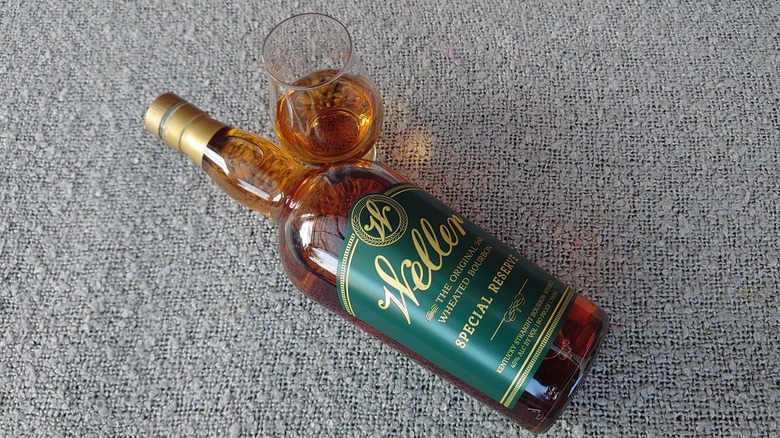
While the Sazerac Company operates multiple distilleries, Weller Special Reserve is produced at the Buffalo Trace Distillery in Frankfort, Kentucky. The part of the production process that makes Weller stand out is the mash bill – the recipe of grains used to create whiskey.
Bourbon's mash bill always contains at least 51% corn, and typically features a small percentage of malted barley to provide the enzymes needed for fermentation. Most bourbons will also add rye for structure, spice, and complexity, but Weller uses wheat instead. Although some distilleries disclose their precise mash bills, Buffalo Trace does not. Some whiskey enthusiasts believe the wheat portion of Weller's mash bill is around 20%, although this has not been confirmed by the distillery. Interestingly, it's also believed that the Weller mash bill is the same as the one used to produce the revered Van Winkle range.
According to Charley Costa Jr., the barrels they select feature unique markings. "If fans ever come visit us at the Buffalo Trace Distillery, it is easy to spot a Weller barrel in our warehouses. All Weller barrels are marked with green text which pays homage to a wise tale about William Larue Weller." The story goes that Weller's popularity in the 19th century led to counterfeit versions of the bourbon being sold under the same name. To differentiate the genuine spirit from counterfeit products, Weller supposedly marked each of his barrels with a green thumbprint.
How to drink Weller Special Reserve
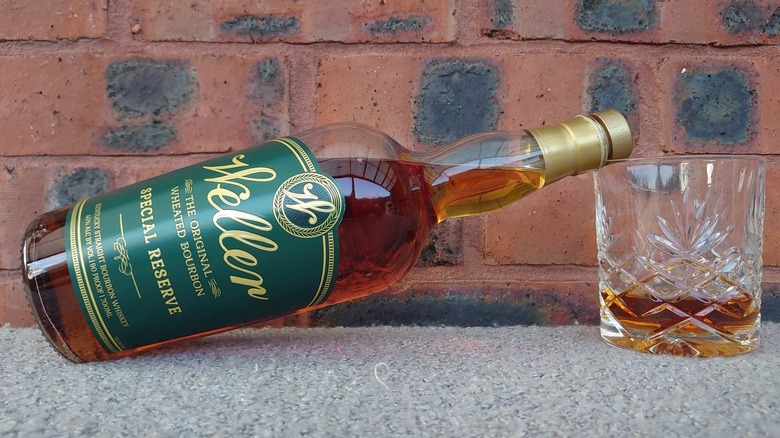
Weller Special Reserve is a versatile bourbon with a smooth nature that won't overwhelm any other ingredients you may add to it. That said, its rich flavor notes and 90-proof strength mean that it doesn't get lost in cocktails, either. It's also perfect for drinking neat or with a few drops of water.
Personally, I would say this whiskey deserves to be drunk neat, at least at first. This will give you the purest experience of the bourbon, letting every tasting note shine through. Take your time with it, and you'll probably find additional layers of flavor revealing themselves with each sip.
Even if you're not used to drinking whiskey, there's a good chance you'll find something to like about Weller Special Reserve. As Charley Costa Jr. puts it, "Weller is an easy enough flavor for non-whiskey drinkers to enjoy, but complex enough for whiskey lovers to appreciate." He also recommends using Weller Special Reserve to make a Paper Plane, which he considers one of the best ways to enjoy the bourbon in a cocktail. Ultimately, there's no right or wrong way to enjoy a whiskey as dynamic as this one.
Is Weller Special Reserve expensive?
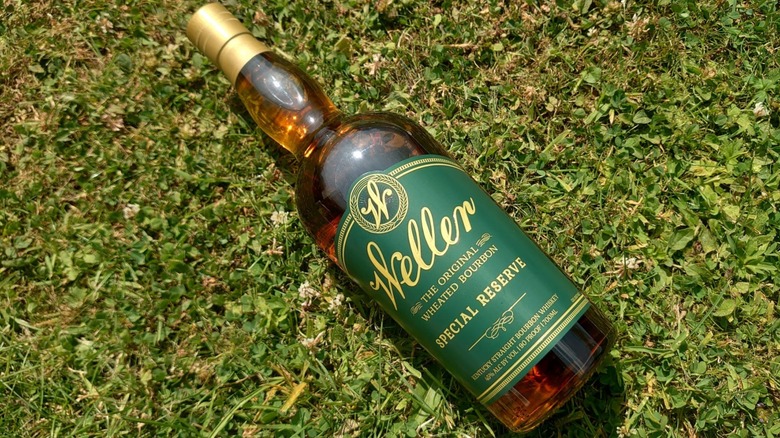
This question isn't quite as straightforward as it should be, as whether Weller Special Reserve can be considered expensive depends entirely on where you buy it from. But let's start with the brand's recommended retail price of $27.99. At that figure, this whiskey offers exceptional value, and you'll never see it as a waste of money.
However, the challenge over the years has been finding it listed at that retail price, or at least close to it. One of the most beautiful-yet-frustrating aspects of whiskey is that it takes so long to make. Unlike other beverages, a distillery can't simply ramp up production and have more product on the shelves in a matter of months. As a result, when demand far outweighs supply, there's very little a distillery can do in the short term. When this happens, secondary markets commonly resell the whiskey at vastly inflated prices.
The price of Weller Special Reserve can fluctuate, but I've commonly seen bottles around the $60 mark, and sometimes even over $100. At these rates, the value for money changes considerably, as there are many great whiskeys with more stable prices that can be found for much cheaper. If you can find this expression close to its recommended retail price, it's an outstanding purchase; if you can't, I suggest holding off for the time being.
Weller Special Reserve vs Maker's Mark
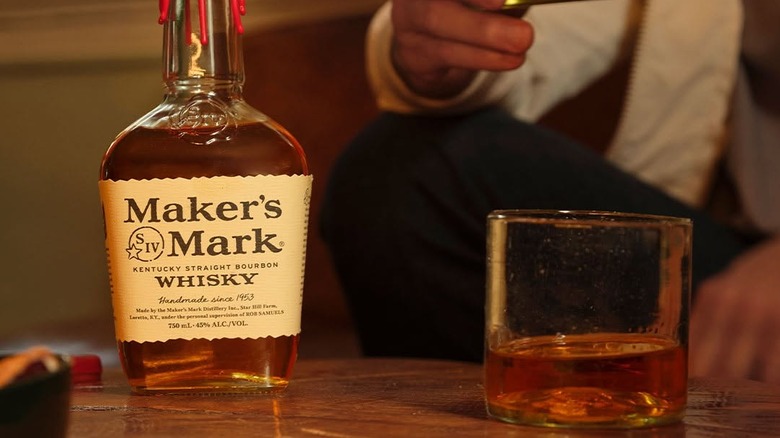
While Weller Special Reserve can still sometimes be expensive, Maker's Mark is one of the best wheated bourbons under $50. And unlike Weller, it's usually widely available, so for many people, it's their introduction to wheated bourbon. However, although availability may differ, the two bourbons are similar enough in strength and recommended retail price to warrant comparison.
Although both whiskeys weigh in at 45% ABV, they taste noticeably different from one another. Weller leans toward more delicate notes, with fresh orchard fruit flavors marrying with vanilla and caramel to give it an exceptionally approachable profile. In contrast, Maker's Mark feels a little more robust, even without the influence of rye.
Maker's Mark feels a touch bolder with its toasted oak, baking spices, and an earthier element. It also has a slightly creamier mouthfeel. If you're choosing based purely on taste, I'd say there is no clear winner here. Both bourbons have their own appeal, so the decision largely comes down to personal preference. Weller is more elegant and subtle with its complexity, while Maker's Mark is a little richer and more robust; personally, I think both are excellent. Weller Special Reserve feels a little more distinctive, but perhaps that's down to the fact that it's harder to get your hands on it. For many bourbon fans, the deciding factor won't be just flavor but whether they can find Weller Special Reserve at its intended retail price.
Weller Special Reserve vs Weller Antique 107
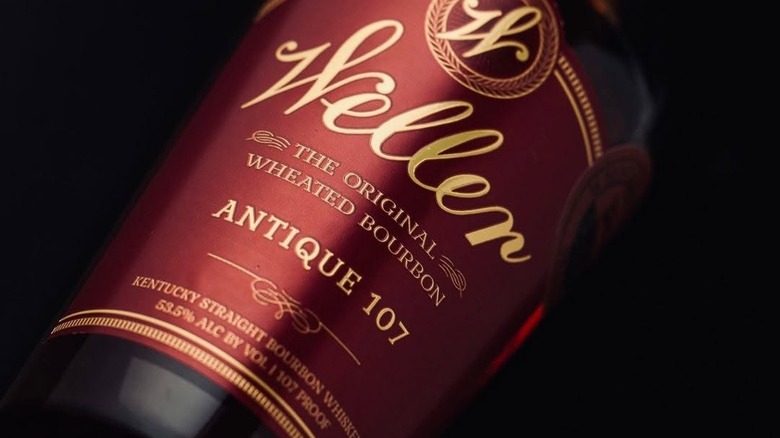
Weller Antique 107 is the natural progression from Weller Special Reserve. Both are produced at Buffalo Trace Distillery using the same wheated mash bill, but the higher proof of Weller Antique 107 gives it a significantly bolder character. At 107 proof, compared to Special Reserve's 90 proof, it delivers more concentrated flavors and a greater sense of intensity. You get the same general profile of sweet caramel and toffee, but those flavors feel deeper and richer, alongside notes of cinnamon, toasted oak, and darker fruit.
The higher proof also produces a warmer finish with extra spice and a longer-lasting aftertaste, making it feel like a much more robust bourbon. That boldness may not be to everyone's taste, especially those who love the Special Reserve's more delicate nature. Weller Antique 107 also comes with a higher price tag, with secondary prices usually sitting around the $160-$170 mark. If you're new to wheated bourbon or want an easy everyday sipper, Weller Special Reserve is a much better starting point. If you're looking for a more powerful, complex whiskey, the Weller Antique 107 is well worth the step up. However, as with the Special Reserve, it's best to seek it out at a more reasonable price.
William Larue Weller was an early whiskey pioneer
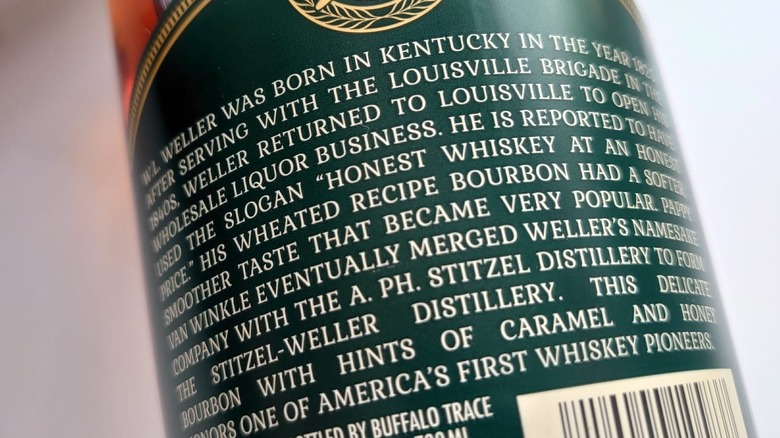
William Larue Weller was born in Kentucky in 1825 and was able to build on a legacy his family had already started. His family immigrated from Germany, and by the 1790s, had begun distilling on their land. When Weller entered the whiskey business in 1849, spirit distillation was rapidly expanding. It was also a time when quality was widely inconsistent, with whiskey often sold directly from barrels, and rye was generally used as the secondary grain. In both of those respects, Weller championed a different approach.
He and his younger brother, Charles, created a trading company in Louisville, selling whiskey under the label W.L. Weller & Brothers. He also saw an early marketing opportunity during the Civil War. While the other Weller brothers found themselves fighting for different sides, William and Charles remained neutral in order to sell their whiskey to both the North and South.
Weller was committed to ensuring the whiskey he was selling was of good quality, marked by his own slogan of "honest whiskey at an honest price." As Charley Costa Jr. puts it, "William Larue Weller built his reputation on making quality whiskey. That commitment remains a central part of the brand and its production at BTD (Buffalo Trace Distillery) today." But as we're about to see, Weller's biggest legacy was the ingredients that went into creating his bourbon.
Weller remains committed to its wheated origins
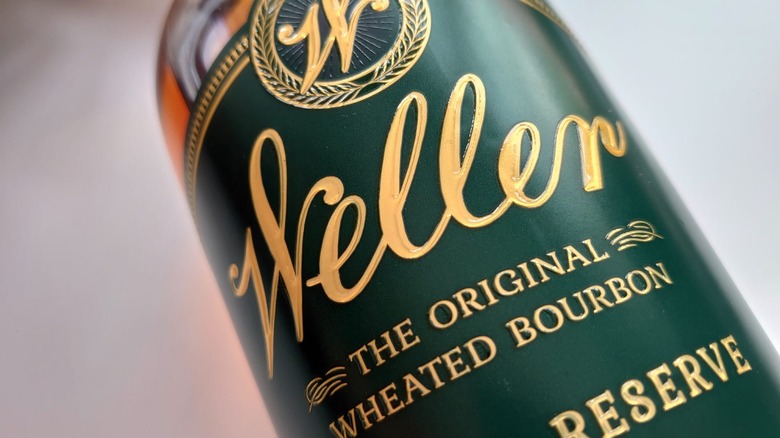
Weller Special Reserve proudly carries the slogan "The Original Wheated Bourbon," and it has long been a pioneer of the style. "William Larue Weller challenged convention by replacing rye with wheat in his bourbon recipe, which still defines Weller today," explains Charley Costa Jr. The result of this switch is a spirit that's typically softer, sweeter, and less peppery than rye-forward bourbon.
While it's unclear if Weller was the first-ever wheated bourbon, it was arguably the first of its kind to gain widespread popularity. Costa Jr. believes people are drawn to the fact that wheated bourbons tend to remain highly approachable while still offering plenty of complexity from a flavor standpoint. "That gentler profile often allows notes like honey, vanilla, caramel and oak to shine through," he notes.
Wheated bourbons remain a relatively small part of the overall bourbon market, making them something of a specialty. Yet, it seems as though Weller is leaning into its traditions rather than moving away from the recipe that helped define the brand. "We believe this wheated recipe is the backbone of the brand and continues to make the brand exciting for consumers," says Costa Jr.
Weller's history is tied to Pappy Van Winkle in several ways
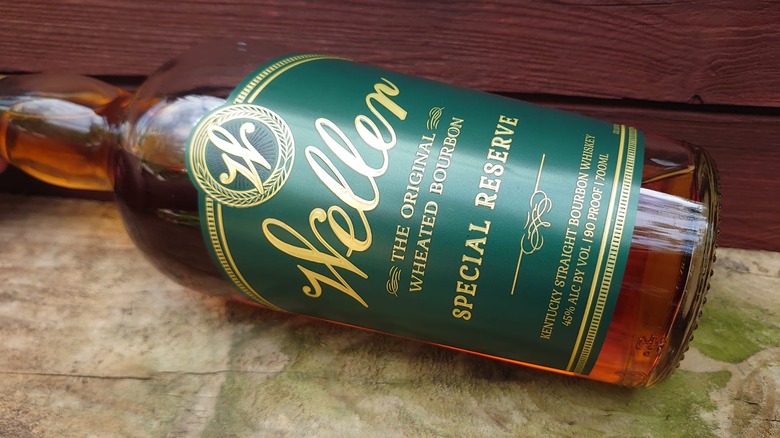
Few bourbon brands are linked quite like Weller and the legendary Pappy Van Winkle. The connection between the two brands began with the men behind them. "The Weller family history and their connection to the Van Winkle brand is undeniable," explains Charley Costa Jr. "William Larue Weller first hired Julian 'Pappy' Van Winkle as a salesman for W.L. Weller & Sons. Pappy would go on to help build the legendary Stitzel-Weller Distillery, which has helped continue to grow the lore around the wheated bourbon recipe."
The Pappy Van Winkle range is also made with a wheated mash bill, further connecting the two brands and cementing their status as two of the most recognizable names in wheated bourbon. The brands were eventually reunited at the same distillery, with production of Weller bourbon moving to the Buffalo Trace Distillery in 1999 and Pappy Van Winkle following suit in 2002. With both brands now produced at Buffalo Trace using the same mash bill, it's a fitting continuation of a story that began when Weller took a chance on hiring a young salesman.
Weller's rarity may be coming to an end
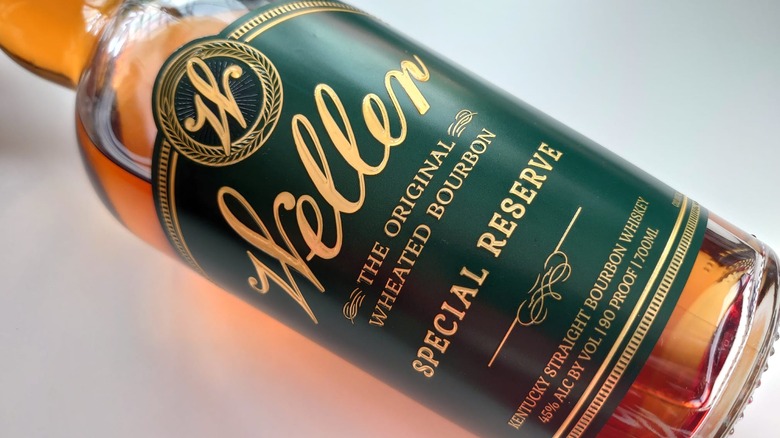
Weller's slogan — "honest whiskey at an honest price" — might seem a little ironic these days, given how Special Reserve's rarity often makes it significantly more expensive than its SRP. However, Charley Costa Jr. says one of the biggest myths surrounding the Weller brand is that this scarcity is manufactured. "Weller is a beloved brand both by us and our consumers, and we both would like nothing more than to see availability increase to allow more people to try the brand."
And it seems that an uplift in availability may be coming sooner rather than later. Costa Jr. confirmed that the brand is benefitting from the recently completed $1.2B expansion of the Buffalo Trace Distillery, which will hopefully increase the output and availability of Weller bourbon. When asked whether the brand has stayed true to its slogan, Costa Jr. gave a passionate defense: "Absolutely. To me, 'honest whiskey' has always been about integrity first. The market has certainly changed since Weller first used that phrase, and consumer demand has created challenges around availability and pricing that are largely outside the brand's control."
Costa Jr. also pointed to Weller Special Reserve's $27.99 recommended retail price as evidence that the brand's intended pricing remains relatively accessible, even if bottles often sell for considerably more on the secondary market. Whether increased production will bring retail prices closer to that figure remains to be seen, but let's hope that the Buffalo Trace expansion will make Weller more readily available to consumers.