

10 Meals You'd Find On An American West Saloon Menu
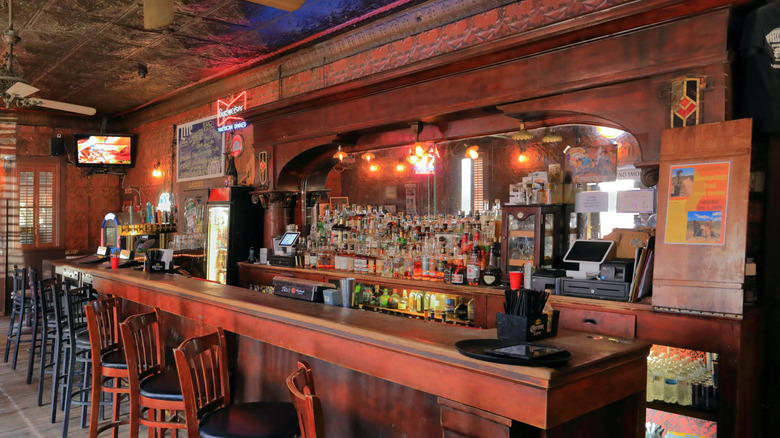
A saloon in the Old West may conjure images of swinging doors, raucous parties, poker, and bar brawls. However, in truth, a saloon on the Western frontier was one of the few public gathering places where folks could go to share news, get their mail, find work, and, of course, sit down to a hearty meal. Saloons ranged from upscale destinations with crystal chandeliers, deluxe furnishings, and fancy "French" menus to ramshackle places serving stale beer and rotgut whiskey.
Even so, for folks who had spent months driving cattle or traveling in a stagecoach, saloons were the only place to get a decent meal and commune with friends. Between the 1850s and early 1900s, westward expansion brought immigrants from around the world. People of all classes chased opportunity and fortune to the Western frontier, bringing their culinary traditions with them. Thus, it was more common than you'd think to find Chinese American dishes like chop suey or German-style buffets serving bratwurst.
Cattle was big business, and delicacies like Rocky Mountain oysters and beef dishes from steak to roast beef were also common. Near the turn of the century, the advent of the railroad transported everything from raw oysters to tinned herring to folks who had never even seen the ocean. All these dishes and more were served at saloons in the Old West. In fact, here are 10 meals you could find on saloon menus across the frontier.
Baked pork and beans
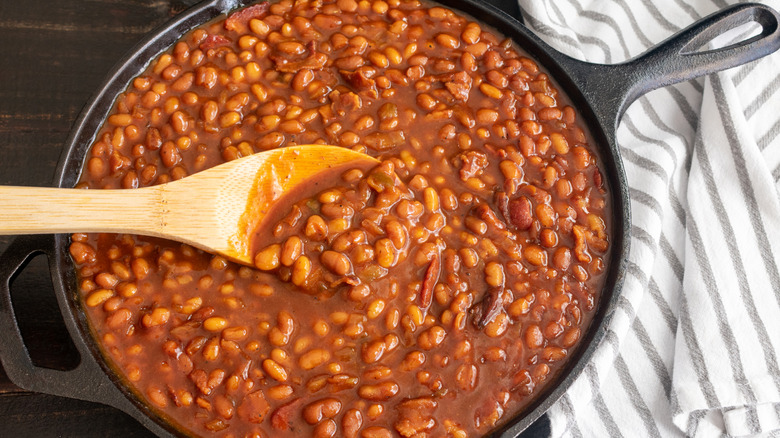
Baked pork and beans were ubiquitous at saloons across the west. The basic recipe consisted of navy beans, salt, molasses, and salt pork boiled together and then baked. To recreate it today, you could use another pork cut, such as smoked ham, to imbue a richer, smokier flavor to the baked beans. Baked pork and beans were cheap to prepare (and profitable to sell), lasted without refrigeration, and used ingredients most everyone would have.
English plum pudding and other European desserts
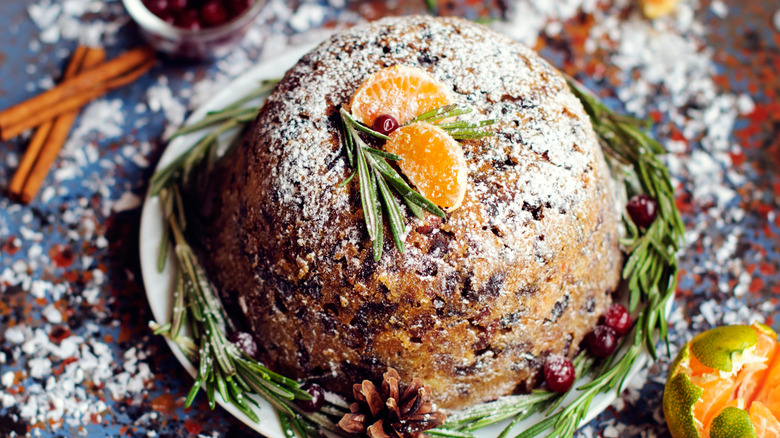
English plum pudding is a Christmas dessert that's been beloved in some form for centuries, but it was commonly found year-round at saloons across the American West. Plum pudding combines dried fruit and citrus peel, spices, cake-like batter, and brandy. The dessert was likely popular with saloon owners because it would keep for months thanks to its alcohol content.
Champagne and oysters
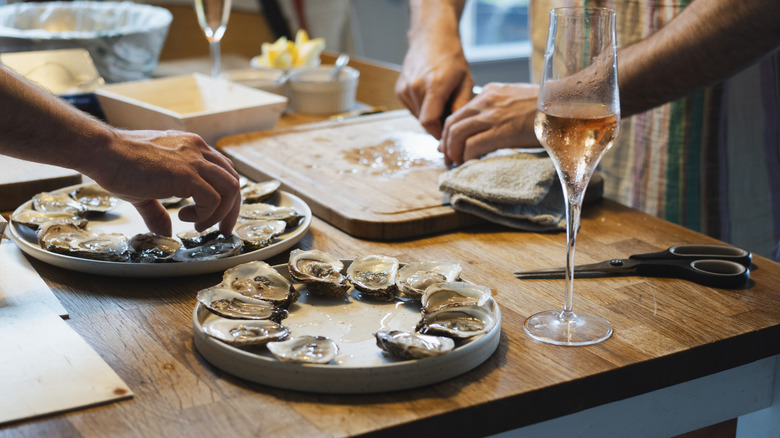
To get a taste of the Wild West, slurp down an oyster with a sip of champagne. Folks in the 19th century, regardless of social echelon, were obsessed with oysters. They were sold by street vendors and in upscale restaurants alike. Oysters were prepared many ways, including grilling and shucking. Once trains started connecting the coasts, they were shipped fresh and canned to saloons everywhere. Champagne was a mark of civility on the frontier, and a drink that (unlike whiskey) couldn't be adulterated — proven by the pop of its cork.
Rocky Mountain Oysters and rattlesnake meat
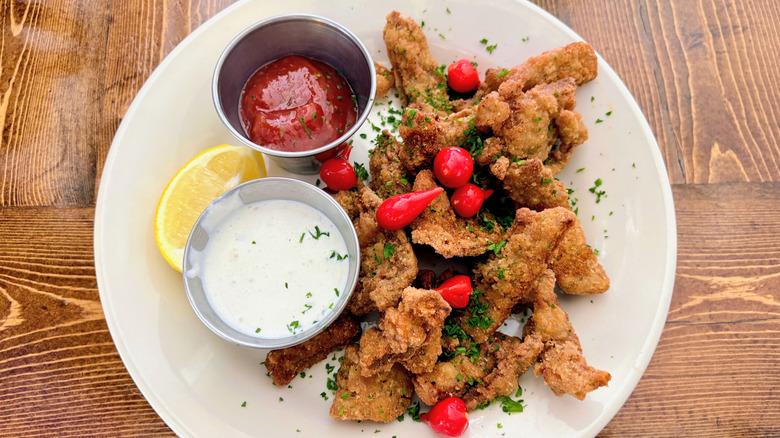
Resourcefulness was key in the Old West, especially when it came to food. Rocky Mountain oysters, aka prairie oysters or cowboy caviar, are actually bull calf testicles that are peeled, thinly sliced, and dredged in flour or cornmeal before being fried. The delicacy still appears on menus in Western states today, much like rattlesnake. Not to be confused with Texas Roadhouse's Rattlesnake Bites, rattlesnakes often went from danger to dinner on the frontier. Breaded and fried, they were a reliable source of protein and were reputed to taste like chicken.
Roast beef with mashed potatoes and gravy
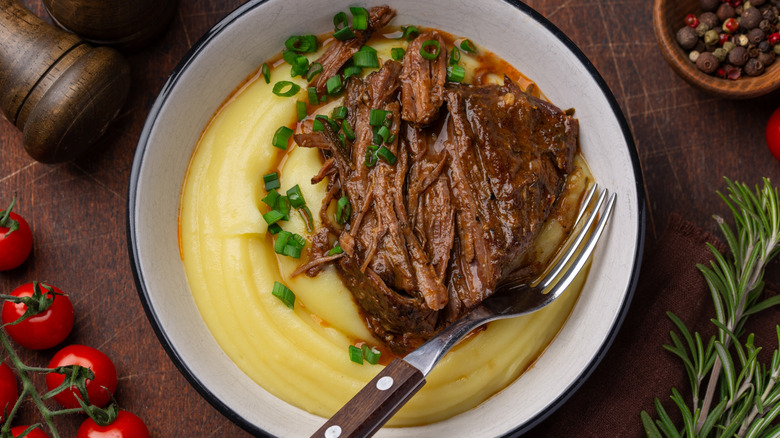
Roast beef dinners are a cornerstone Sunday dinner in England, and that tradition seemed to have crossed the pond into the Old West as well. Many saloons gave beef pot roast an earthy sweetness with added vegetables in the pot, often with mashed potatoes and gravy in tow. They also served dishes like corned beef and cabbage, a classic Irish American meal inspired by the meat served in Jewish delis.
The not-so-free 'free lunch'
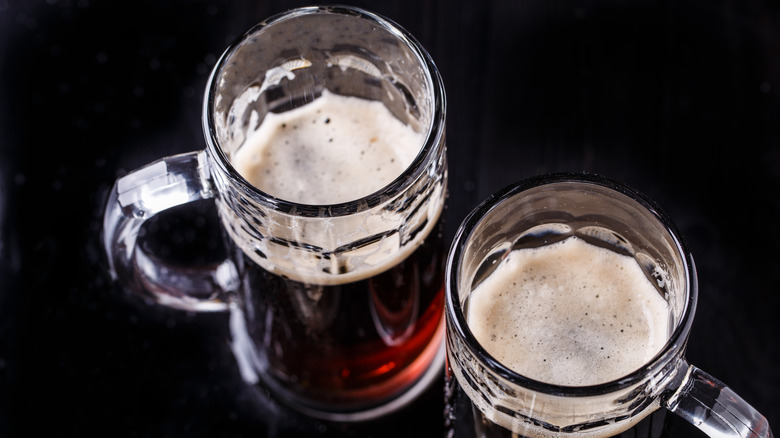
They say there's no such thing as a free lunch, but in the saloons of the Old West, the complete opposite was true. The beer you would've found in an Old West saloon was always accompanied by a buffet table laden with an array of salty foods aimed at making patrons order more to drink. For the price of two beers, patrons could eat from buffets might include deli meats, pretzels, or sardines, or possibly an oyster soup — you could say the saloon free lunch was the original thirst trap.
Fish and seafood
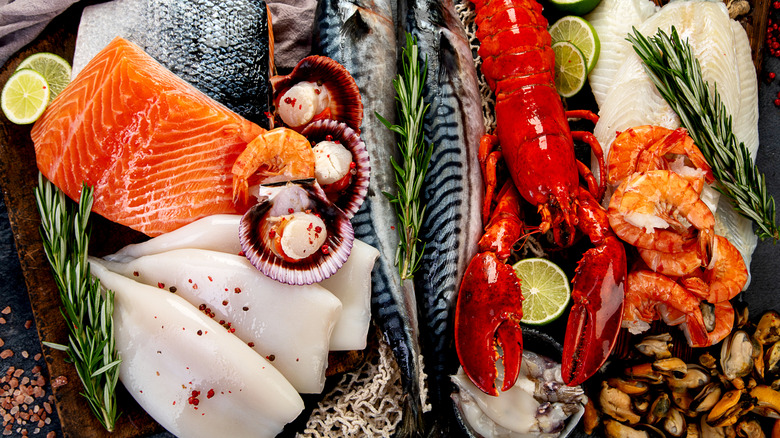
Folks in the Old West, whether they lived in one of the coastal territories or a landlocked region, loved fish and seafood. In addition to oysters, saloon patrons loved salty smoked or pickled herring, which was often featured on free lunch tables. Upscale saloons served lobster transported on ice by rail. Tinned clams and canned sardines, whether as a quick snack or classy appetizer, were prized for their shelf life. Resourceful saloon owners served fresh fish like trout or salmon found locally.
Chop suey, chow mein, and other Chinese-American dishes
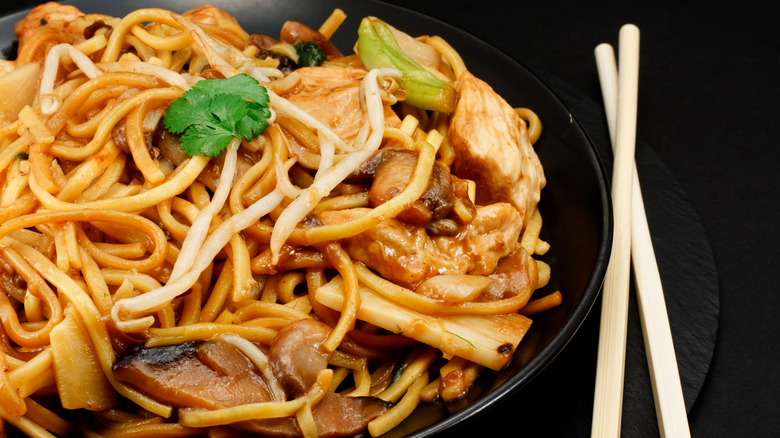
Thanks to the influx of Chinese immigrants who came to the U.S. to build the railroads, all types of other Chinese-owned businesses popped up. Using ingredients common in the West, Chinese restaurateurs developed a canon of Chinese-American dishes that aren't commonly eaten in China, but still popular in the U.S. today, such as chop suey, chow mein, and egg foo young. Though there was strong anti-Chinese sentiment in the 19th century, Chinatown neighborhoods still thrived. Even smaller towns had Chinese saloons and gambling houses.
Commonplace dishes with misspelled French names
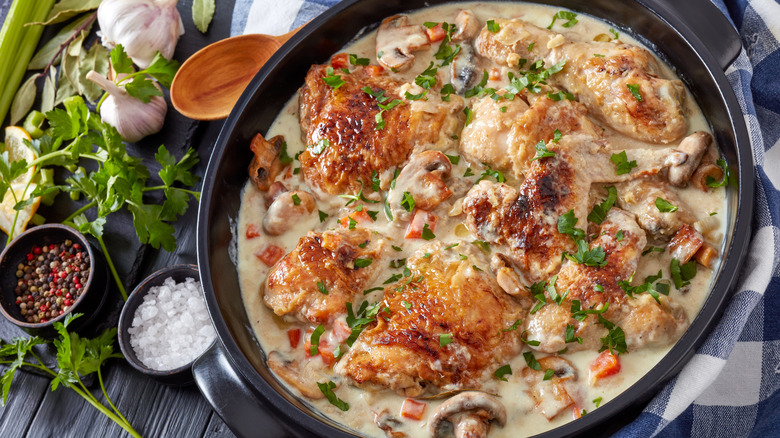
Saloons that wanted upscale clientele paying premium prices gave dishes French names. At the Occidental Saloon in Tombstone, patrons were known to dine on dishes like "pinons a poulett, aux champignons," which was really just chicken drumsticks with mushrooms. While there are plenty of French dishes you need to try at least once, these misspelled meals were misspelled weren't really French at all: Lapine Domestique, a la Matire d'Hote was just domestic rabbit prepared the saloon owner's favorite way.
Pozole, nachos, and other Mexican dishes
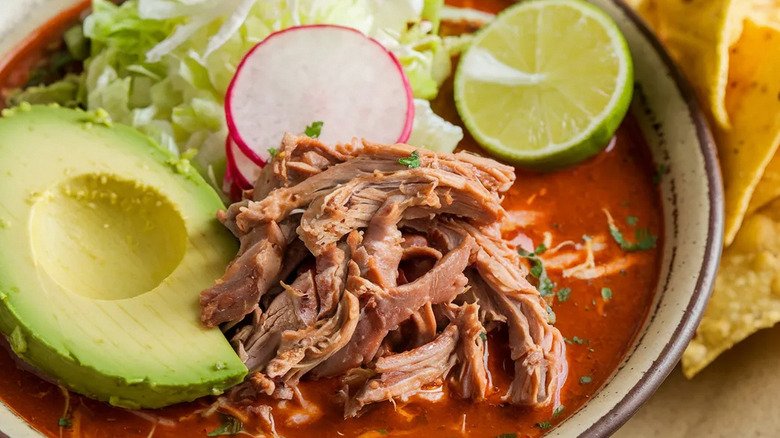
Before becoming part of the U.S., California and the majority of the Southwest was all part of Mexico. It tracks that there were lots of saloons across the region that served typical Mexican dishes. Tamales, chile con carne, nachos with cheese and beans, and pozole, a vibrant Mexican soup made with pork and hominy, were common fare.