

These Old-School Methods Beat Modern Techniques For Juicy And Tender Meats
We may receive a commission on purchases made from links.
Regardless of how you choose to serve a cut of meat, the general consensus is that it should be juicy and tender. And there is no shortage of tips for the modern cook on how to achieve this, from the choice of meat to overnight brining, searing, and marinades. Your ancestors, however, would have used different methods of keeping meat moist, among them the rhyming pair known as larding and barding.
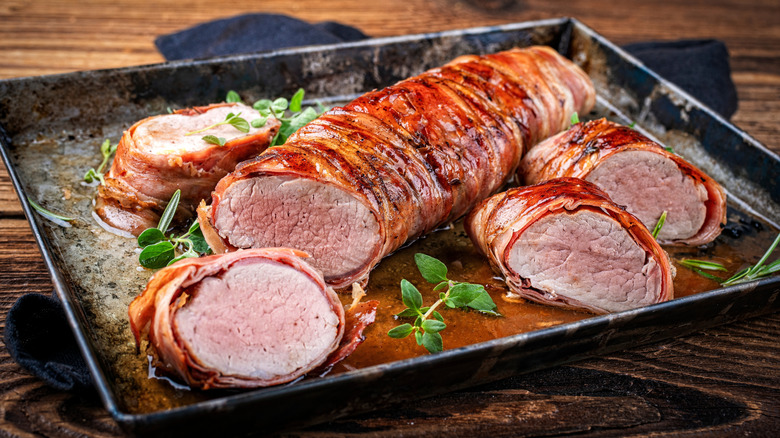
Larding is the process of threading thin strips of fat through a cut of meat before cooking, essentially to replicate natural fat marbling in leaner meats. You're probably more familiar with barding, even if you don't recognize the name. It involves wrapping fat around the meat to prevent the outside from drying out during cooking. Although they both involve adding fat to the meat, larding moistens the meat from the inside, while barding has more of a protective effect.
Both of these techniques would have been commonly used up until the mid-20th century but have now largely been relegated to culinary theory. A big part of this is that commercially bred meat has more marbling and is more readily available. In the past, people would have been limited to the meat they could raise or obtain locally. With the advent of electric ovens and meat thermometers, it also became easier to avoid overcooking and drying out meat. Finally, the use of lard and other animal fats in cooking has taken a backseat to more heart-friendly vegetable oils. But if you're interested in expanding your culinary skillet, there is still a place to incorporate larding and barding into your cooking.
What is larding?
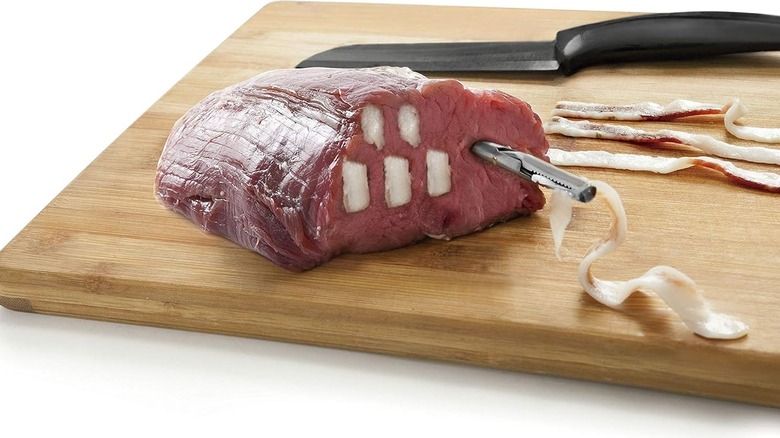
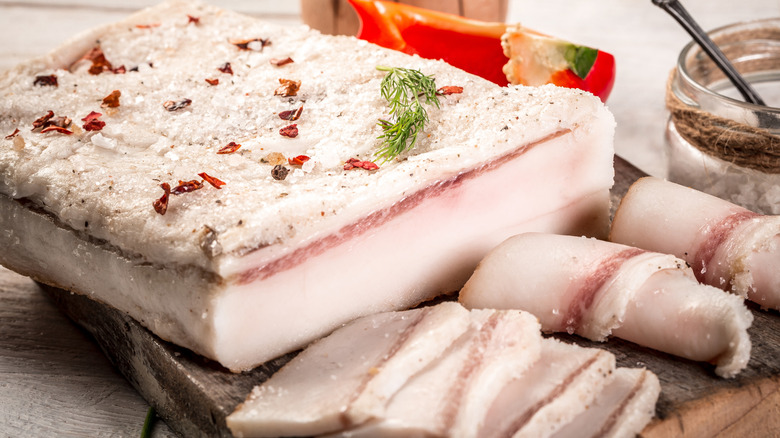
Larding involves threading long strips of fat, traditionally salt pork or fatback, through a piece of meat. And it's these strips of fat known as lardons that give the technique its name. The first recorded mention of larding was all the way back in the 14th century, though it may have been in use before this time. It was most commonly used for game meat such as venison or pheasant, which are naturally very lean, but later recipes did incorporate the technique for cooking leaner cuts of beef. Although larding won't prevent moisture loss during cooking, the fat will render and coat the meat, creating a juicier mouthfeel overall. Some chefs have commented that it also disrupts the structure of the muscle fibers and prevents them from toughening during cooking.
Today, larding is relatively uncommon outside professional kitchens and enthusiasts of classical French cookery. Some people refer to the technique of adding fat under the skin of a roasting chicken as larding, but this isn't introducing fat into the meat itself, making it more similar to barding but without the protective aspect.
If you want to try it yourself, you'll need a larding needle like this wicking needle from Lacor. Alternatively, you'll need a knife and a lot more patience, though people have suggested that freezing the lardons can make it easier to insert them into the meat. For most everyday cuts, careful cooking is usually enough to keep meat from drying out. But if, for example, you're cooking a piece of venison and want to get the most out of it, it could be time to get out the lard.
What is barding?
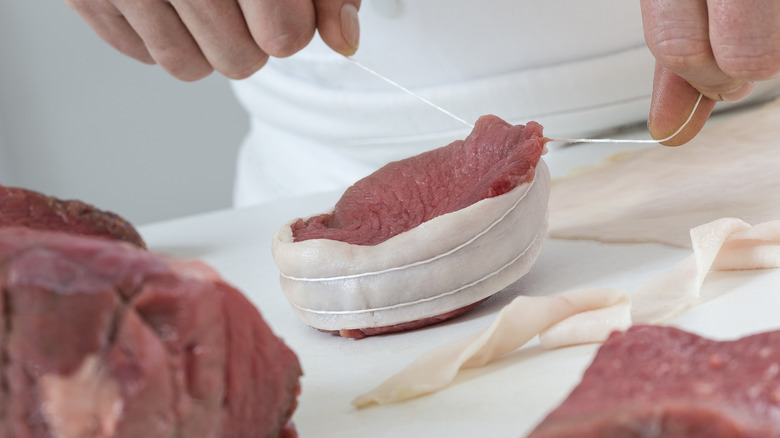
Barding is the less complicated and less invasive method of the two. In theory, it's as simple as wrapping fat around a piece of meat, but in practice it might need some fiddly trussing techniques to help it stay on during the cooking process. There are more options for the type of fat used for barding, which could be bacon, pancetta, prosciutto, or caul fat.
Just like larding, this is a centuries-old technique and would have been used to protect large cuts of meat from burning or drying out while roasting. Again, it would have been used on leaner meats, but particularly on whole birds where the breast is prone to drying during cooking.
Barding does have a downside compared to larding: you won't get a good sear on the meat. But if you do want some color on the outside, you can pull the fat off towards the end of cooking. The timing for this will depend on whether you're roasting or grilling. For larger cuts of meat, barding also won't be enough for the fat to penetrate to the middle. Despite that, barding is still the one home cooks reach for more often, mostly because it doesn't ask for any special equipment. Wrapping meat or fish in bacon is not an uncommon sight to see today, but it's used just as much to add flavor as it is for the moisture. It's also a tasty trick employed to stop delicate fish from sticking to a grill.
When to use larding vs barding
If you're up for the challenge, larding and barding are both valuable techniques to learn, but knowing when to use one or the other will go a long way in determining your success. For instance, larding is best used for large cuts of meat such as eye of round, especially if you want to cook them for an extended period, such as with roasting. If you opt for this, you will need to give yourself plenty of time both to prepare the strips of fat and thread them through the meat.
Barding is great for smaller cuts of meat which would be too fiddly to thread with fat, or when you plan to cook meat using direct heat. While it can still be good for oven roasting birds or fish, it's particularly helpful for adding fat and flavor when pan cooking or grilling. Barding is still used when making a traditional French dish known as tournedos, which uses lean beef tenderloin.
Both of these methods were originally workarounds to the meat and cooking methods available at the time. And although they still serve their original purpose, there's no point in using them as an excuse for overcooking. With the accurate tools and appliances we have today, you can create a meat dish that's always juicy and tender.