

14 Meals You Probably Ate In The '60s If You Were Middle Class
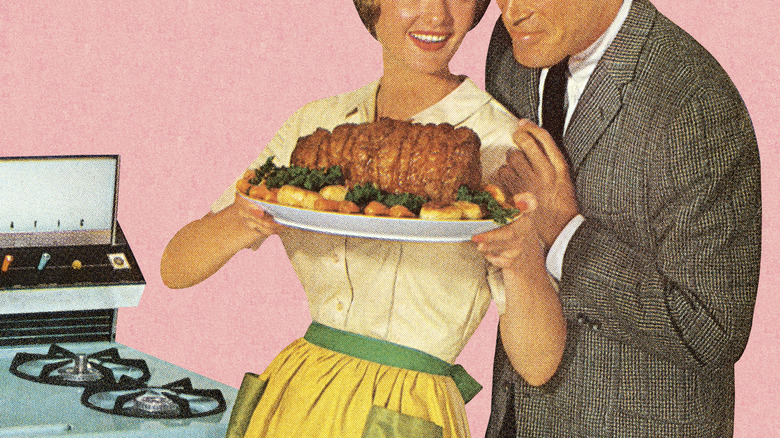
Following a decade filled with processed foods, TV dinners, and convenience cooking, the '60s saw a shift in American palates. Jet travel was in full swing, and people were growing more and more curious about international cuisine. One of the first celebrity chefs in the U.S., Julia Child, urged home cooks to try new flavors and made French cuisine accessible to the everyday American. All of a sudden, middle-class Americans could impress their neighbors with homemade boeuf bourguignon by way of France, or cheese fondue from the Swiss Alps.
The middle class was growing, with money to spend and time to indulge. However, the efficiency and affordability of convenience cuisine didn't go away completely. Casseroles, cocktail meatballs, and macaroni salad were still largely popular in the '60s. If you were born in the baby boomer generation, these recipes will surely bring about nostalgia and maybe even surprise you.
Swedish meatballs
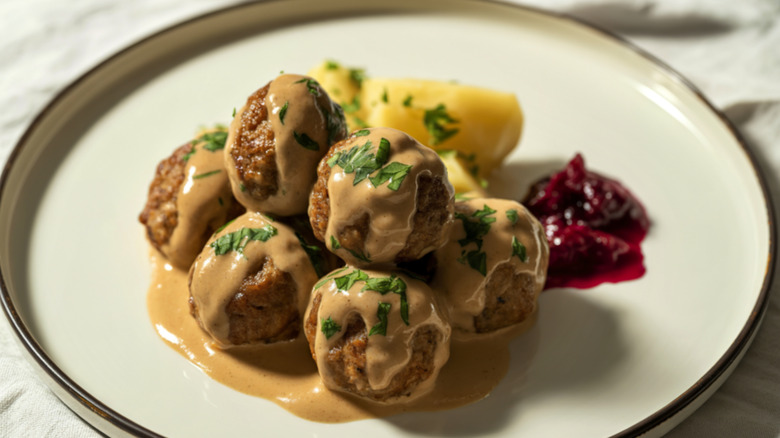
During the 1960s, as sleek, functional Scandinavian furniture became popular amongst Americans, so did Scandinavian food. Spaghetti and meatballs were already a tried-and-true dinnertime staple, so it's only natural that Swedish meatballs would become a family favorite. In a fascinating twist, this Scandinavian classic isn't actually from Sweden. According to Sweden's own X account, the recipe was brought to the country from Turkey by a former king. Aside from its roots, there is no denying the dish is one of Sweden's biggest culinary exports.
Nowadays, you can easily find these juicy, gravy-coated balls of goodness at any Ikea food court, but they are surprisingly easy to make at home. Classic Swedish meatballs typically use a mixture of beef and pork, combined with binding agents like breadcrumbs and egg, and seasoned with onions, salt, and pepper.
The key to a good Swedish meatball is its small size and savory gravy. The gravy is rich from cream, beef stock, and a splash of soy sauce for extra umami. Best served with mashed potatoes and lingonberry jam to cut through the richness, Swedish meatballs are an affordable, hearty meal perfect for middle-class families.
Fondue
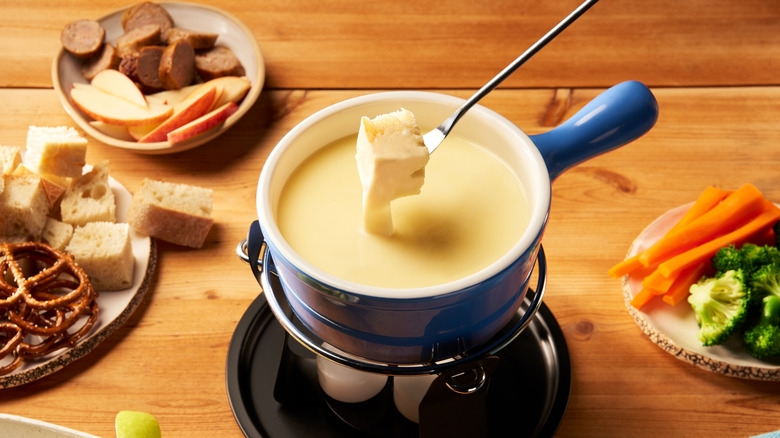
When hosting a large gathering, having something that guests can graze on, with enough variety to meet diverse palates, is a must. Nowadays, charcuterie boards are all the rage. Back in the 1960s, nothing was as communal and interactive as a fondue spread.
Fondue has roots that can be traced back to ancient times, but the contemporary iteration of the dish took hold in the French and Swiss Alps in the 1800s. During harsh winters, making fondue was a great way to stretch resources by using stale bread and aged cheeses. The dish didn't take hold in the U.S. until the 1960s, when Americans became more interested in communal dining and international cuisine.
The key to a good cheese fondue is a flavorful, decadent sauce. The sauce includes Swiss cheeses like Gruyère and Emmentaler, which are added to a garlic-rubbed pot filled with wine and cornflour. The cornflour acts as a thickener, giving the sauce its smooth, velvety consistency. Crusty bread, fresh veggies, roasted potatoes, and meat are popular dipping sides, but the possibilities are endless.
Chicken à la king
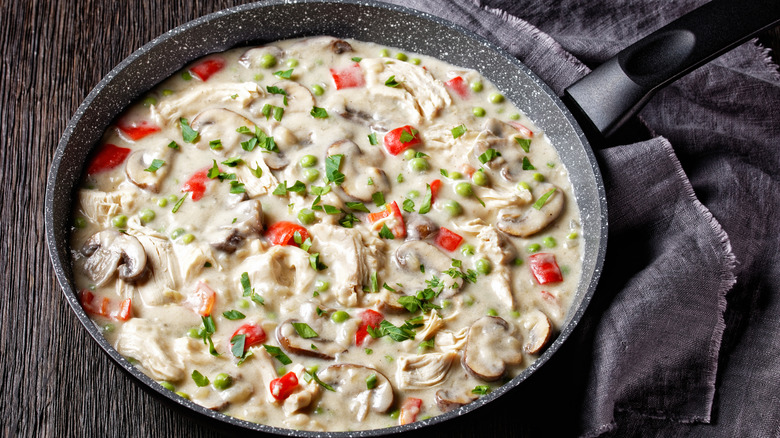
Chicken à la king may have started off being served at luxurious restaurants for high-end guests, but by the 1960s, it found its way onto the dinner plates of middle-class Americans. The dish has a murky history, but is commonly thought to have originated at a high-end resort or restaurant. Dishes like A5 Japanese Wagyu or fresh truffle pasta don't often make their way onto the plates of everyday Americans due to the use of expensive ingredients.
However, chicken à la king can be made with leftover chicken and frozen veggies, making it both accessible and affordable. It takes only minutes to make and can all be cooked in one pan, which is perfect for those looking for a quick weeknight meal. The key to this dish is a creamy sauce packed with mushrooms, peppers, peas, and chicken, which can be served with any staple carb. Adding dry white wine or sherry is a great way to elevate chicken à la king and give it an upscale flair, just like its roots.
Chicken Kiev
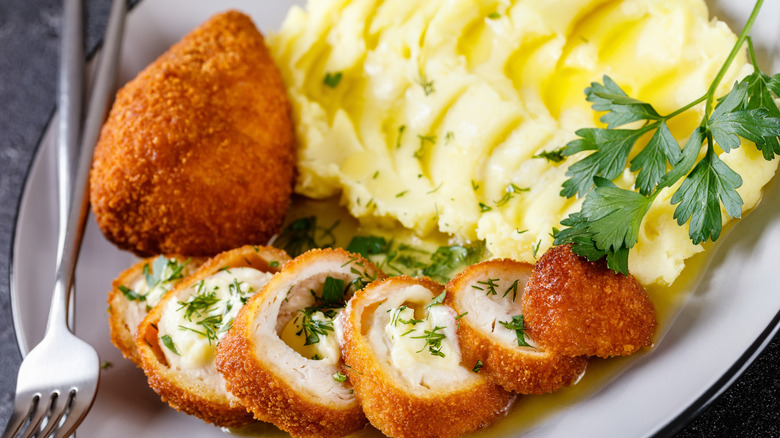
Like many recipes, chicken Kiev is the result of culinary fusion and an exchange of knowledge. You'd expect this dish to have originated in Kyiv, Ukraine, but the origins are more complex than that. Chefs from a Kviv hotel were sent to Paris for culinary training, and they brought this dish back, originally using veal. Eventually, chicken was subbed in, and chicken Kiev made its way to Russian and Ukrainian restaurants in New York City.
The dish includes a chicken fillet pounded, breaded, rolled around seasoned butter, and then fried. It became a hit in the 1960s, in part due to tourists from Kyiv spreading the word. While traditional recipes use unseasoned butter, American recipes incorporate seasonings like fresh herbs and garlic. These golden parcels of goodness make for a show-stopping entree and can be sliced to reveal the oozy interior of herby, seasoned butter. For a healthier alternative, opt for oven-baked chicken Kiev rather than the original fried method.
Steak Diane
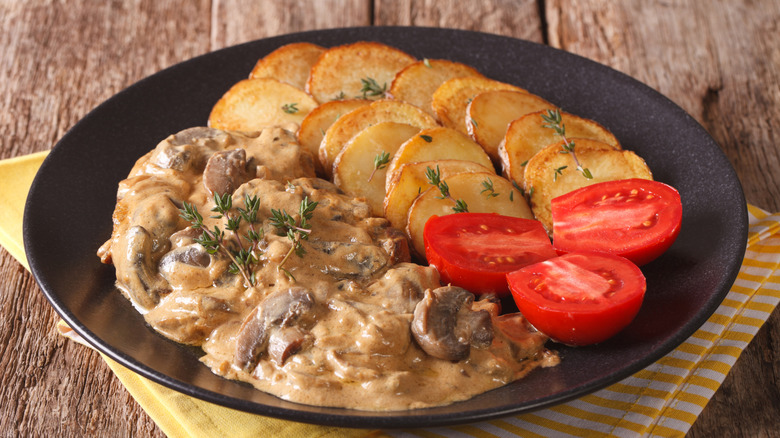
Steak Diane is one boomer recipe that definitely deserves a comeback. Like many popular middle-class meals of the '60s, this dish comes by way of Europe. Originally served in London during the 1930s, steak Diane became a staple Continental dish served stateside in the 1960s and '70s. Rumored to be named after the Roman goddess of the hunt, Diana, this steak dish is rich and complex. The key components are a pan-seared beefsteak and a pan sauce made using the drippings of the steak. Restaurants in New York City once served the dish table-side, flambeing Cognac to build the sauce, adding a bit of flair to the dining experience.
Often using beef tenderloin, this isn't an everyday meal but is still within the budget of middle-class Americans looking to treat themselves. The best part of steak Diane is the sauce, which is a savory, velvety combination of cream, Cognac, Dijon mustard, and Worcestershire sauce. Shallots and garlic, along with pan drippings, add further depth, packing each bite with layers of flavor.
French onion dip
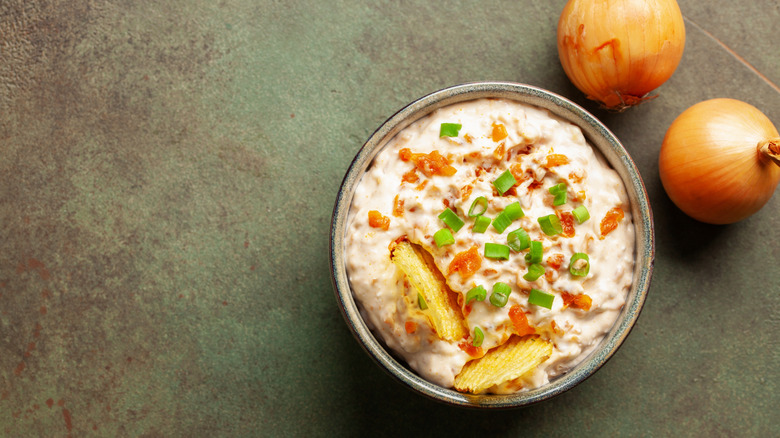
When it comes to retro appetizers, French onion dip has stood the test of time. It's all thanks to the tea company, Lipton. In the 1950s, Lipton debuted dehydrated soup mixes. By the late 1950s, the company released advertisements with recipes for California dip, a mixture of Lipton's onion soup mix and sour cream. By the '60s, the name California dip fell out of fashion and was replaced by French onion dip. The original recipe only used two ingredients, making it a cheap, easy appetizer to whip up on the fly.
Due to its simplicity, French onion dip is incredibly adaptable. It can be elevated with caramelized onions, Worcestershire sauce, or onion powder for extra umami. Rather than just sour cream, you can add mayonnaise or cream cheese to the mix. An unexpected addition like pickles adds an extra layer of acidity and tang. French onion dip can be whipped up using a myriad of cupboard staples, so next time you're in a pinch, add this dip to the rotation.
Macaroni salad
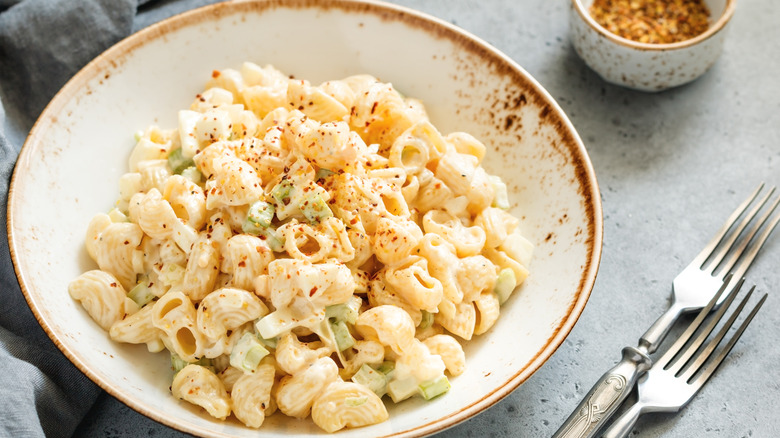
Whether you're packing up some bites for a picnic or looking for a cooling bite on a hot summer day, nothing hits the spot like macaroni salad. This filling side dish won't break the bank and can be made in large portions to feed a crowd or even last the week. Whether you're a boomer, a millennial, or Gen Z, you've likely tried macaroni salad at one point or another. An American classic, the dish has potato salad to thank.
In the early 1900s, potato salads with mustard and mayo became popular. By the 1930s, a recipe was released for "mock potato salad," subbing potatoes for macaroni. By the '60s, mac salad became a staple meal for middle-class families across the U.S. For a creamy macaroni salad, macaroni is tossed with fresh veggies like celery or bell pepper and coated in a mayo-based dressing. However, the possibilities are endless. As long as you have macaroni, you can customize seasonings, dressings, and veggies to your heart's content.
Boeuf bourguignon
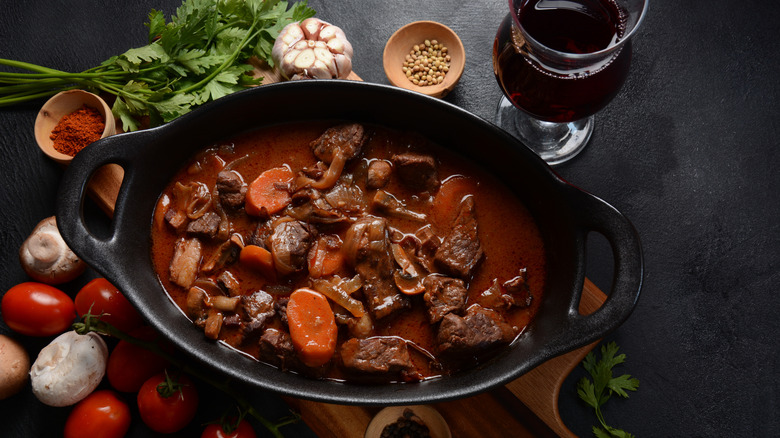
If you grew up in the '60s, you've likely heard of the legendary chef Julia Child. Through her cookbooks and cooking shows, Child taught everyday Americans how to make French classics at home. One of her most popular dishes is her version of the French classic, boeuf bourguignon. The first dish ever featured on her PBS cooking show, this hearty stew quickly became a staple in household kitchens across America.
Boeuf bourguignon is a slow-braised stew with a rich, red-wine mushroom sauce. Beef chuck gets seared and then slowly simmered until tender in a wine and stock broth. Carrots, onions, mushrooms, and bacon bolster the dish, making for an intensely savory, beefy sauce with layers of complexity.
Although this dish is a bit time-consuming, each additional minute of cook time only deepens the flavors and tenderness of the meat. The prep step that's crucial for a successful boeuf bourguignon is mise en place. Preparing your ingredients in advance will streamline the cooking process and make it a little less overwhelming to make this delicious stew.
Grape jelly cocktail meatballs
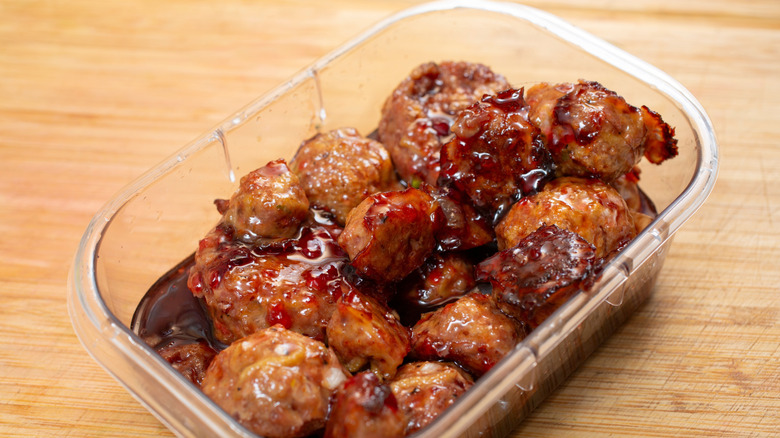
The 1950s and '60s had their fair share of unique party appetizers. From cheese balls to Jell-O salads, the baby boomer generation came up with some fascinating flavor combinations. You wouldn't normally pair meatballs with grape jelly, but recipes for these "cocktail meatballs" started popping up throughout the 1960s. Grape jelly cocktail meatballs quickly became an appetizer favorite for party hosts throughout the country.
While the combination of grape jelly and meatballs sounds bizarre, it surprisingly works. The jelly adds a sweet stickiness that complements the salty savoriness of the meat. The recipe typically uses frozen meatballs, grape jelly, and the occasional added ingredient like ketchup or chili sauce. All you need to do is throw the ingredients in a slow cooker and cook until the meatballs are heated through and the sauce is thickened. For party hosts, this is a stress-free recipe that can be prepped in advance and set aside until serving.
Tunnel of Fudge Cake
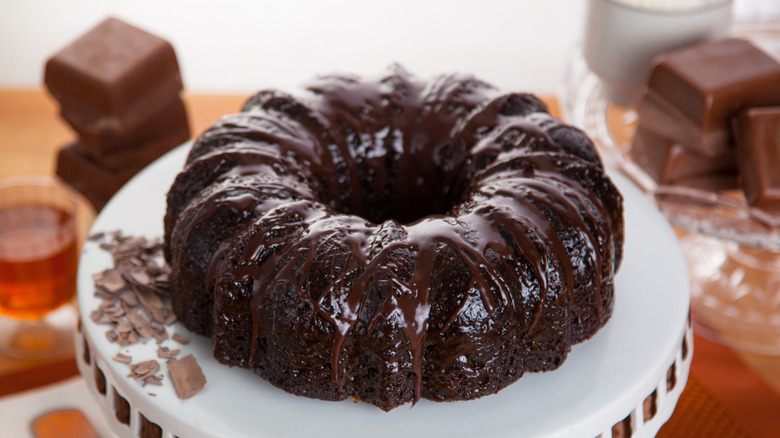
One of the most popular cakes of the 1960s was discovered in a bake-off competition, and it didn't even win. In 1966, a woman named Mrs. Ella Helrich entered her cake into the annual Pillsbury Bake-Off competition. Her cake, a chocolate-nut Bundt cake with a fudgy center, was named the Tunnel of Fudge Cake. The interior of the cake remained gooey, similar to a lava cake. Although the cake ultimately took second place, its legacy far surpassed the winner's, becoming one of Pillsbury's most popular recipes at the time.
The original recipe for this esteemed cake can't be replicated exactly, since Pillsbury discontinued one of its key ingredients, Double Dutch Fudge Buttercream Frosting Mix. All is not lost, though. Pillsbury released an updated version of the iconic dessert, which includes a recipe for a homemade chocolate glaze topping.
Shrimp cocktail
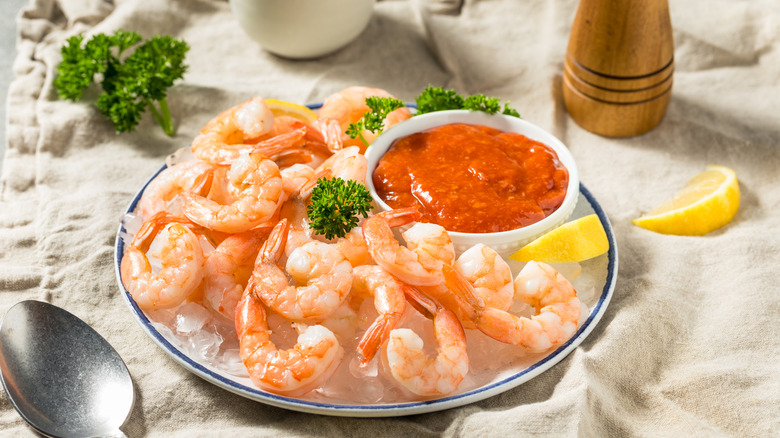
Whether you're at a birthday party, graduation, or wedding cocktail hour, you've likely come across shrimp cocktail. This finger food is the perfect party appetizer. It can be served elegantly, with shrimp lining the rim of a sauce-filled martini glass, or layered over ice with a few lemon wedges. Either way, the moment shrimp cocktail enters the party, it's usually gone in minutes. This quintessential American appetizer hit peak popularity from the '60s to the '80s. It was, and remains, a classy, refreshing bite perfect for sharing.
A classic shrimp cocktail includes chilled shrimp that were poached with aromatics, and it can't be served without its ultimate sidekick, cocktail sauce. Cocktail sauce usually includes a mixture of ketchup, horseradish, lemon, Worcestershire sauce, and hot sauce. It's punchy, acidic, and a little spicy. Although it hit peak popularity decades ago, shrimp cocktail is the perfect finger food for seafood lovers or those looking for a quick bite between conversations.
Grasshopper pie
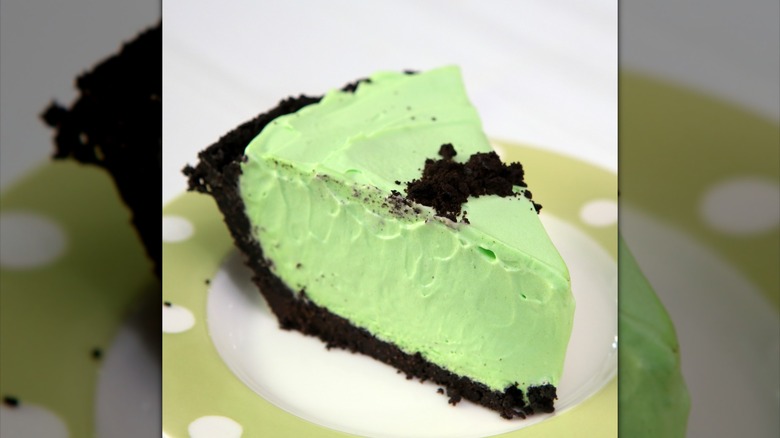
The retro Grasshopper cocktail features heavy cream, creme de cacao, and green creme de menthe shaken over ice and served chilled. It tastes reminiscent of mint chocolate chip ice cream and feels like it was inspired by the dessert. Rather than take influence from desserts, though, the drink actually inspired a dessert all of its own: the Grasshopper pie.
The Grasshopper pie garnered popularity in the 1960s, during an era when no-bake desserts were all the rage. No-bake desserts are easy to prep in advance, cheap to make, and perfect for hot summer days, making them appealing options for busy home cooks. This minty green pie uses similar components to its namesake cocktail. Using the same core ingredients as the drink, the pie adds marshmallows and half-and-half, along with crushed Oreos for the crust. Feel free to add a drop or two of green food coloring to bring out that vibrant green coloration.
Casseroles
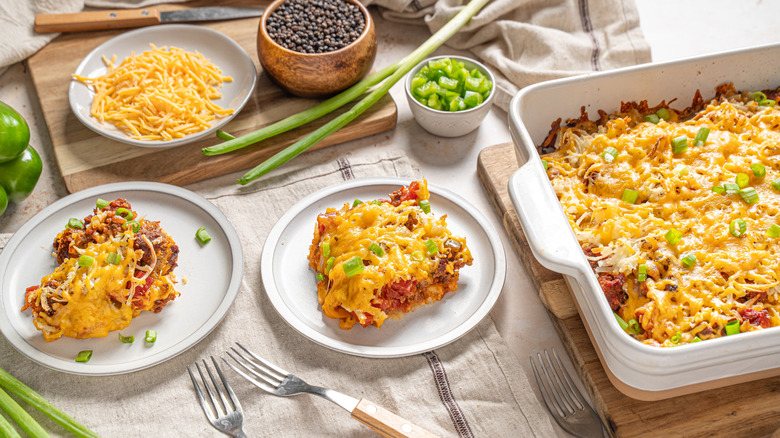
Midcentury cooking was dominated by processed foods and the art of convenience. Quick, efficient meals gave home cooks more freedom to prioritize other things. One dish that emerged from this culinary landscape is the casserole. A casserole, at its simplest, is a mixture of ingredients, often with a sauce, cooked together in one pan until the flavors combine with one another. They are also typically topped with an ingredient to add texture, like breadcrumbs or cheese.
Dozens of casseroles emerged during the 1960s, often using canned and processed goods to shorten prep time. The versatility of the term casserole led to endless varieties, from classics like tuna casserole to creative takes like hamburger tater tot casserole. These one-pan meals could be put together in minutes, and often incorporated leftover meat or veggies from previous dinners. It's a great way to extend ingredients and stretch meals throughout the week. While processed foods aren't the best for you, making healthy casseroles using fresh produce is a great way to feed a group.
Beef Stroganoff
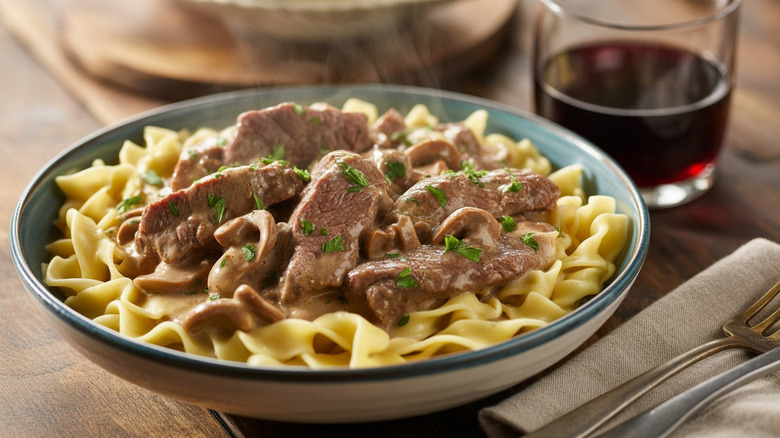
Beef Stroganoff has been around since the early 1800s and was thought to have roots in Russia. The dish is made with beef chuck roast, smothered in a savory, sour cream mushroom gravy. However, the era of convenience cuisine gave this dish a new life in the States. In the 1950s and '60s, when using canned goods for cooking was commonplace in many home-cooked meals, beef Stroganoff was an easily adaptable recipe.
As an already inexpensive meal with a quick cook time, it became even more streamlined. The gravy for the dish, rather than being built from scratch with wine, mushrooms, sour cream, and seasonings, was replaced with cream of mushroom soup. The beef chuck was sometimes substituted for ground beef. This saved both time and money for home cooks, who were looking for the least labor-intensive way to get dinner on the table. To bulk up the meal further, beef Stroganoff was often served over a bed of egg noodles.