

Here's What Newspaper Grocery Ads Looked Like In The '60s (The Prices Are Jarring)
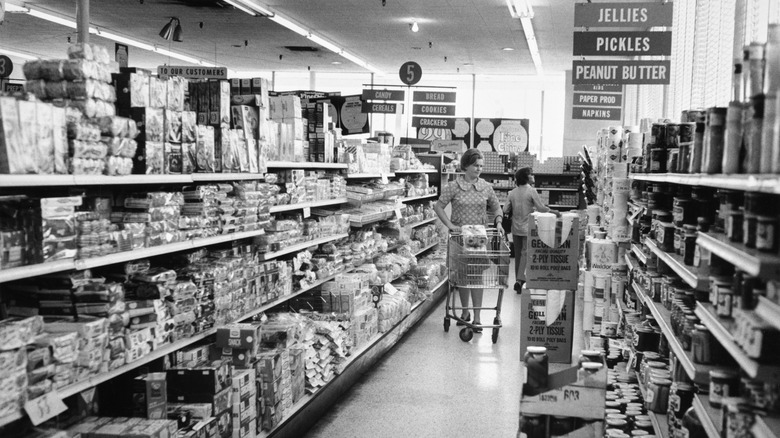
It is no secret that the cost of groceries has been on the rise. Food price inflation is a major factor alongside influences like tariffs, supply chain problems, and even worsening climate conditions. It makes you want to go back to the good old days, when a few bills and a handful of change could cover your grocery bill (and pennies were still in production).
Back in the 1960s, the median household income in the United States was $5,600 per year, according to the Bureau of the Census. The median home value was $11,900. And college tuition? In 1963, a year at a public university would run you $243.
That sticker shock is just as apparent when you look at prices in the grocery store. How does 17 cents for a can of corn, a porterhouse steak for 85 cents per pound, and 49 cents for 5 pounds of sugar sound? Seems cheap, right, but when you look at inflation, prices weren't always better back then.
They have certainly changed, however. Even the sizes of foods and items advertised are dramatically different today than they were in the 1960s. Oleo was a must-have butter alternative, it wasn't unusual to buy 25 pounds of potatoes, and you could get your ham in a can. Take a look at these vintage grocery store newspaper ads to see what supermarket prices and products were like 60 years ago.
Potato chips could be purchased by the pound
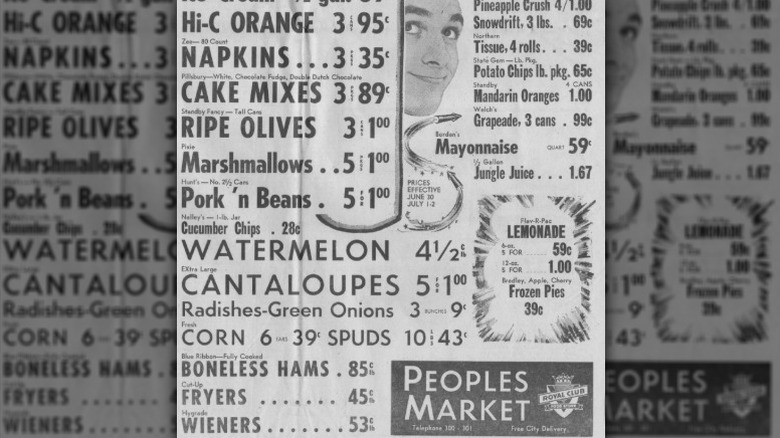
Shopping for snacks in 1960? A pound of potato chips was only 65 cents. Adjusted for inflation that would be $7.63, or 48 cents per ounce. A 15.25 ounce party bag today is $5.99 — or 39 cents per ounce, so your salty craving is actually better value now.
Cake mix is also cheaper than in 1960, when three packages of Pillsbury cake mix cost 89 cents (equivalent to $3.36 each today). In 2026, one box costs just $1.99.
Sirloin steak was a steal
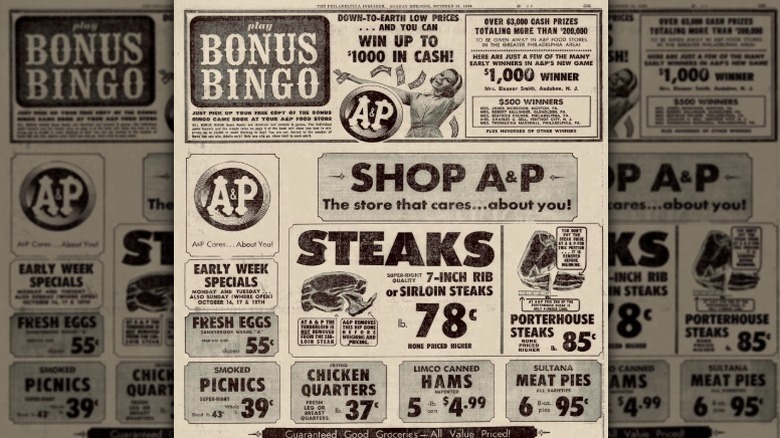
Some foods really were cheaper back in the day. In 1966, sirloin steak cost 78 cents per pound at the butcher counter. That's $7.95 in 2026 dollars, a bargain compared to the actual modern price of $17.99 per pound.
Eggs however, are way cheaper in modern times. A dozen medium eggs cost 55 cents in 1966 ($5.60 adjusted for inflation). While the price of eggs has fluctuated recently, in July 2026 a dozen medium eggs can be as low as $1.59.
A caffeine fix was pretty cheap
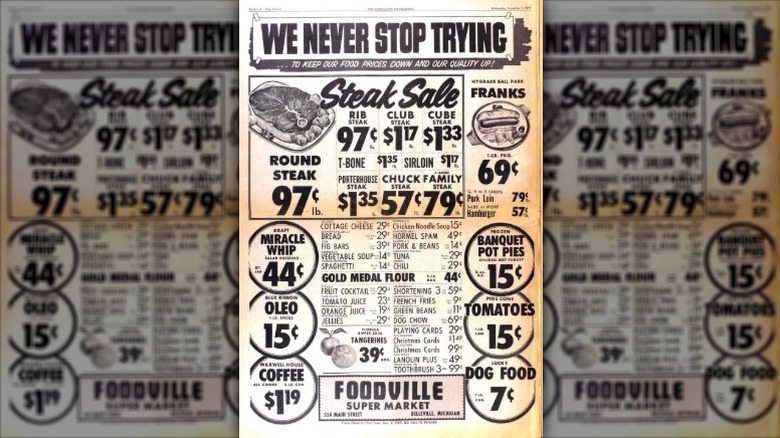
In 1969, 2 pounds of Maxwell House coffee cost $1.19 – that's $10.69 or 33 cents per ounce with inflation. The same brand today costs 58 cents per ounce, or $15.99 for a 27.5 ounce can.
Miracle Whip salad cream (no, it isn't the same as mayo) was 44 cents for 32 ounces. A large jar today is only 30 ounces but costs $7.09 — almost double the price when you account for inflation.
A bargain for grapefruit lovers
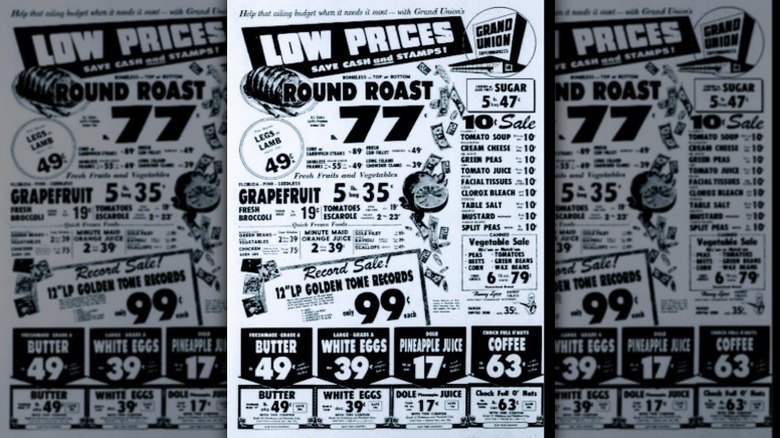
In 1963, 5 pounds of pink grapefruits cost 35 cents ($3.83 adjusted for inflation). Today, that same bag of grapefruits costs $6.99.
Chock full o' Nuts has been selling coffee since 1932, and in 1963 a pound of coffee cost 63 cents. It costs more today. The price adjusted for inflation was 43 cents per ounce, while today it's around 80 cents per ounce.
A Thanksgiving turkey was cheap — or was it?
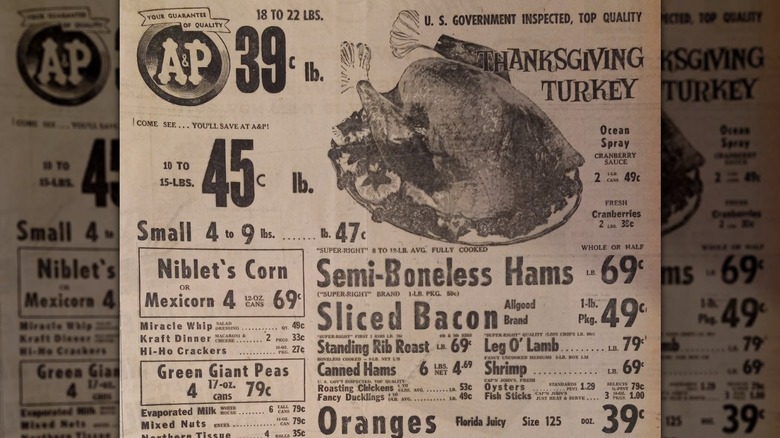
For Thanksgiving in 1960, a 10 to 15 pound turkey cost 45 cents per pound. Adjusted for inflation, that is $5.06 per pound in 2026. The adjusted price is significantly higher than the average price in 2025, which was just $1.34 per pound according to the American Farm Bureau Federation.
Two 1-pound cans of cranberry sauce cost 49 cents in 1960 (equivalent to $5.51 today, or 17 cents per ounce), but in reality today, a 14-ounce can retails for $3.99, or 28 cents per ounce.
Dairy deals are better value now
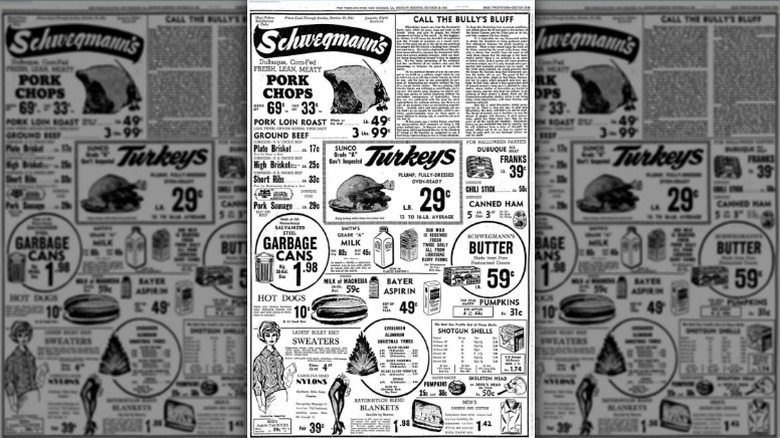
In the dairy aisle, butter was 59 cents per pound — $6.59 adjusted for inflation — and milk was 45 cents for a half gallon, or $5.03 when adjusted. In 2026, the same amounts of butter and milk cost $3.99 and $2.99, respectively.
Center cut pork chops were 69 cents per pound at the butcher counter, or $7.71 in today's dollars. The same cut today costs $5.99 per pound for a more affordable main course.
A fancy dinner was way more affordable
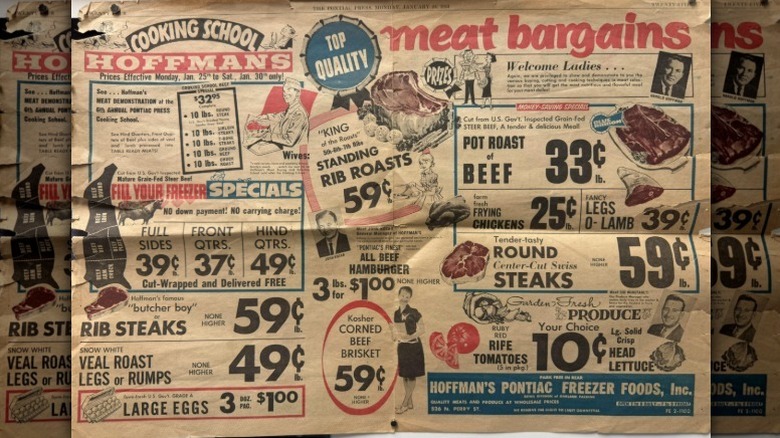
The butcher counter held bargains a-plenty in 1965. Pot roast was 33 cents per pound, or $3.54 adjusted for inflation. Today, that cut costs $11.99 per pound. A leg of lamb was 39 cents per pound ($4.19 in today's dollars), which would cost you $14.99 per pound when shopping in 2026. 1960s dinner party, anyone?
Serious savings for a sweet tooth
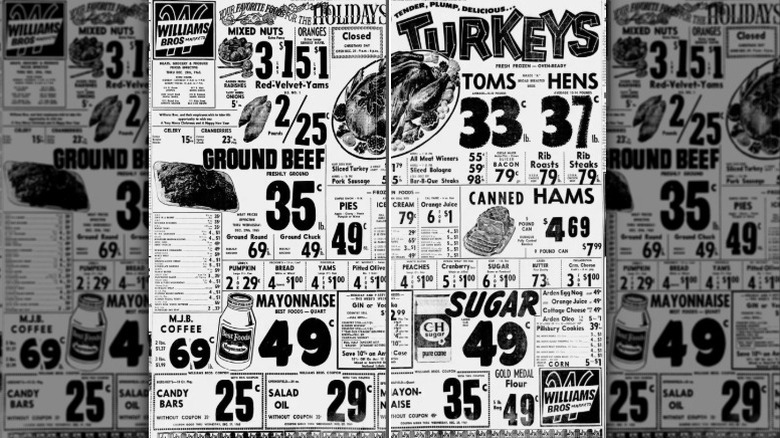
Have you ever wanted 10 Hershey's bars? In 1965 that cost 35 cents — though with inflation, that's 37 cents each. Still a steal compared to $1.66 each today!
To make a chocolate cheesecake, you'd also need sugar and cream cheese. Five pounds of C&H sugar was 49 cents, which is $1.03 per pound with inflation, compared to $1.25 per pound in 2026. Three 8-ounce blocks of Philadelphia Cream Cheese cost a dollar, which would be $3.51 per block adjusted for inflation, but it's actually only $3 today.
Prices for bulk basics are surprisingly consistent
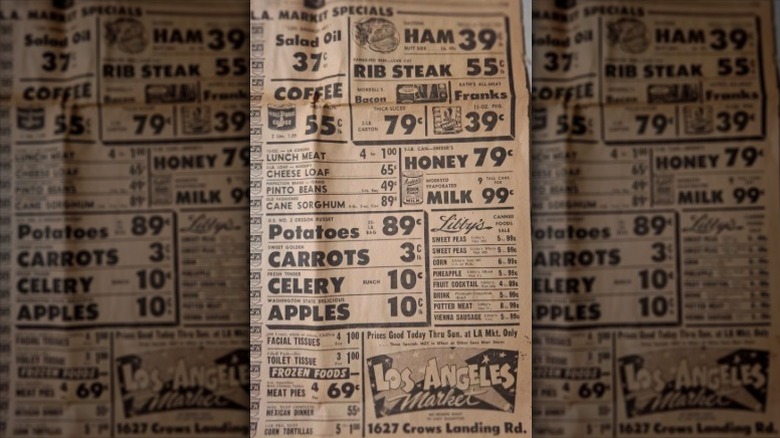
When you account for inflation, the price of basic items hasn't changed much. In 1960, two pounds of bacon cost 79 cents. Adjusted for inflation, that's $4.44 per pound — compared to $4.99 per pound today.
Potatoes and apples have also stayed the same. While it's hard to find potatoes in a 25 pound bag, which went for 89 cents, the per-pound price is comparable: 40 cents per pound from 1960 when adjusted, and 44 cents per pound today. Apples were 10 cents per pound ($1.12 when adjusted) and are around $1.30 per pound in 2026.
Eggs and ice cream cost less than they used to
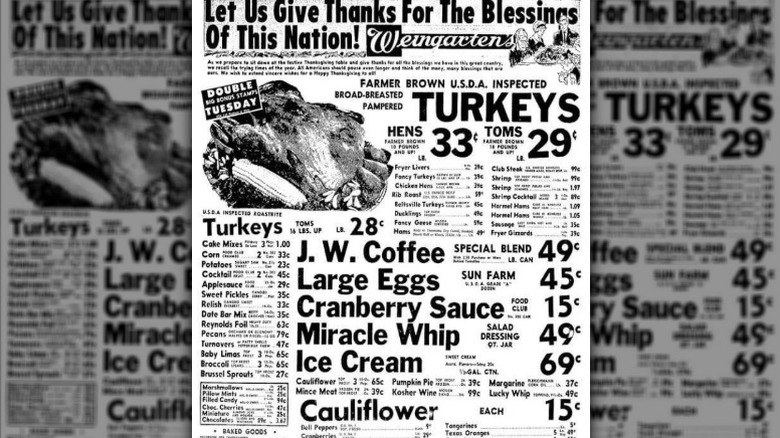
While a half-gallon of ice cream for 69 cents and a dozen large eggs for 45 cents sounds like a great deal, these items actually cost less in 2026 than they did in 1964. With inflation, that ice cream costs $7.41 or 12 cents per ounce, while 48 ounces today costs $2.99 or 6 cents per ounce.
Making cookies today costs extra
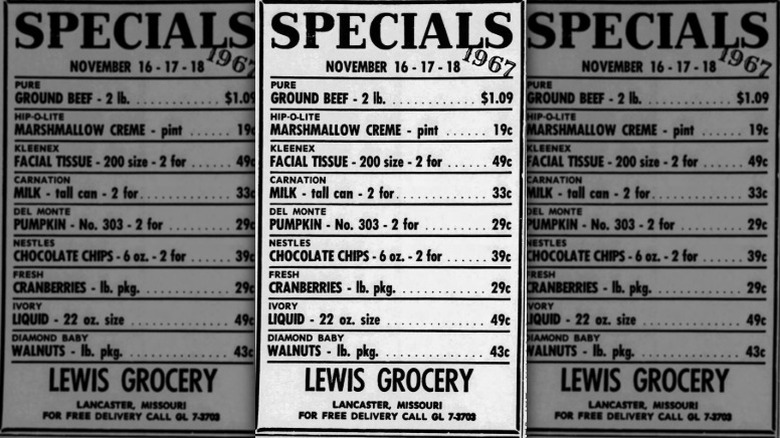
Levain chocolate chip cookies didn't exist in 1967, but the ingredients did and they were much more affordable. Two six-ounce bags of Nestlé chocolate chips cost 39 cents, which is $3.87 with inflation. Today they cost $5.99. Walnuts have doubled in price since 1967, when a 1-pound bag of Diamond nuts was 43 cents ($4.26 when adjusted). In 2026, 8 ounces is $4.99.