

What It Was Like To Shop At The First Trader Joe's
Trader Joe's is more than a grocery store; it's a cultural icon. In fact, if you head overseas, you might see someone who has never been to a Trader Joe's, or even stepped foot in the U.S., sporting a Trader Joe's tote bag — simply because it's fashionable. That's how much of a reach the grocery store has, which is impressive, considering it doesn't have any stores outside of the U.S. Heck, it hasn't even expanded to every state yet.
Domestically, too, Trader Joe's has a cool factor. It's fun, it's creative, it's whimsical, and, of course, it has a great selection of interesting products. All of this is by design. The very first store was carefully moulded into a destination, as well as a retailer, and laid the blueprint for the popular chain we see today.
The very first Trader Joe's is still open, but if you're intrigued to know what it was like decades ago, when the Trader Joe's journey was just beginning, you've come to the right place. Here's what it was like to shop at the very first Trader Joe's, with tiki-everything, cheap wine, French cheese, and so much more.
The first store was in Pasadena, CA
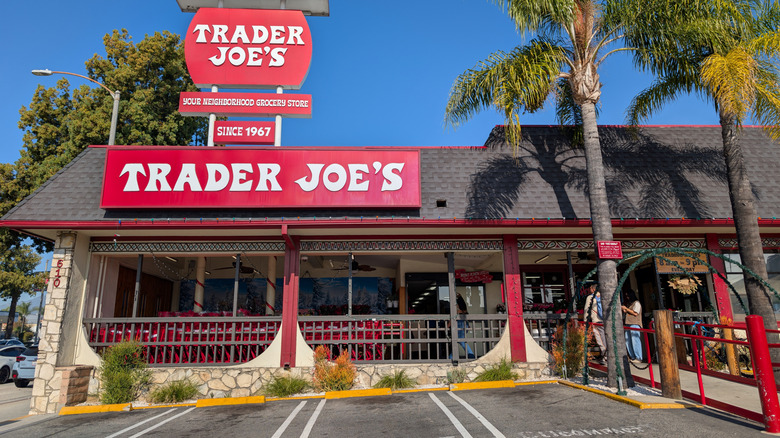
At the time of writing, there are more than 650 Trader Joe's across the U.S. in over 40 states and territories. From California to New York, from Florida to Texas to Illinois, shoppers everywhere can flock to their local store to stock up on their private-label favorites. But back in August 1967, the only people who could shop at Trader Joe's were those who lived local to Pasadena, California. It was there where founder Joe Coulombe (yes, that's the real-life Joe in Trader Joe's) opened the very first store on Arroyo Parkway.
Before Trader Joe's, Coulombe had been in the retail business for a few years; in 1958, he started managing a chain of convenience stores called Pronto Markets. But after fearing competition from 7-Eleven, the owner of those stores (a pharmacy company called Rexall) decided to abandon the business completely. Coulombe might have been out of a job, but he wasn't out of inspiration. He loved the tiki-themed bar and restaurant trend, so he decided to see if he could apply the same vibe to a grocery store, and Trader Joe's was born.
For more than two decades, Trader Joe's focused on expanding around California. In fact, it wasn't until the early 1990s that Trader Joe's stores started opening up outside of the state for the first time.
It was inspired by tiki bars
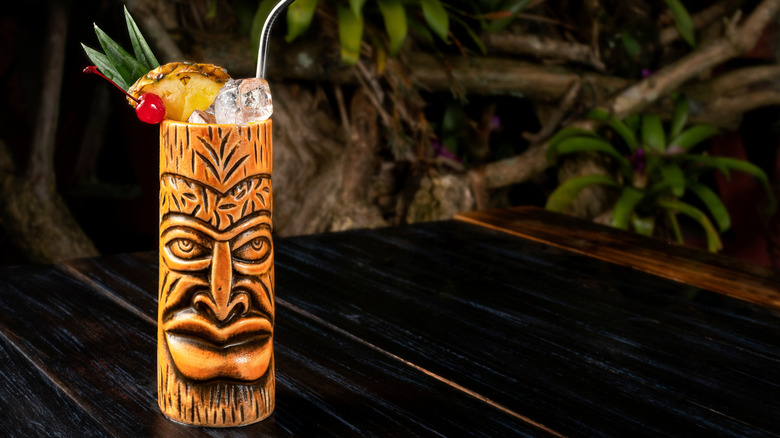
Back in the 1960s, when Joe Coulombe opened the first Trader Joe's, tiki-everything was big. The tiki bar trend, characterized by Aloha shirts, fruity cocktails, and bamboo, was inspired by the islands of Polynesia. There, tiki sculptures and statues, which have huge cultural and historical significance, are common. Americans, however, largely saw tiki as a symbol of vacation — hence the popularity (and arguably widespread cultural appropriation).
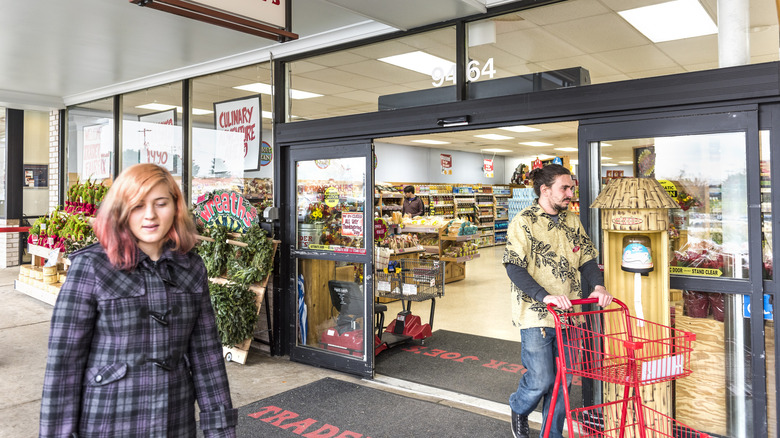
Like many, Coulombe was a big fan of the tiki trend at its peak in the 1960s, and so the first store in Pasadena was decked out as a South Sea trading post, with fishing nets and oars used as decoration. There was even half a rowing boat inside the store, and the background music was Hawaiian. Just as they do today, workers wore brightly colored, Aloha-style shirts and referred to their managers as "captains" and their assistant managers as "first mates."
There were probably a lot of college kids about
As well as tiki bars, Joe Coulombe's inspiration for Trader Joe's came from another slightly unusual place: a newspaper article about airplanes. Specifically, the article was about the invention of the Boeing 747 jumbo jet, which happened one year before Trader Joe's opened, in 1966. Many experts predicted that the jet would change air travel forever, making it more accessible and more affordable than ever. Just as Coulombe suspected, they were right.
Coulombe had a feeling that an increase in affordable air travel would impact one particular group in society: young, well-educated people who enjoyed traveling but didn't have a lot of money to burn. They would spend all their money on travel, and when they got home, they would yearn for something a little less, well, American. To cater directly to this group, Coulombe stocked the shelves of Trader Joe's with affordable products from international destinations, like French cheese, Thai noodles, and South American coffee.
You could sample international foods for cheap
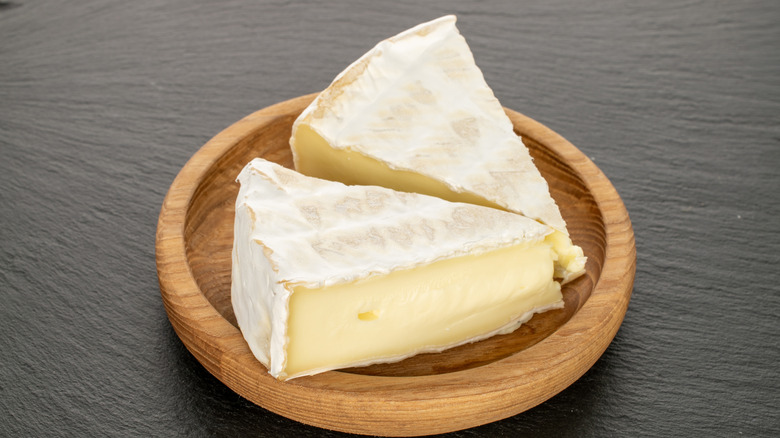
If you wanted to sample European cheese in the 1970s, you'd have to pay for the privilege. The U.S. government had strict trade laws on imported cheeses, likely due to excessive supplies of domestic cheese at the time. In some cases, taxes on imported cheese could add as much as $3 to the total price of a pound. But not all cheese was impacted.
Joe Coulombe quickly realized that, unlike Italian Parmesan or British Cheshire, French Brie wasn't impacted by U.S. cheese regulations. He quickly started stocking it and selling it for even less than Velveeta — that classic, processed American cheese produced by Kraft.
But Brie wasn't the only international food you could pick up at Trader Joe's for cheap. Trader Joe's also became one of the biggest importers of Dijon mustard, and it also sold olive oil, dolmas, whole coffee beans, and a huge selection of wine.
There was cheap, imported wine
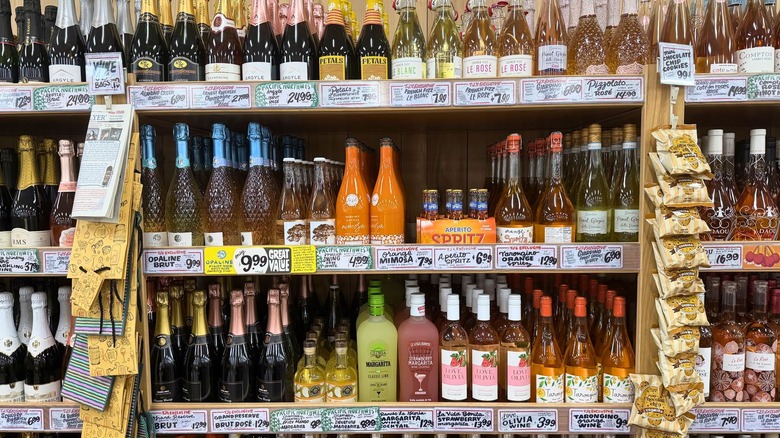
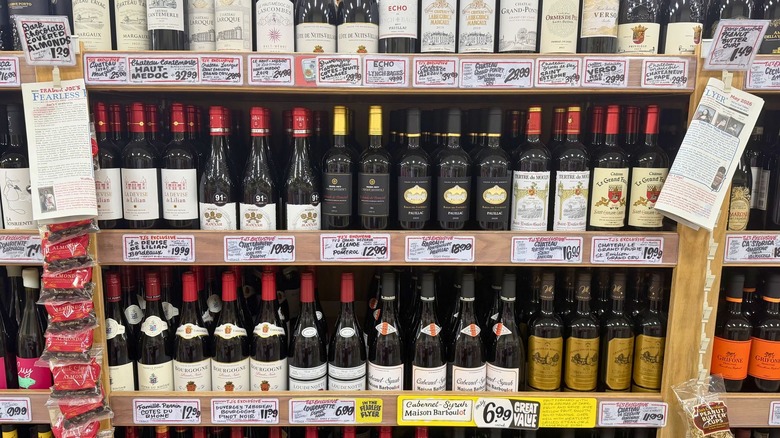
When he started Trader Joe's, Joe Coulombe knew there was a big, untapped market for high-quality, affordable wine. It makes sense: What else do young people and college graduates like to do, other than travel? So he got to work on stocking the shelves. There was California wine and wine from Bordeaux, a region in France that specializes in reds like merlot and cabernet sauvignon. The Bordeaux wine was particularly good value for money; Coulombe cut a deal with an importer, enabling him to sell it for much cheaper than other Californian stores. For some Americans, Trader Joe's was the first place they ever bought red wine.
Decades later, Trader Joe's is still the place to buy affordable, good-quality wine. Now, it even sells its own in its budget-friendly Charles Shaw private-label range, which it introduced back in the early 2000s. And listen, for cheap wine, it's not bad. When our taste tester reviewed the range in 2025, they had good things to say about many of the wines, and declared the merlot as the best. "This particular merlot is surprisingly light and supple, making it super easy to drink even without food," they said.
There were more than 100 brands of Scotch
Joe Coulombe really knew his audience. Not only did he know that his well-educated target customers liked to travel and sample new international foods but were short on cash, he also knew that they were more likely to drink good-quality alcohol than other groups in American society.
So, as well as wine, Coulombe started stocking Trader Joe's shelves with hard liquor, like whiskey, brandy, and Scotch. In fact, those first stores had more than 100 brands of Scotch on the shelves, as well as 50 brands of whiskey. Not only did Coulombe know that people would buy liquor, but he knew that he could charge a little more for it, and the extra cash could help him pay his workers.
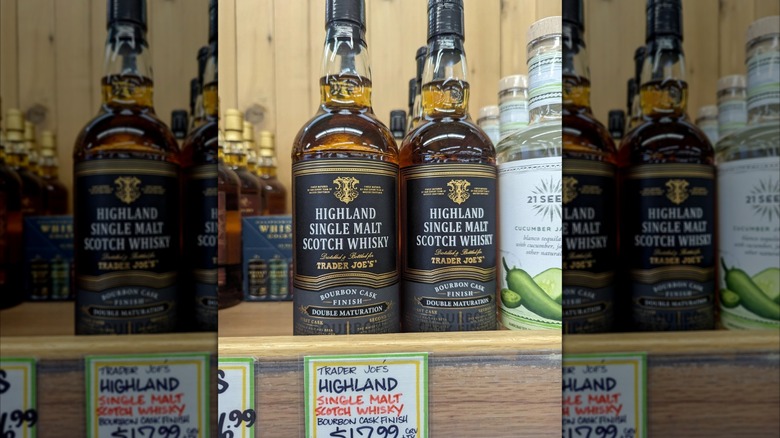
But this is Trader Joe's, of course, so the Scotch was still pretty affordable, just as it is today. Like wine, it even sells private-label Scotch now, which is supplied by Alexander Murray & Co. in Calabasas, California. According to our taste-tester, the best Trader Joe's own-brand Scotch is its Highland Single-Malt Scotch Whisky. They praised its "buttery toffee notes" and its "pretty sweet and juicy finish."
Even the canned foods were vintage and limited-edition
Trader Joe's products don't tend to stick around for too long. This can be annoying, especially when you've just fallen in love with a product and then it disappears. But there is a reason for this: Trader Joe's wants to keep things special and exciting. As the old saying goes, you can have too much of a good thing. Trader Joe's doesn't want you to get bored and lose interest, so it has a regular rotation of new things to keep everyone engaged.
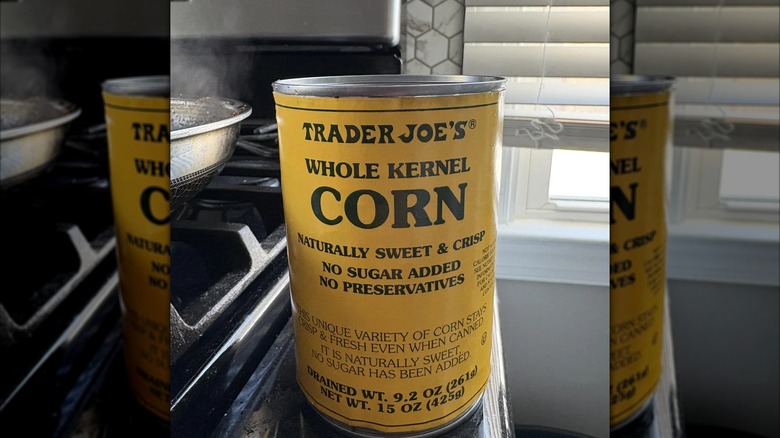
But this isn't a new concept; Joe Coulombe caught on to the idea pretty fast. At the beginning of the Trader Joe's journey, he stocked multiple limited products, including vintage, special-edition cans of corn. Yep, seriously. The corn was grown in one specific field, which meant that there wasn't an endless supply for customers to have. Coulombe understood right from the start that when something is sold as a limited edition, it instills a sense of urgency in the consumer and makes the product seem more desirable than ever.
The workers were friendly and relaxed
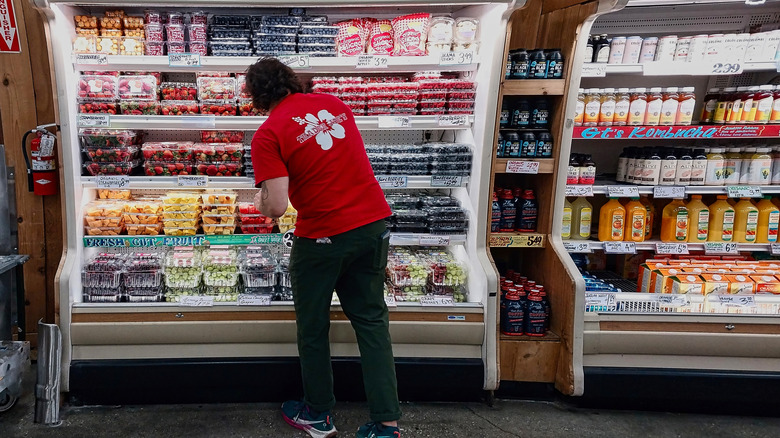
There's no doubt that Joe Coulombe, who died in February 2020, was whip smart when it came to business. He understood that even grocery stores could benefit from having personality, and he knew exactly how to nurture and cater to his target market. But he also knew that a business is nothing without its employees. He valued their opinions and ensured they were paid above industry rates for retail. He also understood that it's the everyday workers on the shop floor that customers associate with the brand, so it was essential that they were happy, educated, and engaged with the products.
It was a smart move. Employees were friendly, relaxed, and enjoyed working, and this spread to the customers through the general atmosphere in the store. In fact, many of the original employees from that first spot in Pasadena in the 1960s stayed with Trader Joe's their entire working lives. Coulombe would likely be pleased to know that this reputation is still intact. In 2026, Forbes named the retailer as the best large employer in the U.S., thanks to its supportive culture and commitment to employee growth and development.