

Lemon Herb Pasta Salad Recipe
We may receive a commission on purchases made from links.
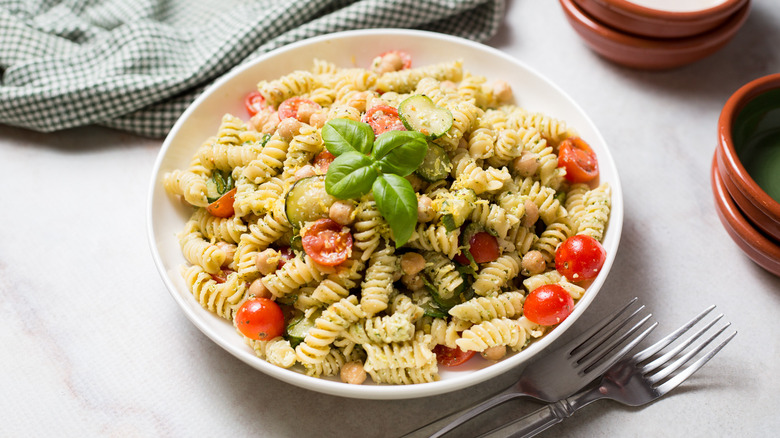
Pasta salad is an easy and colorful dish for a quick lunch, a family dinner, or an outdoor summer party. There are so many ways to make great pasta salad that choosing the right recipe may seem overwhelming. The warmer months are perfect for giving fresh herbs top billing in recipes — the fresh brightness of herbs pairs well with another key ingredient that increases the brightness, lemon. While herbs and lemon are often featured in small amounts as a garnish or a squeeze of juice, featuring them prominently can result in a unique and delicious recipe.
Recipe developer Michelle Bottalico has created a lemon herb pasta salad recipe that gets its base flavor from a homemade pesto featuring five fresh herbs plus both lemon juice and lemon zest. Olive oil, nuts, and garlic round out the pesto's flavor and texture, making it a great pairing with corkscrew pasta and other seasonal veggies.
Thinly sliced zucchini sauteed in olive oil and garlic develops an irresistible flavor that complements the dish. The other ingredients are chickpeas and cherry tomatoes that are tossed in the salad. This colorful dish is customizable if you want to mix and match your favorite veggie add ins or add mozzarella or feta cheese. Pine nuts or almonds are also good choices for the nuts in the pesto. Served garnished with fresh basil, grated lemon zest, and freshly ground black pepper, this dish is as beautiful as it is delicious.
Gather your lemon herb pasta salad ingredients
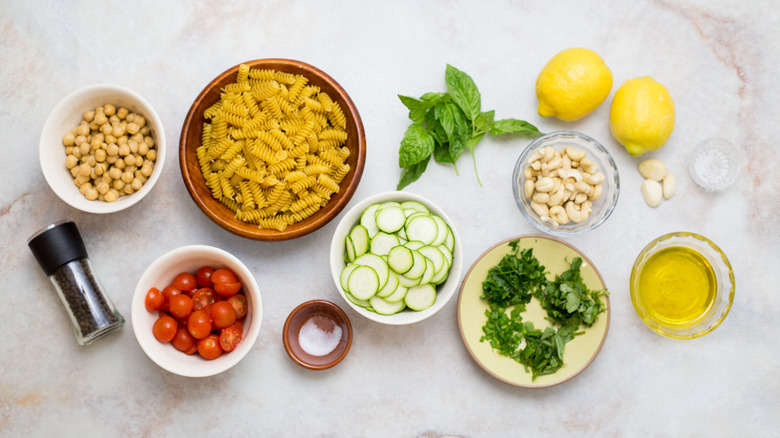
For the pesto, you will first need small lemons. Wash and dry them first. Organic lemons are recommended since the peel will be consumed, but if organic isn't available, you can soak regular lemons in a water and baking soda mixture for 10 minutes before rinsing, drying, and using. You'll also need cashews, extra virgin olive oil, garlic, and coarse salt. The fresh herbs for the pesto are basil, parsley, cilantro, mint, and chives.
Have more extra virgin olive oil and garlic on hand for sauteing the zucchini, and slice the zucchini in thin rounds before you start. The remaining ingredients for the pasta salad are salt, fusilli or rotini pasta, chickpeas, halved cherry tomatoes, and freshly ground black pepper.
Step 1: Peel one of the lemons and add peel to food processor
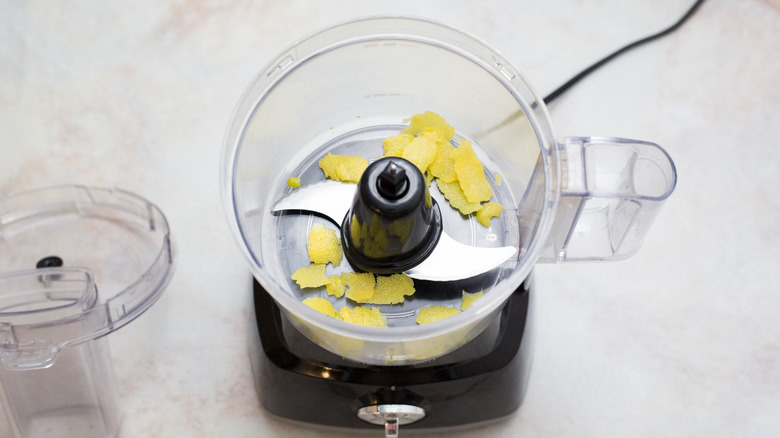
Begin the pesto: Carefully remove the peel from one of the lemons with a sharp vegetable peeler or paring knife, leaving the white part underneath intact, and place the peel in a food processor.
Step 2: Zest the other lemon
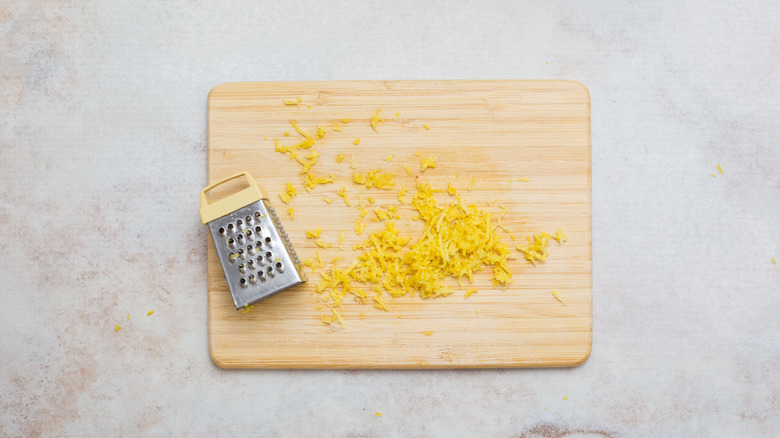
Zest the other lemon with a lemon zester or grater and set the zest aside for garnish.
Step 3: Juice one of the lemons
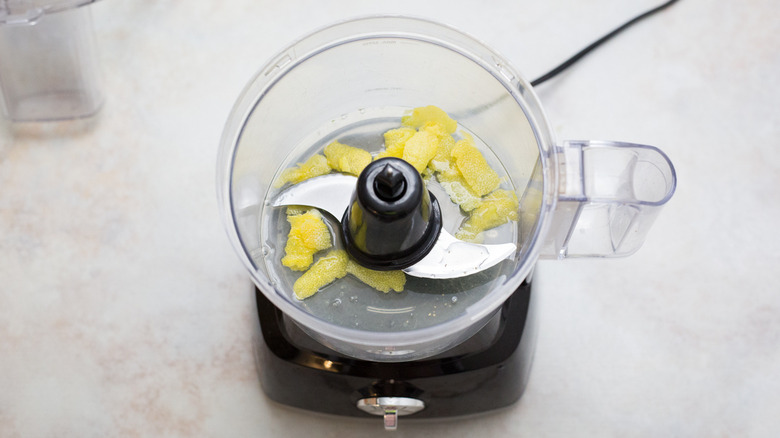
Juice 1 lemon and measure out 3 tablespoons of juice. Pour the juice into the food processor with the lemon peel. Reserve any remaining lemon juice for another use.
Step 4: Process the pesto ingredients
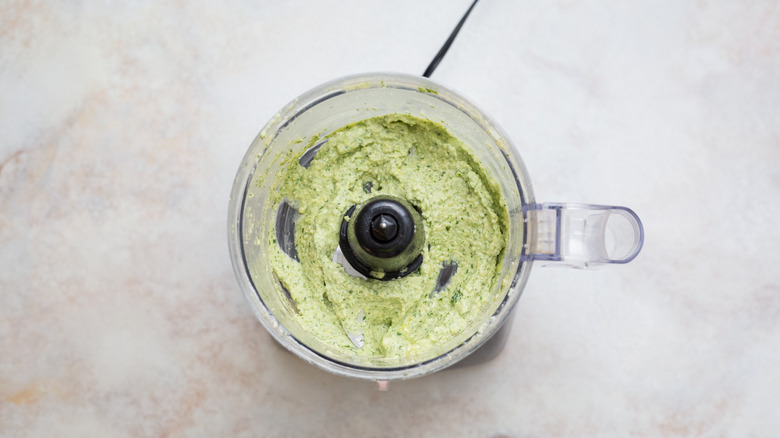
Add the cashews, extra virgin olive oil, garlic, salt, basil, parsley, cilantro, mint, and chives to the food processor and process until smooth, scraping the sides as needed. Taste and adjust for salt if desired and set the pesto aside.
Step 5: Heat the oil
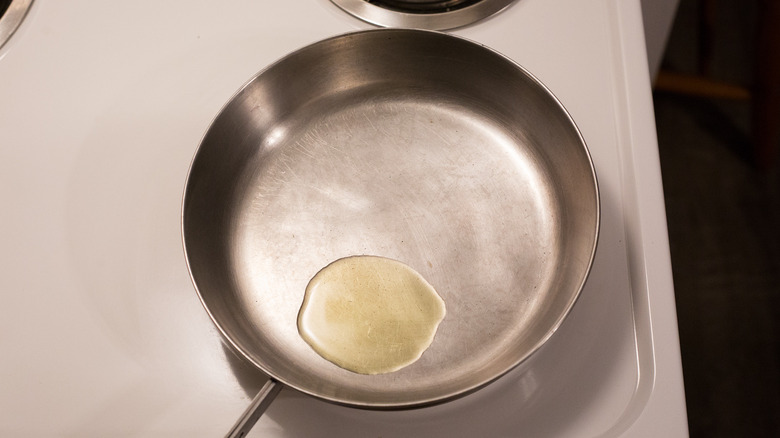
Begin the pasta salad: Heat the ½ tablespoon extra virgin olive oil in a frying pan on medium.
Step 6: Saute the garlic
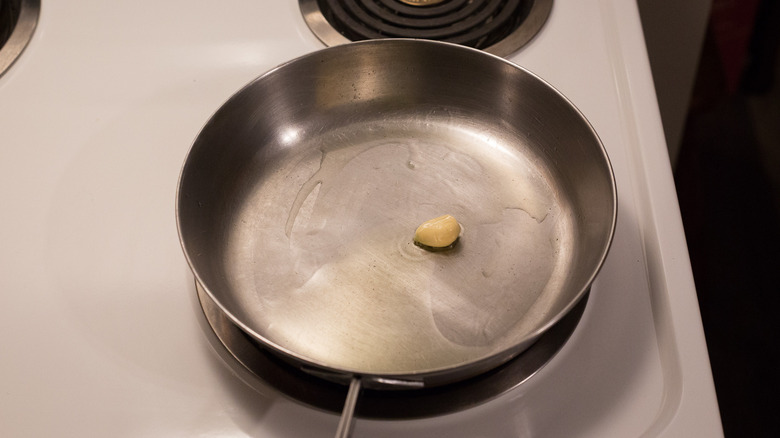
Add the garlic clove and saute 1-2 minutes, until fragrant.
Step 7: Cook the zucchini
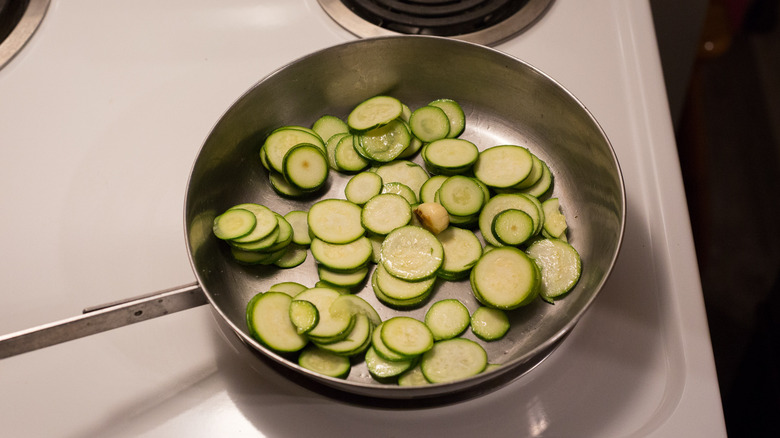
Add the zucchini slices and salt and saute for 6-7 minutes until tender and starting to brown.
Step 8: Let the zucchini cool
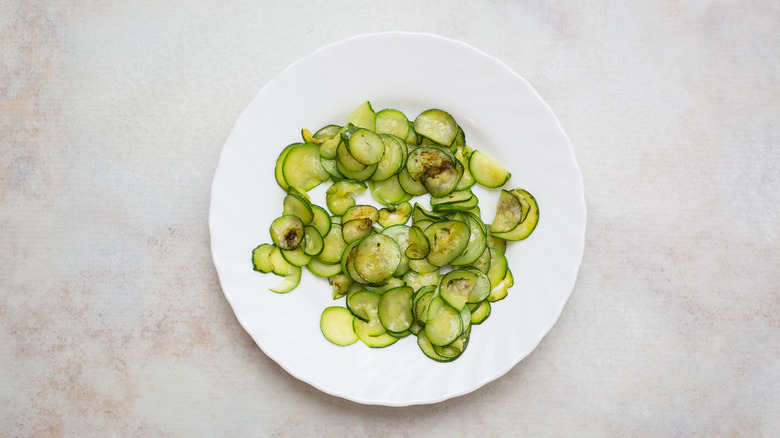
Remove the garlic clove and set the zucchini aside to cool in a separate dish. Alternatively, you can mince the garlic and leave it in for more garlic flavor if desired.
Step 9: Boil the water
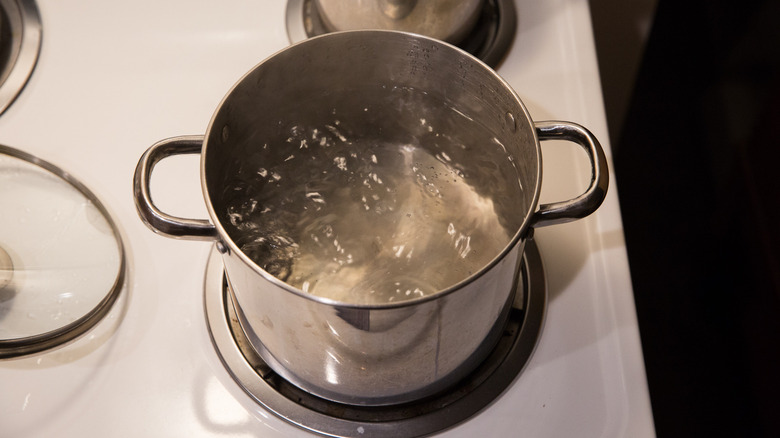
While the zucchini is cooking, bring a large pot of salted water to a boil.
Step 10: Cook the pasta
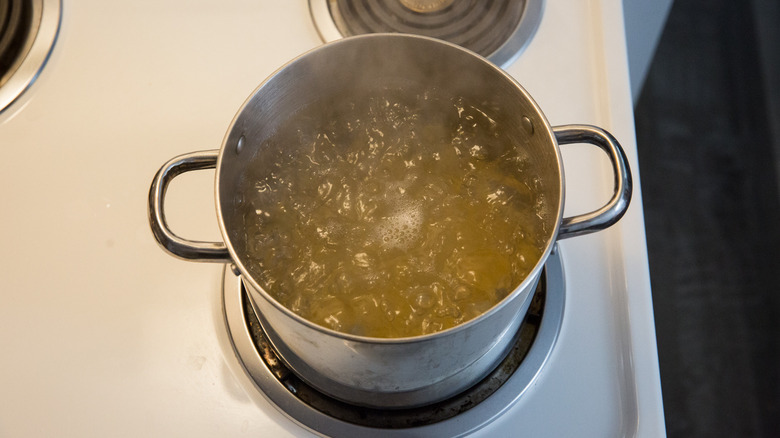
Add the pasta and cook it to an al dente consistency according to the package directions. Scoop out about ¼ cup of the pasta cooking water shortly before the pasta is done and set it aside.
Step 11: Drain the pasta
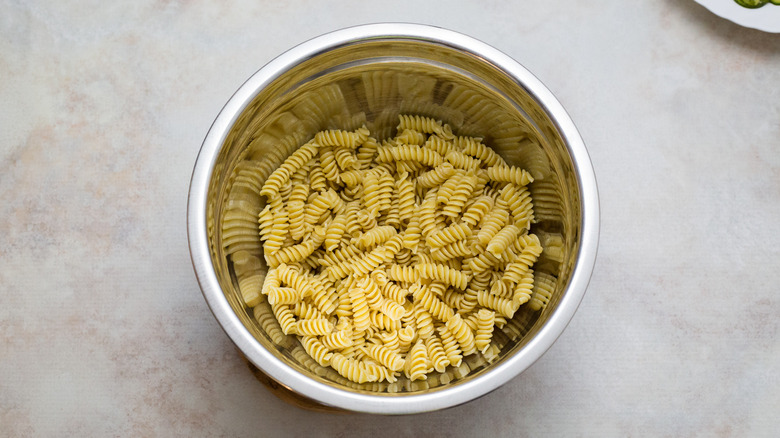
Drain the pasta without rinsing it and place it in a mixing bowl.
Step 12: Mix the pasta and pesto
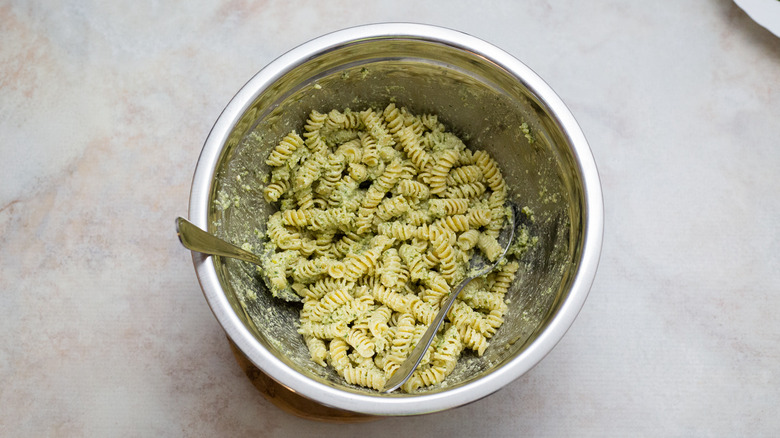
Add the pesto to the bowl and toss until the pasta is evenly coated. Add a little of the reserved pasta cooking water if needed to help mix the pasta and make it creamy. Set aside to cool completely.
Step 13: Finish the pasta salad
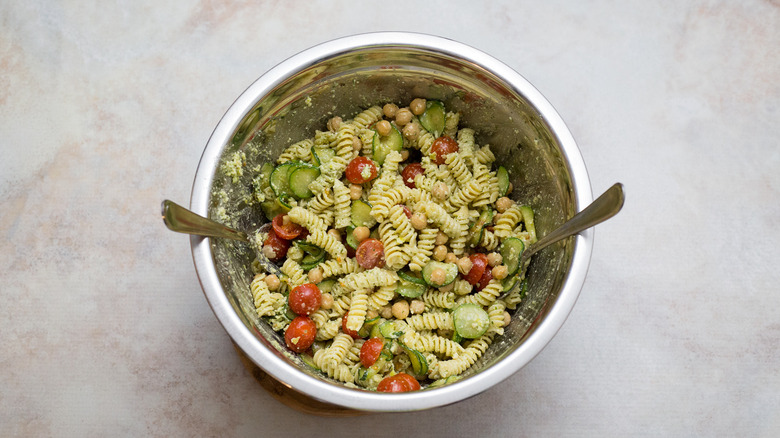
Once cool, add the chickpeas, cherry tomato halves, and the cooled zucchini and toss to mix.
Step 14: Serve the lemon herb pasta salad
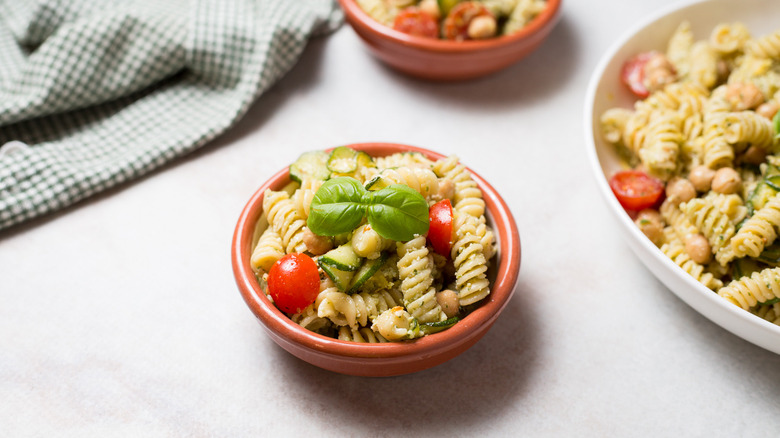
Serve the pasta salad garnished with the reserved lemon zest, fresh basil leaves, and a few twists of freshly ground black pepper.
What to serve with lemon herb pasta salad
Lemon Herb Pasta Salad Recipe
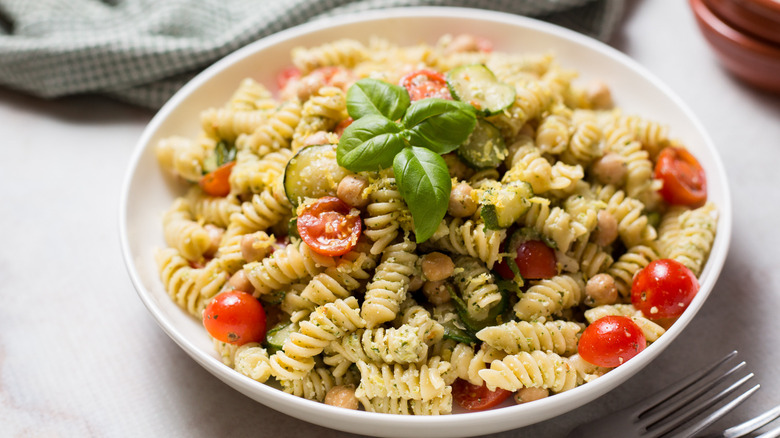
This bright and citrusy lemon herb pasta salad features a homemade pesto dressing, fusilli pasta, zucchini, and cherry tomatoes for a summer side dish staple.
Ingredients
- For the pesto
- 2 small lemons, washed and dried
- ½ cup cashews
- ⅓ cup extra virgin olive oil
- 2 small cloves garlic
- 1 pinch coarse salt
- 10 leaves basil, plus more for garnish
- 1 tablespoon chopped parsley
- 1 tablespoon chopped cilantro
- ½ tablespoon chopped mint
- ½ tablespoon chopped chives
- For the pasta salad
- ½ tablespoon extra virgin olive oil
- 1 clove garlic
- 2 small zucchini, sliced into thin rounds
- 1 large pinch salt
- 10 ounces fusilli or rotini
- 1 cup cooked chickpeas
- 1 cup halved cherry tomatoes
- Freshly ground black pepper, for garnish
Directions
- Begin the pesto: Carefully remove the peel from one of the lemons with a sharp vegetable peeler or paring knife, leaving the white part underneath intact, and place the peel in a food processor.
- Zest the other lemon with a lemon zester or grater and set the zest aside for garnish.
- Juice 1 lemon and measure out 3 tablespoons of juice. Pour the juice into the food processor with the lemon peel. Reserve any remaining lemon juice for another use.
- Add the cashews, extra virgin olive oil, garlic, salt, basil, parsley, cilantro, mint, and chives to the food processor and process until smooth, scraping the sides as needed. Taste and adjust for salt if desired and set the pesto aside.
- Begin the pasta salad: Heat the ½ tablespoon extra virgin olive oil in a frying pan on medium.
- Add the garlic clove and saute 1-2 minutes, until fragrant.
- Add the zucchini slices and salt and saute for 6-7 minutes until tender and starting to brown.
- Remove the garlic clove and set the zucchini aside to cool in a separate dish. Alternatively, you can mince the garlic and leave it in for more garlic flavor if desired.
- While the zucchini is cooking, bring a large pot of salted water to a boil.
- Add the pasta and cook it to an al dente consistency according to the package directions. Scoop out about ¼ cup of the pasta cooking water shortly before the pasta is done and set it aside.
- Drain the pasta without rinsing it and place it in a mixing bowl.
- Add the pesto to the bowl and toss until the pasta is evenly coated. Add a little of the reserved pasta cooking water if needed to help mix the pasta and make it creamy. Set aside to cool completely.
- Once cool, add the chickpeas, cherry tomato halves, and the cooled zucchini and toss to mix.
- Serve the pasta salad garnished with the reserved lemon zest, fresh basil leaves, and a few twists of freshly ground black pepper.
Nutrition
| Calories per Serving | 423 |
| Total Fat | 19.9 g |
| Saturated Fat | 3.0 g |
| Trans Fat | 0.0 g |
| Cholesterol | 0.0 mg |
| Total Carbohydrates | 51.5 g |
| Dietary Fiber | 5.6 g |
| Total Sugars | 5.6 g |
| Sodium | 127.2 mg |
| Protein | 11.9 g |

How else can I use lemon herb pesto?
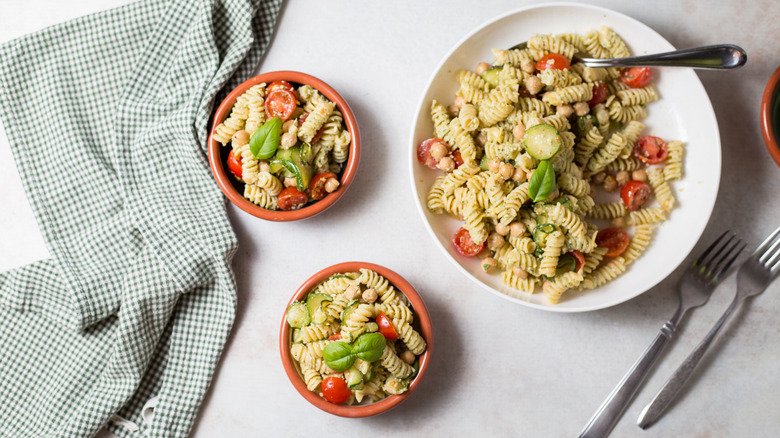
Lemon herb pesto is very versatile. For a traditional pasta dish, use it to dress hot pasta. Stir a generous amount into hot drained pasta, making sure to drizzle a little of the pasta cooking water in to help it spread and make it extra creamy. There's no need to limit yourself to short pasta shapes if you're using the pesto this way. Besides using it to dress pasta, you can use it to dress dishes made with other grains like couscous. As far as cold dishes, it works for more than just pasta salad. It's also a great option for cold rice salads, green salad, or Caprese salad.
Lemon herb pesto is also delicious spread on crusty bread as an appetizer. It's wonderful as a sandwich spread too, giving sandwiches or wraps a creamy texture and a lovely bright and fresh flavor. Finally, try serving it with roasted vegetables or fish to give those foods extra flavor.
What's the best way to zest a lemon?
Lemon zest is the yellow peel of a lemon — just the outside layer, and not the white pith underneath. Zest contains natural oils and extra flavor, which is why it's an important ingredient in recipes ranging from desserts to cocktails. When you zest a lemon, be careful not to go down to the pith, the soft white layer underneath the peel and above the segments. The pith is edible but can add a bitter taste to the dish.
If you have a tool known as a microplane grater, zesting will be a breeze. Grate the lemon like you would a block of cheese, but only give it a couple of strokes. Then rotate the lemon and grate a fresh spot on the peel. This will ensure you don't grate down to the pith. If you only have a box grater, use the smallest holes. It will still work but it's a bit harder to remove the zest and clean the grater.
If your recipe calls for lemon twists, you can use a tool called a lemon zester. Besides holes for grating, it has special holes for removing small strips of peel. It may have holes of different sizes to create larger or smaller strips. If you don't want to buy a special tool, just (carefully) use a sharp vegetable peeler or paring knife. If you need to know how much zest a lemon yields for a certain recipe, one lemon will give you about 1 tablespoon of zest, but this will naturally vary depending on the size of your lemon.