

What Exactly Is Picnic Ham And How Did It Get Its Name?
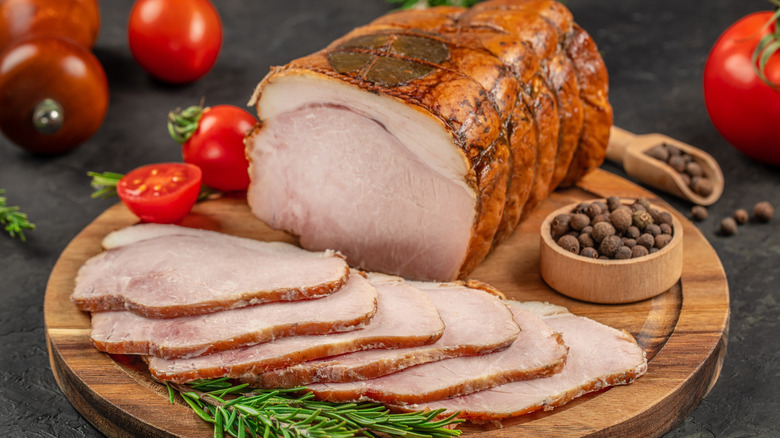
The world of ham is wide and versatile, spanning the unconventional and the everyday. It can be the hero of a quick-and-easy sandwich or the centerpiece of a holiday meal. It fits right into a delicate grazing board or a decadent croque monsieur. You'll find endless varieties at your deli, from Black Forest Ham to Country Ham and City Ham. These same varieties are out in the world, too — Prosciutto from Italy, Serrano from Spain, and Bayonne from France. Picnic ham is different from any of these. In fact, you could even say it isn't ham at all.
Ham is made from the cut of meat that comes from the back legs of the hog. The flavors and textures change depending on a variety of factors, from which cut of the hind leg has been used to how it's been processed and for how long. What's common, however, is that all ham comes from the hind leg of the hog. All except picnic ham, which is made from the front section of the hog, from the lower shoulder to the leg. So, although picnic ham doesn't qualify as ham since it doesn't come from the hind leg, it does share many of the same characteristics as ham, since the meat is processed using similar techniques — smoking, curing, and precooking.
How picnic ham got its name
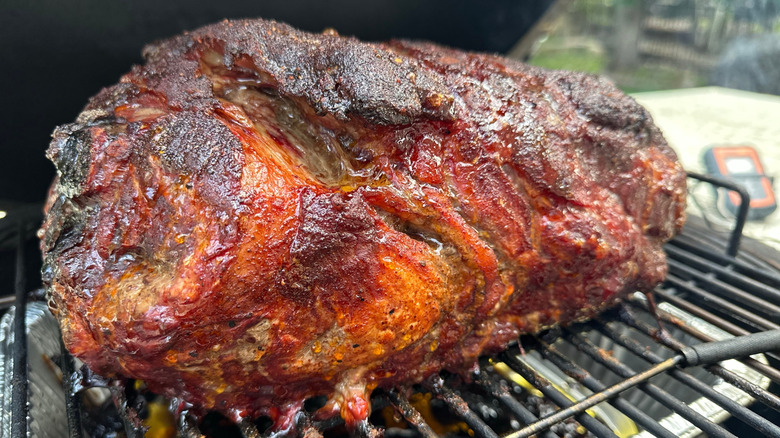
Since the shoulder meat is cured and smoked, picnic ham has a similar flavor and texture to traditional ham. Just like ham, it can be sliced and used in sandwiches, or to give various other dishes (like soups, salads, pastas) a meaty hit. What's different between the two is the price point. Cured ham can cost around $5 to $6 per pound on average at the grocery store, while the processed cut from the shoulder is significantly cheaper, at only $2 or $3 per pound.
This difference in price is where picnic ham got its name from. While ham was considered expensive, a treat reserved for holiday meals over the decades, the meat from the front legs was cheap enough to be used for everyday meals — or, you guessed it, picnics. Of course, picnic ham does have some things in common with ham, and there's a good reason for the premium one pays for the latter.
Ham has very little fat and an intense meaty flavor, coming as it does from the big leg muscles. This is in direct contrast to picnic ham, which has more fat in it. Because of this, even though it's cured and smoked, there's scope for tenderizing the meat further by cooking it in an oven until some of the fat starts melting.
Picnic shoulder vs other cuts of pork
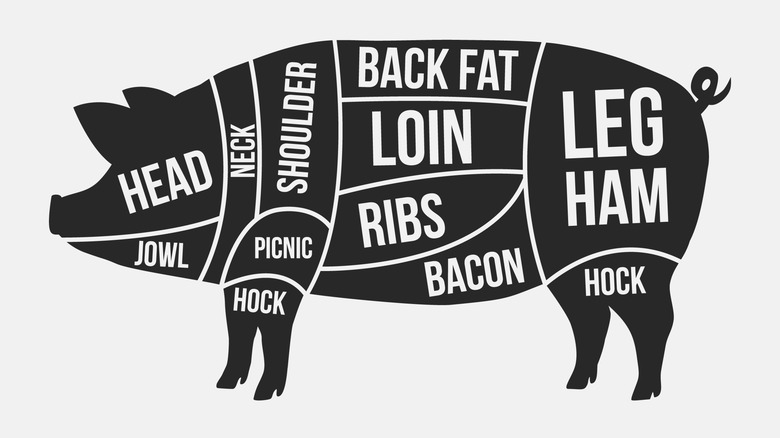
When it comes to pork, the different cuts have very distinct characteristics and uses. The hind legs, as we know, are best for making ham. The pork loin near the top of the pig is where chops and cutlets come from, while the belly produces bacon and pancetta. The ribs just above the belly usually make it onto the grill. The picnic shoulder, the cut used to make picnic ham, shares a lot of characteristics with both the hind leg and the butt, though it is often confused with pork shoulder though both come from the same region.
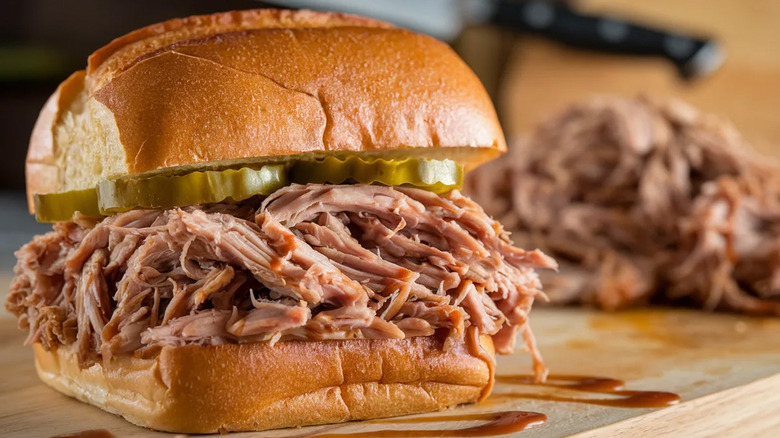
The pork butt (or Boston butt) is a tough cut of meat with a lot of connective tissue and marbling. While this cut can be roasted or grilled, the meat lends itself nicely to braising, stewing, and other forms of low-and-slow cooking. There are subtle differences between the pork butt and the pork shoulder, which has less fat and marbling. But, just like the picnic shoulder is a great, cheap alternative for making ham, it's also a solid budget option when it comes to making pulled pork — second only to the butt, and better than fresh ham from the hind legs.
How to serve it and sides to pair with it
Picnic ham is always cured, smoked and precooked, but most packets come with cooking instructions anyway. Cooking picnic ham serves one of two purposes: to heat up the ham before consuming it or to tenderize the meat further by breaking down the fat and connective tissue. In the second case, you can follow any recipe that you would like to cook a regular leg of smoked ham.
Whether you choose the slow cooker, the oven, or any other method, remember that the picnic ham is likely to take less time to cook than the recipe you're following, since the cut itself is significantly smaller (here are the cook times of 14 types of ham, explained). You can serve the ham sliced with classic holiday side dishes (like parsley potatoes or bacon-wrapped beans) or shredded to make pulled pork tacos or sandwiches.
Even though picnic hams are smaller than actual legs of ham, they're large enough to feed a crowd. Thus, you're likely to have some leftovers. Get creative with these by serving them on a bed of beans; baking in a tray with scalloped potatoes, roux and cheese; or possibly even in a ham-and-gruyere quiche. Here are some more ways to use up leftover ham recipes that may just inspire you.
Picnic ham has its legion of fans
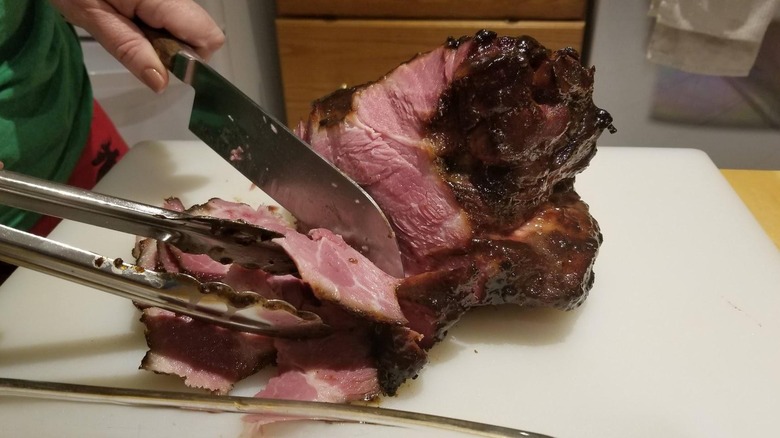
While picnic ham is significantly cheaper than other types of cured meats from around the world, that does not mean it's inferior. In fact, the cut has its legion of fans online. "I was raised on picnic hams. It is the best ham you will ever eat," one user on Reddit posted. "I have been looking for one for the holidays if anyone knows where I can get the real thing."
Another user was blown away after trying picnic ham for the first time. "I've never had ham anywhere near this good, ham is normally boring but I loooove how this came out," explained the Reddit user. "So much flavor in the ham itself from the cure, the smoke flavor, the spicy glaze on it... one of the best things I've made in a long time." Talk about a rave review.
Picnic ham should be easily available in the deli section of your supermarket, where you can keep an eye out for offerings from notable producers. These include the smoked shoulder picnic offerings from Royal Foods, the hardwood smoked shoulder picnic from Hatfield, and the smoked picnic ham from Sanders Meats, among others. Don't skip this cut the next time you find yourself craving ham — or something similar.