

The Pots And Pans You Might Not Realize You're Misusing
We may receive a commission on purchases made from links.
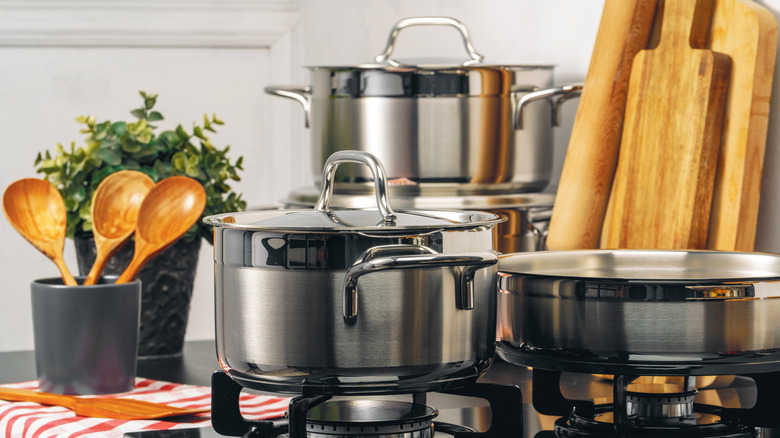
If you think that pots and pans are pretty much interchangeable, you probably haven't been cooking for long. Every material that pots and pans are made from — be it a terra-cotta tagine or the latest high-tech non-stick cookware — has its own strengths and weaknesses. You'll come to recognize those over time, as you work with the cookware you own and learn its quirks. The biggest thing to know is that every kind of pot and pan is better suited for some cooking tasks than others. That doesn't mean you can't work with whatever you've got, just that misusing pots and pans can lead to frustration and bad results if you don't know why they act the way they do.
I'm a former chef and restaurateur, but like most young people, I started out with a pretty random selection of hand-me-downs and thrift-store pots. Over the years since then, I've worked with almost every kind of cookware imaginable, either personally or on the job, and I've taught hundreds of cooking classes. Here are some of the most common ways I've seen people misuse their pots and pans, and some pro tips on working with what you've got.
Cast iron
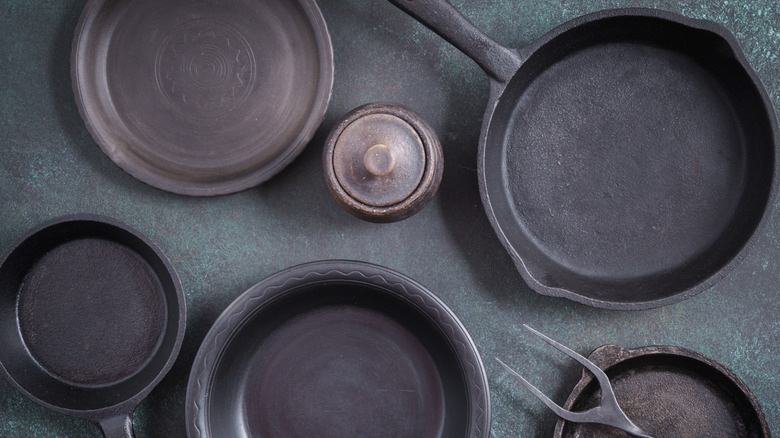
Old-school cast iron remains a solid choice even in modern kitchens, working equally well on gas, electric, or induction cooktops. Less constructively, it's also the subject of a lot of mythologizing, and aficionados tend to make it sound like a lot more work than it really is (remember, this was your great-grandparents' daily, "don't think about it" cookware).
Leaving aside questions of maintenance, the biggest thing to know about cast iron is that you really do need to preheat it thoroughly before you use it. This leads to two equal and opposite issues for cooks. On one hand, if you don't preheat it adequately, your food will stick to the iron. On the other hand, if you're impatient and heat it too aggressively, you run the risk of your pan warping or even cracking (that's an issue with induction burners especially, because they create such quick heat).
The thing is, cast iron is great precisely because it's a poor conductor of heat. It takes a while to get hot, but then it retains heat really well instead of losing it to your food. So, to preheat your cast iron properly, give it several minutes over a low-to-medium burner rather than cranking the heat right up. It takes a bit of patience, but the results are worth it.
Lightweight skillets and pots
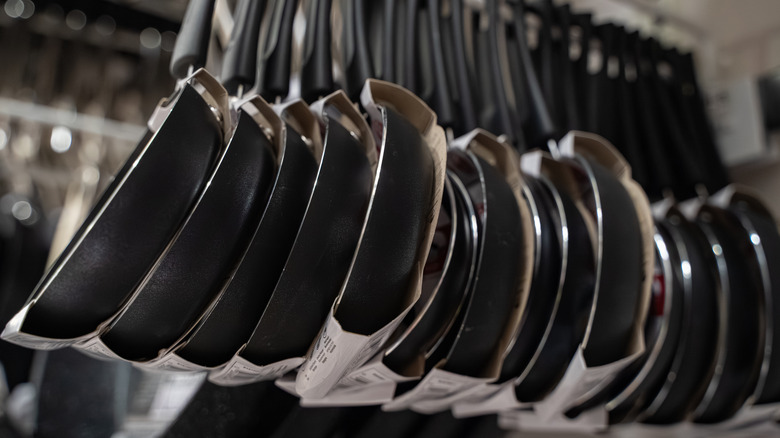
At the opposite end of the cookware world from cast iron, we have the inexpensive, lightweight skillets and pots that most people seem to start with. They're usually made of aluminum, which is inexpensive and transfers heat beautifully, though you'll occasionally see sets of flimsy stainless steel, as well.
The big problem with these pots and pans is hot spots. That means the heat is concentrated right above the heating element (on an electric stove) or the flames (on a gas stove). This creates an issue when you need high heat, perhaps to sear a steak; or when you need to cook something low and slow for an extended period. In each case, you'll find that your food tends to get scorched in the area right over the burner. It's especially notable if you're heating anything with milk or cream in it, or when making a thick or cheesy sauce.
Ideally, you'd have (or get) a heavier pot or pan for those uses, so you don't need to work around your thin pans' limitations. If that's not an option in the short term, you can deal with hot spots in long-cooked dishes by getting an inexpensive heat diffuser, like KLNBRWR's stove rings for electric stoves or Hoziel's stove rings for gas burners (both found on Amazon), or by doing them in the oven, if your pots' handles are heat-proof (they usually are, but check first). For high-heat meals, the best workaround is to keep stirring, shaking, or turning the food to prevent sticking and scorching.
Pots and pans with non-stick coatings
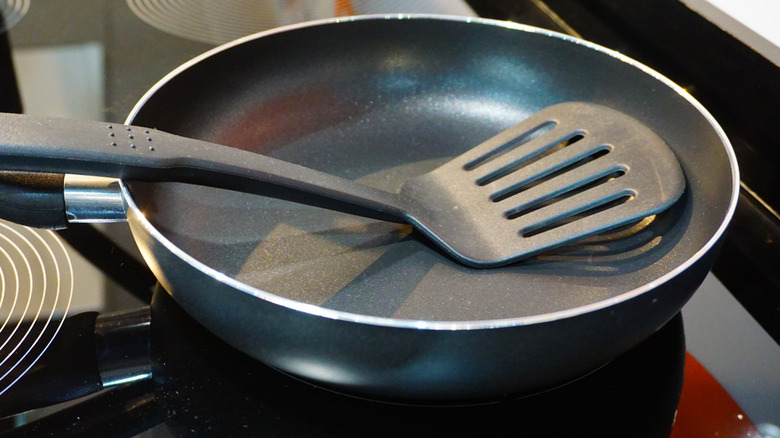
The biggest issue with non-stick cookware is the durability of its non-stick coatings. I'm old enough to remember how easily the coating peeled from early Teflon-coated pans, because getting something to adhere when it's made to do the exact opposite is a significant engineering challenge. Over the past half-century, manufacturers have gotten pretty good at this, but most coatings are still susceptible to damage if you use metal utensils with them. That damages their non-stick abilities and can leave bits of coating in your food. More importantly, overheating non-stick cookware is a big mistake, and it's one of the more dangerous ways people are misusing pots and pans.
There are long-term health concerns around the non-stick coatings' use of forever chemicals in surfaces that come into contact with foods, but there's a more immediate concern with overheating. It's called polymer fume fever, or colloquially Teflon flu, and it's a flu-like illness caused by breathing in the fumes from hot non-stick chemicals. It used to be found primarily in industrial and workplace settings, but in recent years, it's showing up more often in home cooks.
Enameled cast iron
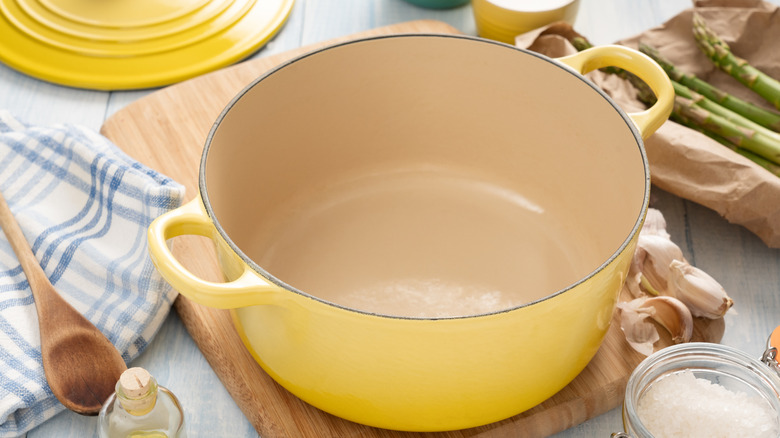
Enameled cast-iron cookware, notably flagship French brand Le Creuset, is — like regular cast iron — the kind of cookware that can last for generations if it's handled properly. That said, there are differences between the conventional and enameled kind. Enameled cast iron doesn't need seasoning and won't rust, for example.
But there are also notable differences in cooking with enameled cast iron vs the regular kind. Regular cast iron is the best option for searing a steak or stew meat, for example, but those high-heat scenarios aren't good for enameled cast iron. In fact, using enameled cast iron on high heat is a common mistake that can ruin your pan, causing the finish to crack or chip. Even without those kinds of physical damage, high heat can darken and discolor the enamel, spoiling the pan's appearance. I like white-enameled cast iron for sauces and caramel-making, because they let me see how dark my sauce is getting, and this kind of darkening spoils the effect.
Your best bet with enameled cast iron is to use it for low- to moderate-heat scenarios, like soups and stews or even deep frying. You can still get a pretty decent sear on your stew meat, without damaging the finish, if you warm your Dutch oven over medium heat for several minutes. You should also avoid metal utensils in favor of wood, silicone, or nylon, because metal can chip the enamel.
Grill pans
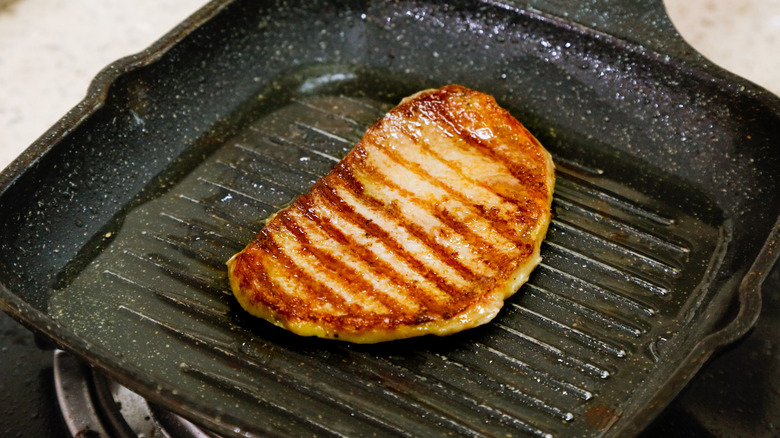
When grilling isn't an option, grill pans provide a reasonable substitute. Their raised ridges let fat cook out and drain away, which a skillet won't do, and when used correctly, they'll give you good grill marks that look just like the real thing.
The key here, as with a cast-iron skillet, is to preheat the grill pan for several minutes, starting with a moderate burner and then slowly increasing the heat. I have two grill pans, one of them a 10-inch round vintage cast-iron model (square grill pans are arguably best, because they have more surface area, but this one fits my burner), and a big reversible griddle/grill pan that either fits across two burners or goes on a grill.
A downside is that grill pans only brown your food where the ridges make contact, while a skillet will sear the whole steak (some argue you should avoid doing steaks in a grill pan). Also, many grill pans are lightweight and have a non-stick coating. Both of those things work against preheating an empty pan, which — as I said above — is exactly how grill pans need to be used. So, if you have that kind of grill pan, warm it well over no more than medium heat, and leave your food untouched for as long as possible, so grill marks can develop.
Copper cookware
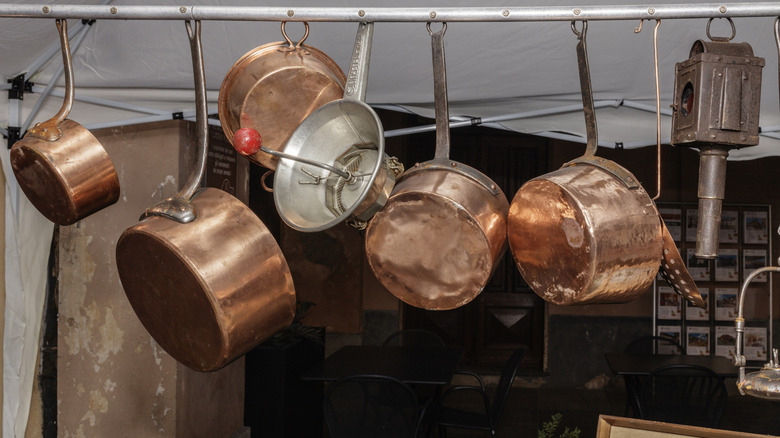
Copper cookware fetches a premium price, because copper is a superb conductor of heat. That means it's super responsive, and when you raise or lower the heat of your burner, you'll see that change mirrored almost immediately by the copper pan.
The problem here is that your stovetop may not let you take full advantage of its capabilities. You'll really only experience that responsiveness in full if you use a gas stove, because the heating elements on electric stoves (whether the coil type or the smooth glass/ceramic cooktops) just don't raise or lower the heat fast enough to exploit copper's responsiveness. Induction cooktops are more promising, because they also give very fast response times when you raise or lower the temperature.
Unfortunately, copper itself is non-magnetic and won't work on induction. Many manufacturers now make copper pans that will work on induction, by adding a layer of magnetic material to the base of the pan for the induction coils to work with. But unfortunately, that also has the effect of dulling the pan's responsiveness, so — again — you're losing the advantage of copper. So, if you're debating whether it's worth spending big on copper cookware and bakeware, the answer is "probably not, unless you cook on gas."
Stainless-steel skillets
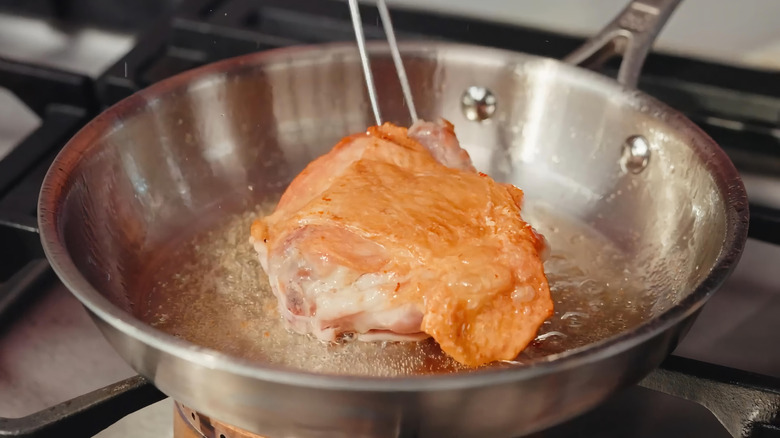
When I taught cooking classes regularly, one of the complaints I heard most often was about how "everything sticks" to stainless-steel skillets. Pots didn't seem as problematic, probably because they're used mostly to boil or simmer liquids. So, there are a couple of things to know about using a stainless-steel skillet.
One is that you can, and arguably should, season it like cast iron. Some people don't like to do that, because it spoils the look of the skillet, but it's a functional option. Whether you season the skillet, or stick with shiny stainless for esthetic reasons, the most important thing to do with a stainless-steel skillet is preheat it. Putting food into the pan before it's hot is one of the common mistakes people make with stainless steel, and food is almost guaranteed to stick if you do that.
Heat the pan and the oil, then add your food when the oil is hot enough to simmer. If you're searing meat and it sticks to the pan, that's just your food letting you know it's too soon to fuss with it. Be patient and let it go until the meat releases easily from the pan instead of forcing it. You'll get a better sear, and you can deglaze the pan to turn the browned-on bits into a tasty pan sauce.
Woks
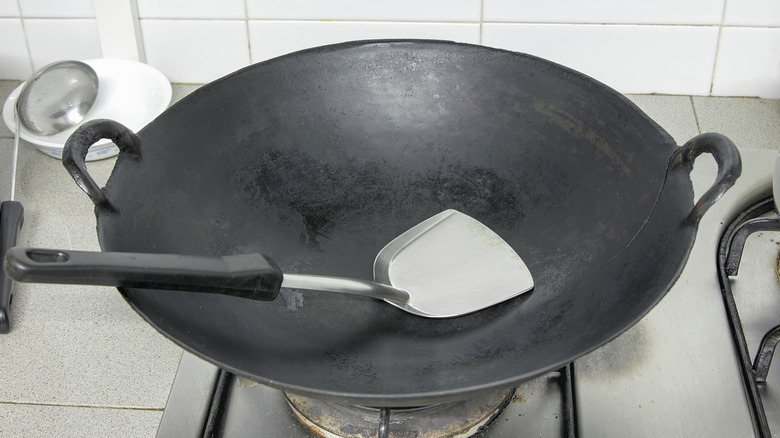
The wok is a really brilliant piece of basic cooking technology, but that's a discussion that I'll skip for today. Instead, I'll explain why I think woks are arguably the pot or pan that's most frequently misused.
Let's start with preheating, because I see two opposing issues quite frequently. On one hand, if you don't preheat it enough, your food is just going to wilt in the wok instead of stir-frying properly. On the other hand, if you overheat the wok (perhaps in pursuit of the much-hyped wok hei flavor), you'll run the risk of warping it or damaging its non-stick finish. We've already talked about why too much heat is a bad thing where non-stick coatings are concerned, which is why I personally prefer plain carbon steel or even cast iron for a wok.
The other big issue I see with woks is overcrowding the pan. It's a mistake almost everyone makes when stir-frying, and it'll give you underwhelming results every time. You need to add your ingredients in small quantities, just enough to cook nicely in the small puddle of oil at the bottom of the wok without reducing the oil's temperature. As you pass meat and vegetables through the hot oil, they'll cook quickly, and then you can slide them up the sides of the wok to stay warm as you repeat the process with your remaining ingredients. Do that, and you'll enjoy better homemade stir-fry, even without the heat of a restaurant-style burner.
Sheet pans
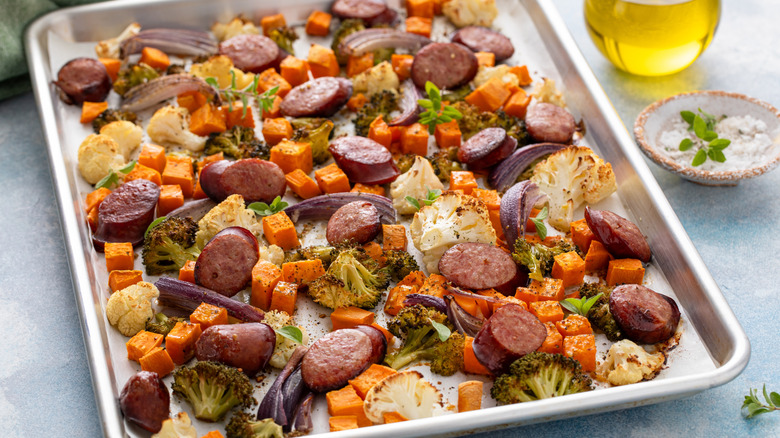
Until now, we've spoken mostly about pots and pans you use on the stovetop, but I'm going to finish with an exceptionally useful pan that goes into the oven instead. I'm talking about sheet pans, the versatile pans you use for baking or for sheet-pan meals.
You'll find they vary a lot in quality and size, with some being thicker and sturdier than others. I favor restaurant-style sheets, which come in standardized sizes (full-, half-, and quarter-sheet being the most common). Professionals usually opt for plain, unfinished aluminum with a thick, rolled edge for stability and sturdiness. Good ones will last you for decades, as long as you don't put them under the broiler.
The intense heat of the broiler will warp most sheet pans, even if they're good ones, because metals expand as they heat. The rolled edge helps a lot, but your pans may warp anyway. It's not that you can't broil on a sheet pan: In my experience, heavy-duty professional-style pans hold up reasonably well if they're only under the broiler briefly. But in practice, most home cooks and bakers don't own pro-quality sheet pans, so warping is a common outcome. That doesn't mean you'll need to throw it out; you can sometimes fix a warped sheet pan. But overall, you're better off using your broiler pan for broiling, or a preheated cast-iron skillet.