

Don't Toss Out Your Warped Sheet Pan. Here's How To Fix It
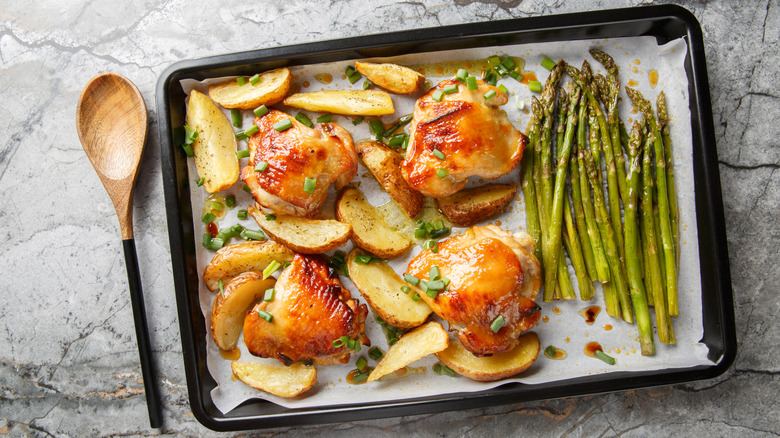
Sheet pans are one of those kitchen essentials we keep for years, even as they start to show their age. Scratches and stains are inevitable, and since these pans tend to be pretty sturdy, why toss a perfectly good one due to some aesthetic wear and tear? However, when a baking sheet warps, the problem is more than an eyesore. Using a warped one is among the worst mistakes you can use with a sheet pan: If the nice, flat pan becomes raised in some places, that's exactly where food will cook or bake unevenly. But don't toss that old baking sheet just yet — you can fix even a badly warped one.
When you notice your sheet isn't lying flat anymore, place the pan in your oven at around 200 degrees Fahrenheit. After about 10 minutes, take it out and lay it on an even, flat surface. With a hammer or meat tenderizer, pound the pan's surface until it's straight again — this may require hammering on both sides. To protect your counter or table, place a towel under the pan, just make sure it's smoothed out.
If your sheet pan is pretty badly warped and you don't see the hammering method working, up the ante with a wooden block. Place that on the uneven parts and hammer the block — it adds extra weight and impact to the pan. Be careful when hammering the pan, but don't be afraid to really throw some muscle into it.
How to avoid warping sheet pans
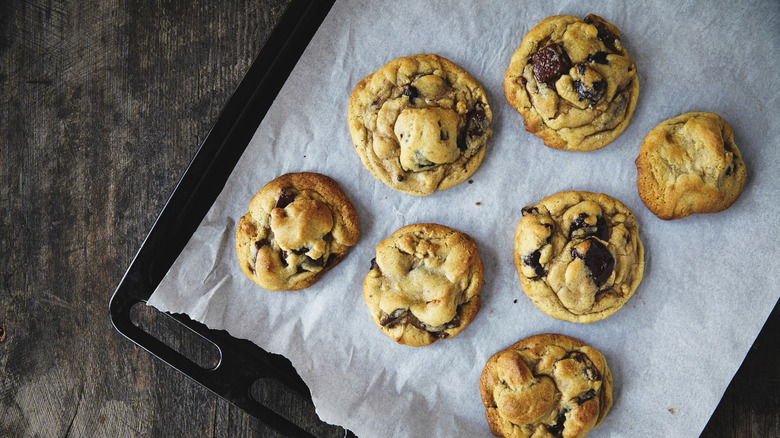
Knowing how to fix warped sheet pans is a gamechanger but understanding how to prevent warping in the first place is just as key. That way, you don't have to learn your pan is warped the hard way — with unevenly cooked or baked food — and then go through the hammering process. Of course, the biggest reason baking sheets warp is sudden temperature changes.
Popping a room-temperature pan into a blazing hot oven instead of letting it heat up gradually or removing a pan from that hot oven and immediately placing it under cold water in your sink would both qualify. After all, metal expands when heated and contracts when cooled. When these shifts happen too rapidly, the temperature changes don't distribute evenly throughout the metal. Even worse, expanding and contracting occurs at different rates in different spots, with thinner or lower-quality pans being especially vulnerable.
The best ways to avoid warped sheet pans include investing in heavier-duty versions like these Boxiki Premium Nonstick Baking Sheet Pans. Let pans warm up slowly by placing them in the oven while it's still preheating and never run them under cold water too soon after removing them from the oven. Always spread food evenly so heat distribution remains balanced. Between being able to fix warped pans and preventing future warping, you'll be back on track making your favorite sheet pan recipes in no time.