

Mixed Herb Pesto Shrimp Pasta Recipe
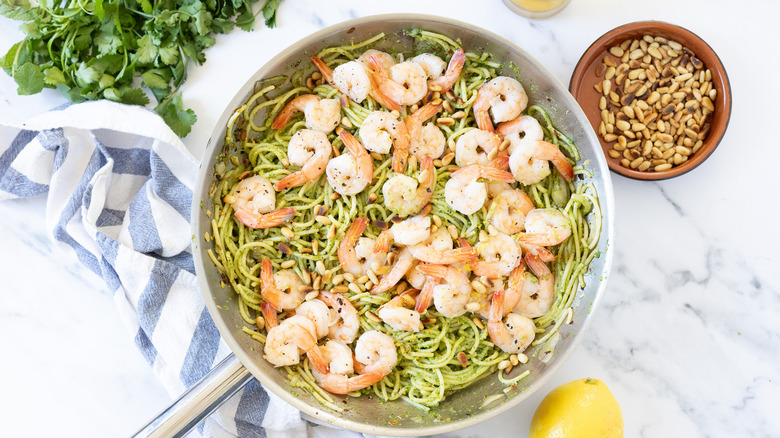
This mixed herb pesto shrimp pasta recipe combines long strands of al dente pasta, coated fully in a bright, herbaceous pesto sauce, and topped with juicy, spicy, garlicky pieces of jumbo shrimp. Crowned with a generous smattering of lemony Parmesan, this pasta is a vibrant and satisfying meal you can look forward to.
This mixed herb pesto shrimp pasta recipe was borne out of necessity. Though classic Genovese basil pesto is undoubtedly delicious, it can also be rather expensive, and sourcing large quantities of basil in North America outside the summer months can be difficult. As the food blogger behind At the Immigrant's Table, I love that unusual pesto variations like pesto alla trapanese solve the pine nut problem, but what if you simply don't have enough basil but are craving a good, slick green sauce on your pasta? That's where this mixed herb pesto comes in. With all the traditional seasonings and flavors of regular pesto, like pine nuts, Parmesan, and lemon, it cleverly swaps out basil for whatever herbs you have on hand. Whether it's a mix of cilantro, parsley, or even some dill thrown in, it's a bright and herby twist on the original.
Paired with shrimp sauteed with garlic and chile flakes, and topped with plenty of lemon zest for contrast, the resulting pasta is a glorious lemony, herby, and savory tangle that pairs well with a chilled sauvignon blanc. A bonus is that any leftovers will taste just as good the next day.
Gather the ingredients for mixed herb pesto shrimp pasta
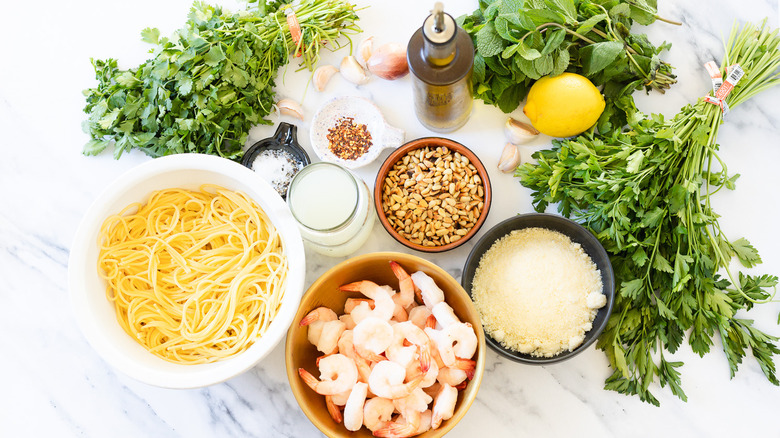
To make the mixed herb pesto that gives the dish its unique, scrappy character, we suggest a combination of equal amounts of mint leaves, parsley leaves, and cilantro leaves, some toasted pine nuts, garlic cloves, grated Parmesan, fresh lemon juice, fine sea salt, black pepper, and extra virgin olive oil. But honestly, we've tried this sauce with different combinations and variations of ratios of herbs — sometimes swapping out some of the cilantro for dill, or throwing in a bit of basil, and it always tastes great. It's about using up what might be wilting in the fridge and reducing your food waste.
The secret to making this taste like traditional pesto is really in the combination of toasted pine nuts, fresh lemon, and Parmesan cheese, so don't skimp on those. Also, avoid very fragrant herbs like tarragon or woodsy herbs like thyme and rosemary, as they will overpower the sauce.
For the shrimp pasta, you'll need spaghetti, olive oil, peeled and deveined jumbo shrimp, sliced garlic cloves, red chile flakes, shallots, fine sea salt, black pepper, grated Parmesan, and lemon zest, for serving. You can use another long-strand pasta like angel hair or fettuccine if that's what you have on hand.
Step 1: Combine the pesto ingredients
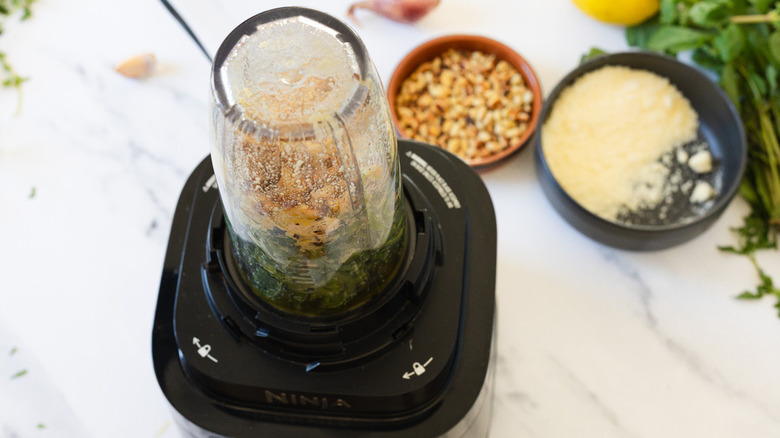
For the mixed herb pesto, combine the mint, parsley, cilantro, pine nuts, garlic, Parmesan, lemon juice, salt, pepper, and oil in a high-speed blender or food processor.
Step 2: Blend the pesto
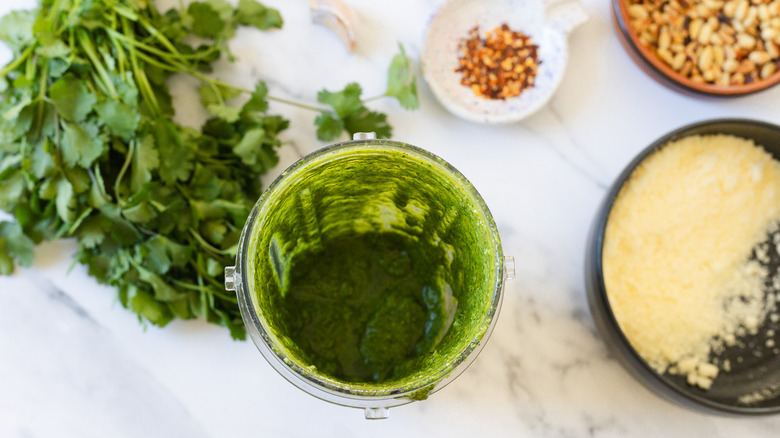
Process until smooth. Taste and adjust the seasoning. Set aside.
Step 3: Boil water for pasta
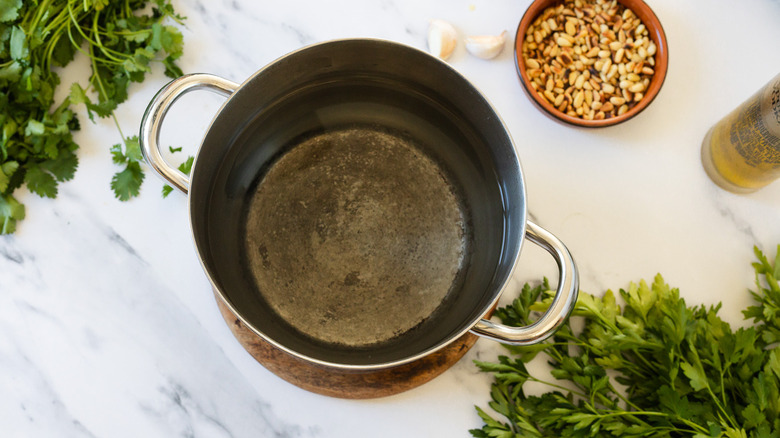
Bring a large pot of salted water to a boil.
Step 4: Cook the pasta
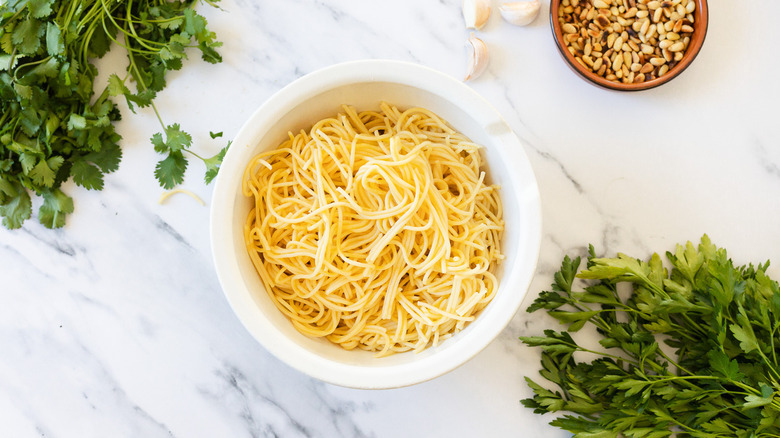
Cook the spaghetti according to the package directions until al dente.
Step 5: Reserve some pasta water
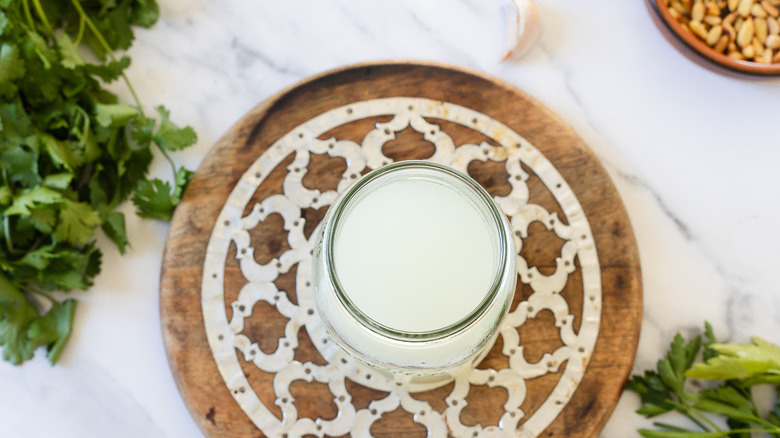
Reserve ½ cup of pasta water before draining.
Step 6: Heat the olive oil
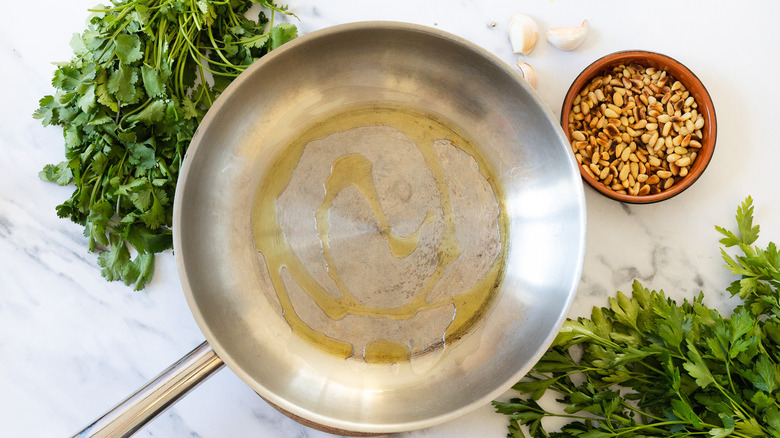
Heat the olive oil in a large skillet over medium-high heat.
Step 7: Cook the shrimp
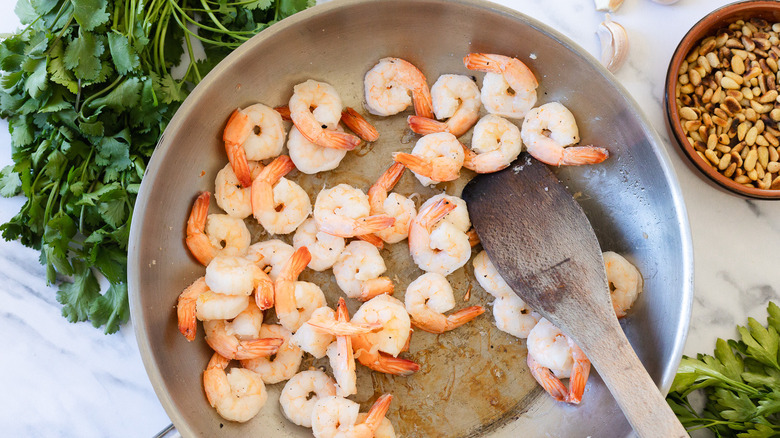
Add the shrimp in a single layer, and cook 1–2 minutes per side, until pink and just cooked through. Season with salt and pepper. Remove the shrimp from the pan and set them aside.
Step 8: Saute the garlic and chile flakes
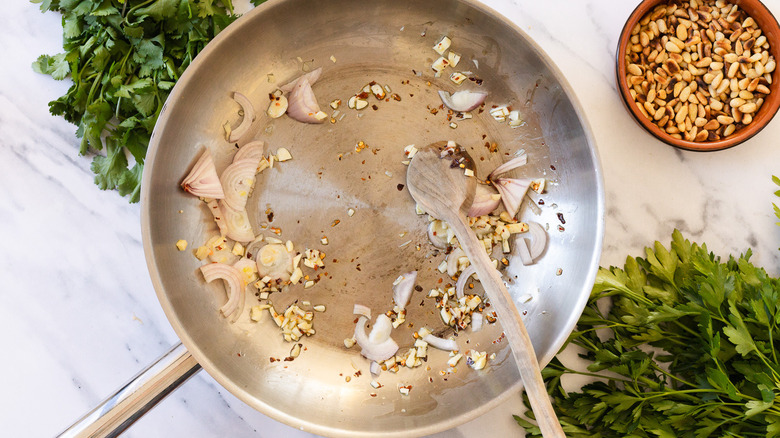
Reduce the heat to medium. Add the garlic and chile flakes to the same pan and cook for 1 minute, until fragrant.
Step 9: Add the shallots
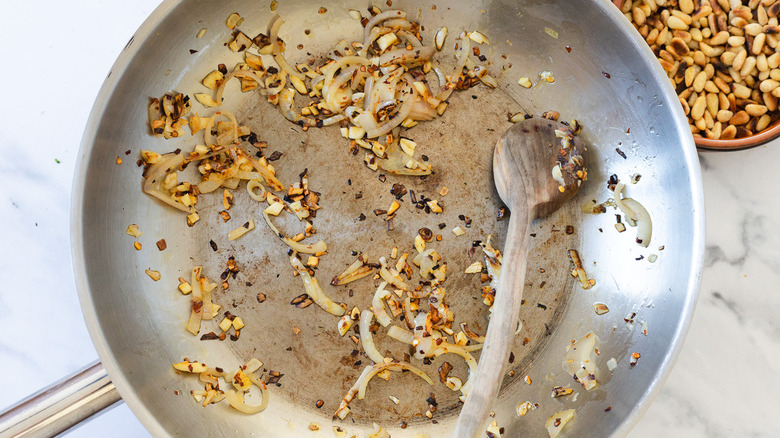
Add the shallot and cook for 2–3 minutes, until softened.
Step 10: Toss the pasta
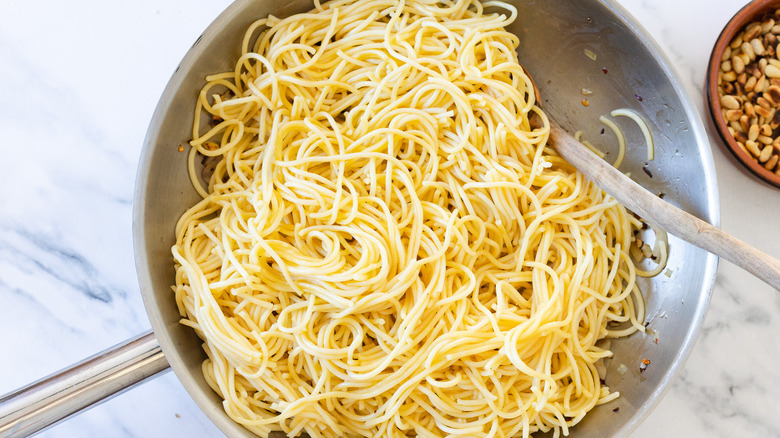
Add the drained pasta to the pan and toss to combine.
Step 11: Add the sauce
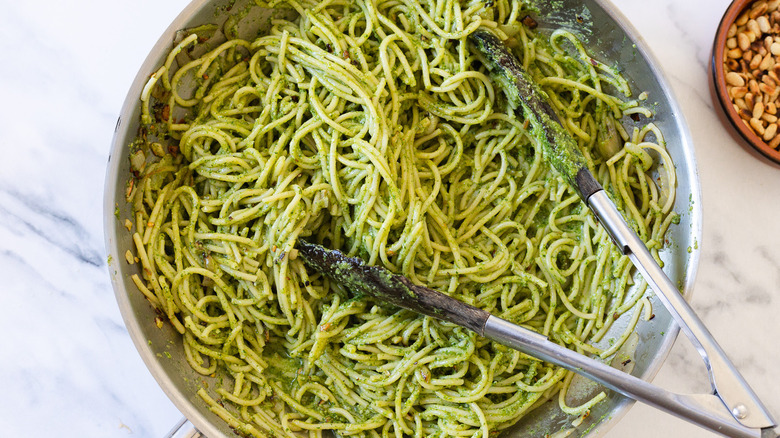
Add the pesto and a splash of pasta water, and toss until the pasta is evenly coated. Add more pasta water as needed to loosen the sauce.
Step 12: Add the shrimp
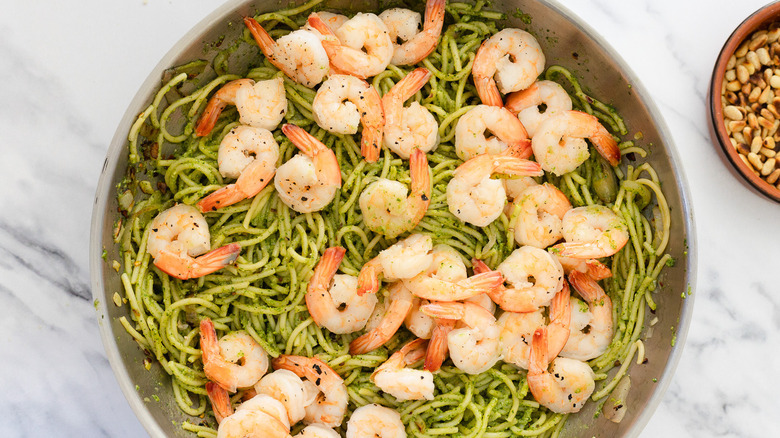
Return the shrimp to the pan.
Step 13: Serve the mixed herb pasta with shrimp
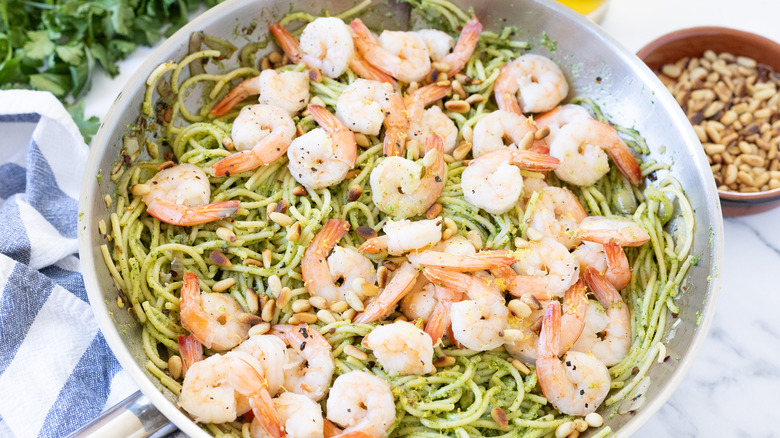
Serve the mixed herb pesto shrimp pasta, topped with extra pine nuts, Parmesan, and lemon zest.
What pairs well with pesto pasta?
Mixed Herb Pesto Shrimp Pasta Recipe
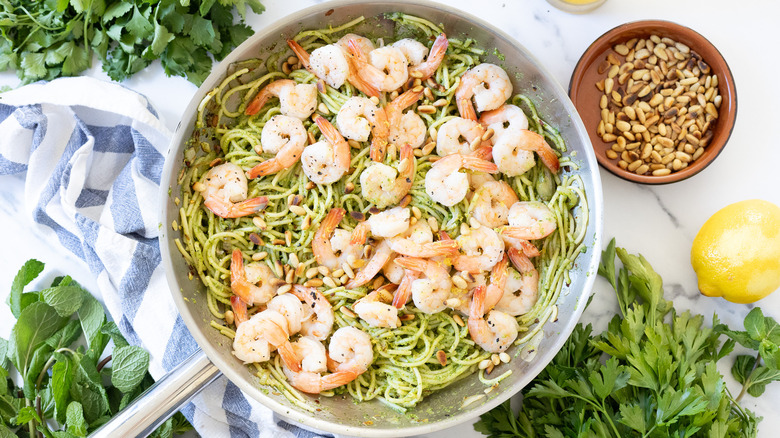
In our 305-minute pasta recipe, we toss spaghetti and garlicky, spicy jumbo shrimp in a bright herby pesto and top the whole thing with a dusting of Parmesan.
Ingredients
- For the mixed herb pesto
- 1 cup fresh mint leaves
- 1 cup fresh parsley leaves
- 1 cup fresh cilantro leaves
- ⅓ cup pine nuts, lightly toasted, plus more for topping
- 2 garlic cloves
- ½ cup grated Parmesan
- 2 tablespoons fresh lemon juice
- ½ teaspoon fine sea salt
- ¼ teaspoon black pepper
- ½ cup extra virgin olive oil
- For the shrimp pasta
- 1 pound spaghetti
- 2 tablespoons olive oil
- 1½ pound jumbo shrimp, peeled and deveined
- 4 garlic cloves, thinly sliced
- ½ teaspoon red chile flakes
- 1 large shallot, thinly sliced
- ½ teaspoon fine sea salt
- ¼ teaspoon black pepper
- ¼ cup grated Parmesan, for serving
- 1 teaspoon lemon zest, for serving
Directions
- For the mixed herb pesto, combine the mint, parsley, cilantro, pine nuts, garlic, Parmesan, lemon juice, salt, pepper, and oil in a high-speed blender or food processor.
- Process until smooth. Taste and adjust the seasoning. Set aside.
- Bring a large pot of salted water to a boil.
- Cook the spaghetti according to the package directions until al dente.
- Reserve ½ cup of pasta water before draining.
- Heat the olive oil in a large skillet over medium-high heat.
- Add the shrimp in a single layer, and cook 1–2 minutes per side, until pink and just cooked through. Season with salt and pepper. Remove the shrimp from the pan and set them aside.
- Reduce the heat to medium. Add the garlic and chile flakes to the same pan and cook for 1 minute, until fragrant.
- Add the shallot and cook for 2–3 minutes, until softened.
- Add the drained pasta to the pan and toss to combine.
- Add the pesto and a splash of pasta water, and toss until the pasta is evenly coated. Add more pasta water as needed to loosen the sauce.
- Return the shrimp to the pan.
- Serve the mixed herb pesto shrimp pasta, topped with extra pine nuts, Parmesan, and lemon zest.
Nutrition
| Calories per Serving | 1,090 |
| Total Fat | 51.4 g |
| Saturated Fat | 9.9 g |
| Trans Fat | 0.0 g |
| Cholesterol | 292.8 mg |
| Total Carbohydrates | 95.9 g |
| Dietary Fiber | 7.2 g |
| Total Sugars | 5.5 g |
| Sodium | 1,003.2 mg |
| Protein | 62.6 g |

What adaptations can you make to this recipe?
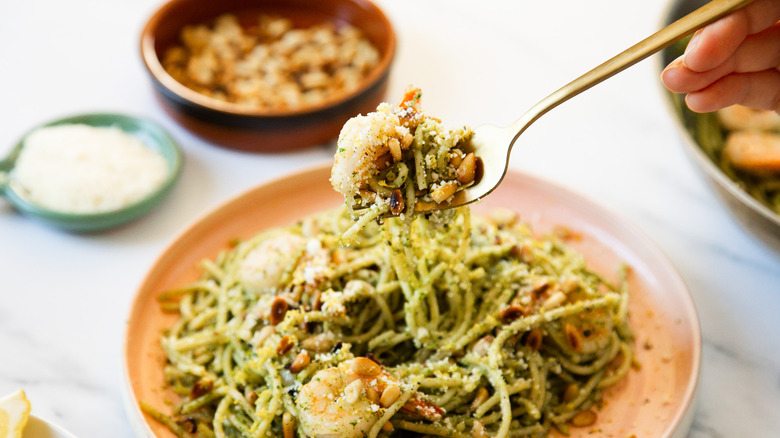
When working with a multi-component recipe like this pesto shrimp pasta, there's no shortage of ways to change it up. As mentioned before, pasta is the obvious swap, but do note that even a low-carb option like zucchini noodles or hearts of palm pasta would work here. Both would hold up to the sauce without getting soggy.
For the protein, we love adding scallops to the shrimp for flavor and variety. Even flaked salmon stirred in during the last ten minutes of cooking works well. If you want more vegetables in your pasta, then blistered cherry tomatoes and zucchini (you can roast them in the oven at 425 F for 30 minutes) provide great additions. We also love to fold in some spinach to wilt it along with the pasta.
Finally, another substitution if you're looking to make the pesto even more affordable and to give it a slightly different flavor profile, is to use walnuts in place of some, or even all, the pine nuts. Both nuts have a high degree of fat in them that helps make the pesto flavorful, nutty, and smooth.
What's the best way to prevent the shrimp from going rubbery when making or reheating this pasta?
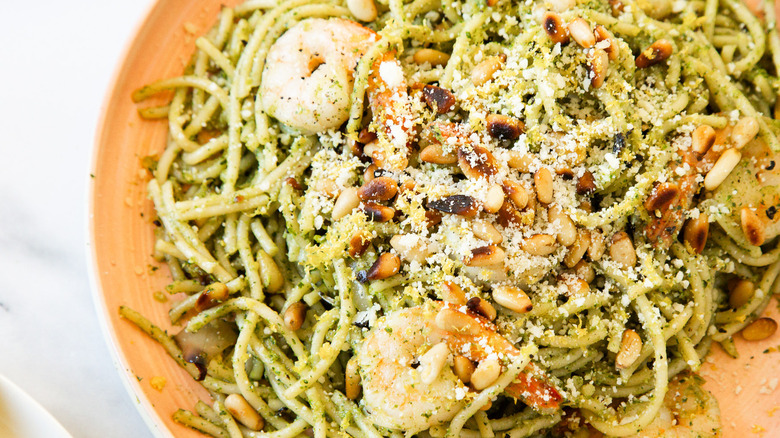
Shrimp is likely one of the easiest proteins to overcook, which turns them rubbery and chewy. To avoid that unfortunate fate whether you're cooking from scratch or reheating the dish, we have a few suggestions and ideas.
One option is to group the shrimp together on a skewer to make it easier to remove them all smoothly at the same time. After all, the main cause of rubbery shrimp is overcookeding them, and adding even one minute to their already short cooking cycle can be the ruin of your beautiful jumbo shrimp. So watch them carefully, and pull them from the pan the moment they turn pink and curl into a loose C shape. If they roll in on themselves into an O, it means they're already overcooked. Another way to prevent overcooking is to pat them fully dry before cooking, as this helps them to sear them on the outside and to avoid steaming them.
If you're reheating the pasta the next day, avoid using the microwave, as the intense, uneven heat is a quick ticket to rubbery shrimp. Our best advice is to heat a pan with some olive oil and add any noodles you are heating first. Loosen the pasta with some water, and only when it's reached your desired temperature, add the shrimp in the last 30 seconds of cooking. If separating them isn't possible, spread them in a single layer in a pan with a lid, and warm them on the lowest setting possible.