

The Main Grocery Items You Should Have On Your List When You're On A Budget
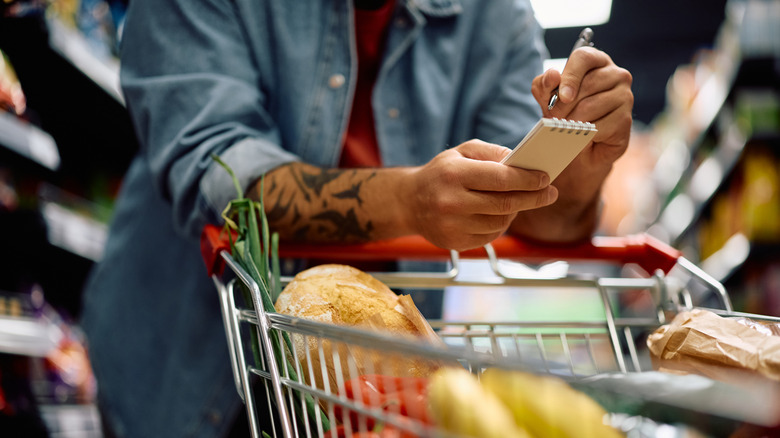
For years now, grocery prices have been on the rise at what seems like an ever-increasing rate. Unfortunately, it doesn't look like this trend will change anytime soon. As fuel costs rise, so too do grocery prices, with suppliers passing those increased operating costs to consumers. Avoiding the most overpriced grocery items is one step to lowering your household food bill. But for real expert advice on cutting costs, we spoke with consumer savings and shopping expert Andrea Woroch, who shares that it's about shopping smart and accepting that you may need to do a little more work.
"Keep your pantry stocked with pasta and carbs," Woroch reveals, "which are an inexpensive side dish for any meal." Particularly if you are stocking up with store brand items, a pantry full of the right dry goods can allow you to feed the family on pennies per serving. "Rice and dry beans are especially beneficial when shopping on a budget," she adds, "because these are inexpensive ingredients, great fillers and have a long shelf life."
But dry goods alone aren't enough for a proper healthy diet. For that, you need protein, fresh fruit, and vegetables. For produce, Woroch suggests reviewing the "Clean 15" list of the fruits and vegetables with the least pesticides, for which you don't need to feel guilty skipping the 20% to 30% markup that comes with buying organic. As for proteins, she suggests sticking "with less expensive meat options, including chicken thighs, ground turkey, pork chops, and chuck roast." If you are willing to trim a bit of fat or marinate the meat to tenderize it, you can find huge savings.
Meal planning is another important step for saving money at the checkout
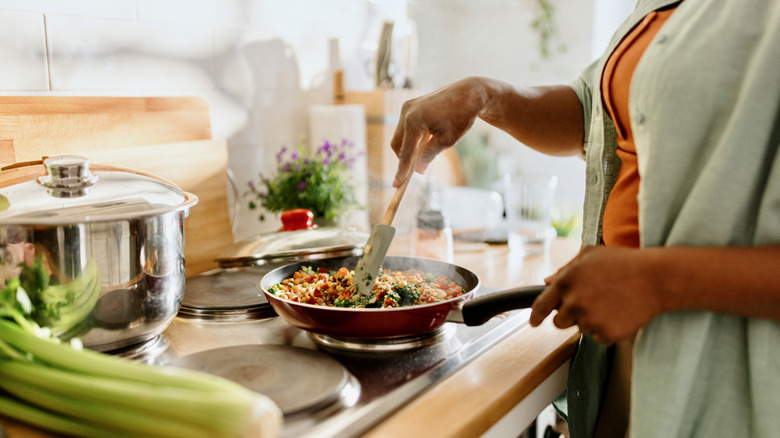
Another simple technique that Woroch suggests is buying ingredients in bulk. When you do the math on the unit pricing at the grocery store, larger packages of dry ingredients and meats in particular often have much lower costs by weight. In addition to shopping for these larger packages, Woroch adds another suggestion: "Meal plan to reduce food waste, looking for recipes that use the same ingredients to ensure you cook and eat everything in its entirety."
The idea of meal planning can feel intimidating for those that are not particularly comfortable in the kitchen, but it doesn't have to be. One simple trick is to start with an easy, adaptable meal formula centered around dividing the plate into proteins, starches, and vegetables. Then, simply plug in what you have on hand — or plan for what you'll need — for these simple meals. Alternatively, there are free meal planning apps out there that can do the work for you.
For the best results and the cheapest meals, however, Woroch suggests what she calls "backwards shopping." "This is when you come up with a meal plan based on ingredients you already have at home by reviewing your fridge, pantry, and freezer," she explains, "then make a 'gap only' shopping list for some items you don't have." As simple as it sounds, surveying the pantry to see what you already have in stock in terms of things like dry goods and spices can significantly reduce that final sum on your receipt at the end of your shopping trip.
Prepared and frozen foods aren't always a bad deal
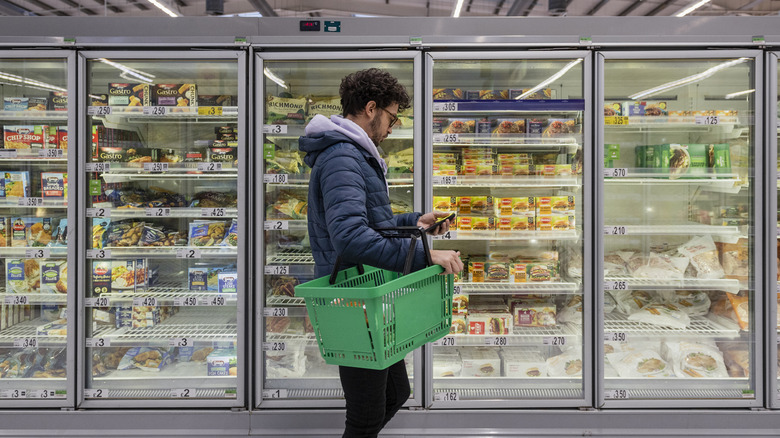
While many of these suggestions involve a bit of extra work at home, they don't all mean cooking from scratch. For example, Woroch suggests avoiding buying prepared baked goods and choosing boxed baking mixes instead. These remove most of the work and still confer big savings. Similarly, smart shopping in the freezer aisle can also be a low-effort way to reduce costs.
"Frozen prepared food, when on sale, can be a great way to add variety to your menu while saving you money," Woroch notes. The important part here is shopping for the sale. Stores generally charge a convenience fee for prepared foods, but a significant discount can be a real windfall. "You can stock up when it's on sale and always have an option to make a quick meal," she adds. "Since these are frozen, you also won't have to worry about it spoiling."
But the value of the freezer aisle extends beyond prepared foods as well. "Frozen produce can also help you save 10% to 20% compared to fresh options," Woroch says, noting that the prices of fresh produce are expected to continue climbing. "And they're flash frozen at peak ripeness, offering maximum nutrients, even more so than fresh!" This is true for certain proteins, too. You can save a lot of money on seafood by buying frozen instead of fresh, and the quality is typically as good or better.
With food prices on the rise, we can use all the shopping advice we can get. The best groceries to buy on a budget often involve a little more work, but between smart shopping and a bit of elbow grease, you can really bring down that grocery bill.