

10 Chain Restaurants Boomers Miss Visiting
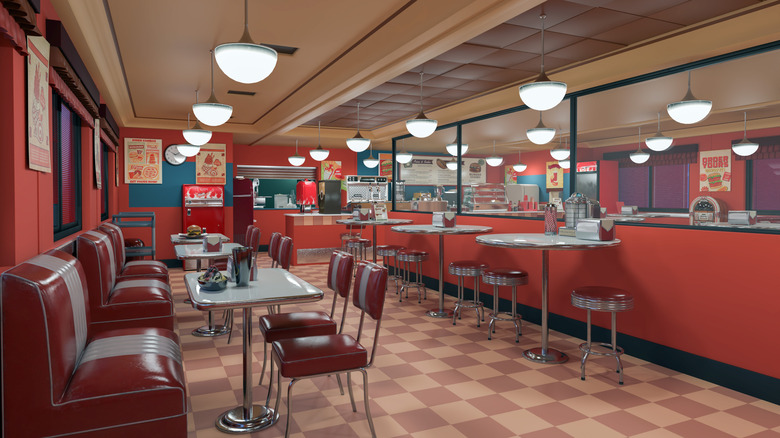
If you were asked to name your favorite restaurant chain today, what would you say? Maybe you'd answer Dairy Queen, Wendy's, or Baskin-Robbins. You certainly wouldn't be alone. According to YouGov, they're the top three dining brands in the U.S., closely followed by brands like Krispy Kreme, Cinnabon, and IHOP.
But if you were growing up in the 1950s, 1960s, and 1970s, like the Boomers were, your answer would likely be different. You might say something like Burger Chef or Red Barn, or maybe Hot Shoppes or even the lunch counter at Woolworth's. They're places that sound alien to many younger generations today, but to many Boomers, were beloved institutions and the locations of first dates, family celebrations, and milestone birthdays.
Boomer or not, join us as we take a trip down memory lane. We're taking a closer look at the many chain restaurants that people miss visiting from the 1950s, 1960s, and 1970s and what makes them so nostalgic today.
Burger Chef
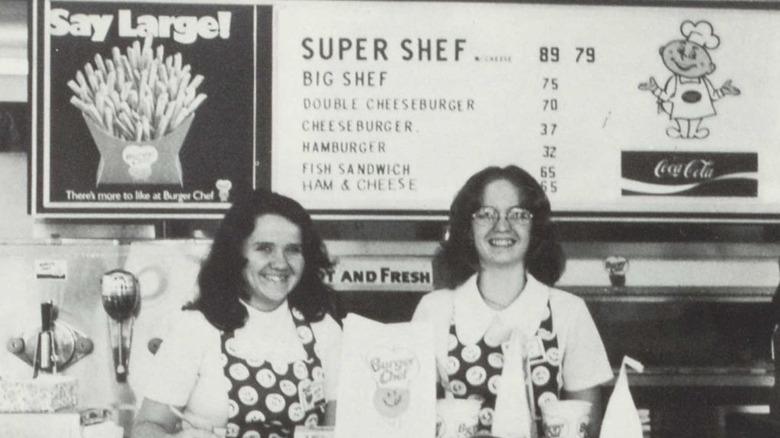
Just a few years after the first Burger King was founded, another burger giant entered the fast-food scene: Burger Chef. Its first location opened in Indianapolis in 1957, but by the 1970s, it had opened around 1,200 restaurants and evolved into one of the biggest fast-food chains in the entire country. As you've likely gathered, given the lack of Burger Chef signs across the U.S. today, that astronomical success didn't last. Hardee's bought the chain in the 1980s, and the final restaurant closed before the end of the 1990s.
But Burger Chef was around long enough to leave a huge imprint. Many Boomers have fond memories of heading to their local restaurant to sip on strawberry milkshakes and eat hamburgers. One of the best parts for many people was the condiments bar, which allowed you to load up your burgers however you pleased.
Others miss being able to head to their local Burger Chef and grab a soda for a dime and a portion of French fries for just $0.15, while for many, it was the ham and cheese sandwich that pulled them back every time. "Everything was good there. I loved going there," said one Facebook user.
The Red Barn
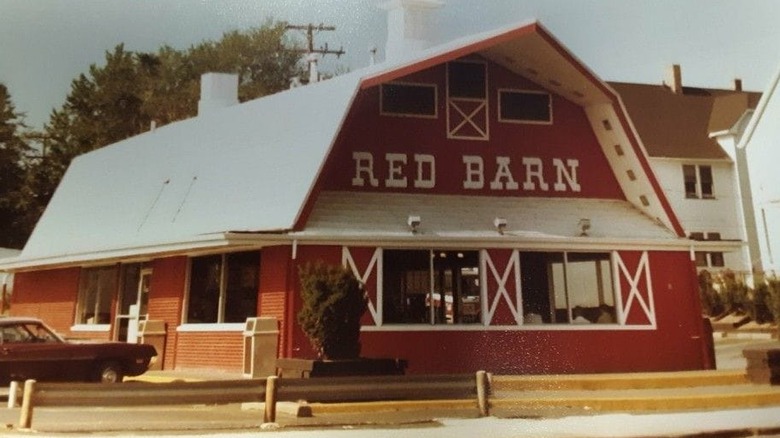
Burger Chef isn't the only once-popular burger chain that doesn't exist anymore. Back in the 1960s, another competitor made its arrival in the growing industry. It was called The Red Barn because, well, all of its countryside-themed restaurants were made to look like red barns. At its peak, the chain also had hundreds of locations across the U.S., and many Boomers still miss them today.
For some, it's thinking about The Red Barn's french fries that makes them feel the most nostalgic. Others wish they could still take a bite out of the Barnbuster, which was basically a quarter-pounder loaded up with lettuce, tomatoes, onions, pickles, sauce, and cheese. "[It was] like a Whopper but the Barnbuster was 1000 times better," wrote one Facebook user.
Some miss The Red Barn fish sandwiches, which you could grab for $0.25, while others say the Big Barney was the best thing on the menu. The latter was very similar to a Big Mac, according to those who remember it fondly.
Howard Johnson's
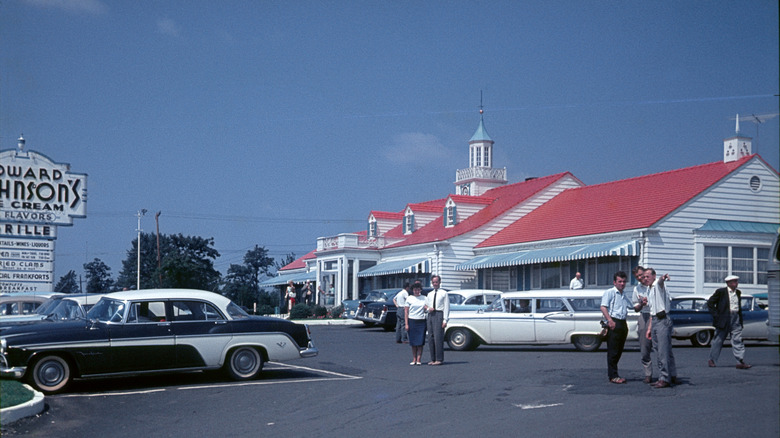
If you were driving down the highway in the 1960s, the chances were you'd drive past a glowing Howard Johnson's sign. Those billboards, alongside the restaurant's bright orange roofs, were key to the iconic diner chain's success. They immediately told hungry drivers: Stop here, we've got you. By the 1960s, Howard Johnson's had a huge presence, with hundreds of restaurants across the country. Despite the competition from juggernauts like McDonald's, the restaurant chain clung on through the 1980s, but by the turn of the century, it was struggling. In 2022, the final Howard Johnson's closed its doors.
Today, many Boomers miss the heyday of Howard Johnson's back in the '60s and '70s. For some, it was the Friday night all-you-can-eat clams that were the best, while others remember the many different ice cream flavors they could choose from. "My parents would take us there for their fried clams and we loved their orange sherbet," said one Facebook user. Many people loved the hot dogs in toasted buns, and the turkey dinners seem to be nostalgic for quite a few Boomers, too. "Whenever we traveled back in the day we would stop at Howard Johnson's Restaurants," said another Facebook user.
Royal Castle
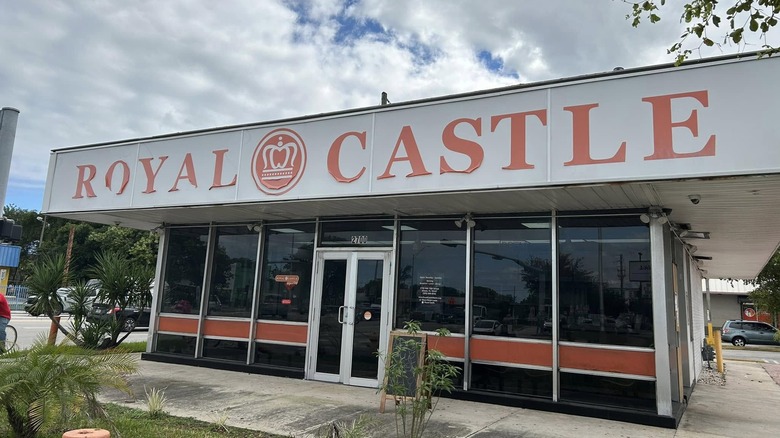
For many Boomers who grew up in Florida, Georgia, Louisiana, and Ohio in the 1950s and 1960s, the name "Royal Castle" brings back many happy memories of drinking cold birch beer from a frozen mug in one hand, with a slider loaded up with cheese and pickle in the other. The chain was founded in Miami in the 1930s, but by the end of the 1960s, it had grown to around 200 restaurants.
The birch beers and burgers kept many customers coming through the doors of Royal Castle in the middle of the 20th century, but many people also remember the large, cheap breakfasts the chain offered. According to some, for less than $0.30, you could get two eggs, grits, toast, and a coffee.
If you wish you could visit Royal Castle just one more time, good news: You absolutely can. While most Royal Castles are now closed, there is still one location left in Miami. Just don't expect to get anything for less than $0.30 in this day and age.
Hot Shoppes
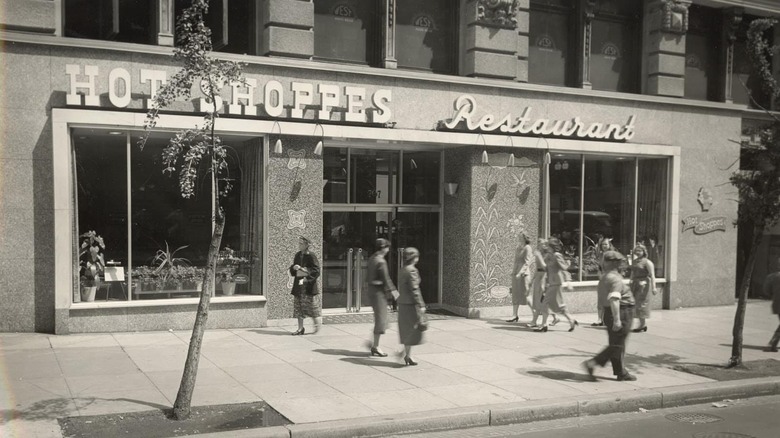
The first Hot Shoppes, which opened in 1927, was a humble street food stand in Washington D.C., offering A&W Root Beer and tamales, but over the decades, it transformed. In the 1930s and 1940s, Hot Shoppes were fashionable roadside restaurants, served by "curbers," who were basically waitstaff who would run around the parking lot taking orders and handing out food. By the 1950s, the chain had adopted more of a fast-food approach, and this is what many Boomers remember fondly about the chain.
By the 1960s, Hot Shoppes had 70 drive-in locations in seven states and Washington D.C., and all were great hangouts for teens and families alike. Some Boomers who frequented the chain especially miss the Mighty Mo, which was a triple-decker hamburger often served with breaded onion rings. For others, it was the Teen Twist (basically a grilled ham sandwich) that had their hearts, and many reminisce on other options like hot fudge cake, strawberry pie, and a milkshake called Orange Freeze. "I now make them for my grandchildren," wrote one Facebook user about the Orange Freeze. Another added: "They cured everything!"
Sadly for fans of Hot Shoppes, it didn't survive the fast food boom, and the last location finally closed in 1999. Interestingly though, Hot Shoppes kind of lives on. Its founder, J. Willard Marriott, also went on to open the hotel giant, the Marriott Corporation.
Sambo's
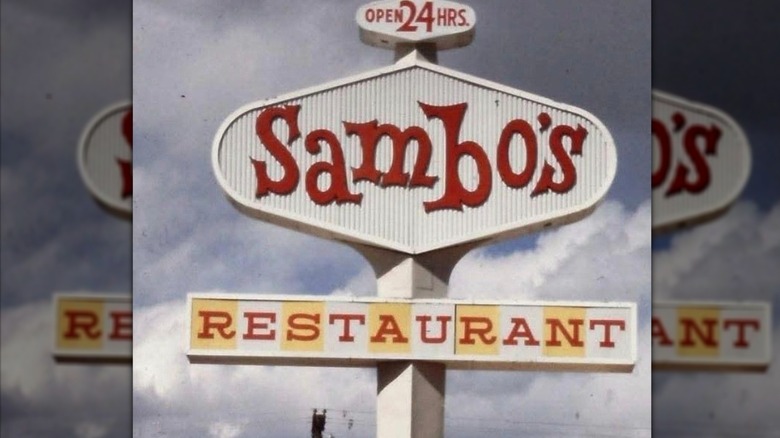
Many Boomers remember Sambo's with fondness. They recall heading to their nearest location of the popular full-service restaurant chain, which had grown to more than 1,100 locations by the 1970s, and sharing sodas and pancakes with friends. Others say the all-day breakfast was the best thing about the Sambo's menu, while others miss the sweet Tiger Butter and the bottomless coffee.
For many people though, that fondness is tinged with regret. While the name was apparently chosen because it was the combination of the founders' names (Sam Battistone Sr. and Newell Bohnett), it had some seriously racist undertones. For centuries, the name Sambo has been used to denigrate Black people. Per the Jim Crow Museum, the term and the stereotype it conjured up of a lazy, silly Black person, were used by many enslavers to defend slavery. It was used in the same way as Mammy or Aunt Jemima — to shape racial attitudes and cause Black communities immeasurable harm.
Unfortunately, despite backlash against the name in the 1970s, Sambo's — which was decorated with images from the 1899 book "Little Black Sambo" — doubled down. It wasn't until the 1980s that it would start to change its branding to names like Jolly Tiger and No Place Like Sam's, but it was too late. This, combined with competition from the booming fast food industry and a bankruptcy filing, spelled the end of the chain. While many Boomers miss the food, plenty also think the name was wrong.
Farrell's Ice Cream Parlour
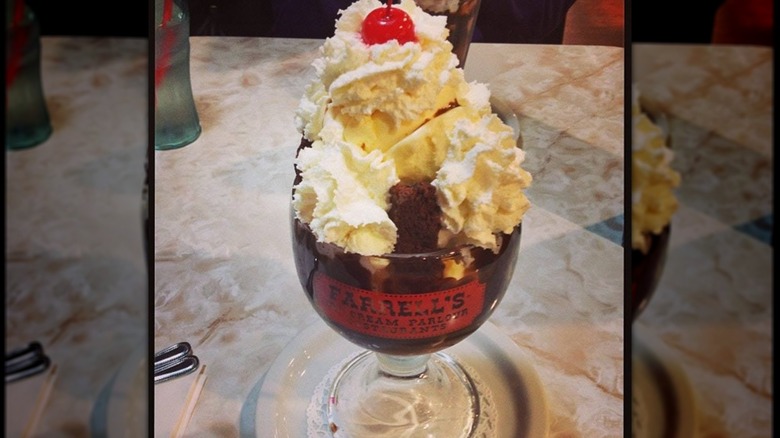
In 1963, the first Farrell's Ice Cream Parlor opened in Portland, Oregon, and it was a hit. Families couldn't get enough of the New York-style parlor, which offered elaborate ice cream sundaes and burgers, and was fitted with booths, self-playing pianos, and bright red decor. By the 1970s, it had grown to 120 restaurants.
If you were lucky, you got to spend your birthday at Farrell's, say many Boomers. You would be treated to free scoops and the whole parlor would sing to you. If you were extra lucky, your parents might buy you one of the most impressive items on the menu: The Zoo. This sundae was truly something else. It had 50 scoops of ice cream, plastic animals, and was marched around the restaurant to the sound of sirens before it was placed in front of you.
"Nothing like watching the zoo being raced around on a stretcher by two bus boys while sirens and bells went off," recalls one Redditor who allegedly worked at Farrell's in the 1970s. Others remember the Pig's Trough with waves of nostalgia. Like The Zoo, the Pig's Trough was a huge sundae with brownie chunks and whipped cream. "I ate a Pig's Trough on my birthday and got a ribbon," said another Reddit user. "It took me so long the ice cream melted and I had to drink it with a straw. I was determined!"
Ponderosa Steakhouse
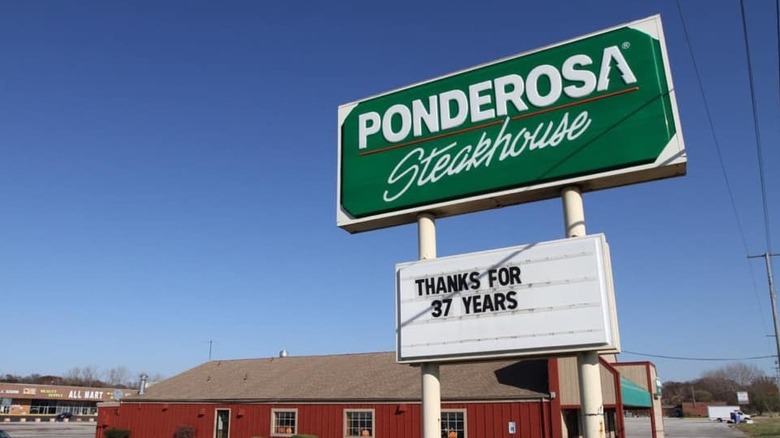
In the 1960s, the TV show "Bonanza" dominated the airwaves. It was a fun, family-friendly Wild West show, set on a ranch in the Nevada desert. It was so popular, one of the actors, Dan Blocker, decided to take things even further. He opened his own Bonanza Steakhouse in Westport, Connecticut, giving viewers a real place where they could experience the magic of the TV show off-screen. People loved it, and the steakhouse grew into a chain with hundreds of locations. In Indiana, two young entrepreneurs were inspired. Norm Weise and Dan Lasater opened their own copycat, low-budget, Wild West-themed steakhouse called Ponderosa, which was also a big hit.
In fact, some Boomers remember waiting in line to get into the Ponderosa Steakhouse, so they could enjoy a hearty yet cheap steak dinner. Some recall taking dates there, while others say they always had family celebrations at Ponderosa. It's not surprising: In the 1970s, you could order a Ponderosa Sirloin Steak Dinner with a baked Idaho potato, a tossed green salad, and freshly baked roll for less than $2.
The Ponderosa Steak House and the Bonanza Steakhouses were rivals for decades, but in the end, they decided to bury the hatchet, merging together just before the 1990s. The restaurants are still around, but they no longer number in the hundreds. At the time of writing, there are 16 Ponderosa Steakhouses in the U.S.
Steak and Ale
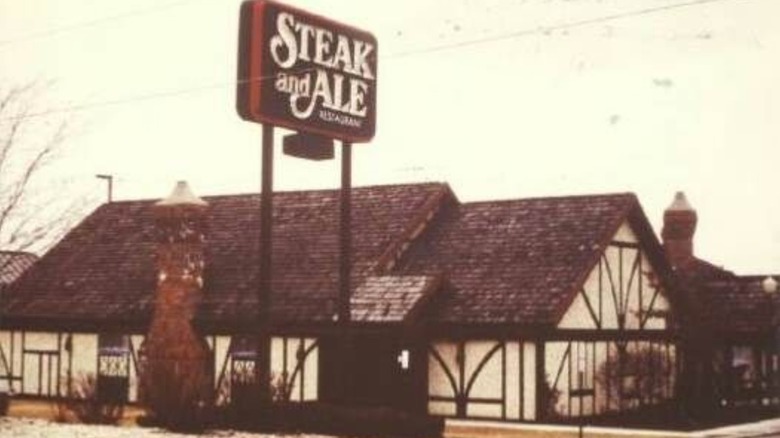
Ponderosa and Bonanza weren't the only places offering affordable steaks in the 1960s and 1970s. Many Boomers also remember spending special occasions at the Steak and Ale Restaurant, a popular steak chain founded in Dallas in 1966. At its peak in the 1980s, the chain, which was styled after a British inn, had nearly 300 locations.
For some Boomers, though, the thing that sticks in their mind about Steak and Ale wasn't the steak at all, but the bread. It was a black pumpernickel bread, which was incredibly soft and sweet, and diners would layer it up with plenty of butter. For others, though, the main draw was the salad bar. The chain was a pioneer of the concept and actually introduced the very first restaurant salad bar in the U.S. "As a kid I would only eat the nuts, raisins, pepperoni and croutons off of it but as [an] adult I would tear that salad bar up if it was still around," recalled one Redditor.
Steak and Ale made it until 2008, but it ended up closing all locations after filing for bankruptcy. But the dream isn't over. In 2024, restaurateurs Paul and Gwen Mangiamele decided to revive the brand and opened a new and improved Steak and Ale in Burnsville, Minnesota. There are more locations to come, in Colorado, New Mexico, Texas, and Wisconsin.
Woolworth's Lunch Counter
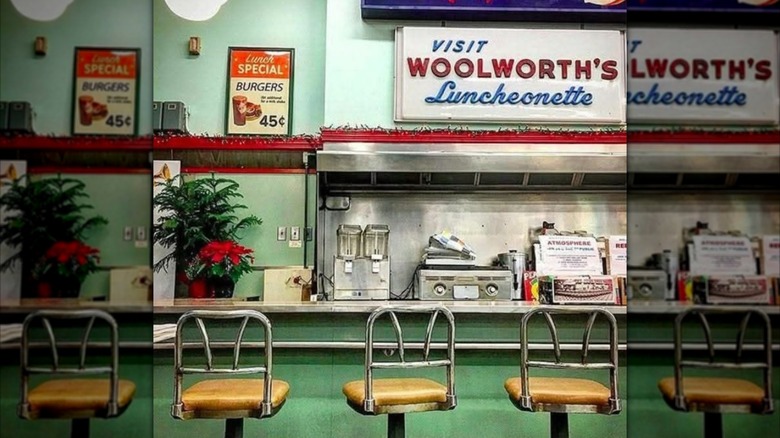
Let's be honest: Shopping isn't always that fun for kids. But if you were growing up in the 1960s and 1970s, getting to eat at Woolworth's Lunch Counter made it all worth it. In the U.S., the retail giant had long lunch counters, which were fitted with dozens of swivel stools. Many Boomers remember sitting at the counter, spinning on the stools, and eating comfort food classics like burgers, pizza slices, hot dogs, and toasted tuna sandwiches while drinking egg creams and Cherry Cokes.
For some, Woolworth's Lunch Counter wasn't just significant because of the food. In the 1960s, it even became a symbol of the Civil Rights Movement. Four Black college students marched into a Woolworth's in Greensboro, North Carolina, and took their seats at a segregated counter. The protest sparked an entire movement and inspired many Black Americans to initiate similar sit-down protests across the South.
Woolworth's was once a shopping hub for many Americans, but the retailer and its lunch counters are long gone in the U.S. In fact, the final store closed in 1997.