

This Old-School Deli Meat Sparks A Generational Divide
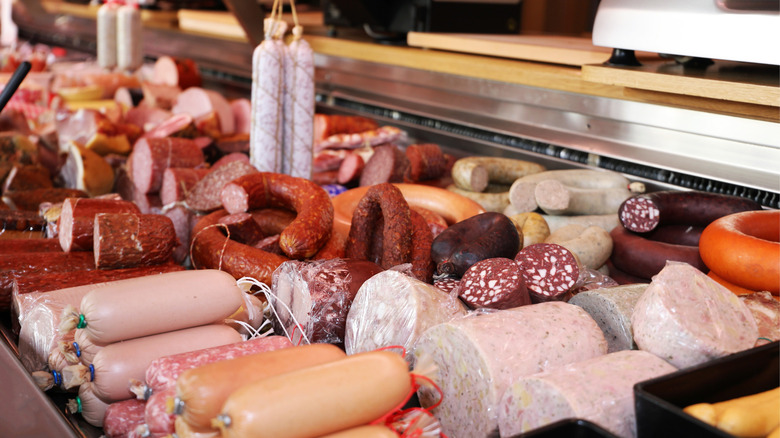
It's a shame that such rich, savory delicacies as wurst and offal got stuck with such unflattering, double-entendre'd namesakes. A lot of foods that Boomers grew up eating are simply less popular now than they once were, but one particular deli meat seems to cause a major divide among generations: liverwurst. With its pâté-adjacent consistency, modern foodies might consider liverwurst an uncommon deli meat for building sandwiches. But, to epicures of the Boomer generation, this once-popular meat was a lunchtime staple with a distinctive, salty, umami-forward taste.
"Wurst" is the German word for "sausage," and as its name suggests, liverwurst is an old-school spreadable, seasoned liver sausage with a rich, savory flavor and smooth, creamy texture. While exact compositions can vary, liverwurst is typically made from some combination of liver, pork meat, fatback, and spices like marjoram, allspice, and thyme. Other organ meats might be thrown into the mix such as heart, stomach, kidneys, intestines, and brain, as well as salt, black pepper, onion powder, and coriander. To make it, the meats, fats, and spices are ground smooth, then cased into a cylindrical sausage shape – and, at least for now, a taste for liverwurst sandwiches seems to be one Boomer dining habit that baffles younger generations.
Liverwurst's mid-1900s popularity stemmed from European immigration

Liverwurst hails from Germany, where it was created (like many types of sausage) as a form of meat preservation and shelf-life extension. The historical context of liverwurst's rise might illuminate why it isn't more prevalent among younger folks today. Due to wartime rationing, the Boomer generation ate more offal as a baseline than most foodies probably do today. A liverwurst sandwich even appears in a 1957 episode of "Leave It To Beaver." For folks who grew up eating it, the deli meat retains the appeal of a fond, nostalgic comfort food. This affinity might be especially strong among foodies who bear personal connections to liverwurst as a tradition of German-Jewish family heritage – an immigration boom which hit the U.S. during the mid- to late-1800s, then boomed again between 1938 and 1941. This timeline would make liverwurst familiar fare among the parents and grandparents of the post-WWII Boomer generation (born 1946 to 1964).
In the contemporary food scene, many seemingly old-school or otherwise "unglamorous" meat-centric dining trends have broken into mainstream culture. Whole fish and "nose-to-tail" dining concepts are decidedly "in," and have been for the past few years. At her industry-changing NYC restaurant Prune, Chef Gabrielle Hamilton made it "cool" to eat monkfish liver — and luxurious, controversial foie gras is offal pâté, too, not necessarily a far cry from liverwurst. As one Reddit user inquires: "Why all the hate for liverwurst??"
The case for liverwurst (pun intended)
Another Reddit thread in r/Xennials (a sub-generation straddling Gen X and Millennials, born in the late '70s to early '80s) inquires, "Anyone grow up eating liverwurst sandwiches? Anyone think we might be the last generation that did? I don't know anyone younger than me that's really eaten it, and my kids avoid it." Commenters agree, noting an enduring affinity that has lasted over the years: "I love it! I end up buying some once or twice a year," "I loved it. Haven't had it in 40 years but I can still taste it," and "I ate that all the time as a kid with ritz crackers and mustard. Loved it!"
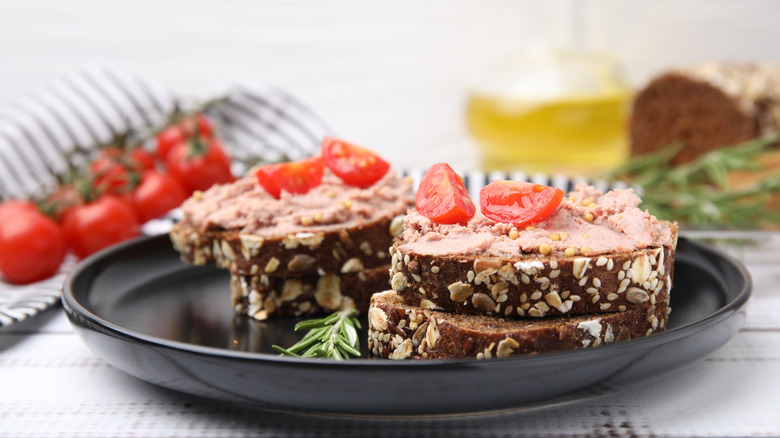
For Boomers, a popular way to enjoy liverwurst was to scoop the smooth meat out from its firm, tubular casing, then spread it on rye or whole grain bread for a protein-rich sandwich. In fact, a 100-gram serving of liverwurst packs an impressive 15 grams of protein, plus major iron and vitamins A and B12. That liverwurst sammy was customarily dressed with pickles, mustard, and onions, or an Americanized sando of lettuce and mayonnaise on white bread. Slam a sprig of fresh rosemary onto the plate and sprinkle on a little flaky Maldon, and this undersung pâté could arguably pass as a chic open-faced sandwich at a West Village bistro ... but we digress. At least for now, this meal seems to be one Boomer favorite that younger generations simply don't share.