

I Tried And Ranked All Of The Breads At Panera
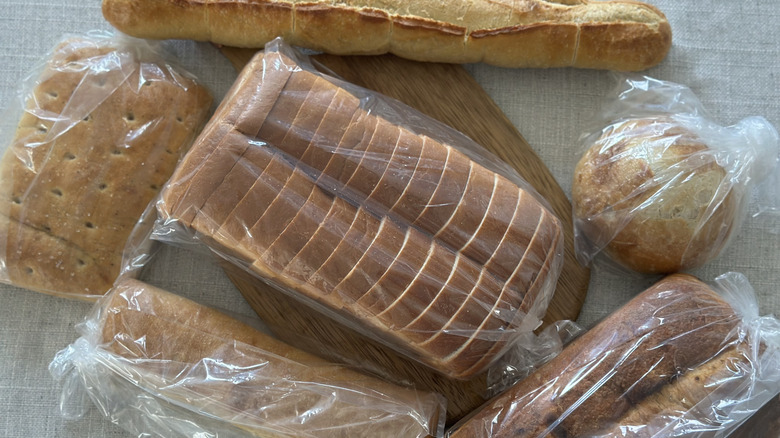
A regular in the fast-casual dining scene, Panera Bread is a popular choice for people who are looking to grab something for breakfast, lunch, or a sweet snack. At Tasting Table, our writers have ranked Panera Bread bagels, sandwiches, drinks, pastries, salads, and more. One thing we haven't ranked, though? The bread itself. Naturally, we had to remedy that, since "bread" is in the name of the restaurant chain, after all.
Yes, in addition to sit-down items you can enjoy at the eatery itself, Panera Bread offers a variety of take-home breads for customers to enjoy. As of this writing, there are seven different breads on the menu, which meant I had seven loaves to put to the (taste) test. In order to determine this ranking, I sampled the loaves the day they were purchased to properly quantify freshness, texture, and flavor. I wanted a bread with a soft interior and a nice crust that had a chew but wasn't hard or stale.
I also noted any smells (good or bad), as well as the versatility of the bread itself. For example, could this loaf be used in multiple ways, or was it only good for a couple dishes? Above all, though, my taste buds made the final decision in determining the ranking of these Panera Bread breads from worst to best.
7. Tomato Basil Bread
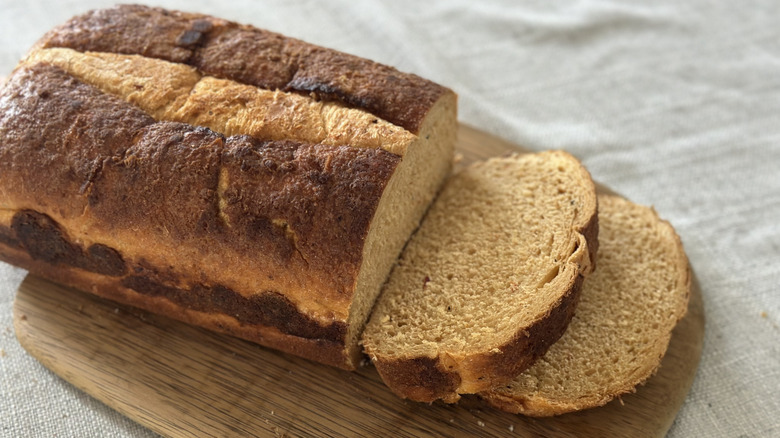
Ooh, did I want to like this bread. First, this loaf is absolutely massive and perfectly sized for something like toast or sandwiches. I opted to get Panera's Tomato Basil Bread unsliced. When I first took it out of its plastic bag and sawed off a slice, I was met with an herbaceous scent, so points for actually smelling like basil, since it's one of the flavors listed in the name. However, as I kept smelling it, I found the scent to become a bit off-putting, more like canned tomato sauce than anything fresh and fragrant. But aroma is only half the battle of the tasting experience, so how did I find it on my palate?
In a word: bad. Like I said, I wanted to like this bread. It sounded intriguing. When I first tasted the crust, I was met with sweetness, which was unexpected, but only because I hadn't properly done my research. Panera Bread describes this loaf as having a sweet crumb topping, and a look at the ingredients list shows brown sugar, sugar, cinnamon, honey, and vanilla. Had the bread been crust alone, this could have been a good thing. Alas, there is more to a slice of bread than crust, and the interior of this loaf left a lot to be desired.
The texture of a slice was fine, with a tighter crumb akin to most sandwich bread, but it was the flavor that was the downfall. While I liked the crust, the interior of the bread tasted — there's no other way to say this –– vomit-y. I had noticed something off at first, but it took a while before I was able to place the flavor, and once I did, it was clear this loaf deserved to be in last place.
6. Artisan Ciabatta Loaf
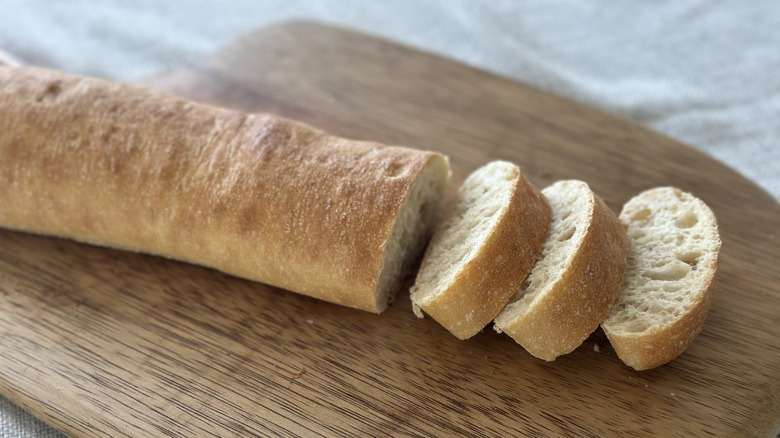
I have a confession: I am not a fan of ciabatta. Don't get me wrong –– I don't dislike this Italian bread, and I even enjoy its backstory of being invented to spite the French, but I haven't come across many ciabattas in my time that haven't destroyed the roof of my mouth and left me with flour all over my hands.
Fortunately for me, Panera Bread's take with its Artisan Ciabatta Loaf isn't half bad. Unlike a lot of ciabatta bread, this smaller loaf had a chewy crust, but it wasn't hard or a texture that would slice up your mouth. It had a mild smell –– not yeasty, nor sour –– and a light interior, with open air pockets, which is necessary for a good ciabatta. The loaf was a bit on the skinny side (the second skinniest after the French Baguette Loaf), which would make it an okay choice for smaller sandwiches, but you might need to make a couple to qualify as a full meal (or pair one with a store-bought Panera Bread soup).
So, why did this loaf rank so low? Well, it was just kind of boring. It was an inoffensive ciabatta in that it didn't leave my mouth bleeding, but that's about it. Mild in flavor and texture, the Artisan Ciabatta Loaf is begging for toppings or fillings to make it interesting.
5. French Baguette Loaf
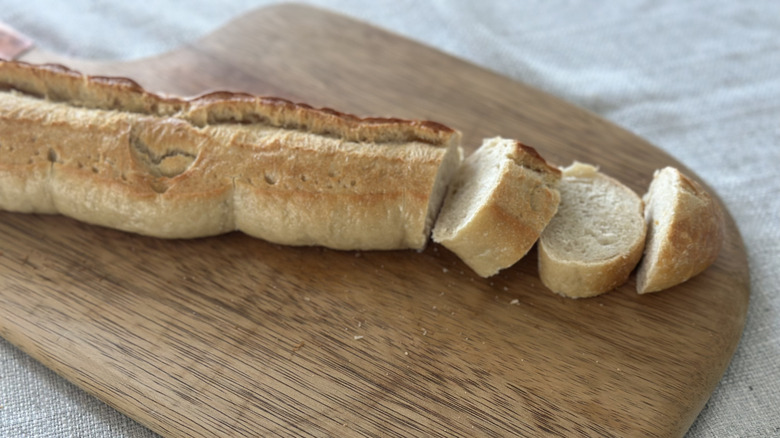
A classic choice, this French Baguette Loaf from Panera Bread is pretty decent, as far as store-bought baguettes go. To begin with, it's huge, just begging to be sliced into rounds or transformed into tiny baguette bread bowls. It has a lovely golden crust that's equal parts crunchy and chewy. There's a slight tanginess to the scent (or perhaps it was snuggled up too close to my sourdough), rather than a yeasty smell, which is nice, if a little unexpected. Inside the baguette, the interior is soft and squishy. It's not as airy as the ciabatta, which makes me think this baguette would hold up well to being toasted without being made into cinders.
So, why is this baguette in the middle of this list? Ultimately, like the Artisan Ciabatta Loaf, it wasn't too exciting. Sure, it's definitely better than your regular supermarket-purchased baguette, but not by much. I wanted to be walloped over the head with the smell and taste of fresh bread. I wanted to feel like I was in some French film with a baguette sticking out the top of my bag. And while the size was there, everything else felt a little lackluster. This baguette is just fine, but I certainly wouldn't go out of my way to get it again.
4. Sourdough Bread Bowl
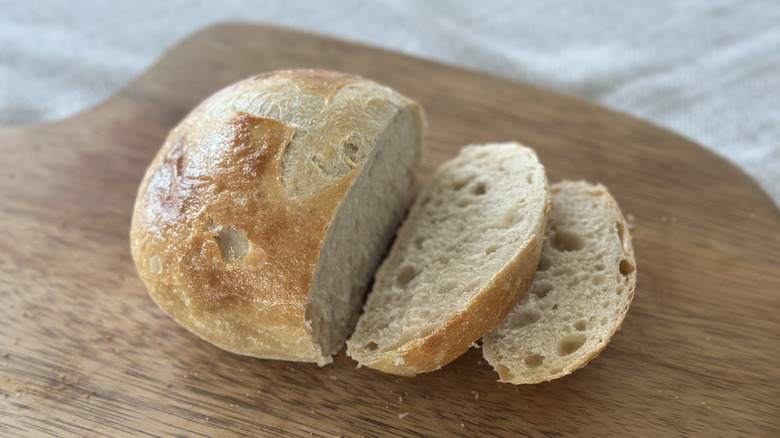
Introducing everyone's 2020 baking craze: sourdough. In this case, it's the Sourdough Bread Bowl from Panera, which is frequently used as a vessel for the chain's soups and mac and cheese. With its round shape, this loaf was the smallest of the bunch, and it made more sense to use the way it's intended –– as a bowl –– versus how I tried it, which was sliced.
Upon slicing into this sourdough, I noticed a lovely aeration, with plenty of bubbles and holes throughout, which meant that this bread wasn't heavy or dense, and was instead properly proofed. There was a delicious sour smell both before and after slicing, and that sourness extended to the taste. There was a sour tang in this sourdough, which is important. If you're going to advertise a bread as being sourdough, then it had better have some fermentation. Fortunately, for those who prefer their breads on the milder side, this bread bowl wasn't overwhelming in taste –– which is likely why it fares so well as a bowl for all those delicious Panera Bread soups.
With a shiny golden crust and a soft, chewy interior, this was a decent sourdough. It only dropped down to fourth place because its shape limits its usage. You can get maybe four moderate slices out of this loaf before you're down to the heels of the bread.
3. Country Rustic Sourdough Loaf
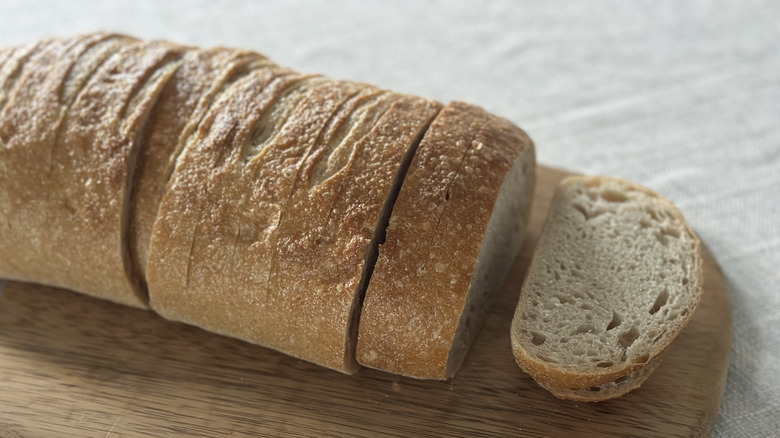
I know what you're thinking: Didn't you just rank a sourdough bread bowl, and now you have a sourdough loaf? What could possibly be the difference? Well, dear reader, there are a few things that made this Country Rustic Sourdough just a hair better than Panera's Sourdough Bread Bowl, and a few things that make it different from the previous entrant.
First, there was one added ingredient to the Country Rustic Sourdough Loaf, and it was obvious in both taste and appearance: coarse whole wheat flour. This gave the loaf the tiniest bit of nuttiness in flavor and offered microscopic specks when the loaf was sliced. Second, the shape of the loaf. This sourdough loaf was massive, so much so that my Panera Bread had to cut it in half by hand first before putting it in the slicer. Finally, this bread was a pain in the butt to get. Twice when I went to my local Panera Bread, this loaf was sold out (despite the fact that I had ordered ahead online). Having to visit the store a third time definitely gave me some high expectations –– after all, if this bread was so popular, it must be amazing, right?
As it turns out, kind of, yes! It had a very sourdough-forward scent, and that carried over to its flavor. There was a tanginess that lingered on the tongue in a not-unpleasant way. The crust had a great chew and a soft, spongy interior. I think it would hold up better to savory flavors, like as a sandwich or avocado toast, versus sweeter toppings. It earned third place for me because I liked its flavor and texture, but I wasn't wowed. It's a good sourdough, and I've had good sourdough before, so third place seems fair.
2. Black Pepper Focaccia
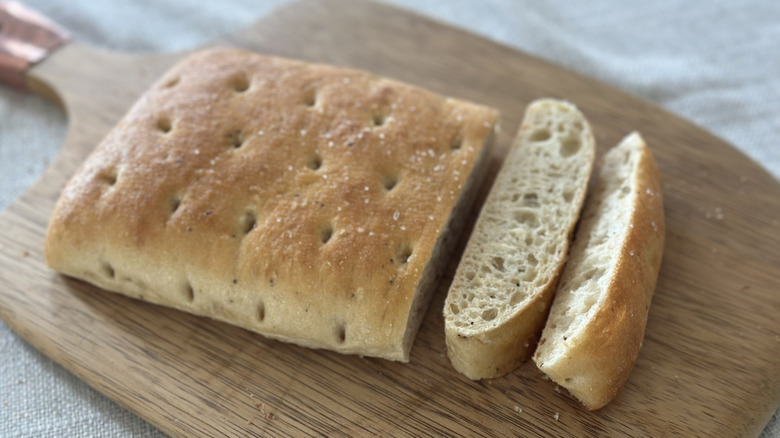
As far as breads go, focaccia can be a bit of a chameleon. This flatbread can be topped with a variety of different ingredients, like our cacio e pepe focaccia recipe, which uses Parmesan cheese and black pepper to bring a pasta twist to the bread, as well as olives, rosemary, tomatoes, and more. Even though focaccia is a good bread for novice bakers, sometimes you just want to buy it from the store, and for those stopping by Panera, the fast-casual chain offers a tasty one.
The Black Pepper Focaccia smelled like black pepper and olive oil the moment I removed it from the bag. There were visible flecks of freshly cracked pepper and grains of sea salt amid the pillowy golden hills of the bread, which seemed promising as far as taste is concerned. The bread itself was squishy and plush without teetering into density, but it was the taste that really pushed this focaccia towards the top.
The black pepper I had seen and smelled was evident in taste, too, which was a relief. The grains of salt offered a delicious salinity that made me want to finish my whole slice, while the slight oiliness provided enough moisture without making things soggy. This was a quality focaccia. The only reason it didn't nab the number one spot is because I don't think it's versatile enough to be used multiple ways.
1. Classic White Miche
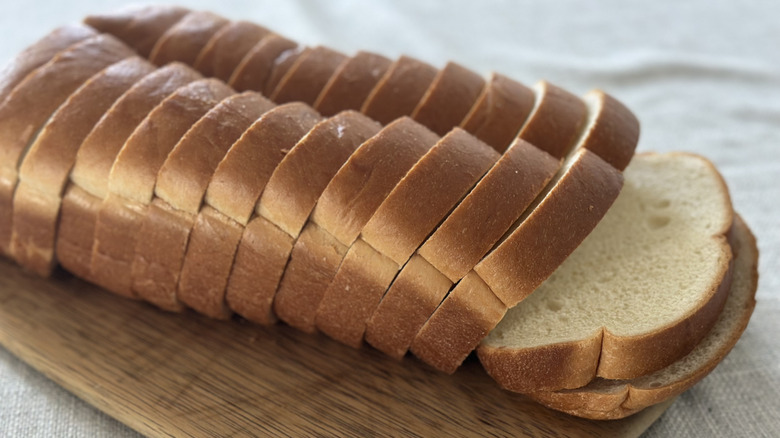
Is it boring to have white bread in the number one spot? Not when it's Panera's Classic White Miche. This is the ideal sandwich bread. Mine arrived pre-sliced, which meant I didn't have to wait before digging into this classic soft bread. When I opened the bag, I was engulfed with the smell of fresh bread –– warm, yeasty, and the tiniest bit sweet. As described on the Panera Bread website, this loaf has a soft center, and it really did. It was downright pillowy, the kind of bread you can eat plain and still feel like it's a treat.
Speaking of treats, there was even a mild sweetness in flavor to this miche. It's not dominant, and doesn't make this bread into a dessert, but it is present. However, if you already like white bread, you probably won't mind it and may even prefer it. This sweetness means that the Classic White Miche would work just as well in a recipe for French toast as it would as the bookends of a savory sandwich. (I myself used it as the vehicle for a grilled cheese made with aged cheddar, and it held up wonderfully.)
This bread wins the top spot not only for its flavor and texture but its versatility. It's a crowd-pleaser and a palate-pleaser, and it shows that sometimes simple really is best.
Methodology
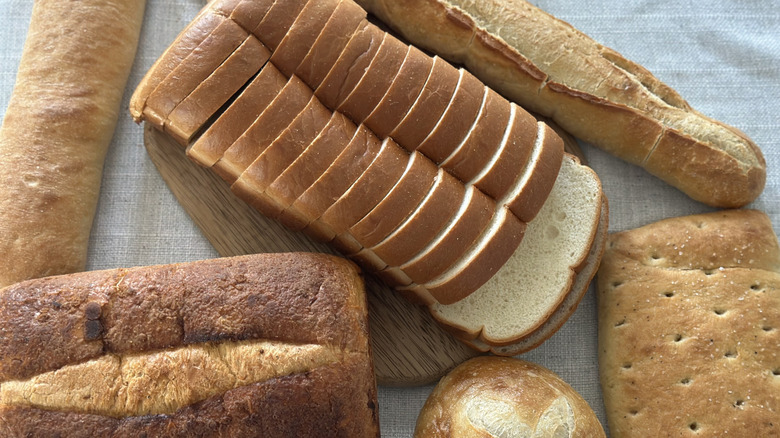
As a baker (although bread is usually outside of my wheelhouse), I felt pretty prepared to determine the overall quality of these breads. I looked mostly at flavor and texture, although smell and versatility played supporting roles. The ideal bread needed to be soft and delicious, with a bit of crust. It needed to be fresh and not stale on my counter the next day.
Additionally, some breads rose a bit higher in the ranking based on the likelihood of how well others might enjoy them. Panera Bread doesn't get too creative in terms of its bread varieties, so this was admittedly a smaller component. Simplicity wasn't a bad thing here, as long as it was well executed. Finally, the ultimate ranking factor was how likely I would go out of my way to buy these loaves again, especially with my proximity to other bakeries in my area.